The Letter of the Day is F: “F” is for Tomatoes, Fiorintino (Costoluto) and Fireworks

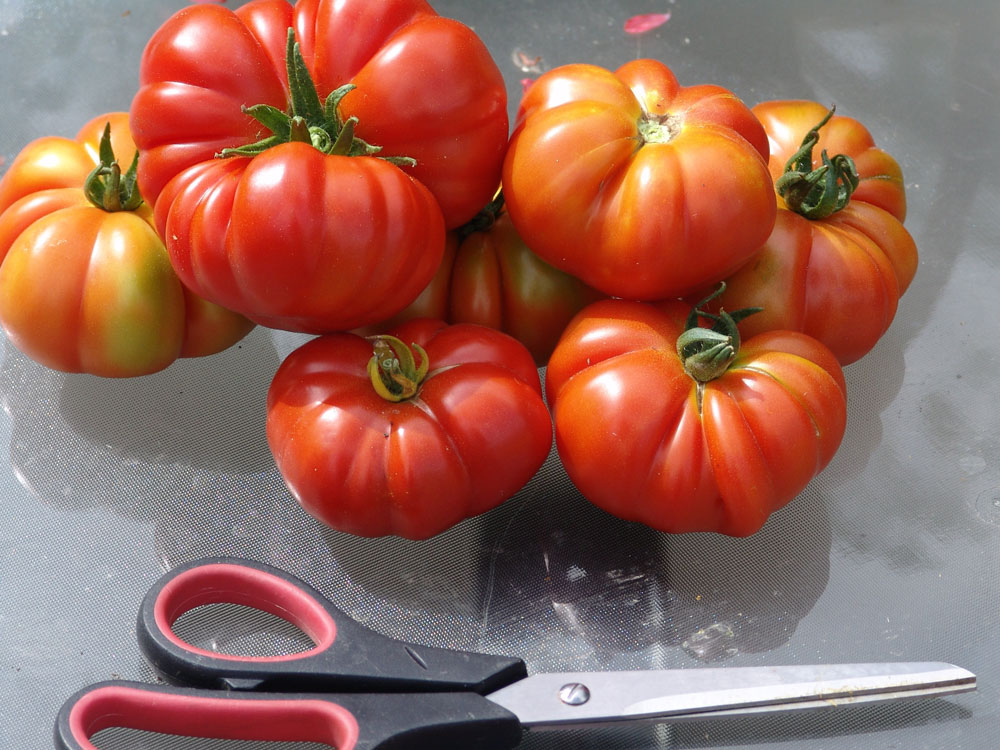
Fiorintino

tomato-fiorintino

My description on my website: A fantastic old Tuscan Heirloom variety with dark red skin and juicy delicious flesh. Shaped slightly flattened with fluted shoulders. Fruits are typically about 8 ounces, with a smoother shape than the heavily ribbed Costoluto Genovese. The flavor is high in sugar with excellent acid, making for outstanding taste that’s wonderful fresh or made into sauces. Fusarium resistant too!

My Notes: These were prolific and most were of a medium size. The taste was pretty good too. I liked to cut their tops off and stuff them with chicken salad. The fluted edges really stood out. Great for cooking and salsa.

Indeterminate, 80 days

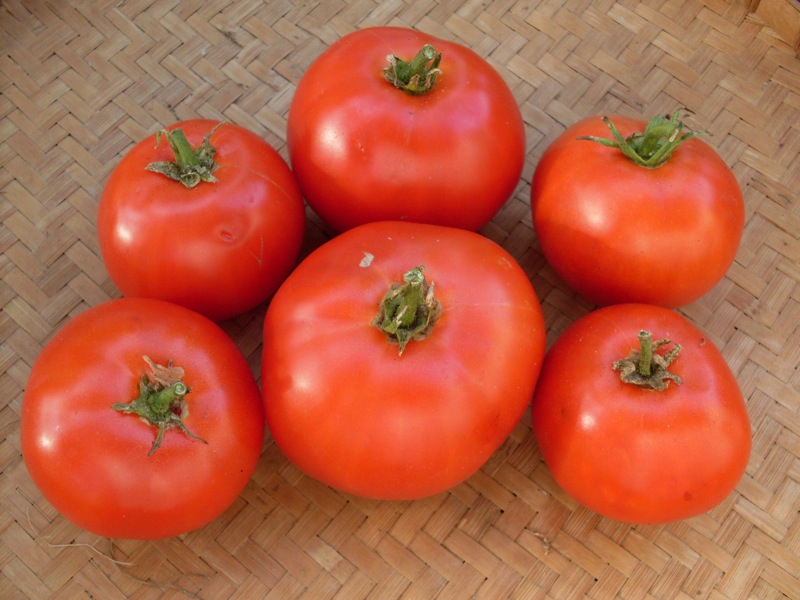
Fireworks


My description on my website: This is one of the largest, earliest red slicing tomatoes available, and it has excellent flavor. Fireworks is an exceptional variety. Its bright red fruit are 6 to 8 ozs., round with a pointed tip, and borne quite heavily on vigorous plants.

My Notes: One of the earlies that is an indeterminate and a larger tomato which is unusual for an early tomato. Jetsetter and Siletz are all a good size. I will be growing it in my garden for myself this year. I had so many customers who raved about it’s size and taste that I need to see it for myself!

Indeterminate, 60 days

Nifty Way to Plant an Accessible Kitchen Garden

Aside

1599072_10151904029761861_1289288943_o

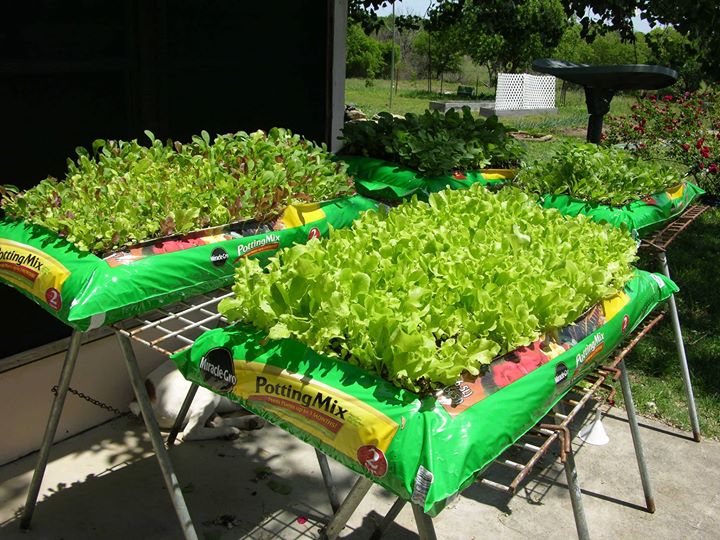
Here is a picture I saw on facebook about a different way to garden. The only caveats: the bag will weigh a lot so make sure that where you put it, is where you want it (you might try putting it on a cart with wheels if you want to move it to catch sun) and that what you put it on, is able to hold it’s weight. Also, PUT DRAINAGE HOLES UNDERNEATH, LOTS OF THEM!

Try shallow rooted veggies like radishes, round carrots, lettuce, spinach, beets etc.

Tomato Terms: What Does It Mean When I Say…Early, Main and Late Season?

ImageSiberia This might be the earliest tomato ever – only 7 weeks from transplanting to table. Capable of setting fruits at 38 F on sturdy dark green plants. The fruits are bright red, 3 to 5 oz. and bunch in clusters. Also good for a patio. Determinate, 48 days

Along with these words usually comes a range of days in which you can expect to start eating tomatoes. (The days are from transplanting not sowing the seed).

Where I live, it can be colder in some areas than others. For instance, Deer Park, is about 10-15 miles north from Spokane. It has predictably colder weather and earlier frosts than we do. Their growing season is a lot shorter than ours and we aren’t geographically that far away. Cheney is colder plus they always have a lot of wind. Different growing conditions is a small area.

After reading my descriptions (www.thetomatolady.com) on my tomatoes or peppers, one of the things my customers ask is if it really will be ripe in 45 days or 60 days. I have to be honest with them and say I can’t give a definitive answer. There are so many variables involved in growing a garden. Weather, soil temps, amount of watering and fertilizing, where did they site the plant and variety.

The biggest one is  the weather, which we have no control over. Last June, it seemed like it rained avery day and was cold. That will keep plants sitting there, in the ground,  just waiting. (The only good thing about that is the plant is working on root development so that when it gets warm they have a good foundation to shoot up). I think I remember having a light frost in early June.

I would like to change my descriptions to early, mid, late and really late. It’s true that a Siberia or a Fourth of July will produce fruit before a late season variety such as Orange Russian or a Gold Medal.
Image

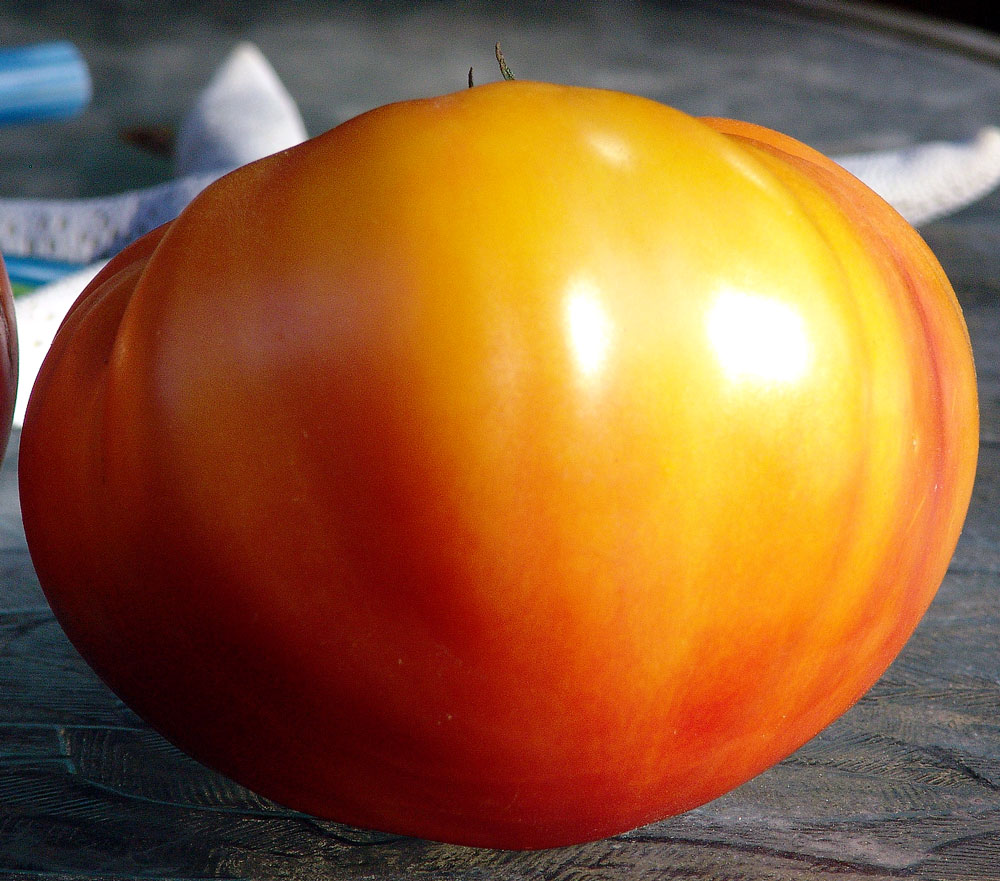
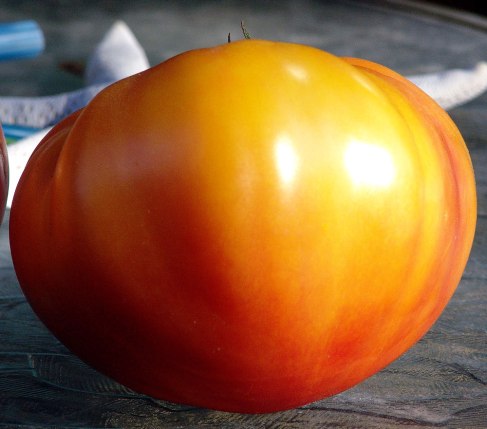
Gold Medal These are fabulous, reminiscent of Big Rainbow. A Ben Quisenberry tomato. Wonderful, 1-1/2 lb., yellow and red bi-color beefsteak tomato with pink marbeling in blossom end, thin skin and luscious sweet, well-balanced flavors. Indeterminate, 85 days

That being said, I have seen some early varieties (48-60 day) that are only about 2 weeks earlier than a 70-75 day tomato. There again it depends on a lot of variables.

It must be nice in the South where have you a longer growing season, if you have to wait longer to get them into the ground it’s ok because you won’t get a frost until November.

There are many ways you can extend your season. Some years  if you wait until all signs of frost are gone you won’t have any tomatoes. At some point you have to get them into the ground. Especially if you live in an area the gets an early fall frost.

I will discuss some ways in later posts

Today I Planted Sweet Pepper Seed and Transplanted Over 300 Impatiens

Image

Despite my inability to stand without pain in my knees I managed to transplant 6 different varieties of impatiens, including Athena, Mystic, Red Flash and Butterfly Mix. I love handling the little guys, it makes me feel like spring although the forecast is for snow tonight.

Today and yesterday, I seeded 24 varieties of sweet peppers. California Wonder, Albino bullnose and White Lakes (both cream colored), Sweet Pickle, Sweet Banana, Sheepnose  and several colors of mini bells, to name a few. A couple of the hot peppers that were planted last week are coming up. Hot peppers take longer to germinate so I am surprised. 

Onions are up and Hot Peppers planted

ImageImageImageearly jalapeno

Onions are up! Impatiens are up! Snapdragons and lobelia too! It’s nice to see signs of spring, even if it’s only under lights in the house.  Oh, and I have Yugoslavian Buttercrunch coming up too.

I tried something different with my onions, I planted them individually in plug trays since they don’t seem to like being transplanted at a young age.

Yesterday I planted hot peppers, Hot peppers are notoriously slow to germinate and then sometimes they are spotty. Depends on the freshness of the seed and the variety. First I soaked them in weak tea. Pain in the butt to separate them, stuck to my fingers. Here is the list: Arbol, Bhut Jolokia (yes, the infamous ghost), Cayenne, Early Jalapeno, Habanero, Hungarian Yellow Wax, Maules Red Hot, Pasilla, Pepperoncini, Serrano, Tabasco, Anaheim, Shishitso

I don’t like hot peppers although I have been know to use a smidgen of jalapeno in my salsa.

We’ve had snow and cold weather until the pineapple express rolled in last night. Now it’s 45 degrees. Melting all our snow.

Tomato Terms: What Does it Mean When I Say . . .Heirloom

Image

Tomatoes in picture: Black Prince, White Queen, Aussie, Gold Medal, Black Truffle, Costoluto Fiorentino and others.

Whether you call them “Heritage” or “Heirloom”, these are still the varieites you will want to grow for taste. Heirlooms come from seed that has been handed down for generations in a particular region or area, and hand-selected by gardeners for a special trait. 

Heirloom vegetables are open-pollinated, which means they’re non-hybrid and pollinated by insects or wind without human intervention. How experts define heirlooms can vary, but typically they are at least 50 years old, and often are pre-WWII varieties. 

In addition, they tend to remain stable in their characteristics from one year to the next. What that means to you is that you can can save the seeds and if they don’t cross pollinate they will come true. Your “Aunt Ruby’s German Green” tomato seed will produce an “Aunt Ruby’s German Green” next year. Tomatoes are self pollinating and if you want to be relatively sure they haven’t “crossed the road” bag the flowers after you hand pollinate them or plant them away from other tomatoes. Remember that wind, bees and other things can pollinate the flowers. too

Many gardeners …to be continued

Tomato Terms: What Do I Mean When I Say…Determinate vs. Indeterminate

Continue reading

Interesting Trivia About Tomatoes: Fruit or Vegetable?

Image

Is it a fruit or vegetable?

In 1887, the US Supreme Court ruled that tomatoes were vegetables even though they are specialized reproductive structures that contain seeds. They said:

“Botanically speaking tomatoes are the fruit of a vine, just as are cucumbers, squashes, beans and peas. But in the common knowledge of the people…all these are vegetables, which are grown in kitchen gardens, and…are usually served at dinner in, with or after the soup, fish or meats…and not like fruits generally as dessert.”

Some Interesting Trivia About Tomatoes: First Part

black-prince

Black Prince

They were once called a love apple and were thought to be poisonous

Tomatoes are native to the coastal highlands of western South America. The early American colonists brought them to America but most people still viewed them with suspicion. Thomas Jefferson mentions planting them in 1809 but they weren’t widely cultivated until after 1830 when tomatoes started popping up in American cookbooks and gardening manuals. America has had a love affair with tomatoes ever since.

Seed Catalogs Starting To Come In

Actually, they’ve been showing up in my mailbox for the last several weeks. I swear I swore off gardening forever when the first frost hit in October. Dragging hoses, pulling weeds, battling bugs and trying to find homes for my abundant garden produce, well just about tuckered me out.

Quite honestly, this was not my best year for gardening. The tomates were a fall crop, (although I did win a grand prize for my Willamette tomatoes at the fair), the peppers were the worst season I’ve had, (and I’ve had some fabulous plants the last couple of years), the zucchini squash plants took over the garden, (I’ve never seen them ramble as much as they did), and the onions didn’t bulb up much. Spider mites attacked my roses and dahlias, slugs ate my tomatoes and my pepper plants, (they had a penchant for the cayenne), and it was a banner year for yellow jackets.

On the upside, my volunteer sunflowers came up in spades, I found some lovely garlic that I had missed last fall, my carnations looked fabulous, and my nasturtiums were lush and aphid free.

Ok, so where was I…right, catalogs. It is almost the first of the new year and still the dead of winter, but perusing all the catalogs that are coming in and seeing all the pretty pictures has stirred something in me. The need to grow things, to “create life”. Not to be blasphemous, but sometimes I think I might know a little of how God must have felt when he created the earth. How pleased He must have been to plant beauty and watch it grow. Despite all of the problems I had last summer, I still am excited about the coming spring, an opportunity to start over again. When you think about it, isn’t that what gardening boils down to?

I was looking through the Irish Eyes Garden Seeds catalog tonight. They are located relatively close to my home in Spokane Valley, WA. Irish Eyes is based out of Ellensburg, WA on the eastern side of the Cascades. I believe in buying local when I can. One of their claims to fame is organic, early season varieties. Yugoslavian Red and Cardinale are two kinds of lettuce that I am going to try, one is a butterhead and the other is a head lettuce. I may even try potatoes again. some of the fingerlings they offer look yummy. Check it out at http://www.irisheyesgardenseeds.com

ImageImage