Unknown's avatar

About elzbthc

I am a Graphic Artist and The Tomato Lady in the Spokane Valley, WA. I love creating beautiful things, horses, quilting, traveling, sightseeing, cooking, entertaining, and reading among other things.

Tomato Terms: What Does It Mean When I Say…Early, Main and Late Season?

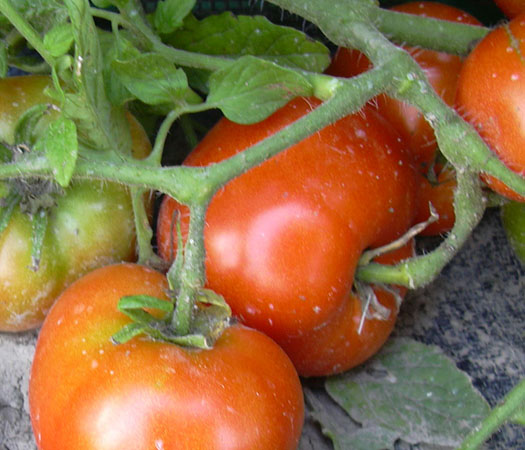
ImageSiberia This might be the earliest tomato ever – only 7 weeks from transplanting to table. Capable of setting fruits at 38 F on sturdy dark green plants. The fruits are bright red, 3 to 5 oz. and bunch in clusters. Also good for a patio. Determinate, 48 days
Along with these words usually comes a range of days in which you can expect to start eating tomatoes. (The days are from transplanting not sowing the seed).

Where I live, it can be colder in some areas than others. For instance, Deer Park, is about 10-15 miles north from Spokane. It has predictably colder weather and earlier frosts than we do. Their growing season is a lot shorter than ours and we aren’t geographically that far away. Cheney is colder plus they always have a lot of wind. Different growing conditions is a small area.

After reading my descriptions (www.thetomatolady.com) on my tomatoes or peppers, one of the things my customers ask is if it really will be ripe in 45 days or 60 days. I have to be honest with them and say I can’t give a definitive answer. There are so many variables involved in growing a garden. Weather, soil temps, amount of watering and fertilizing, where did they site the plant and variety.

The biggest one is  the weather, which we have no control over. Last June, it seemed like it rained avery day and was cold. That will keep plants sitting there, in the ground,  just waiting. (The only good thing about that is the plant is working on root development so that when it gets warm they have a good foundation to shoot up). I think I remember having a light frost in early June.

I would like to change my descriptions to early, mid, late and really late. It’s true that a Siberia or a Fourth of July will produce fruit before a late season variety such as Orange Russian or a Gold Medal.
Image

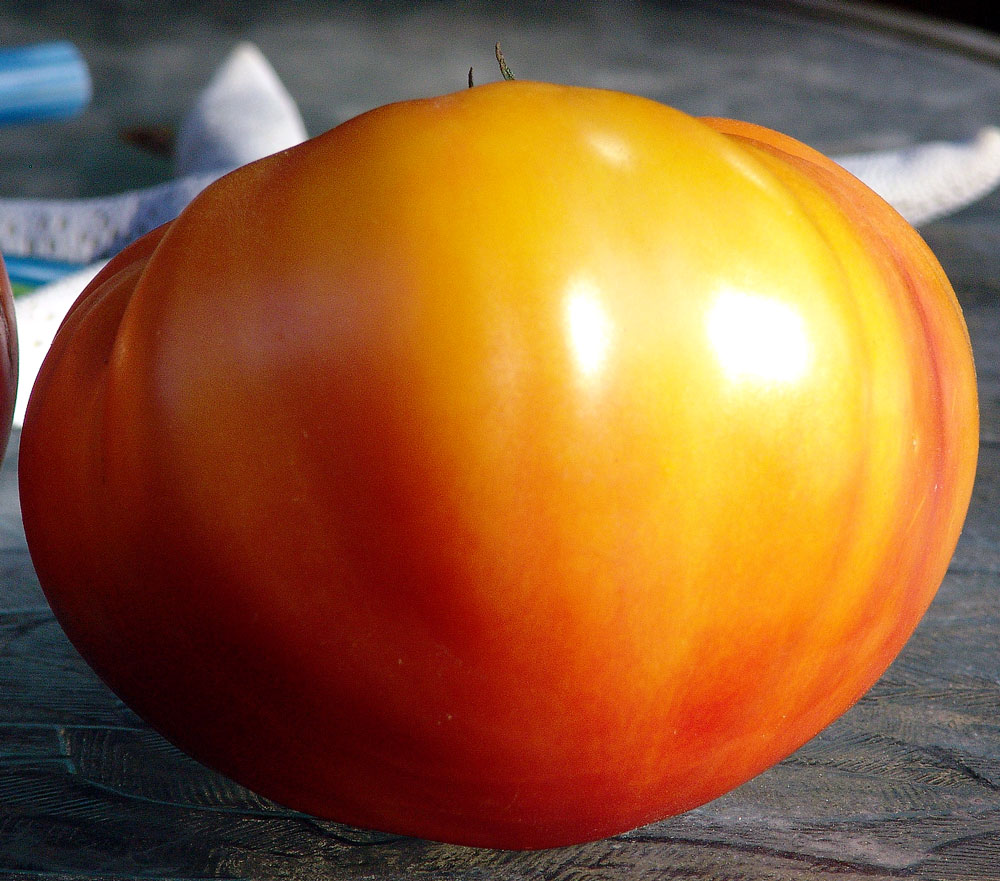
Gold Medal These are fabulous, reminiscent of Big Rainbow. A Ben Quisenberry tomato. Wonderful, 1-1/2 lb., yellow and red bi-color beefsteak tomato with pink marbeling in blossom end, thin skin and luscious sweet, well-balanced flavors. Indeterminate, 85 days

That being said, I have seen some early varieties (48-60 day) that are only about 2 weeks earlier than a 70-75 day tomato. There again it depends on a lot of variables.

It must be nice in the South where have you a longer growing season, if you have to wait longer to get them into the ground it’s ok because you won’t get a frost until November.

There are many ways you can extend your season. Some years  if you wait until all signs of frost are gone you won’t have any tomatoes. At some point you have to get them into the ground. Especially if you live in an area the gets an early fall frost.

I will discuss some ways in later posts

Today I Planted Sweet Pepper Seed and Transplanted Over 300 Impatiens

Image

Despite my inability to stand without pain in my knees I managed to transplant 6 different varieties of impatiens, including Athena, Mystic, Red Flash and Butterfly Mix. I love handling the little guys, it makes me feel like spring although the forecast is for snow tonight.

Today and yesterday, I seeded 24 varieties of sweet peppers. California Wonder, Albino bullnose and White Lakes (both cream colored), Sweet Pickle, Sweet Banana, Sheepnose  and several colors of mini bells, to name a few. A couple of the hot peppers that were planted last week are coming up. Hot peppers take longer to germinate so I am surprised. 

Onions are up and Hot Peppers planted

ImageImageImageearly jalapeno

Onions are up! Impatiens are up! Snapdragons and lobelia too! It’s nice to see signs of spring, even if it’s only under lights in the house.  Oh, and I have Yugoslavian Buttercrunch coming up too.

I tried something different with my onions, I planted them individually in plug trays since they don’t seem to like being transplanted at a young age.

Yesterday I planted hot peppers, Hot peppers are notoriously slow to germinate and then sometimes they are spotty. Depends on the freshness of the seed and the variety. First I soaked them in weak tea. Pain in the butt to separate them, stuck to my fingers. Here is the list: Arbol, Bhut Jolokia (yes, the infamous ghost), Cayenne, Early Jalapeno, Habanero, Hungarian Yellow Wax, Maules Red Hot, Pasilla, Pepperoncini, Serrano, Tabasco, Anaheim, Shishitso

I don’t like hot peppers although I have been know to use a smidgen of jalapeno in my salsa.

We’ve had snow and cold weather until the pineapple express rolled in last night. Now it’s 45 degrees. Melting all our snow.

Tomato Terms: What Does it Mean When I Say . . . Heirloom?

Image

Many gardeners agree that heirloom tomato varieties boast greater flavor than the hybrids. After all, there is a reason they’ve been around for so long. In general I agree although I’ve had some tasty hybrids such as the cherry tomato, “Sungold” and “Sweet Treats” a larger pink cherry tomato, which is fabulous. 

While hybrid plants typically yield a crop that is uniform in both appearance and timing, heirlooms produce a “mixed bag” harvest. The harvest may come in less predictably, and produce size can vary greatly even on the same plant but it is still worth the real estate that they take up. Heirlooms, especially the larger ones, can be prone to cracking and cat facing which is not their most endearing quality but beauty is skin deep in my book. I have never found a beauty queen tomato, perfectly round, consistently red that can compare with a fat, juicy, sweet slice of, say, “Aussie” or “Rose” on my BLT!

Heirlooms typically come with a story that is as wonderful as the flavor. The Amish heirloom tomato Brandywine yields fruit with an unbeatable flavor in shades reminiscent of a glass of Cabernet. Mortgage Lifters paid off a man’s house in the depression years. Nebraska Wedding is an old Great Plains heirloom whose seeds were given to newly married couples to help them start their lives and start their farms together. Amana Orange takes its name from Amana, Iowa. Paul Robeson, a Russian heirloom tomato was named after the operatic artist who won acclaim as an advocate of equal rights for Blacks. His artistry was admired world-wide, especially in the Soviet Union. 

First Seeds of the Year

Aside

I planted Candy onions in plug trays and Walla Walla Sweets in a broadcast method, the way I have always done them. We will see which does better when it comes to transplanting.

I also seeded some Lisanthus, Lobelia, Crytal Palace and Blue Wings,  pink Brugmansia, snapdragons and several varieties of Impatiens, including the uber expensive rosebud type.

Tomato Terms: What Does it Mean When I Say . . .Heirloom

Image

Tomatoes in picture: Black Prince, White Queen, Aussie, Gold Medal, Black Truffle, Costoluto Fiorentino and others.

Whether you call them “Heritage” or “Heirloom”, these are still the varieites you will want to grow for taste. Heirlooms come from seed that has been handed down for generations in a particular region or area, and hand-selected by gardeners for a special trait. 

Heirloom vegetables are open-pollinated, which means they’re non-hybrid and pollinated by insects or wind without human intervention. How experts define heirlooms can vary, but typically they are at least 50 years old, and often are pre-WWII varieties. 

In addition, they tend to remain stable in their characteristics from one year to the next. What that means to you is that you can can save the seeds and if they don’t cross pollinate they will come true. Your “Aunt Ruby’s German Green” tomato seed will produce an “Aunt Ruby’s German Green” next year. Tomatoes are self pollinating and if you want to be relatively sure they haven’t “crossed the road” bag the flowers after you hand pollinate them or plant them away from other tomatoes. Remember that wind, bees and other things can pollinate the flowers. too

Many gardeners …to be continued

Tomato Terms: What Does it Mean When I Say . . .Hybrid vs. Open Pollinated

Image

Hybrid: These tomatoes are made from crossing two varieties which have characteristics that you want to save in their offspring such as earlier maturity, better yield, improved flavor and disease resistance. Good examples are Juliet, a beautiful, little red grape shaped tomato and Sungold, probably the best  cherry tomato that will ever pass your lips. (The tomatoes in the cover picture at the top of my blog are Sungold). Early Girl, Celebrity and Carmello are other hybrids. An F-1 Hybrid means it is the first generation between two different parents.

While you can save seed from it, be advised that it will not come back as the same thing you grew the first year.

Sometimes folks ask me if hybrids are GMO. They are not and I will devote a post on it later.

Open Pollinated: These are tomatoes that have the same parents as themselves. You can save seed and they will come true. All heirlooms are OP and have been saved for generations because of superior qualities like adaptability to a local area and flavor. Heirlooms are another post also.

Tomato Terms: What Do I Mean When I Say…Determinate vs. Indeterminate

Continue reading

More Interesting Trivia

Image

More Interesting Trivia

Indeterminate tomatoes can grow very tall although not as big as the one at Epcot Center. I’ve seen pictures of a twenty foot tomato plant but I believe it was grown somewhere warm in the south. Indeterminates will grow continuously unless killed by frost or disease.

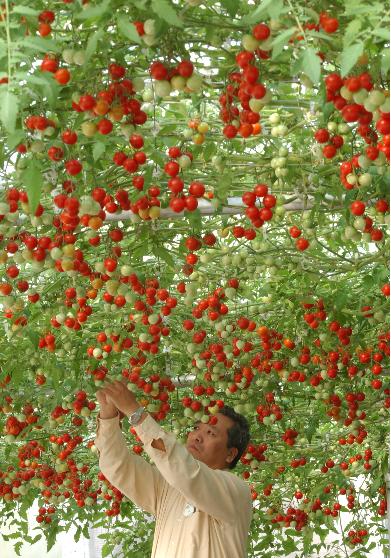
The world’s largest tomato tree was grown in the experimental greenhouse at Walt Disney World Resort. It produced over 32,000 tomatoes in the first 16 months after it was planted, and holds the record for the most tomatoes in a single year, according to the Guinness Book of World Records. Huang, from Shenyang, China, discovered the plants in Beijing, China, and after meeting with scientists responsible for those plants he brought the seeds to Epcot. The plant’s single vine grows tens of thousands of golf ball-sized tomatoes which are harvested and served at restaurants across Walt Disney World Resort. According to what I’ve read, It is grown conventionally in a container not hydroponically. Remember too, that it is grown in a greenhouse with constant attention and lots of fertilizer, most likely beyond the scope of the home gardener, even with a greenhouse.

Interesting Trivia About Tomatoes: Tomatoes From Outer Space?

In 1984 12.5 million tomato seeds (Rutgers California Supreme), were sent into space where they circled the earth for 6 years aboard a satellite, until the crew of the Columbia retrieved them. Back on earth they were distributed to more than 3 million school children, 64,000 teachers and others around the world. When planted, no significant differences were found between them and their terrestrial counterparts. Although there were no worrisome mutations, there were however, casualties.

“Dear Nasa,” wrote one participant, “My name is Matt. I am in grade 2. I really enjoy growing my plants. Here are my results. My earth seed did not grow. My space seed grew but it fell off my desk. It died.”

Hmmm…these tomato seeds have traveled more than I have!