Nifty Way to Plant an Accessible Kitchen Garden

Aside

1599072_10151904029761861_1289288943_o

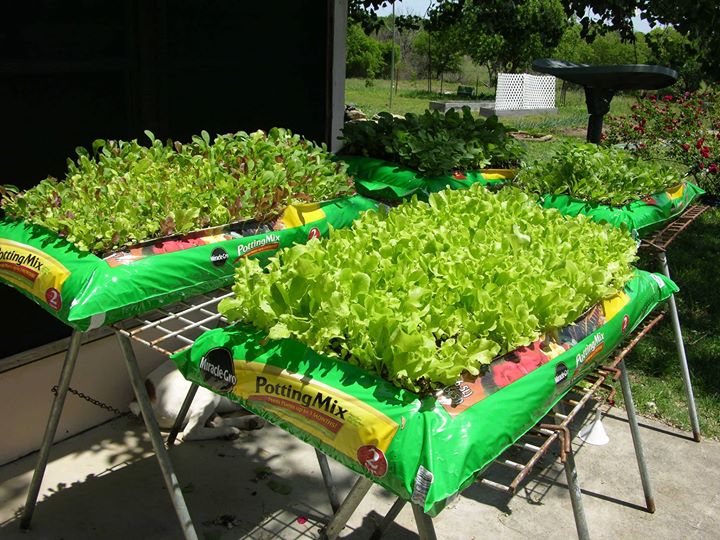
Here is a picture I saw on facebook about a different way to garden. The only caveats: the bag will weigh a lot so make sure that where you put it, is where you want it (you might try putting it on a cart with wheels if you want to move it to catch sun) and that what you put it on, is able to hold it’s weight. Also, PUT DRAINAGE HOLES UNDERNEATH, LOTS OF THEM!

Try shallow rooted veggies like radishes, round carrots, lettuce, spinach, beets etc.

Tomato Terms: What Does It Mean When I Say…Early, Main and Late Season?

ImageSiberia This might be the earliest tomato ever – only 7 weeks from transplanting to table. Capable of setting fruits at 38 F on sturdy dark green plants. The fruits are bright red, 3 to 5 oz. and bunch in clusters. Also good for a patio. Determinate, 48 days

Along with these words usually comes a range of days in which you can expect to start eating tomatoes. (The days are from transplanting not sowing the seed).

Where I live, it can be colder in some areas than others. For instance, Deer Park, is about 10-15 miles north from Spokane. It has predictably colder weather and earlier frosts than we do. Their growing season is a lot shorter than ours and we aren’t geographically that far away. Cheney is colder plus they always have a lot of wind. Different growing conditions is a small area.

After reading my descriptions (www.thetomatolady.com) on my tomatoes or peppers, one of the things my customers ask is if it really will be ripe in 45 days or 60 days. I have to be honest with them and say I can’t give a definitive answer. There are so many variables involved in growing a garden. Weather, soil temps, amount of watering and fertilizing, where did they site the plant and variety.

The biggest one is  the weather, which we have no control over. Last June, it seemed like it rained avery day and was cold. That will keep plants sitting there, in the ground,  just waiting. (The only good thing about that is the plant is working on root development so that when it gets warm they have a good foundation to shoot up). I think I remember having a light frost in early June.

I would like to change my descriptions to early, mid, late and really late. It’s true that a Siberia or a Fourth of July will produce fruit before a late season variety such as Orange Russian or a Gold Medal.
Image

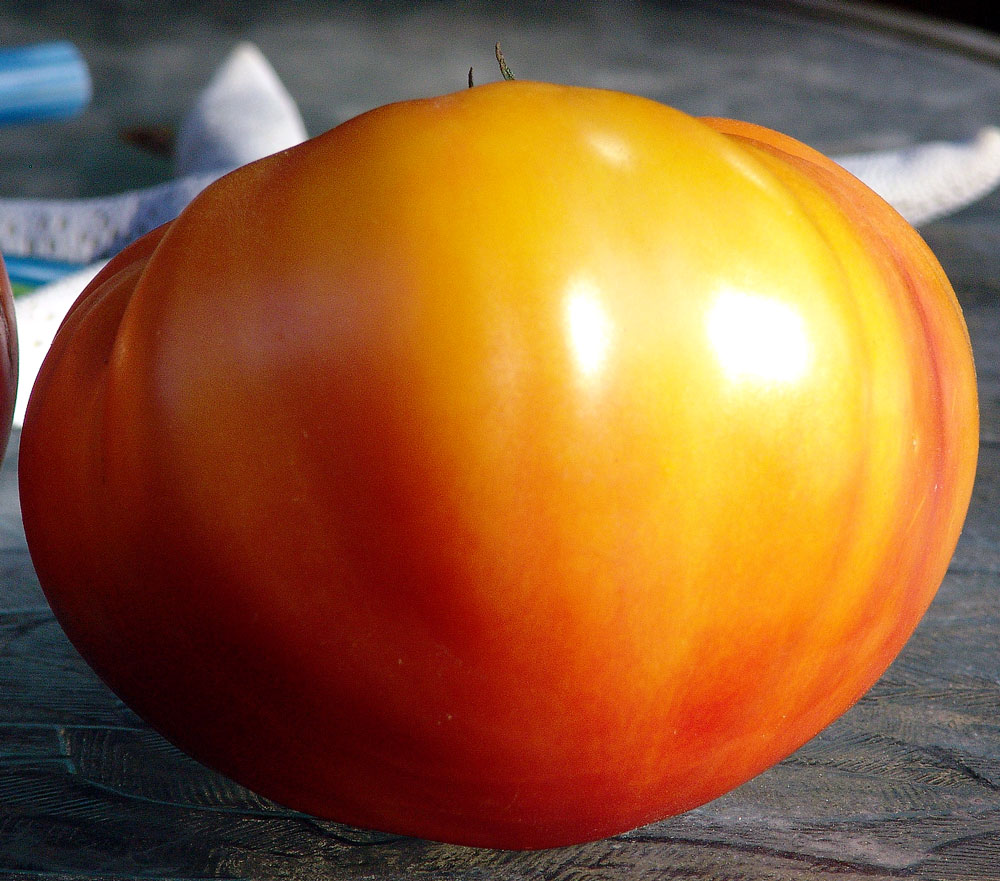
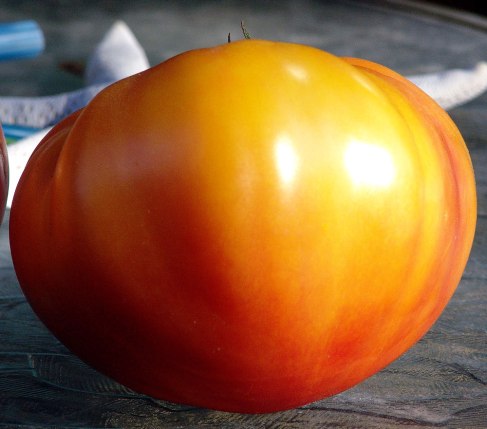
Gold Medal These are fabulous, reminiscent of Big Rainbow. A Ben Quisenberry tomato. Wonderful, 1-1/2 lb., yellow and red bi-color beefsteak tomato with pink marbeling in blossom end, thin skin and luscious sweet, well-balanced flavors. Indeterminate, 85 days

That being said, I have seen some early varieties (48-60 day) that are only about 2 weeks earlier than a 70-75 day tomato. There again it depends on a lot of variables.

It must be nice in the South where have you a longer growing season, if you have to wait longer to get them into the ground it’s ok because you won’t get a frost until November.

There are many ways you can extend your season. Some years  if you wait until all signs of frost are gone you won’t have any tomatoes. At some point you have to get them into the ground. Especially if you live in an area the gets an early fall frost.

I will discuss some ways in later posts

Onions are up and Hot Peppers planted

ImageImageImageearly jalapeno

Onions are up! Impatiens are up! Snapdragons and lobelia too! It’s nice to see signs of spring, even if it’s only under lights in the house.  Oh, and I have Yugoslavian Buttercrunch coming up too.

I tried something different with my onions, I planted them individually in plug trays since they don’t seem to like being transplanted at a young age.

Yesterday I planted hot peppers, Hot peppers are notoriously slow to germinate and then sometimes they are spotty. Depends on the freshness of the seed and the variety. First I soaked them in weak tea. Pain in the butt to separate them, stuck to my fingers. Here is the list: Arbol, Bhut Jolokia (yes, the infamous ghost), Cayenne, Early Jalapeno, Habanero, Hungarian Yellow Wax, Maules Red Hot, Pasilla, Pepperoncini, Serrano, Tabasco, Anaheim, Shishitso

I don’t like hot peppers although I have been know to use a smidgen of jalapeno in my salsa.

We’ve had snow and cold weather until the pineapple express rolled in last night. Now it’s 45 degrees. Melting all our snow.

First Seeds of the Year

Aside

I planted Candy onions in plug trays and Walla Walla Sweets in a broadcast method, the way I have always done them. We will see which does better when it comes to transplanting.

I also seeded some Lisanthus, Lobelia, Crytal Palace and Blue Wings,  pink Brugmansia, snapdragons and several varieties of Impatiens, including the uber expensive rosebud type.

Tomato Terms: What Do I Mean When I Say…Determinate vs. Indeterminate

Continue reading

Some Interesting Trivia About Tomatoes: First Part

black-prince

Black Prince

They were once called a love apple and were thought to be poisonous

Tomatoes are native to the coastal highlands of western South America. The early American colonists brought them to America but most people still viewed them with suspicion. Thomas Jefferson mentions planting them in 1809 but they weren’t widely cultivated until after 1830 when tomatoes started popping up in American cookbooks and gardening manuals. America has had a love affair with tomatoes ever since.

Does This Remind You Of Summer?

Image

Does This Remind You Of Summer?

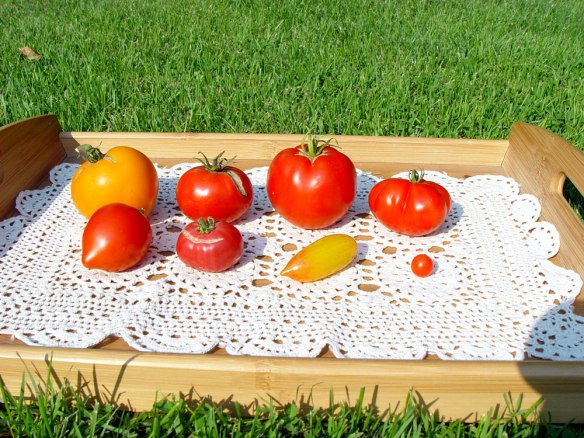
Baby, it’s cold out there. In my neck of the woods it is 22 degrees and there is frost everywhere. I was perusing my pictures and found this one and it made remember the dog days of summer when it was so, so hot. Let me see if I can remember which ones these were, from top right, Nebraska Wedding, Cougar Red, Willamette, Fiorentino, Glacier, Oaxacan, Blush and Honeybunch. The red ones are harder to identify

Red Tomatoes and Crazy Weather in my Garden

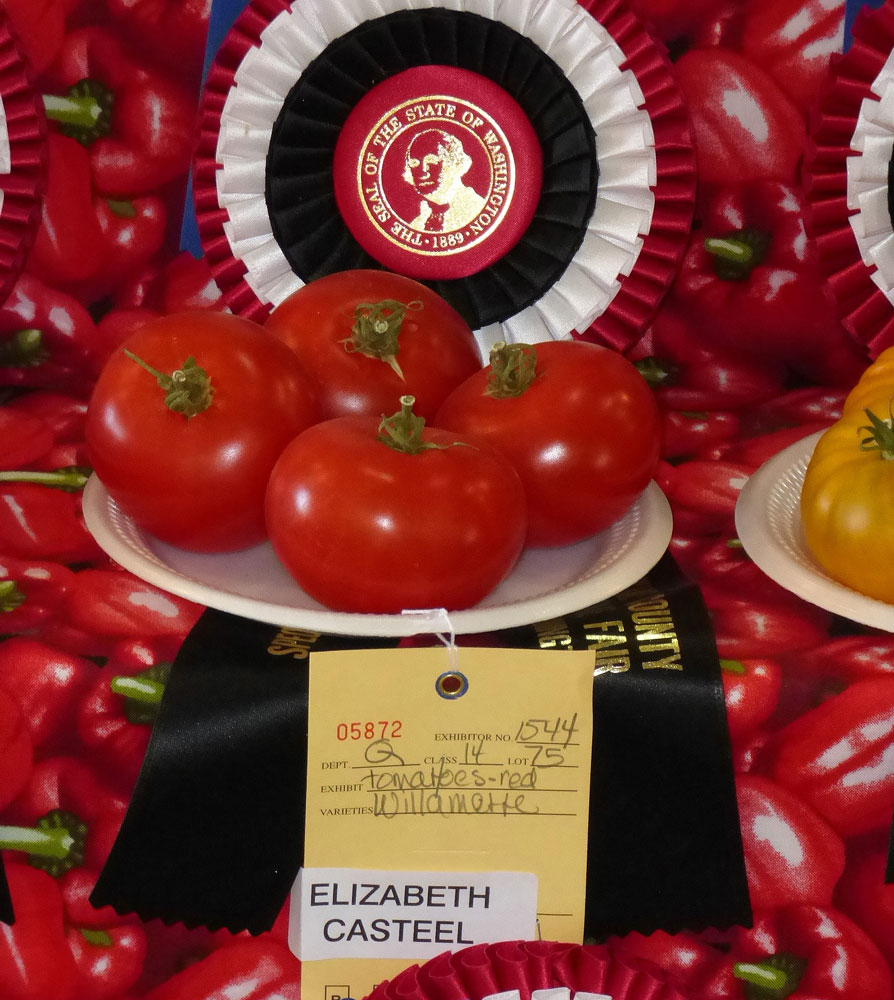
I rec’d an interesting question from one of my customers. He asked me how my garden was growing and what was my favorite red variety. Every year I grow different tomato varieties, not all of them red. This year, I am loving the Marbella, Red Pear, Willamette and Giant Tree Tomato, all of which are red and very prolific. I won a grand prize at the fair for my Willamettes, an aspiring early heirloom from Oregon.

As for how my garden is doing, I’ve had the worst season ever. Every slug, every flea beetle, aphid and spider mite for miles afround has attacked my vegetable and flower garden. Powdery mildew, early blight, physiological damage (ie curly leaves) from the hot/cold/wet/dry weather we’ve had this summer, has blessed my plants too. Aaaagh!

Image

Tomatoes and Heat

Here in the Inland Northwest, we have gone from 50 something degrees to 99 degrees in a matter of days it seems. Not only does that play havoc with our human bodies but it can have consequences in our gardens.

The common miconception is that tomatoes love heat, the hotter the better. Not so much. High temperatures can cause several problems with tomato production. One of them is “tomato blossom drop.” The tomato blossoms “dry up and fall off the plant before a fruit is formed.”  

 “Tomatoes grow best if daytime temperatures range between 70 F and 85 F. Tomato plants can tolerate more extreme temperatures for short periods, but after several days or nights with temps outside the ideal range, the plants start to focus on survival not producing fruit. High nighttime temps are even worse than high daytime temperatures because the tomato plant never gets to rest.”

 Another tomato response to extreme heat involves its leaves. Just as they respond to very cold temps and lots of moisture with their leaves, you will  notice that some tomato varieties also respond to heat by curling their leaves. That’s a defensive mechanism that attempts to slow transpiration (evaporation from the leaf surface) of water from plant to atmosphere. 

 Specific temperatures at which blossom drop begins will vary from variety to variety. If you experience this, all is not lost, they will eventually snap out it. Water thoroughly early in the morning or put a drip system on at night to keep them well hydrated. Mulch to help retain their moisture. And pray for more temperate weather!Image

Another Trouble Afoot – Leaf Curl/Roll

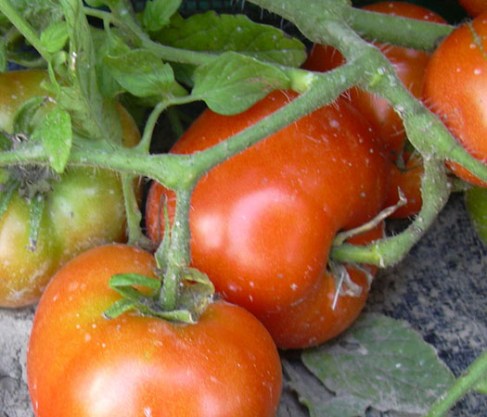
We have been having huge shifts in temperature lately. From 80’s to the 50’s and lots and lots of rain. Our tomatoes are reacting to these changes on an individual basis. some of my varieties, actually most of them, are doing well. A couple have leaf spots (I’ll do a separate post of that at a later date), my “Cougar Red” has some curled, rolled leaves (other than that it is healthy). I have done some research on the latter and this is what I’ve found:

“Leaf Roll:

During very wet seasons, tomato plants frequently show an upward rolling of the leaflets of the older leaves. At first this rolling gives the leaflet a cupped appearance. Later, the margins of the leaflets touch or overlap. The rolled leaves are firm and leathery to the touch. One half to three-fourths of the foliage may be affected. Plant growth is not noticeably checked, and a normal crop of fruit is produced. Frequently leaf roll occurs when tomato plants are pruned severely, and it is very common when unusually heavy rains cause the soil to remain moist for long periods of time.

To prevent leaf roll, keep tomato plants on well-drained, well-aerated soil, and protect them from prolonged periods of heavy rainfall if you can.”

Also this: (Univ. of Colo.)

“Leaf roll, or leaf curl, is a physiologic distortion that may develop with periods of cool, rainy weather. It cause the lower leaves to roll upward and become thick and leathery. Leaf roll does not affect plant growth or fruit production and requires no treatment.

Leaf Roll

Herbicides can distort the foliage and fruit of tomatoes. They are especially sensitive to 2,4-D. Damage can bend the leaves down, causing cupping and thickening. New leaves are narrow and twisted and do not fully expand. Fruit may be catfaced and fail to ripen. Exposure can occur when herbicides are applied to lawns for weed control and the spray “drifts”. Resultant fumes can also effect the plants for several days after treatment. Clippings from grass that has been sprayed with a herbicide should not be used as mulch in the vegetable garden. If the exposure is minimal, the plant will outgrow the injury. Be sure to water the affected plants thoroughly and often.”

I guess I will have to wait and see how they turn out. In the meantime, the “Cougar Red” is in it’s own pot and segregated to be on the safe side.