Does This Remind You Of Summer?

Image

Does This Remind You Of Summer?

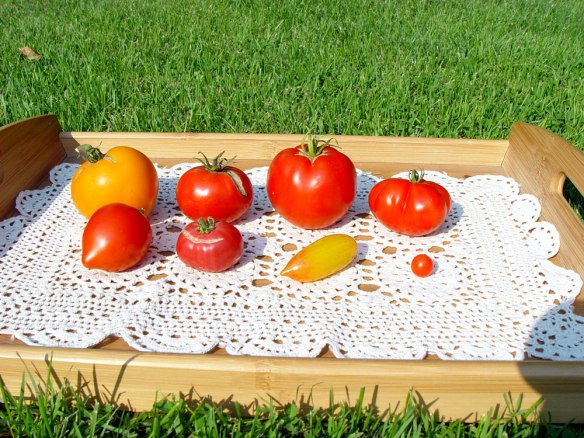
Baby, it’s cold out there. In my neck of the woods it is 22 degrees and there is frost everywhere. I was perusing my pictures and found this one and it made remember the dog days of summer when it was so, so hot. Let me see if I can remember which ones these were, from top right, Nebraska Wedding, Cougar Red, Willamette, Fiorentino, Glacier, Oaxacan, Blush and Honeybunch. The red ones are harder to identify

How Was Your Garden This Year?

I must admit, this was a tough year for my garden. I am the Tomato Lady and should have beautiful tomatoes and to be honest, I thought about questioning my calling. Slugs, flea beetles, aphids, early blight, late blight, splitting, cat facing, you name it, I had it. The weather was cold and rainy in June, then it got really hot for a long time, then it rained. All of my tomatoes split. You expect most of the cherries to split with their thin skins, (juliet is a fine tasting tomato with thicker skins that don’t usually split) but no the larger ones. The Black from Tula, which I adore, split exactly around the middle, the Sungolds and Honeybunch split stem to stern and the Oxacans, (which I won’t ever grow again, mealy texture, small) split without out the rain. Every last one of them. The only ones that didn’t split were the Nebraska Wedding, Old Fashioned Goliath, Joe’s Pink Oxheart and Mountain Gold.

At the end of the season, we picked all the green ones and left them on the porch to ripen. because of the slug bites and splitting, they rotted before they ripened so i just threw them all in the compost pile and shut the door behind on of the worst seasons ever. 

My peppers did not do well either. The heirloom shelling beans, all 7 varieties, had some sort of issue from the moment they came up. 

Hope springs eternal though, there is always next year. 

Note: the plants themselves were glorious and I’ve talked with many of my customers who said they had great success with their tomatoes and gardens. Below is an Aussie that one of my customers has grown. It was the first of the season. Isn’t it lovely? And big? I can tell you they are tasty.

Image

End of Season Tips: Row Covers Protect Vegetable Plants from Light Frosts


Floating row covers, shade cloth, tarps, plastic , sheets and blankets are an easy way to protect crops from chilly nights and light frosts. Anchor  to the ground on each side and the ends; use garden staples, rocks, or boards to hold covers in place. Covering your plants will keep plants 2 to 5°F warmer than the air outside temperature—enough to protect plants from a light overnight frosts.

I am most concerned with keeping my tomatoes from freezing. If  light frost is predicted, I will cover with one of our many blue tarps and drag them off in the daytime so they don’t bake. The whole idea is to protect the tomatoes from frostbite. If that happens, instead of ripening, they will usually rot.

It ain’t pretty but it works!

Image

Red Tomatoes and Crazy Weather in my Garden

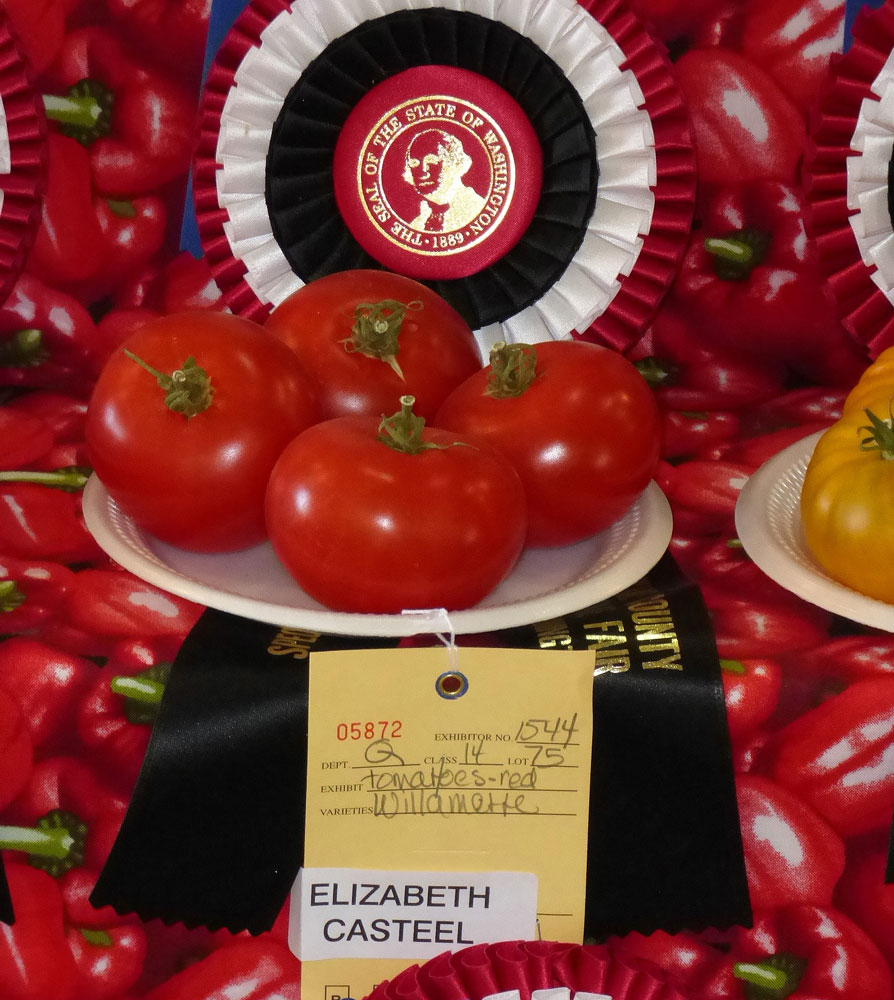
I rec’d an interesting question from one of my customers. He asked me how my garden was growing and what was my favorite red variety. Every year I grow different tomato varieties, not all of them red. This year, I am loving the Marbella, Red Pear, Willamette and Giant Tree Tomato, all of which are red and very prolific. I won a grand prize at the fair for my Willamettes, an aspiring early heirloom from Oregon.

As for how my garden is doing, I’ve had the worst season ever. Every slug, every flea beetle, aphid and spider mite for miles afround has attacked my vegetable and flower garden. Powdery mildew, early blight, physiological damage (ie curly leaves) from the hot/cold/wet/dry weather we’ve had this summer, has blessed my plants too. Aaaagh!

Image

More Pictures of the Unique Blue Indigo Rose Tomato

These are more pictures of the Indigo Rose in our garden

ImageImageThis is a picture from one of our customers. He grew it in a pot and it is enormous! They look like giant blueberries.

Image


A Unique “Blue” Tomato – Indigo Rose

Image

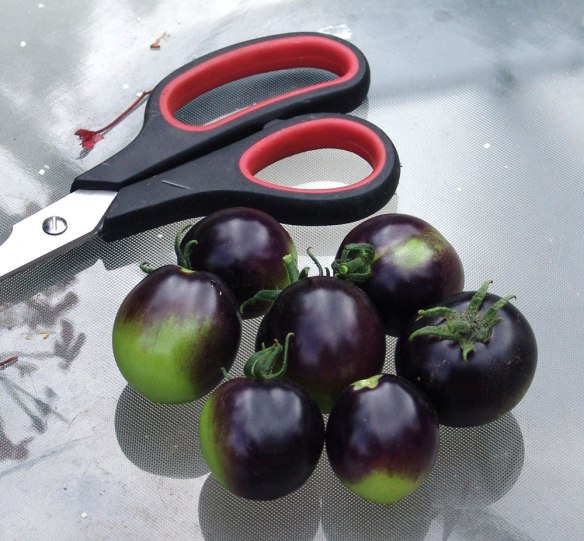
this is a picture of the Indigo Rose grown in our garden this year. It is stunning in color, not so much in flavor in my opinion. These are dark purple on the parts that get by the sun and green on the other side. We picked one and when it got really ripe, it was orange on purple. Really pretty but I thought it was tart.

One Way to Use Tomatoes – Spiced Tomato Jam

Spiced Tomato Jam

1 1/4 pounds ripe tomatoes

1/4 cup lemon juice

1/2 tsp cinnamon

1/4 tsp allspice

1/4 tsp cloves

1 pckge powdered pecton or Sure Jell

4 1/2 c sugar

Wash firm ripe tomatoes. Scald, peel and chop. Puree in blender. Measure 3 cups of pureed tomatoes into a large saucepan. Add lemon juice, the ground spices and pectin.

Over high heat, bring mixture to a rolling boil, stirring constantly. Add sugar all at once, keep stirring  and bring back to a rolling boil (a boil that can’t be stirred down). Boil for 1 minute.

Remove from heat and let cool for 5 minutes. Skim off foam with a metal spoon. Pour jam into jars, leaving 1/4 inch head room. Wipe the lip clean and tighten lids. Process how you would like to. Water bath would work well.

Makes about 5 half pint jars.

The recipe comes from Tzena Scarborough in Spokane Valley WA. She writes,” This is a Scarborough family favorite when tomatoes were in abundance in their garden. Mom found this recipe in the Sure Jell package.”

Link

Pasta-sauce-193x300

From Harvest to Table

Making and Canning Pasta Sauce

This is a nice basic recipe for making pasta sauce. Soon, we will have a glut of tomatoes on our hands and will need ways to preserve them.

Another Trouble Afoot – Leaf Curl/Roll

We have been having huge shifts in temperature lately. From 80’s to the 50’s and lots and lots of rain. Our tomatoes are reacting to these changes on an individual basis. some of my varieties, actually most of them, are doing well. A couple have leaf spots (I’ll do a separate post of that at a later date), my “Cougar Red” has some curled, rolled leaves (other than that it is healthy). I have done some research on the latter and this is what I’ve found:

“Leaf Roll:

During very wet seasons, tomato plants frequently show an upward rolling of the leaflets of the older leaves. At first this rolling gives the leaflet a cupped appearance. Later, the margins of the leaflets touch or overlap. The rolled leaves are firm and leathery to the touch. One half to three-fourths of the foliage may be affected. Plant growth is not noticeably checked, and a normal crop of fruit is produced. Frequently leaf roll occurs when tomato plants are pruned severely, and it is very common when unusually heavy rains cause the soil to remain moist for long periods of time.

To prevent leaf roll, keep tomato plants on well-drained, well-aerated soil, and protect them from prolonged periods of heavy rainfall if you can.”

Also this: (Univ. of Colo.)

“Leaf roll, or leaf curl, is a physiologic distortion that may develop with periods of cool, rainy weather. It cause the lower leaves to roll upward and become thick and leathery. Leaf roll does not affect plant growth or fruit production and requires no treatment.

Leaf Roll

Herbicides can distort the foliage and fruit of tomatoes. They are especially sensitive to 2,4-D. Damage can bend the leaves down, causing cupping and thickening. New leaves are narrow and twisted and do not fully expand. Fruit may be catfaced and fail to ripen. Exposure can occur when herbicides are applied to lawns for weed control and the spray “drifts”. Resultant fumes can also effect the plants for several days after treatment. Clippings from grass that has been sprayed with a herbicide should not be used as mulch in the vegetable garden. If the exposure is minimal, the plant will outgrow the injury. Be sure to water the affected plants thoroughly and often.”

I guess I will have to wait and see how they turn out. In the meantime, the “Cougar Red” is in it’s own pot and segregated to be on the safe side.

Flea Beetles are on the loose in the Inland Northwest

Flea Beetles, A common problem this time of year. It has come to my attention that they are afoot. If your leaves have what looks like little shot holes you might/probably have flea beetles. They seem to attack the lower leaves first. Here is a link ot a site that gives you good information as to what they looks like, how they overwinter and what to do about it.

http://www.ext.colostate.edu/pubs/insect/05592.html

Imageflea beetle damage