What Really Goes on Behind The Scenes at The Tomato Lady

It has been an interesting “non-winter” this year. Mild weather all through January and into the first part of February. I so badly wanted snow for Christmas. I was concerned that all the shrubs, spring bulbs and trees would think it was looking like spring and starting to bud.

In February, the weather started to look more like winter; we had really cold temperatures, like in the single digits, for about a week and a half, and then we had 6 inches of snow over a few days, with a little warmer temperatures.

In the meantime, I am holding seedlings under lights and watching them grow taller and taller. When we had cold temperatures, we didn’t want to risk losing plants that needed to be transplanted. We have the experience of losing 1500 tomato plants a couple of years ago. It just got too cold. I am happy if we can keep the greenhouses at about 40 degrees.
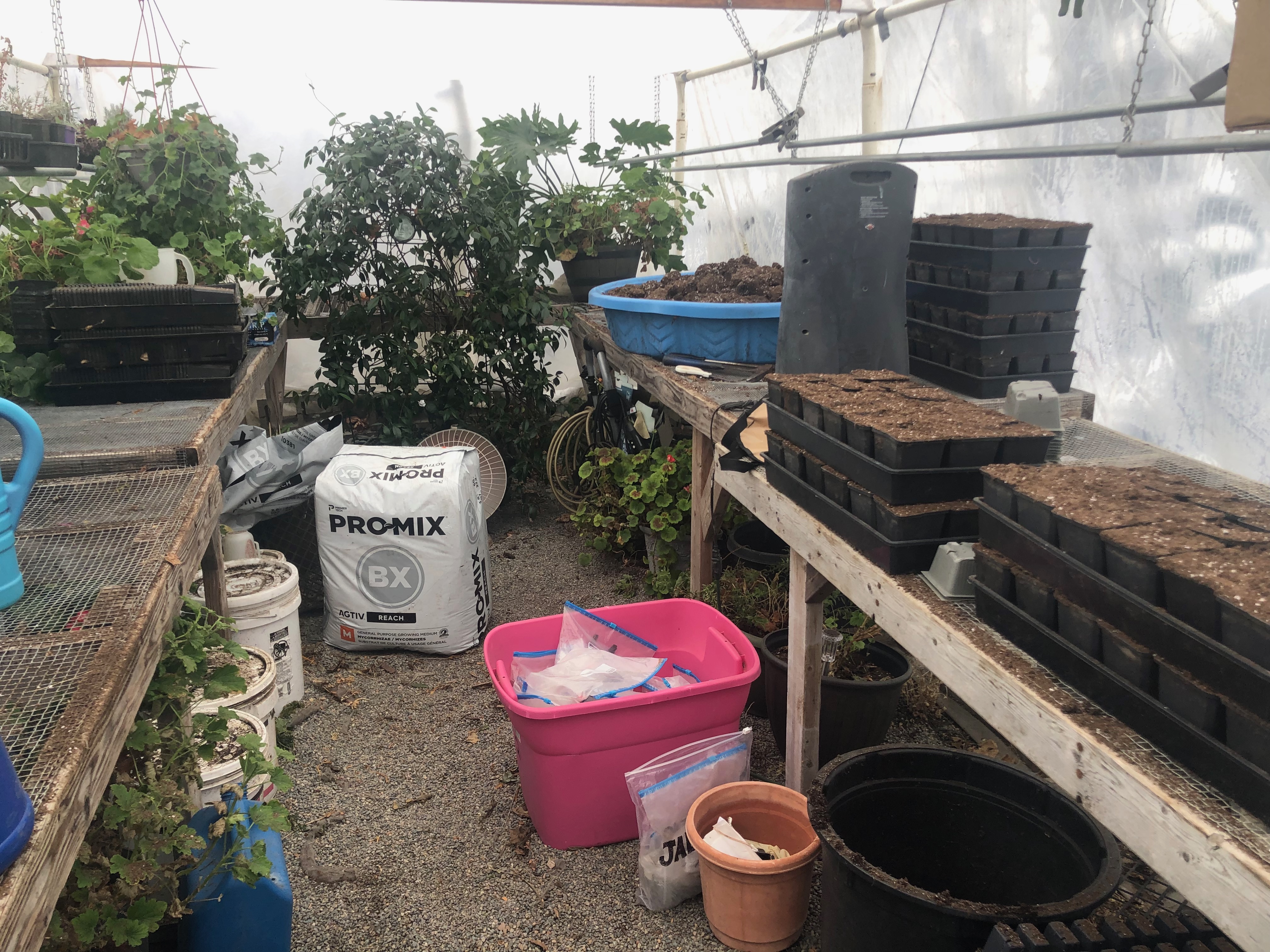
Greenhouse #2, outfitted for transplanting.

We did get the peppers transplanted about 2 weeks ago. They went into the greenhouse that we were keeping heated to winter over some geraniums and jasmines and keeping dahlia tubers from freezing.
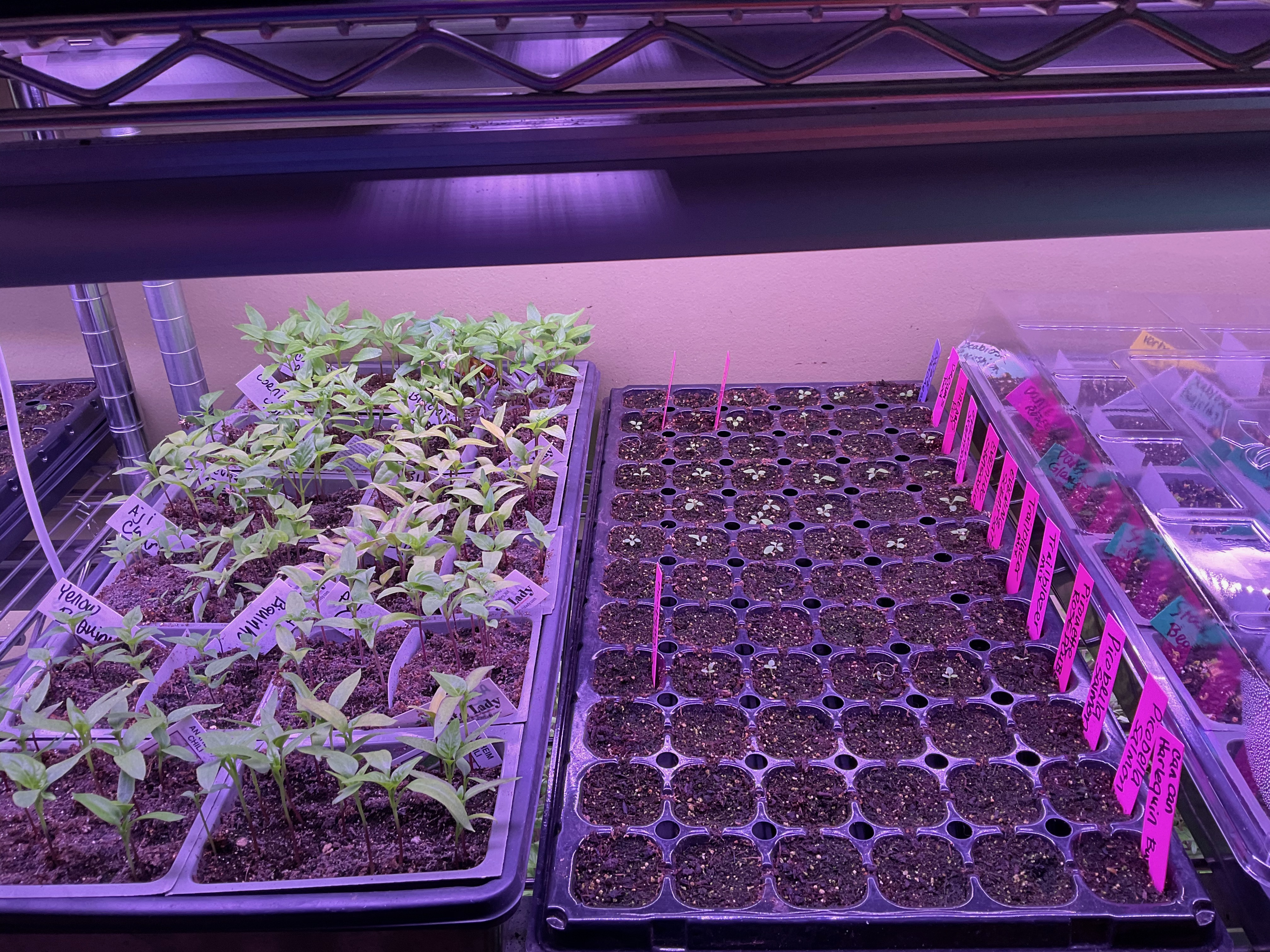
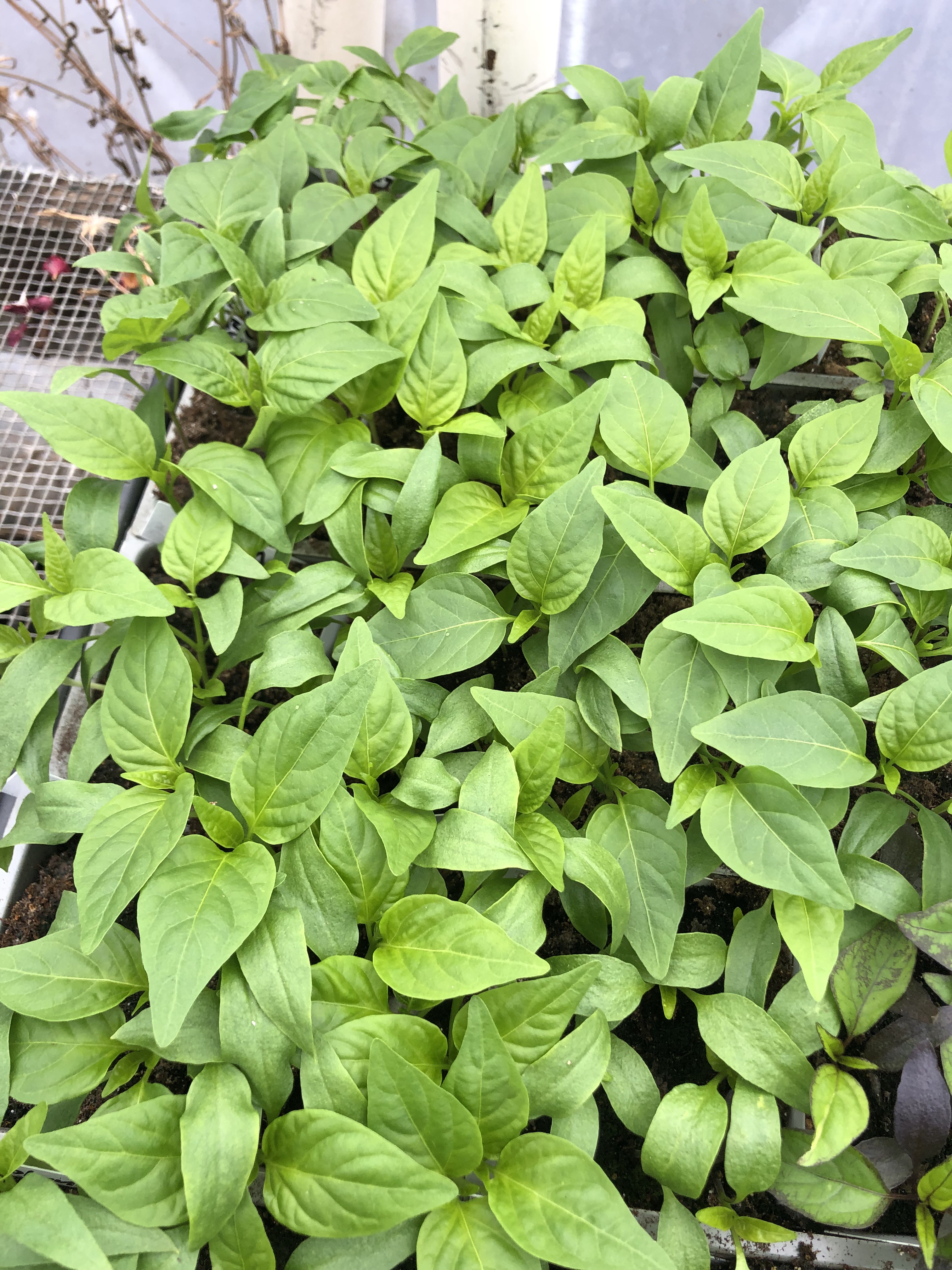
Peppers prior to transplanting.

As usual, some were looking spectacular, and others not so much. We are trying something new this year, we are putting the not-so-great plants back in the house for more light and warmth. After they were transplanted in the number two greenhouse, Steve placed one of those translucent plastic domes over the flat to cart them over to the pepper house. That protected them from the nasty cold air.
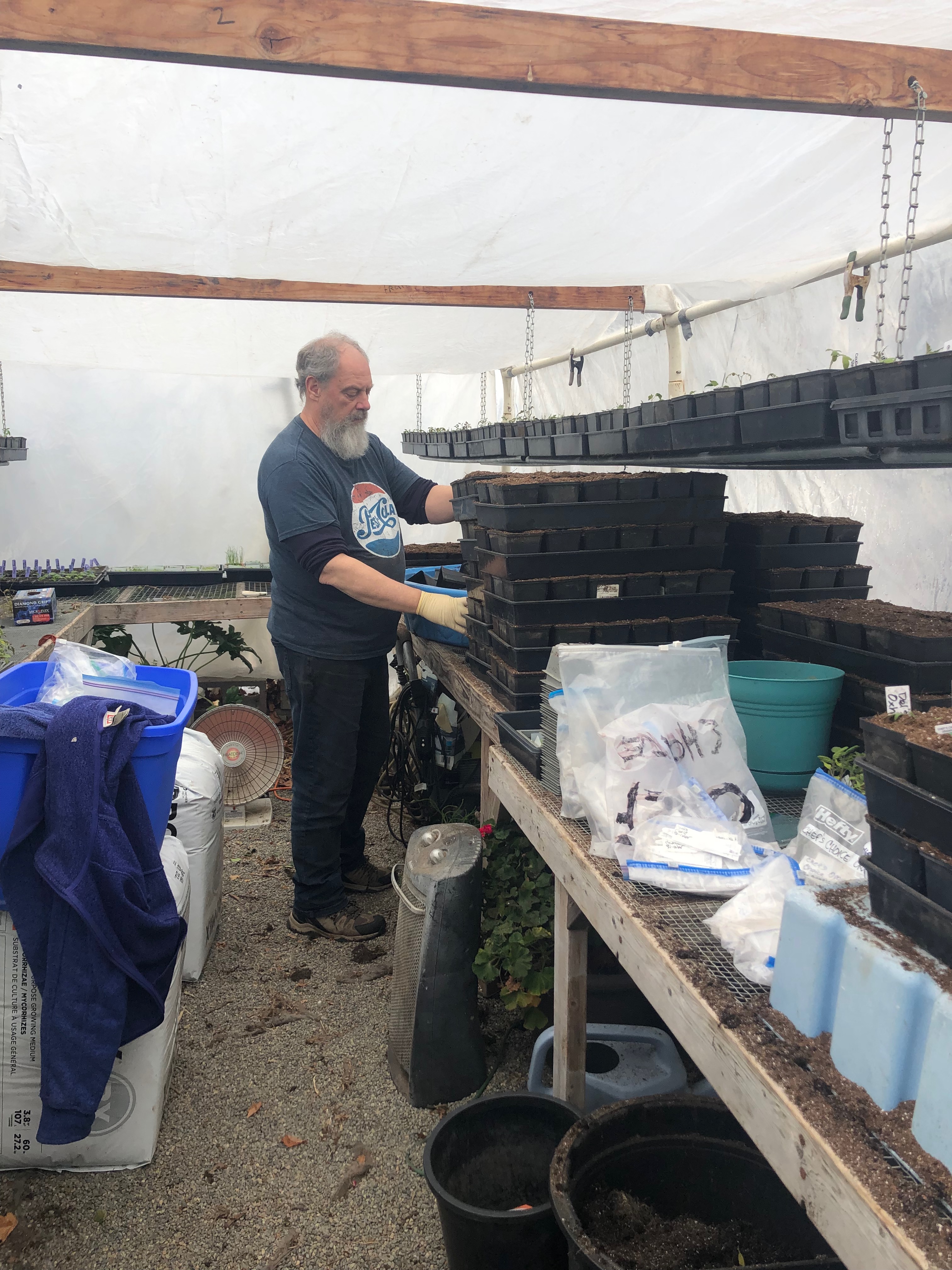
Steve doing the honors, mixing up soil and filling up pots.

Back to the tomatoes. I just finished transplanting all the tomatoes that we are putting into gallon containers at 1:00 pm today. I am so glad that it is over. I transplanted 3662 plants over 4 and a half days. My back hurts, my bruised foot hurts and so do my hands (Uncle Arthur).
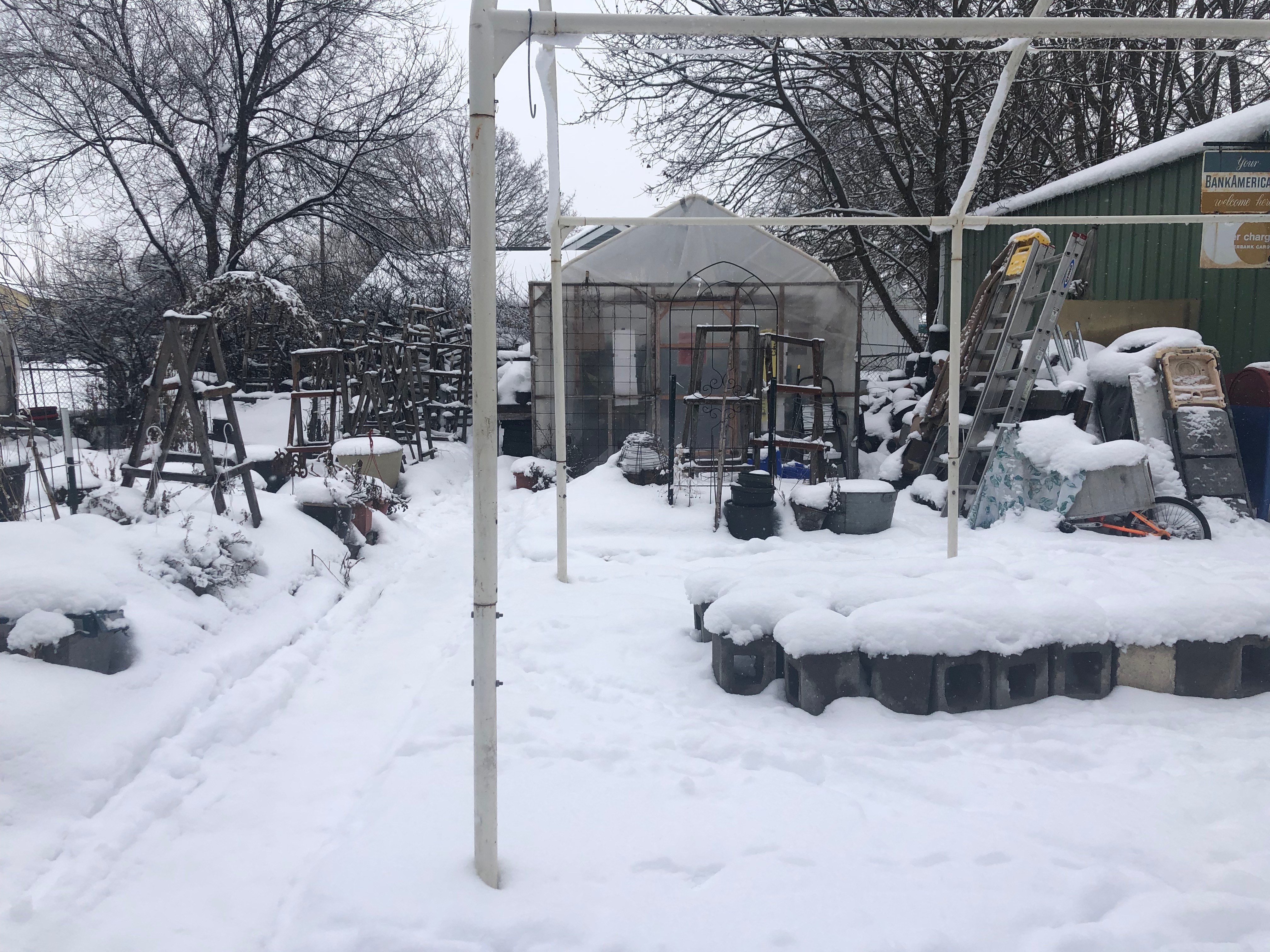
What our yard looked like two days ago. Today is Monday the 24th.

I have slogged through snow, back and forth to the greenhouses, waded through massive mud puddles, and got wet from being rained on! The ground was so frozen and was unable to handle the prodigious amounts of rain that we got, so it just sat on top of the ground. Even my dog took offense at being asked to walk through the slush. She started making tracks through the garden which is a no-no in order to avoid the slush and mud.
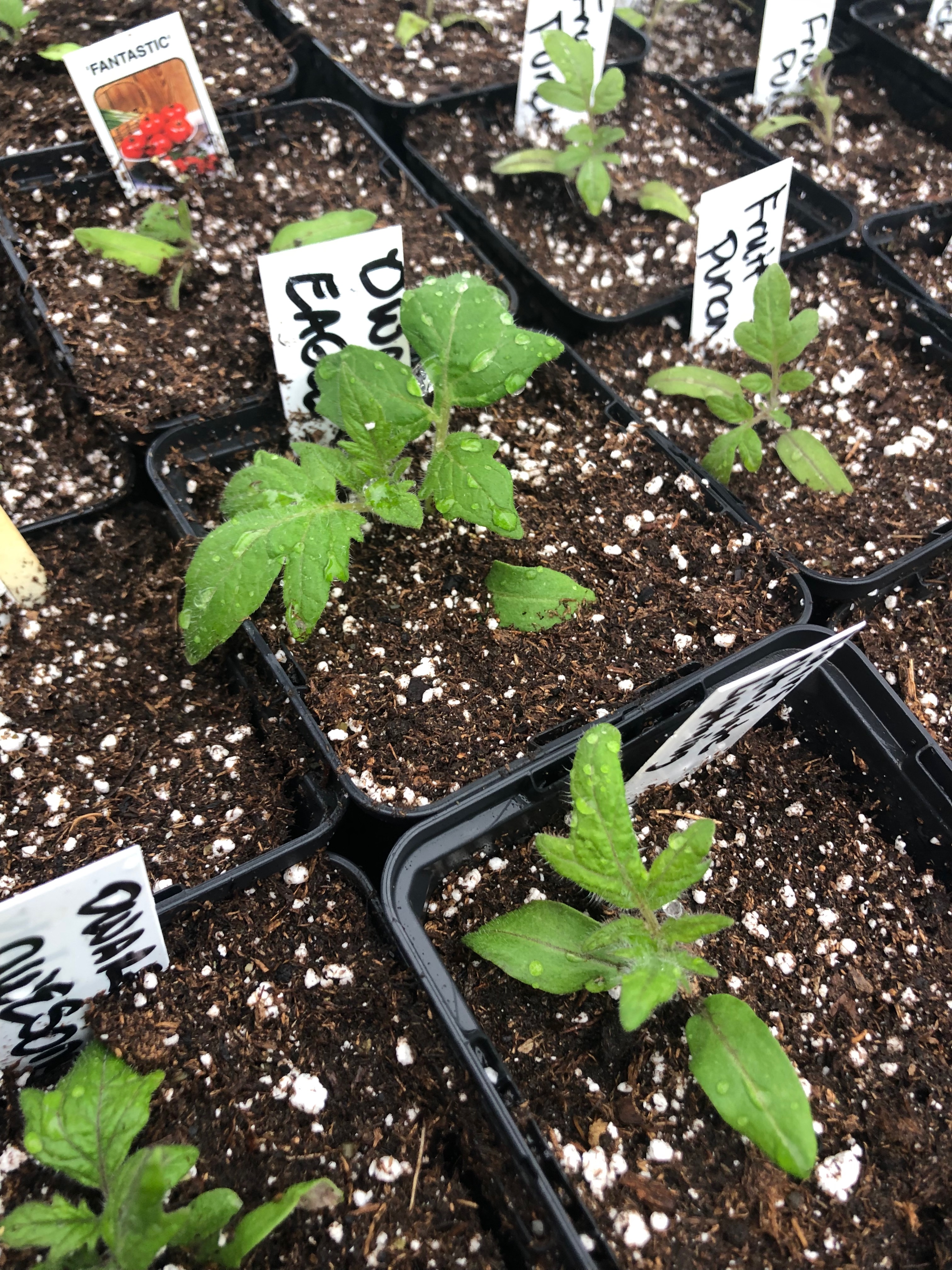
Baby tomatoes in their new homes.

As I mentioned in the post before, we are going to have more tomatoes in gallon size, partly because I am getting older but mostly due to the fact that by the end of the season the 3 ½ ” pots look pretty ragged.

After a short rest, I need to get started on the cole crops, kale, cabbage, broccoli, cauliflower, and bok choi.
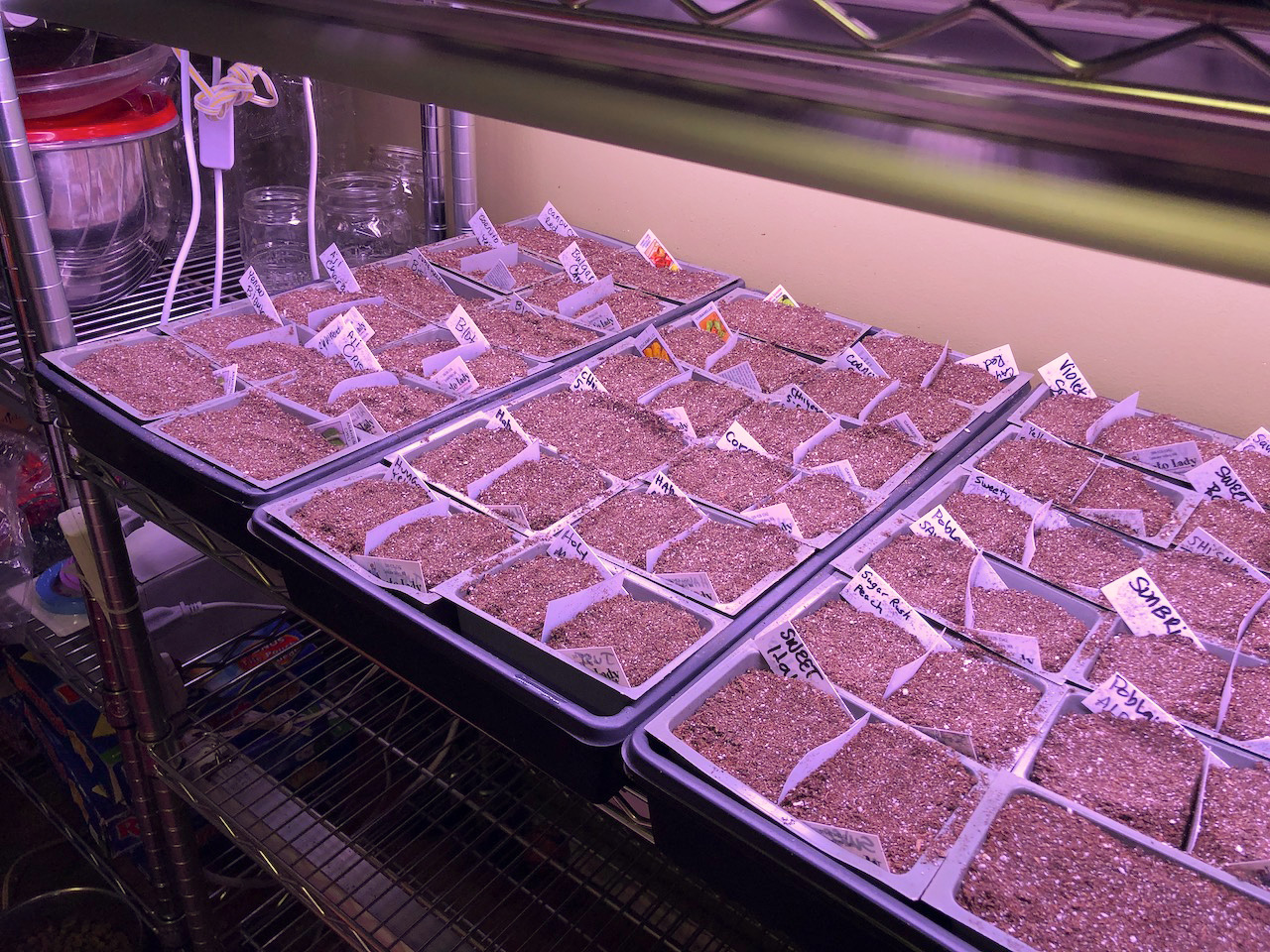
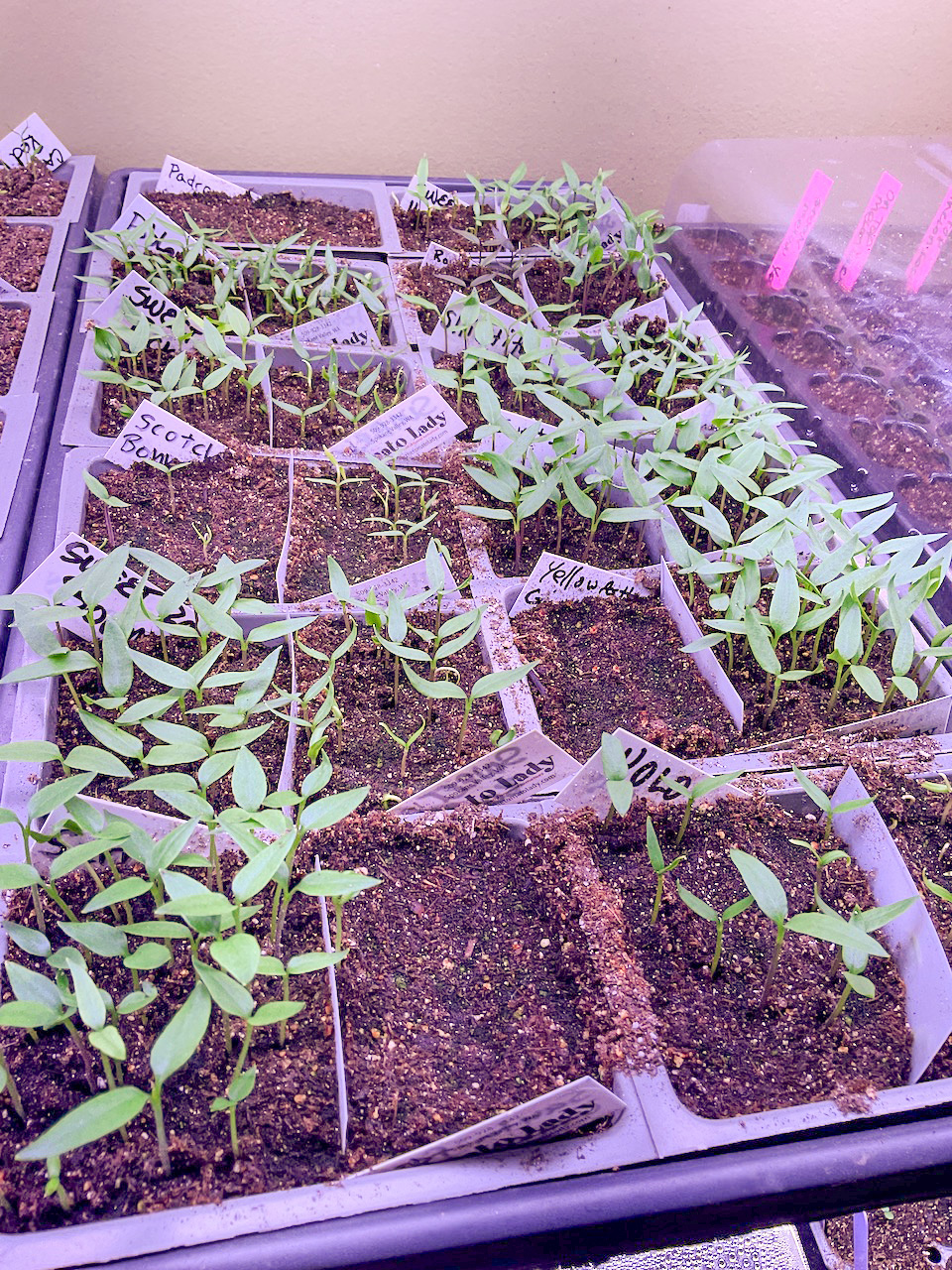
Peppers and Tomatoes are Up!

Even though I said I would cut back on the amount of plants we sell, well, that hasn’t exactly worked out for us. Somehow, even after culling varieties that I either didn’t like or couldn’t find a source for, I ended up with more of everything!

(I have included some pictures of various stages and techniques we are using. Nothing to do with what I am talking about but it’s fun to share.)

How it starts, This is seed starting mix that we put into individual gray cells. Each one of these has 20 or so, very carefully placed, seeds of one variety.
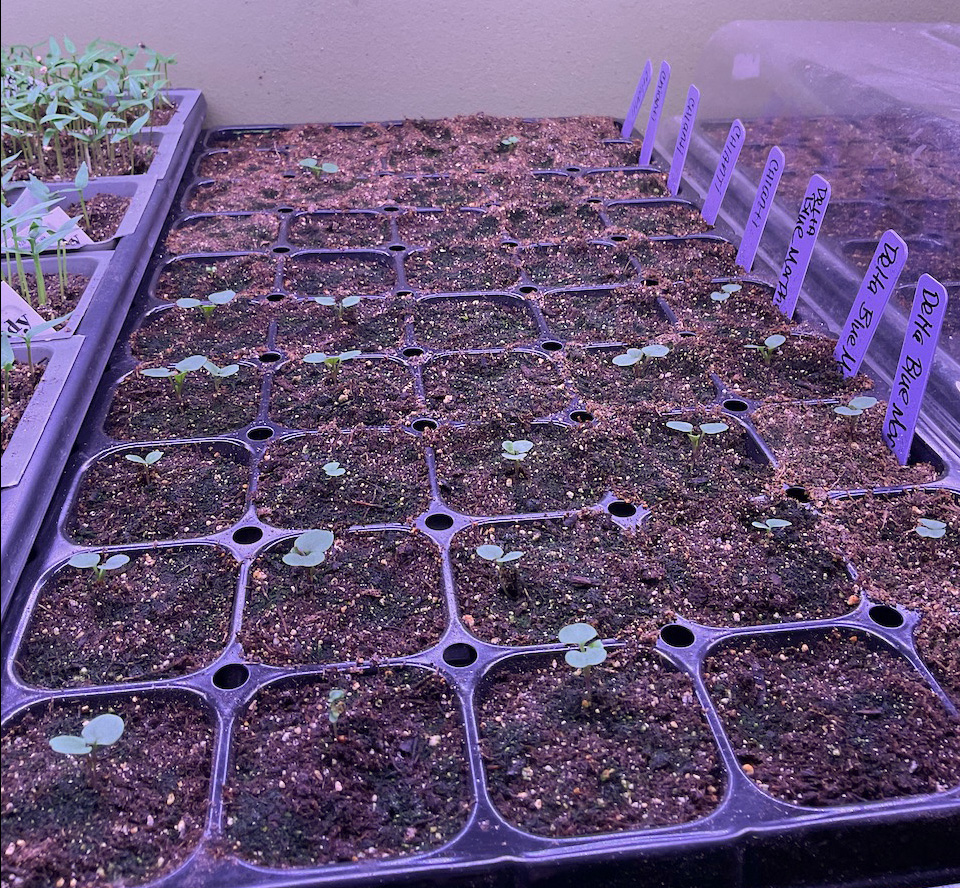
This is what they look after germinating.

Seed catalogs are like “adult material “for gardeners. You know what I mean. The pictures and descriptions are so enticing. This year, I have 386 varieties of tomatoes and 165 varieties of peppers. I have decided to put almost every one of my tomatoes in a gallon pot. Yes, it is more, but they are almost 2 months older than the 3 ½” size and are much more mature. In our climate with such a short growing season, that is important if you actually want to have some tomatoes on your sandwiches.

The biggest reason is that no matter what I do, I always have tomatoes left over at the end of the season, and they don’t look good. They are an embarrassment. I take pride in my plants, and they do well for about a month once they are transplanted into a smaller pot with fresh amended soil, but inevitably, they start looking like &^%&^$#! There is nothing I can do to make it better. I’ve tried. I could throw fertilizer at them all day long, and they won’t respond. The problem is the lack of real estate. In a gallon size, they have room to roam, but not so much with the smaller size. Plus, by this time, it is getting hot. and that means they start drying out very quickly. Plants as a rule don’t like to be rootbound and their little root hairs dry out. Not a pretty situation.

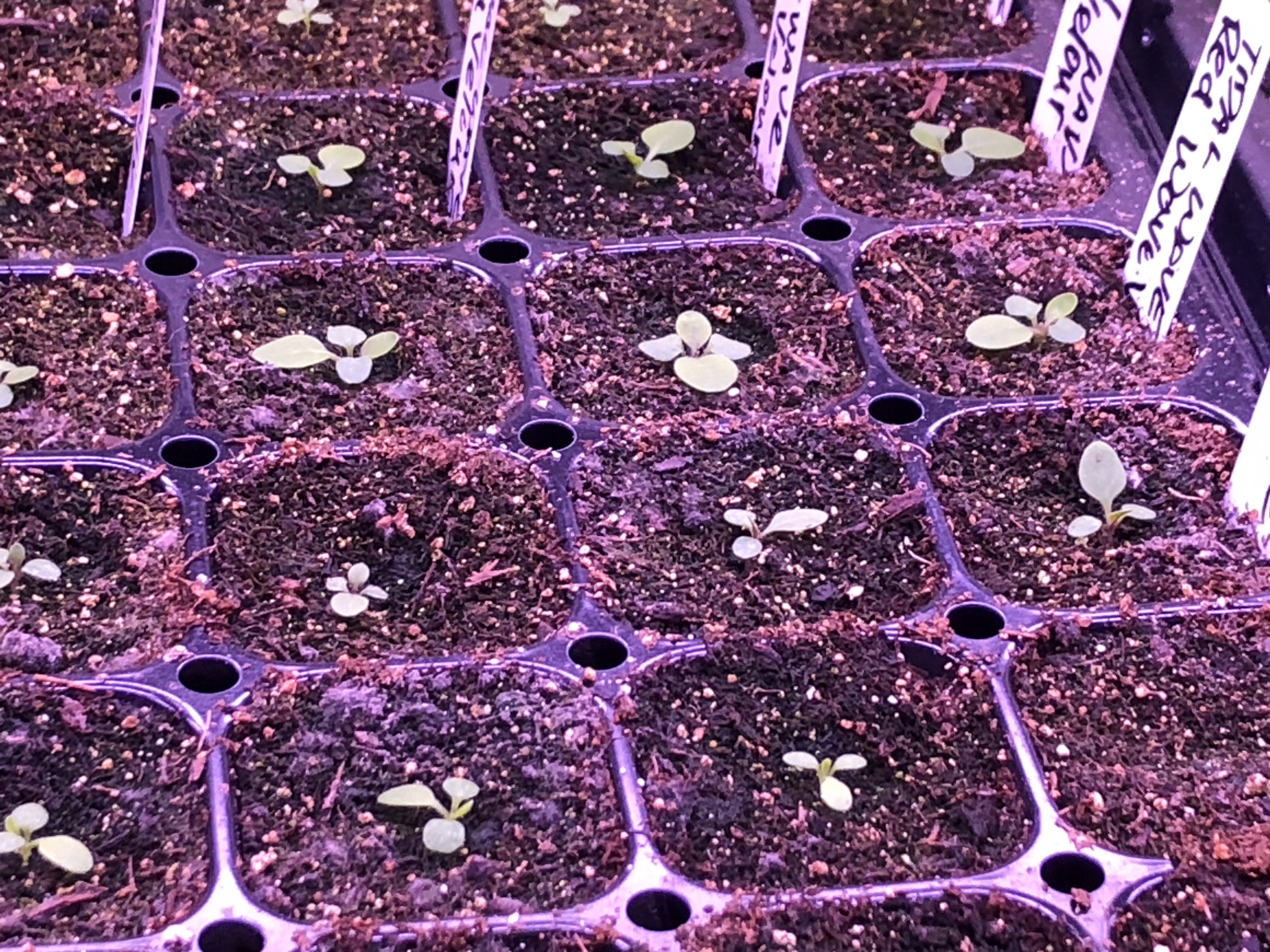
These are pansy seeds. I decided to try them in a 50 strip pkug tray. there are a few more that have come up since I took this picture. I like the plug trays but find they take a lot more room. Less root disturbance when transplanting though.

We have had to put some in bigger pots in an effort to save them, and we have to charge less since they aren’t as mature as the ones we put into gallon pots earlier.

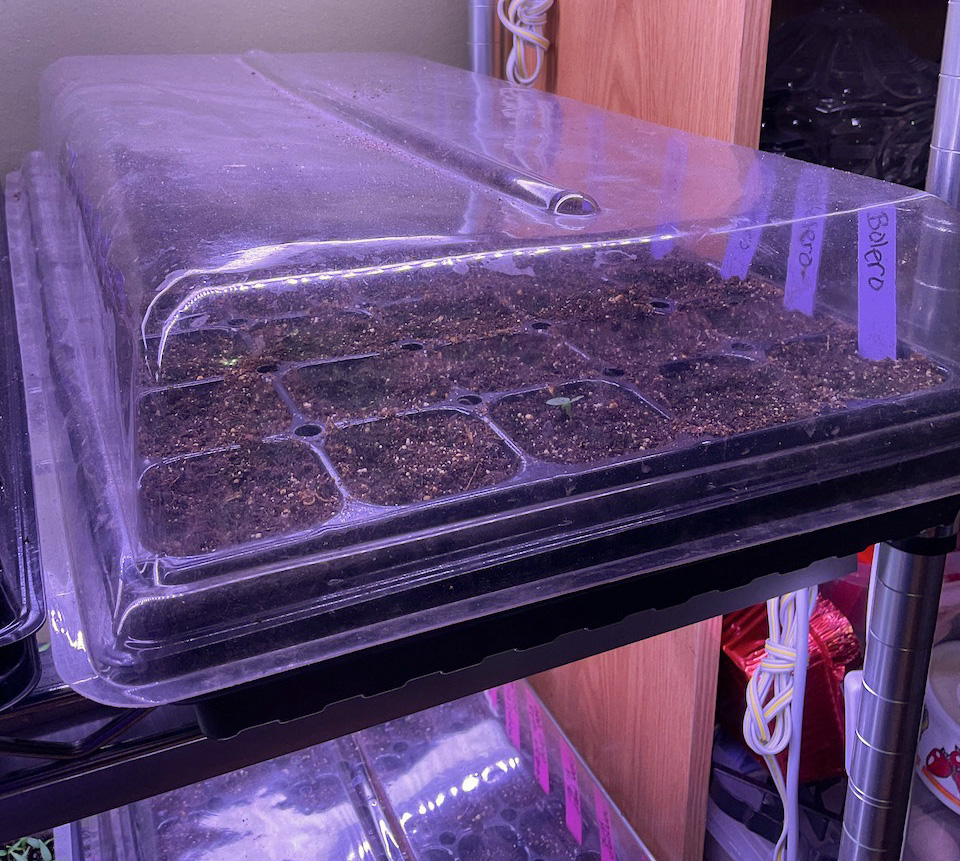
These are the domes I tried for the first time this year. They act like a mini greenhouse, keeping in warmth and moisture. I believe I can see a difference. Especially with the peppers, they take forever to germinate.

These are some of the changes we are making this year. We are looking at different types of flowers, (some which are testing my patience to germinate) more education in that I am going to try and have more information on best practices for gardening utilizing larger signs, info sheets. I also want to have more workshops on things like container gardening, the basics of gardening (I tend to forget there are a lot of newbies out there who really don’t know much about planting) and flower gardening. Of course I’d like to share what I know about tomatoes and peppers.

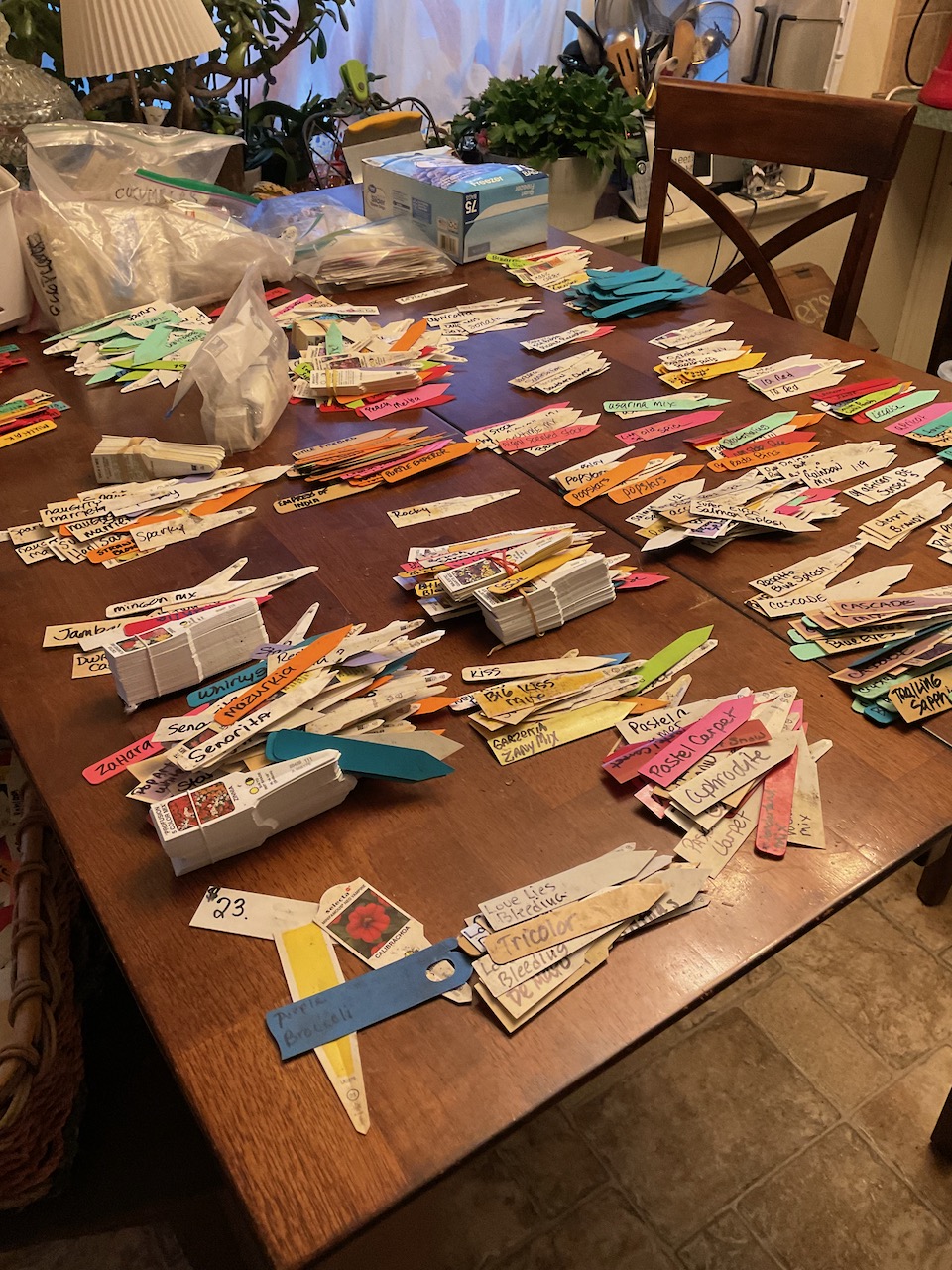
These are the tags, a small fraction of what I needed to organize. We literally had thousands to deal with and these were just the flower tags! Waste not, want not. Right?

I am looking forward to this season and can’t wait to see you out back. If you have any qustions, go to my facebook page and message me. http://www.facebook.com/thetomatolady

The FIRST Round of Tomatoes and Peppers are Transplanted

Tomatoes and peppers are the lifeblood of my business. With a few exceptions, the plants that are going into gallon pots are all safely ensconced in the greenhouse(s). The pictures above are of them before they entered into their relocation program. I have to say they are probably the most beautiful plants to date.

Someone asked me how long I have done this and it’s a good bet it’s been around 25 years. I started on the South Hill and participated in the fledgling (at that time) Garden Expo. The first year for me was held at the Spokane Community College. I think I had around 200 plants and I remember being inside the building next to the cafeteria. I was thinking I was all big and bad and had finally made it! One of these days I will share my story with you.

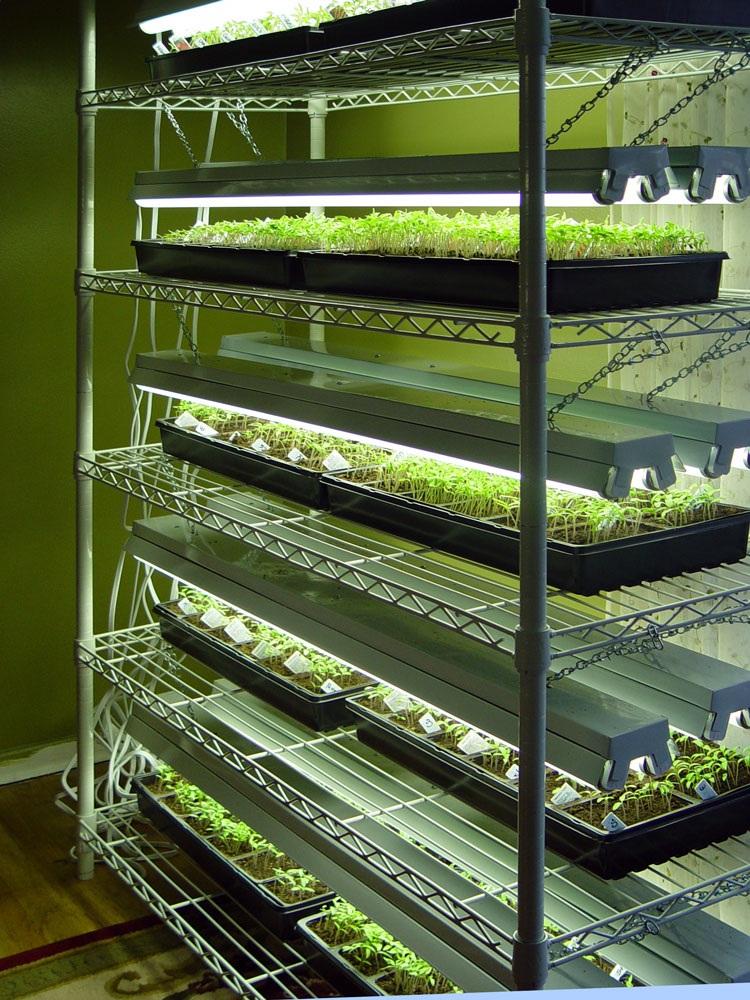
My point is, I’ve learned a few things in all those years. I think it shows in my plants, whether they are tomatoes, peppers flowers, or veggies. Inside the house, when they are in their infancy, they all need the same thing, water, food, warmth, and light. For most of those years, we started our plants in the dining room on Costco metal racks with two banks of fluorescent lights on each shelf. No longer a dining room for the next couple of months, it becomes the propagation room. Think messy and chaotic, germination mix on the floor, seed packets strewn everywhere. And it smells like dirt. Lovely, moist dirt. But I digress.

Last year we started using LED lights instead of fluorescent lights. I was noticing that the plants weren’t doing as well. You can’t tell by looking at the lights themselves but the light output decreases. You can see it in the plant growth. Plants don’t lie. If they are not happy, you can tell.

Our fluorescent light set up.

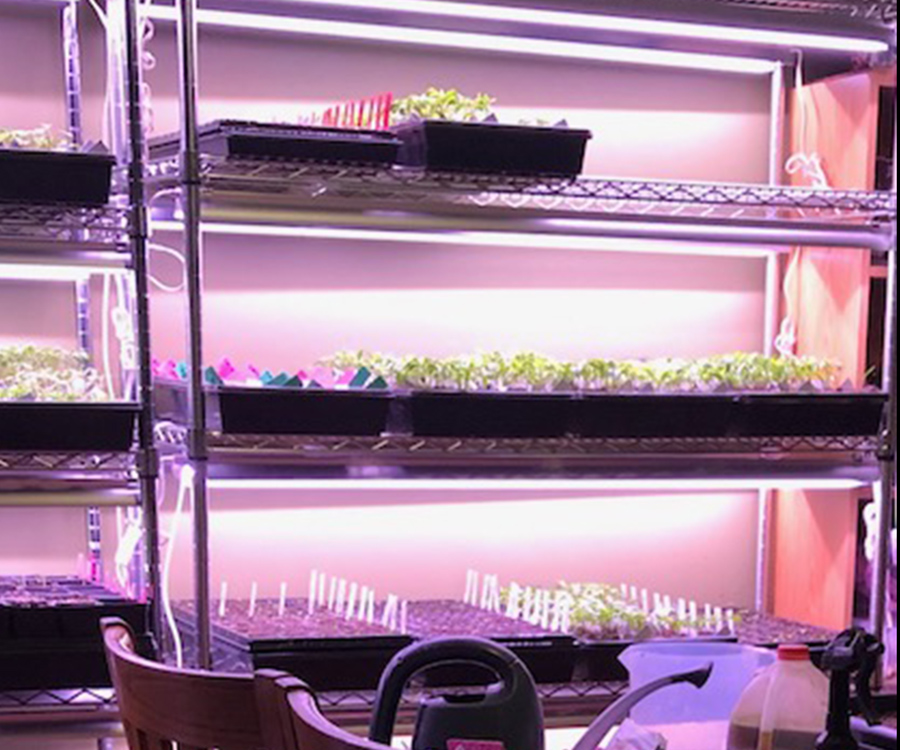
I was so pleased with the LEDs. My plants certainly seemed to respond. We hung one light bar in the middle of the shelf and two flats end to end on each rack. This year, we placed the LED light bars two on a shelf and placed four trays of seeds, side by side, on each shelf, instead of one light bar and only two trays. The lights hang above each side of the shelf. It gives us twice the space and as you can see from the pics above, they are loving it.

Notice the 2 LEDS on each shelf, sorry about the quality of the pic.

One other thing I wanted to share with you is that my body is getting back at me. Being a year older and doing a whole lot of sitting for the past 6 months has not been a good choice. My shoulders, back, hip, whew, you’d think that I decided to climb Mt. Everest. Without training. Or oxygen. I know that this too shall pass. Hopefully soon since I have so many other plants to transplant.

Spring Is Here (Almost), Starting Seeds, Transplanting, and Other Garden Chores

I feel like I am just awakening from hibernation. The bears have it right, taking a nap in the winter. Although I wouldn’t exactly call it a winter. Very little snow. That makes a lot of people happy but I live HERE for the four seasons. What this does for me, is make me antsy. I hear the birds chirping, I don’t need a coat for the most part and I am chomping at the bit to start our plants.

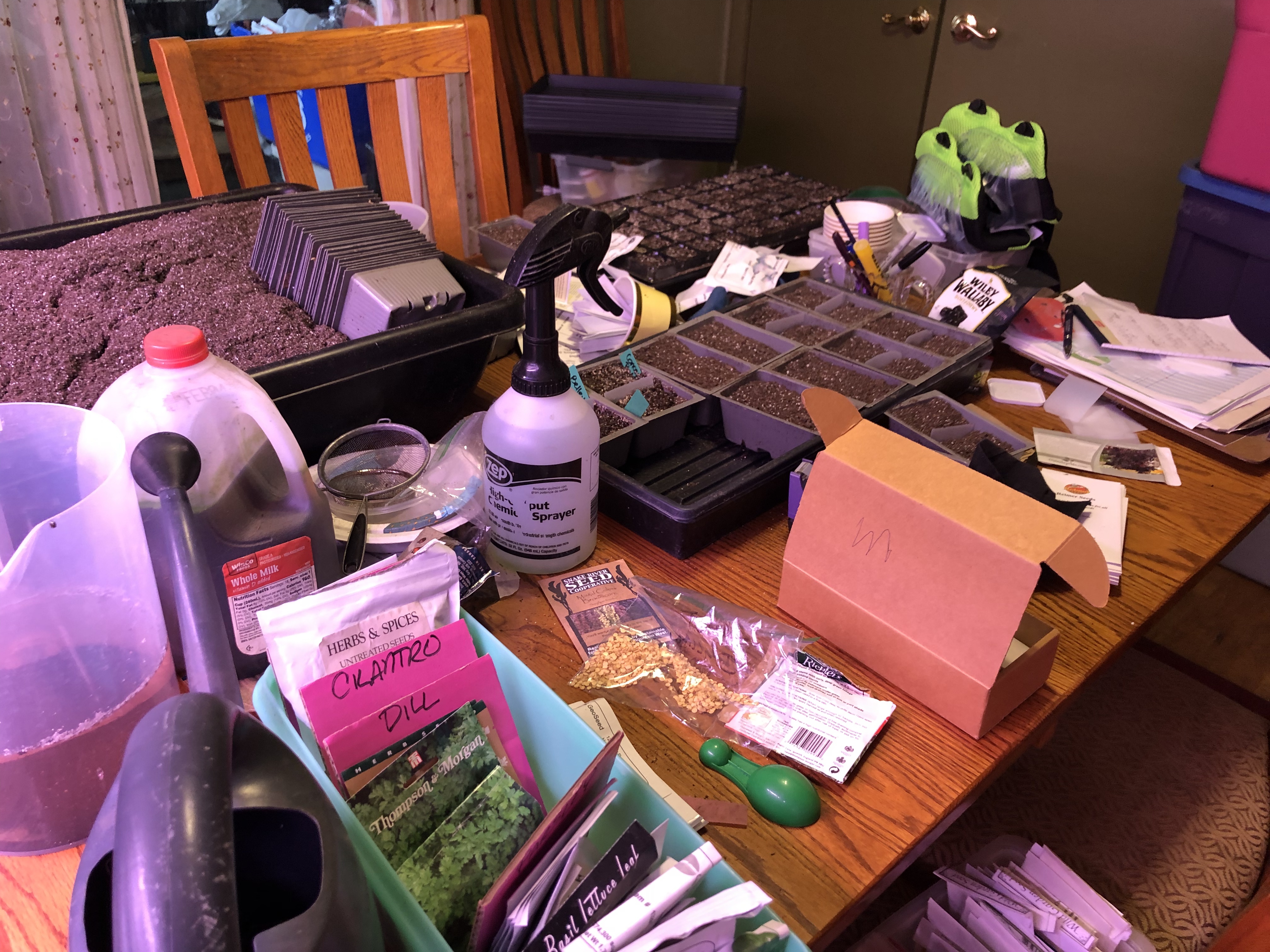
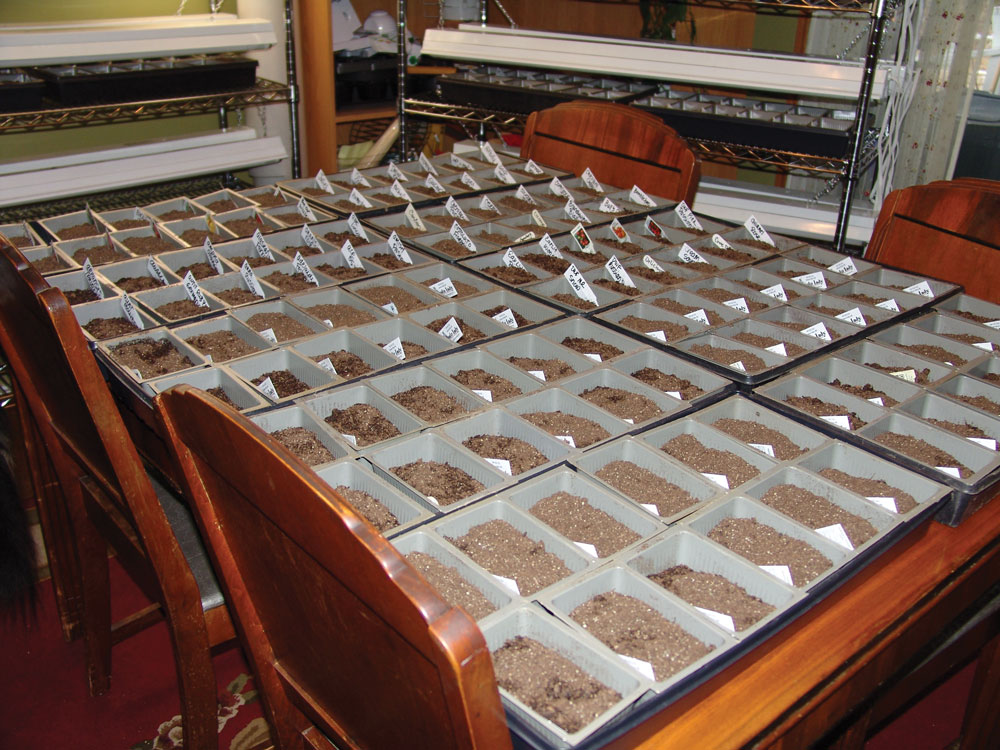
My table is filled with germination mix, seed trays, and seed packets, a sprayer, garden marking pens, tags, etc. All the paraphernalia you need to plant seeds. and I even have printed spreadsheets. I am trying to be organized.
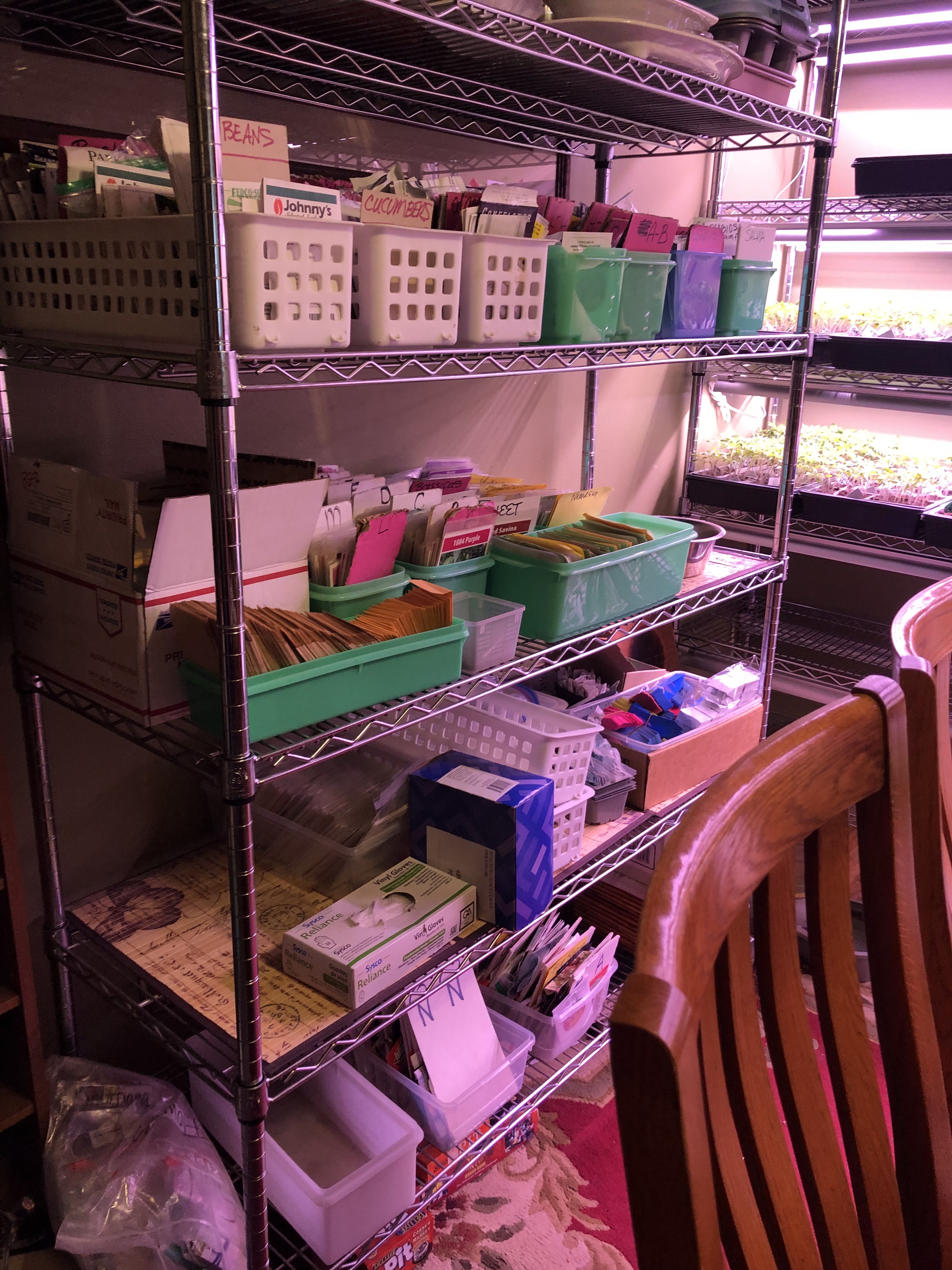
These are my seeds. I store them in the dining room, which at this time of year is no longer called a “dining room” but a “seed propagation” room. You can see in the background the racks and LED lights we use to germinate them.
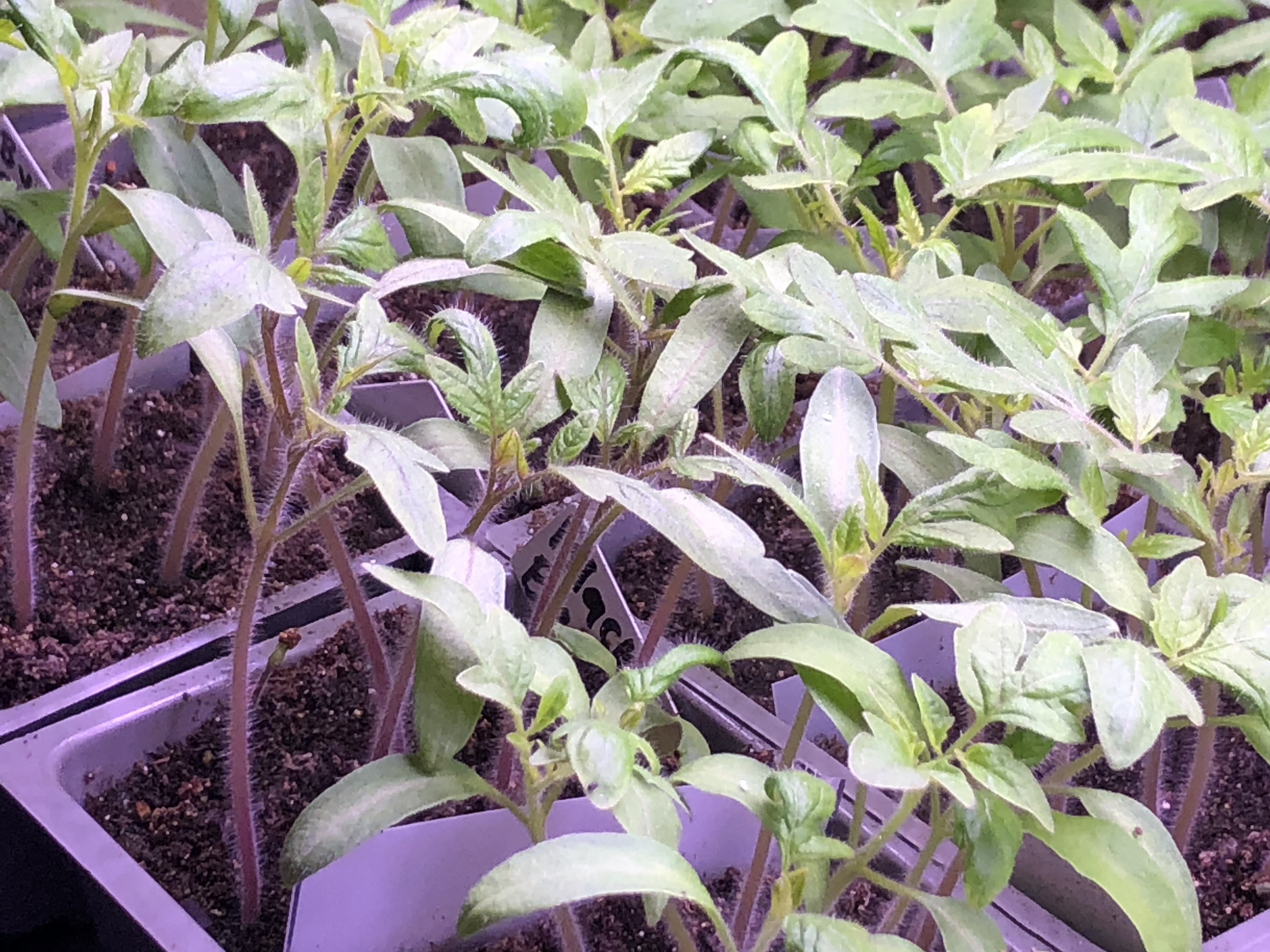
Tomato babies, they look really good this year.
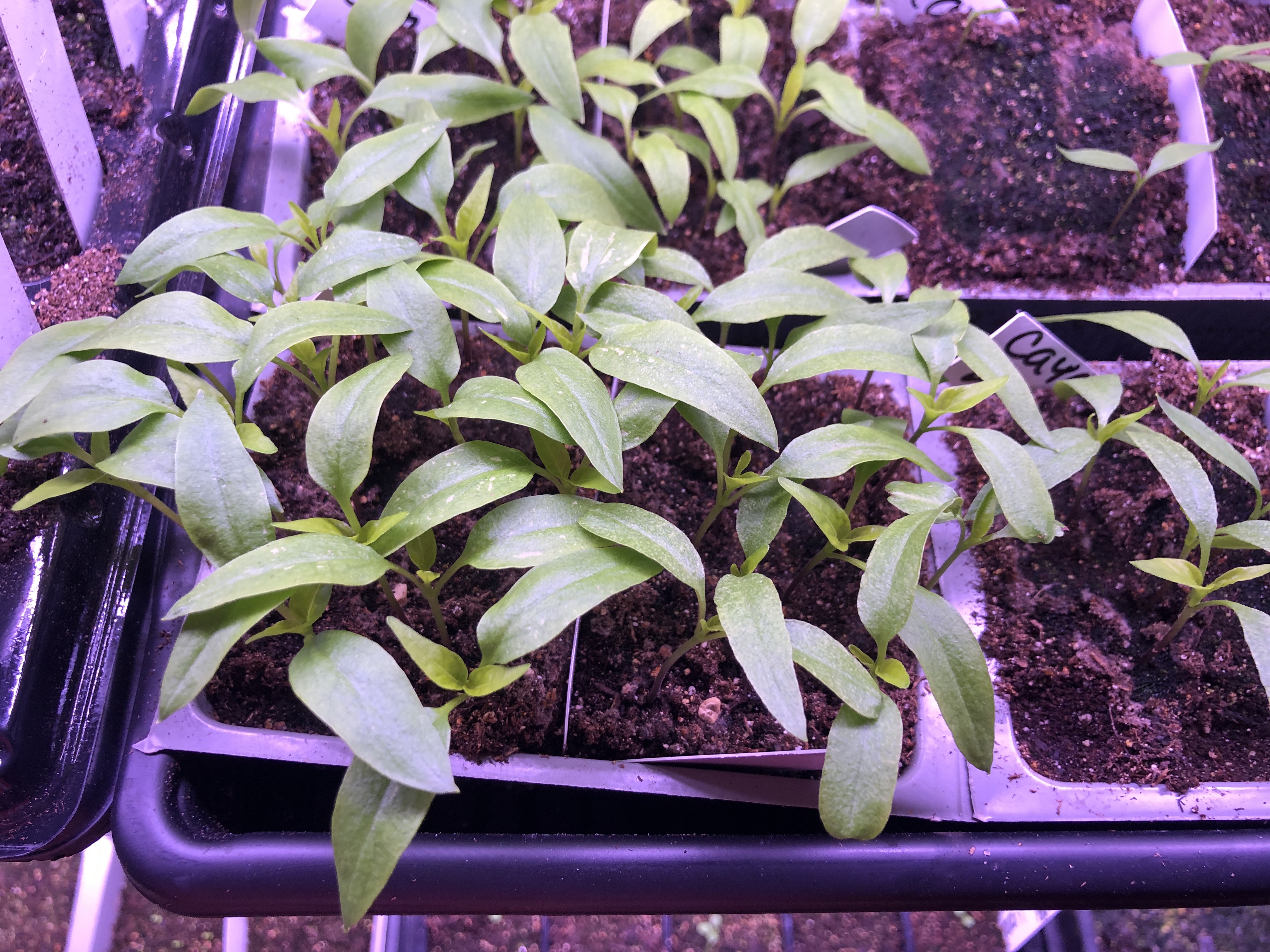
Pepper babies, they take a lot longer to germinate than tomatoes do.

I spend a lot of time looking online at seed catalogs, choosing new and old varieties of tomatoes, peppers, veggies, and flowers. It is a veritable buffet out there. So far, I have 357 varieties of tomatoes, 64 kinds of lettuce, and 126 kinds of peppers and the number of flowers is almost incalculable.

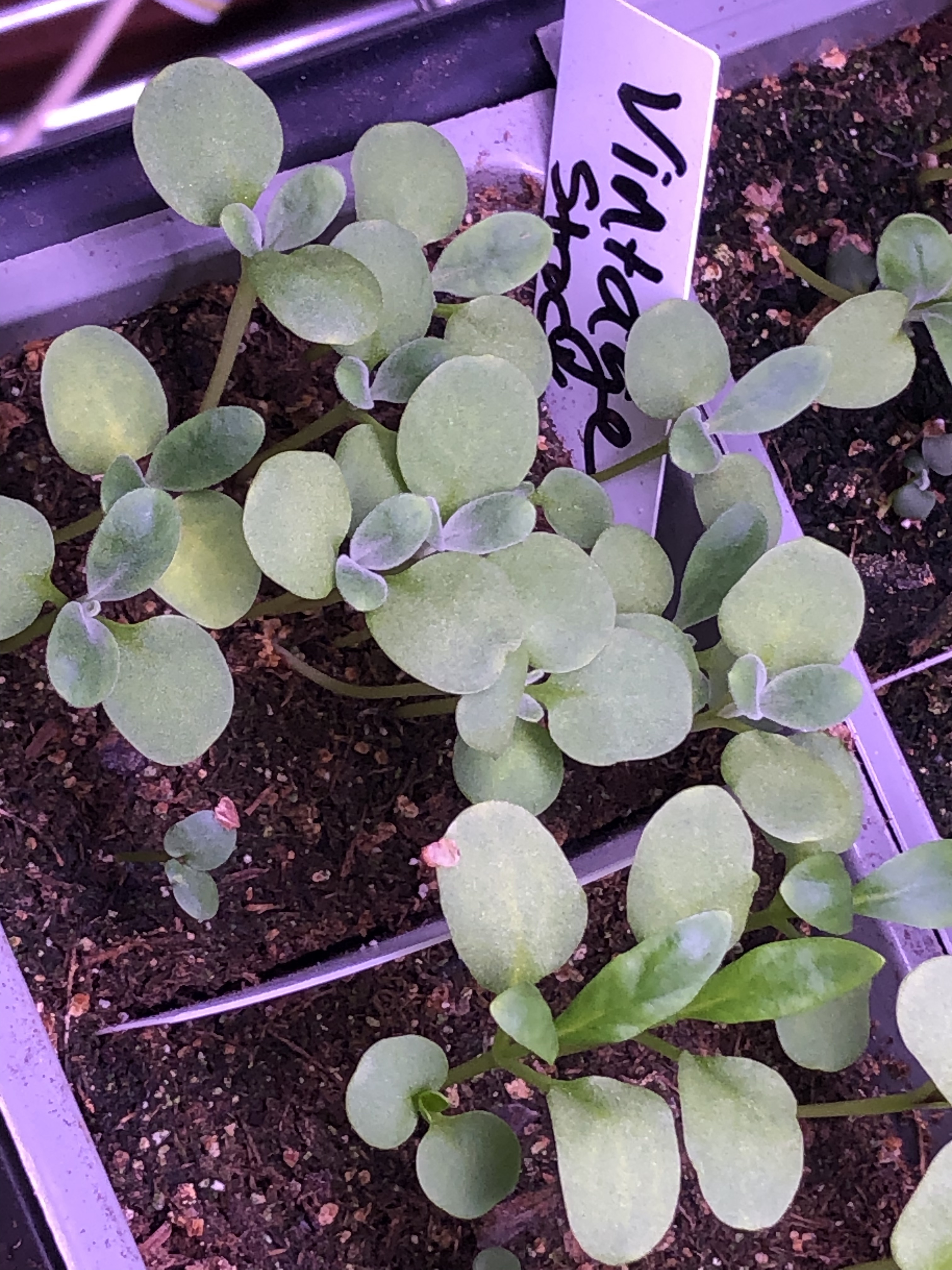
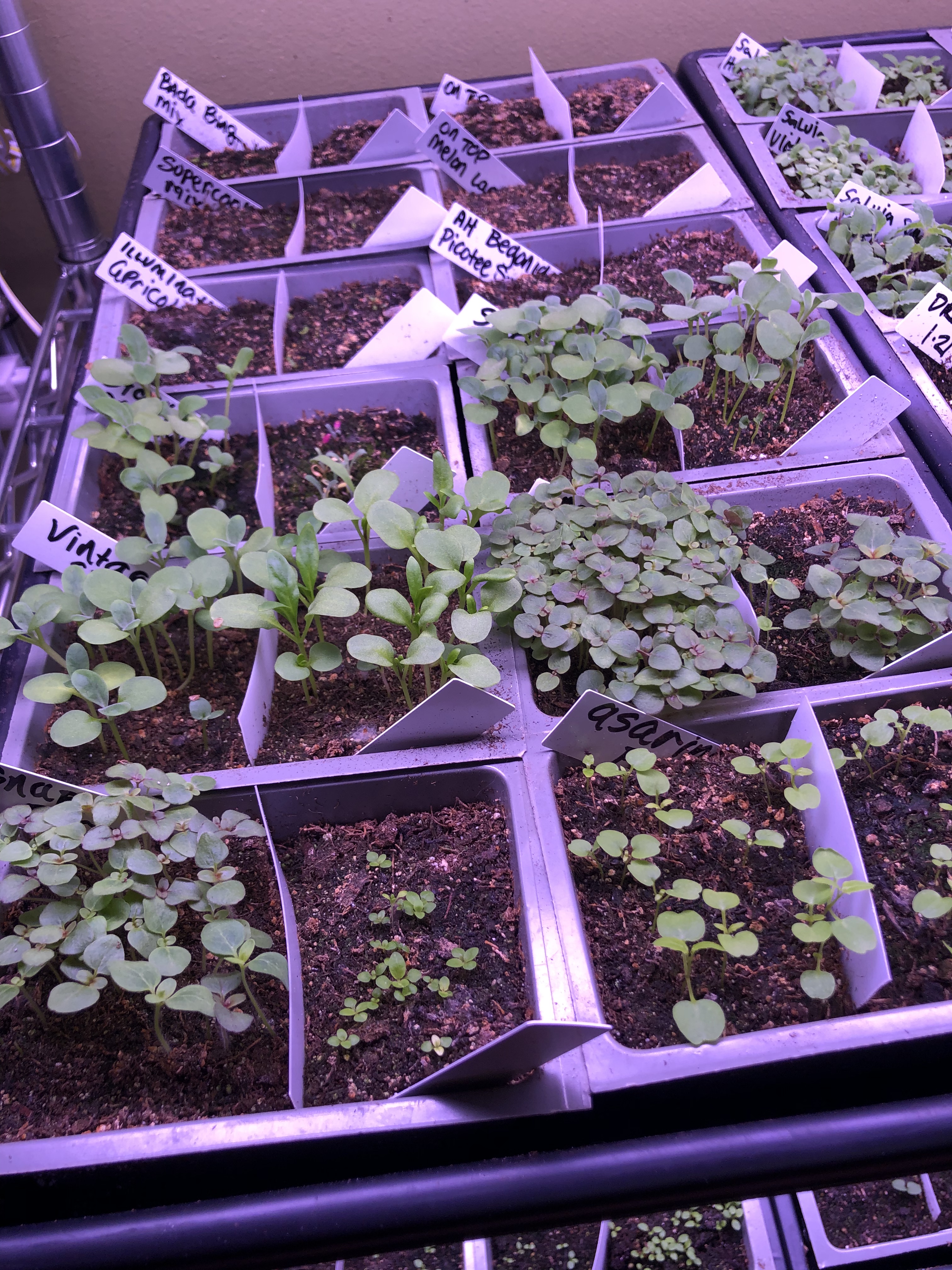
Flowers and more flowers. Snapdragons, stock, alyssum, asarina (a beautiful vining plant), begonias, salvia, and alyssum.

Now that I’ve found out I can grow teeny, tiny seeds that look like dust, I am growing all of them I can. Of course, for things like coleus, begonia, and petunias, I am finding the benefits of using pellleted seeds. I am even trying calceolaria. Talk about dust. You want to plant maybe 30 or 40 plants, no, what you have in your hand is more like 5000 seeds, or so it seems.

Petunias, I am trying something different using plug trays for individual flowers. It doesn’t necessarily save space but it should save time in the long run.
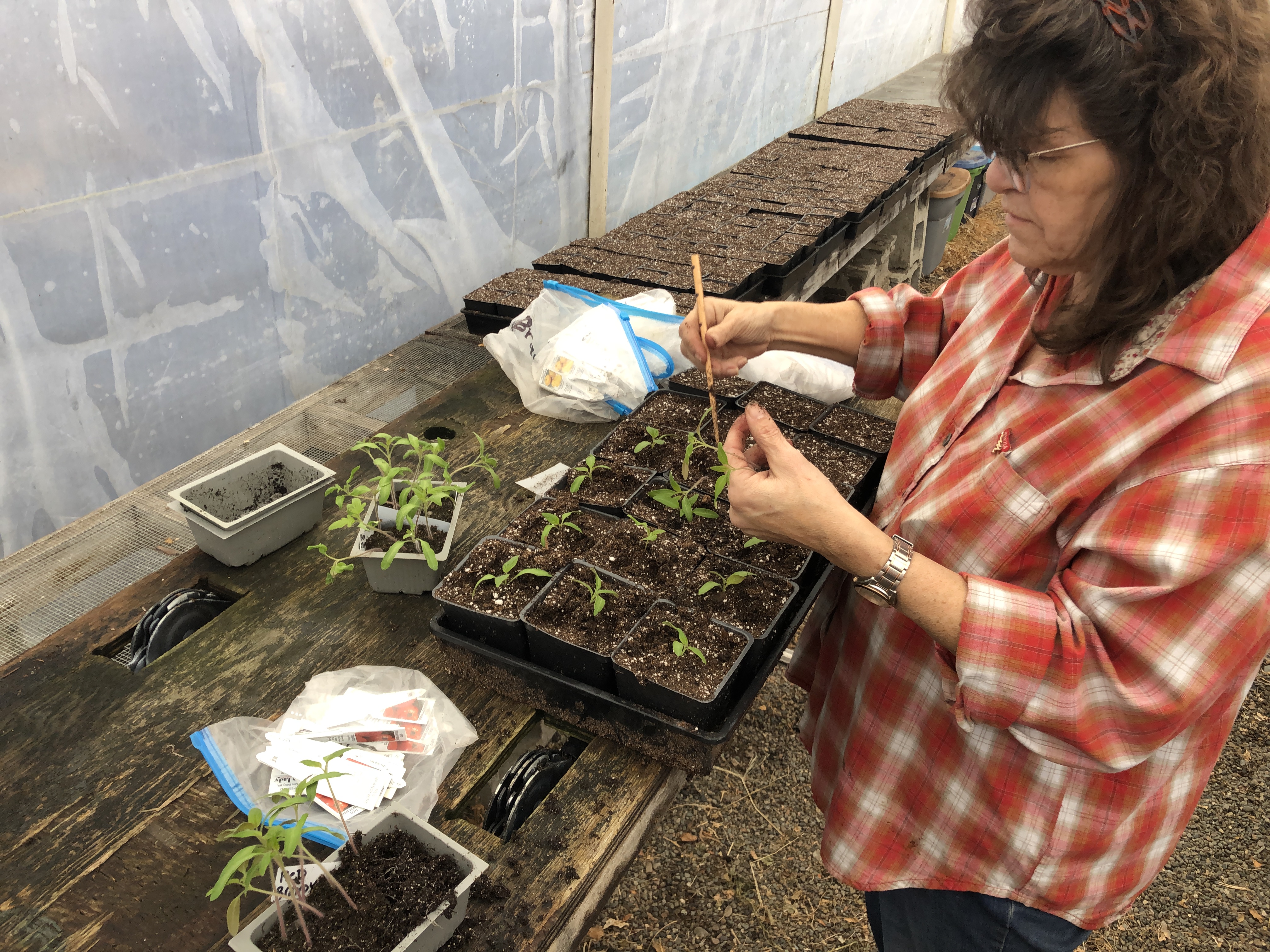
Here I am transplanting the first sets that are going to live in gallon pots

So it begins, transplanting. We put a couple of heaters out in the greenhouse for me to work and not freeze, a fine music system (well actually my iPhone and a Bose speaker) and I am happy as a clam. There’s something about playing in the dirt.

Today I have transplanted 600 tomatoes. Only a billion more to go. I am glad I love doing plants although it can be overwhelming at times. They say that if you find something you love, you’ll never work a day in your life!

Some of My Favorite Seed Companies – The Tomato lady

samson in gardenHere is a list of seed companies that I interact with on a regular basis. Good prices, nice selection of varieties, excellent seed quality, and good customer service! (My cat, Samson, has nothing to do with this subject but he sure is cute and is in the garden! Sam is a Maine Coon)
Seeds n Such
I love that this gentleman used to own Totally Tomatoes and decided to retire, which didn’t suit him so he opened up Seeds n Such. One of the nicest things about him is that their shipping is right in line with what it should be and they have a deal whereby if you buy 20 packets of seeds, they are all $1.99. Believe me, it’s easy to find that many things you want.

Tomatofest
Lots and lots of heirloom tomato seeds, some I have never heard of. The really nice thing is they are “local” –  California based. Most companies are midwest or eastern based companies. (I love them too, I just like buying local if I can)

Totally Tomatoes
Many, many varieties of tomatoes and peppers. Now they have other veggies. so I guess they aren’t “totally” tomatoes anymore! That’s ok, I like the variations.

Swallowtail Garden Seeds
This is for the flower growers. Veggies are good for your bodies, flowers are good for your soul. They have a nice variety, good prices, and quality seed. I love the pictures on the website, and they are fast!

Geo Seed
I recently found this company. I can’t remember how but am sure glad I did. Prices are phenomenal, customer service outstanding (Dora rocks!) varieties are numerous. Stuff you didn’t know you needed! the only drawback is that they don’t have pictures (but that is what the internet is for, right?) and at this time, you can’t order online. Mere nuisances. They have trade packets and bigger bulk sizes. I’d recommend the trade packets for home gardeners.

Fedco Seeds
I found this company in the last couple of years also. I love that they are a Cooperative and represent seed from a lot of small, independent growers. Great website too, lots of pictures. I found they have seeds with great histories; for instance, I found a winter squash called Uncle David’s Dakota Dessert Squash (a mouthful) on their site. it was passed down forever and as far as I can see, it’s not available anywhere else. it is delicious! Lots of fun stuff!

Irish Eyes Seeds – Located in Ellensburg, WA, Huge selection of potatoes and garlic and other cooler climate veggies.

High Mowing – I ordered from them last week and they have great selection and shipping was surprisingly fast. Out of Vermont.

Baker Seeds Great selection, good prices, and reasonable shipping. Unusual heirloom seeds from all over, rare and exotic seeds from around the world. Two examples: Thai Lavender Frog Egg Eggplant and Sichuan Red Beauty Radish. I have to be honest, some of them are so odd I can’t imagine growing them, like the Sakurajima Giant Radish, considered the world’s largest Radish. it’s white and bigger than my head! Definitely, an entertaining place to visit.

Snake River Seeds – They are new, at least to me, and I have yet to order from them but I will. they have bulk seeds too and they are local to me. In their own words:

“Snake River Seed Cooperative is a collective of family farmers in the Intermountain West who work together to produce a wide diversity of locally-adapted seeds. We believe that sharing seed saving knowledge with farmers in our region is vital to growing a robust, regional seedshed.”

While I can’t name everyone I like dealing with, (actually I could AND include all the links but I do have other things to do today!) here are some other companies I recommend, just search for them on the internet: Parks, Johnny’s Selected Seeds, Victory Seeds, Pase Seeds, Harris Seeds to name a few.

Don’t forget Northwest Seed and Pet. It is the best and biggest gardening store that I know of here in Spokane. They have a HUGE selection of seeds, a lot of which you may not have heard of. They carry their own bulk brand, Burpees, High Mowing, Baker Seeds, Snake River Seeds, Botanical Interests, Irish Eyes and many, many more. Don’t miss their cat, give him a scratch.


How to Test the Germination Rate of Your Old Seeds – Courtesy of You Grow Girl

This is an excellent article on testing the germination rate of seeds. If you are like me, I am always saving seeds I buy, seeds I collect from my garden, seeds I save from other folk’s plants… Sometimes I feel the need to test the germination rate of seeds I buy from commercial seed houses! Occasionally I get no or little germination on a seed packet.

How to Test the Germination Rate of Your Old Seeds

I love to buy, collect, save, and trade seed, but I have to admit that I do not go about it in a particularly organized fashion. While I am careful about where and how I store my seeds and I do have my own “it’s all in my head” system, it doesn’t exactly compare to some of the personal seed banks I have seen. I do not have Excel charts or lists of any kind that track what I have and when I got it. If I’m being honest, I often don’t realize I am out of a particular something or other unless I bother to check ahead of time. However, most years that moment doesn’t come until I am in the act of sowing. Whoops, guess I won’t be growing that this year.  For this reason, it’s not uncommon for me to find packets in my stash that are older than I can remember. Most store-bought seeds have a “packed for” date on them, but I receive a lot of seed in trade, and some of those traders are even less organized than me. The seed of some plants last no more than a year or so. If I find an unmarked, rogue packet of onions or leeks I can be nearly certain that they are junk. Tomatoes seem to last forever, so if I find a packet of unknown origin that I’d like to grow, it’s worth spending the time to test its germination rate.A germination test determines the viability of the seed — how many in a packet will reliably germinate. This is important because the window of opportunity to get some crops sown and growing can be short. I’ve lost the chance to grow a specific variety some years because I sowed and then waited on seed that wouldn’t grow.Germination rate can also provide a gauge of a seed’s vigor. I explain what this is below.

How to Test for Germination Rate
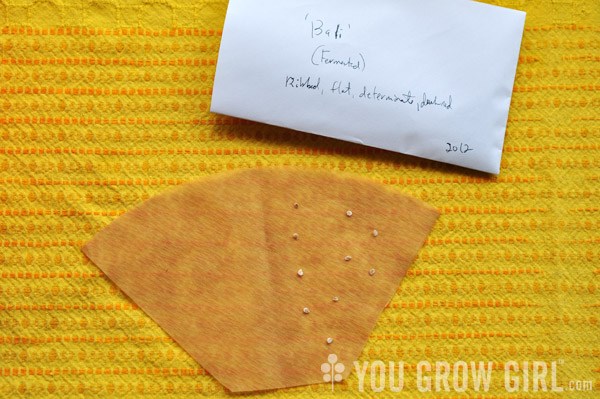
There are lots of ways to go about this. Some people use paper towels. I use coffee filters because I find it easier to see the germinated seeds and their roots should I opt to plant those that have germinated. Fragile roots and leaves tend to disappear in the pile of paper towels.

What You Need:
Coffee filters
Plastic baggies
Water
10 Seeds (per test)
Permanent marker

Cut or tear the coffee filter along the bottom and one side seam. Lightly moisten with water so that it is moist, but not sopping wet. I sometimes use a spray bottle but you can also just dip it into a bowl of water and squeeze it out.

Open the filter up flat and lay out 10 seeds on one half. You do not have to do 10 seeds at a time, but it makes figuring out the germination rate a heck of a lot easier. Spread the seeds out so that they aren’t touching. I do this so that there is less chance that their roots will become entangled should I decide to plant them up.

Fold the half of the coffee filter that does not have seeds over onto the side that does.

Fold the bottom half up.

Place the moist and folded coffee filter inside a baggie and seal. Write the variety name and the date you started the test on the outside of the baggie. I write this onto sticker labels so I can reuse the baggies in further testing.

Place the sealed and labelled baggies in a warm place and check on them every few days to see whether germination has occurred. Some seeds may require more time. Some may also require light in order to germinate, or more heat.

Tip: The majority of the seeds I test do well in a kitchen or utility drawer that is used often. Otherwise I have a tendency to forget about them! I also put a sticky note on the front of the drawer as an added reminder to keep checking the seeds! Hot peppers tend to need more heat, so I keep them on top of a reliably warm (but not hot) appliance.

The rate is determined by the number of seeds out of 10 that have germinated. For example, 6 out of 10 seeds = 60% 3 out of 10 = 30% and so on.

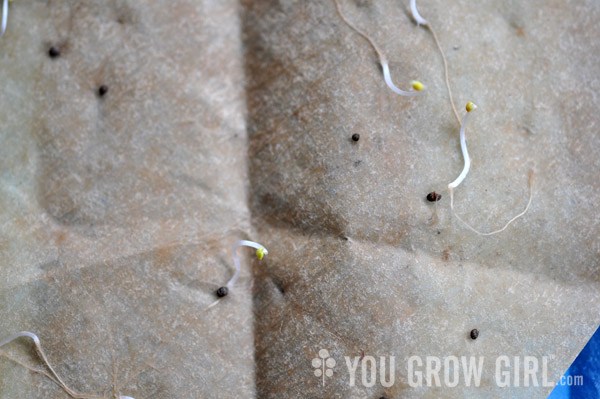
You can go ahead and plant any seedling that have germinated into soil just as you would a seed. Don’t bother trying to remove the seedling from the paper — you risk damaging delicate roots. Instead, tear the paper around the plant. (Note: If your seedlings have browned roots like mine do in the above photo then I would not suggest planting them up. I left those too long and the roots were starting to rot.)

Loss of Vigor: Seeds that fall below 70% germination tend to suffer from a loss of vigor that will increase with each passing year. What this means is that even though many of them will still germinate, the seedlings that develop may not be healthy or develop into strong, vital plants. If the percentage isn’t too low you may decide to take a chance and see how the seedlings develop. It should be easy enough to determine which are suffering. However, if you’re planning to save seed from this plant for future crops then you may want to replace the seed now. Unhealthy plants beget unhealthy plants and since you’re going to the effort, it is worth it to start out with the best of the best.

Please note that some varieties suffer from a poor germination rate even when new and healthy, so it’s important to know your plant/variety.

Tip: I keep all of my seed testing equipment (including the used baggies) together with my seed saving equipment in one of the dollar store containers that I use for organizing seed. That way I have it on hand whenever I need it.

Source: How to Test the Germination Rate of Your Old Seeds – You Grow Girl

Starting Seeds in March

This has to be the longest winter I can remember. In 2008 we had lots of snow but it didn’t stick around for 3 months as it has this year. We can’t even put up our third greenhouse yet due to snow on the ground! Did I mention it is March 3rd?

tomato-seeds-2tomato-seeds-racks

Above are pictures of our tomato babies, as yet unborn. There are approximately 5000 seeds in the various gray cells. We bottom watered them with almost a gallon of hot water for each flat on March 1st and then the were moved to the shelves under the lights. In about 7 days they will germinate. It’s actually quite exciting checking them everyday, most times twice a day, to see if they’ve raised their tiny, green heads.

tomato-seeds

This is a close up of some of the cells. I spent several hours every day spreading the tiny seeds in rows of 50 to 35 seeds in each cell. This year I even used tweezers to keep them orderly. Doing it over a couple days saved my back big time!

Once they get their first set of true leaves, I will transplant them into 3.5″ pots and they will go out into the greenhouses.

One very important tip when starting seeds: Use a sterile seed starting/germination mix. It will help tremendously in not getting damping off. Nothing is worse than seeing them lush and healthy one day and watching them fall over the next. Very sad. It doesn’t matter whether you are starting tomatoes or petunias in a greenhouse or inside your family home. Since I started using a sterile mix I haven’t had damping off. You can get it at NW Seed and Pet and possibly other big box stores.

Planting Flower Seeds in the Snow

I started 36 kinds of flowers today, impatiens, petunias, pansies, lobelia, snapdragons, canterbury bells, stock and schizanthus. Was thinking I’d only need 12 seed flats for the pansies, then got to thinking about how much I’d like the other flowers to be blooming if possible and they take a long time from seed to flowering. This year I am starting them a little over 2 weeks earlier. Hard to believe I am in the greenhouse with no coat enjoying the sunshine before the incoming snowstorm…in December no less.

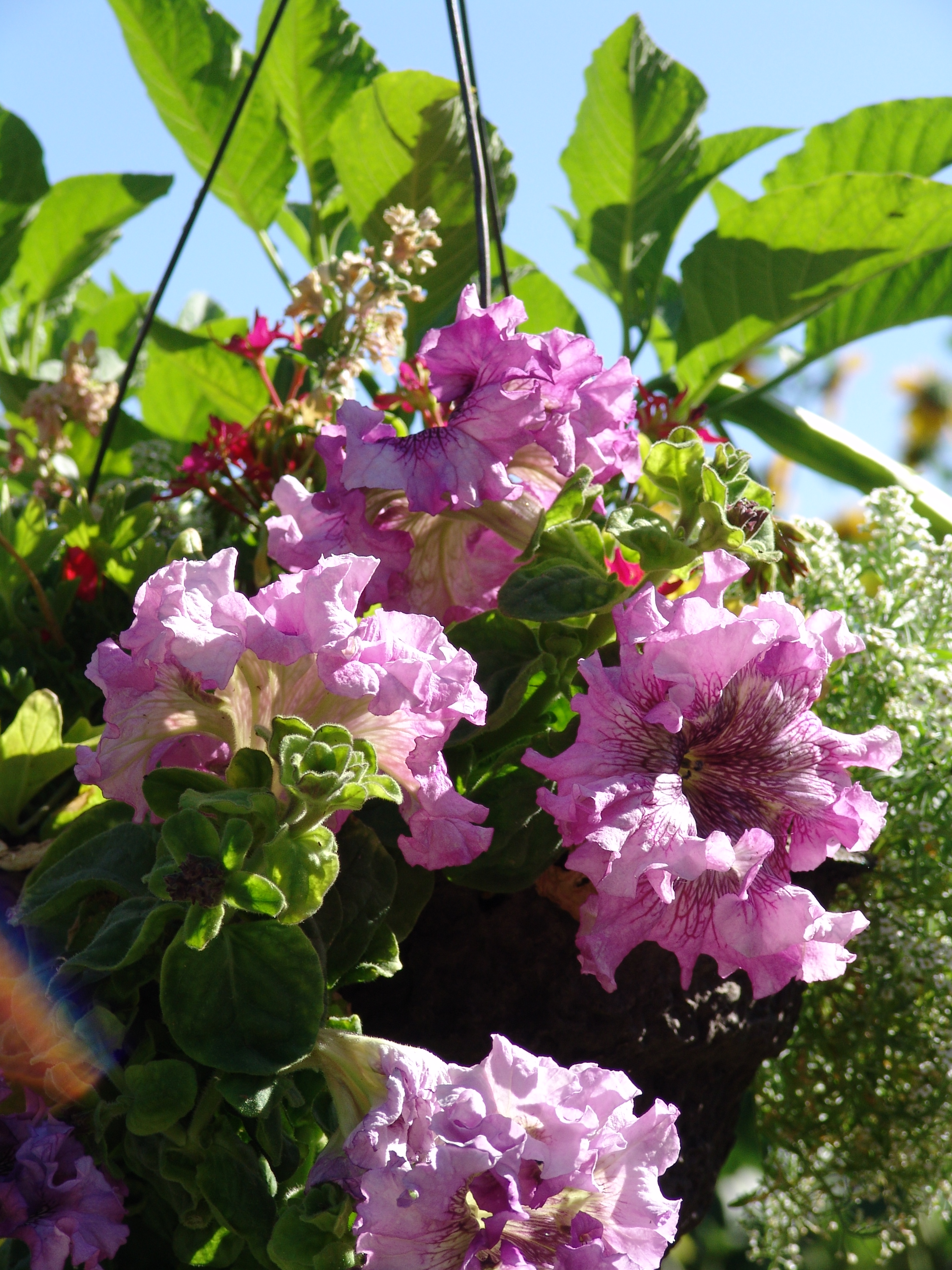
I wanted to start a petunia called petunia grandiflora superbissima  and couldn’t find any seed in the states. Thompson and Morgan used to have some retail outlets here and then for some reason stopped a couple of years ago. Made me sad, they had some really cool varieties. After doing an internet search for the seed, I found them available from three different seed houses in the UK. Two have agreed to sell them to me, I just hope shipping isn’t horrendous. Here is a picture of this flower. Beautiful. 4 to 5″ blooms, frilly with gorgeous and unusual veining in the throat. They are pinks and purples. They also have white but I haven’t had any that I remember. They come as a mixed color. One of my favorites.

big-petunia3big-petunias-3big-petunias-6

Carolina Reaper, Ghost Pepper, and Trinidad Scorpion Have Been Seeded!

I seeded my super hots and my “just plain hot” peppers over the last couple of days.

The superhots: Carolina Reaper, purportedly the hottest pepper in the world, the Ghost pepper, aka Bhut Jolokia, and the Trinidad Scorpion can take up to 8 weeks to germinate.

The normal hot peppers (ones that are not reported to set your head on fire) that I planted are Thai, two kinds of Habanero, Serrano, Cayenne, Hungarian Hot Wax and Chinese Five Color can also be slow. I do know they are slow to grow, hence my starting them in January. Next week I will sow the rest of them. The sweet bells, non sweet bells and the medium hots like Jalapenos, Poblanos etc.

The funny thing is that I am of hispanic descent yet I don’t like anything even remotely spicy! Wait, I do have a caveat to that statement. I will use the smallest piece of jalapeno that I can get away with in my salsas for flavor. And I mince it to dust at that.

Carolina_Reaper_Pilemaya pepper chinese five color hungarian yellow wax Trinidad-Scorpion-Hot-Pepper

The A to Z Blog Challenge

I just signed both of my blogs up for the A-Z Challenge. Coming up with topics will be harder for my Flowerchild Designs blog than my Tomato Lady blog.

If you are at all interested in learning about different varieties of tomatoes I would suggest you follow my Tomato Lady blog. I have plenty of material for that one. I will showcase 26 tomatoes, possibly more for each letter of the alphabet. You will be amazed how many varieties there are.

Of course, i am convinced that some heirloom tomatoes are called different names while still being the same tomato. For instance, Hillbilly from Georgia may be the same as Old Flame from Iowa. Just called a different name. It depends on what region you live in. Families have been saving seeds of their favorites for many, many years. Color, markings, maturity date, taste and texture all contribute to identify the variety.

On the opposite side, I’ve grown Hillbilly for several years and each year, they are different. It depends on whether the seeds came from Tennessee or Arkansas. Brandywine is another that has different characteristics depending on the region it comes from and who grew it. Sudduth, Landis, Platfoot, Quiesenberry are all words used to describe the various strains. If you are intereseted in learning more about the Brandywine, here is a link to a site detailing the history written by Craig LeHoullier.

http://www.webgrower.com/information/craig_brandywine.html

I hope that makes sense. Hope to see you reading me!