7 Ways to Use Coffee Grounds in the Garden

A good article to read. We have started saving our coffee grounds and throwing them into the garden beds. If nothing else, it shows me how much coffee we really drink!

Here are 7 ways how to use coffee grounds in your garden. You may be amazed at how versatile this item is!

The next time you finish your morning coffee, think twice before you toss those used coffee grounds into the trash. Coffee grounds have many uses in the garden. They enrich the soil with nitrogen, potassium and other minerals, improve soil quality, and plant growth.


1. Composting

Add coffee grounds to your composting bin. They’re a valuable source of nitrogen.


2. Pest Control

A barrier of coffee grounds around the plants may protect them from slugs and snails.


3. Cat Repellent

Put coffee grounds in the soil to keep cats away from digging in your garden.


4. Acid-Loving Plants

Place coffee grounds around the soil of your acid-loving plants such as roses, rhododendrons, fothergillas, holly, gardenias and so on. Coffee grounds increase acidity and nutrients in the soil.


5. Easy Fertilizer

Add 2 cups of coffee grounds to a 5 gallon bucket of water and allow it to steep overnight. Mixing these two ingredients is one of the simplest ways to make your own homemade fertilizer.


6. Mulch

Using coffee grounds as a mulch can help controlling weeds and keep your vegetable plants more hydrated during the heat of the day.


7. Boost Carrot & Radish Harvest

Double your harvest of carrot and radish, mixing your carrot and radish seeds liberally with coffee grounds.

Source: 7 Ways to Use Coffee Grounds in the Garden

Build a Vertical Wood Slat Vegetable Garden Project | The Homestead Survival

This easy method of how to build a vertical wood slat vegetable garden project is a great option from growing in small spaces or as part of a living landsc

Source: Build a Vertical Wood Slat Vegetable Garden Project | The Homestead Survival

Bird’s Eye Chili Pepper – Chiltepin

Birds-eye-Chiltepin.jpg

Here is another hot little number. It may be small but it is very hot. They are 100,000-225,000 on the Scoville heat scale.

The Bird’s Eye Pepper is a  chili pepper that originated in Guyana. It has a slightly small and round shape, maturing to about a fourth of an inch wide and an inch long. Due to their small size, the fruits are easily spread by birds (if you know what I mean). That is why they were so named. The Bird’s Eye will be a light shade of green, and then turn to a hue of orange, to a vibrant red upon fully maturing. The plants themselves, if happy, can get to 4 feet tall.

Using Bird’s Eye Peppers

Bird’s Eye peppers are widely used in the seasoning of fish or other seafood. Medically, they have many benefits; easing pain of arthritis, treating conditions of the stomach, relieving gas, and toothaches.

These peppers can also be used in your garden. Dried and ground into powder, they can be mixed with water and used as a repellent for insects or a pesticide.

Always be extra careful when handling these and other hot chilis. Use gloves, wash your hands with a soap that works on oils, such as Dawn and keep your hands away from your face. You will regret it if you don’t!

9148.jpg

Gypsy Peppers – The New Blonde In The Garden

gypsy-peppers.jpg

Actually they aren’t all that new. I have seen them at our grocery store and they are beautiful.

These are an elongated, three lobed,  bell type pepper that starts out as a light green, not unlike Cubanelle peppers and matures to a fabulous red in color. They are sweet in flavor and can be used raw, stuffed or try frying them. Gypsy pepper plants are fairly early, depending on the weather of course and can be eaten at any stage.

In my greenhouse they are amazing little plants. The first of the sweet peppers to come up, the first to get their true leaves, and they are head and shoulders above in their growth habit. I would say they make smile with vigor and health. Healthy peppers are always the goal and some can be more resistant than others.

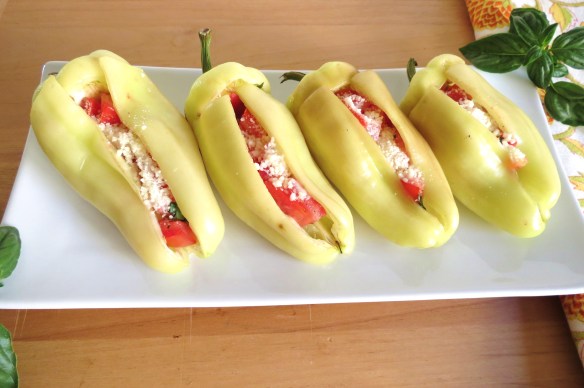
berry-cake-sheetal-watermelon-peppers-053.jpgHere is a recipe for stuffed Gypsy peppers, from http://www.peanutbutterandpeppers.com
Sweet Gypsy Peppers stuffed with fresh tomatoes, basil and Parmesan cheese and grilled to perfection. A perfect compliment to a summer meal.

Ingredients

4 Gypsy Peppers or Sweet Italian Pepper

2 medium tomatoes, seeded, diced small

1 Tbs. Fresh Basil (about 3 leaves)

¼ tsp of Olive Oil

2 Tsp. of Parmesan Cheese

Salt & Pepper (optional)

Instructions

Grill, spray grill grates with cooking spray,

In a small bowl add tomatoes, basil and olive oil. Mix until combined and set aside.

Cut a slit down the middle of the pepper, than a slit across the top of the pepper (the cut makes a T-shape) but don’t cut all the way through the pepper. Carefully take out as much of the seeds as you can.

Equally stuff the pepper with tomato mixture and top each pepper with ½ tsp of cheese.

Place on the grill for about 3 minutes until cheese starts to melt and peppers soften a bit, but be careful not to char it to much.

The Tomato Seeds Have Come Up For 2016!

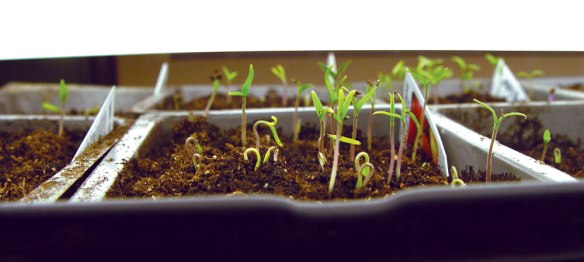
tomato_seedlings_3There are times when I absolutely love what I do. Don’t get me wrong, I generally like being The Tomato Lady. Today is a day when I totally love it.

We planted the rest of the tomato seeds on Saturday (about 5000). Yesterday I was making mental bets on when they would come up, I figured about 7 days. This morning I checked and they were up! A couple of days sooner than I thought. Tonight they have started straightening up and are putting forth their seedling leaves.

Growing things is such a wonderful thing. It connects you with nature. I love the idea that these little babies will grow up and someone will give them a new home and they will be blessed with fresh tomatoes. All from a tiny little seed. And believe me, some of these are really tiny little seeds!

tomato_seedlings_2

There is something about growing your own vegetables. You know where it came from, you know what it was fertilized with and whether pesticides were used to combat the bugs.

Whether you choose to use everything or nothing on your plants, garden organically or semi-organically, it is ultimately your decision. That is certainly not something you have control over in the produce aisle at the grocery store.

Plus there are so many more options/varieties to choose from! Striped tomatoes, blue tomatoes, white tomatoes, purple cauliflower, white peppers, purple jalapenos, red carrots, freckled lettuce, striped eggplant, peppers so hot they should come with a hazmat warning, and heirloom vegetables that have been around for a hundred years. The diversity is endless.

Shishito Peppers – The Gourmet Pepper From Japan

shishito-hot-pepperPepper Profiles: Shishito

This gourmet pepper is an exotic delicacy iconic to Izakaya (Japanese tapas/appetizers).The Shishito Pepper is delicious and couldn’t be easier to prepare.

Native to Japan, the slender, green peppers grow 3”- 4” long, have delicate skin and a slightly pleated surface. Most of them have a hist of grassy and peppery flavor, with a faint note of citrus. However, some (approximately one in ten) have a real bite! It’s almost like playing roulette. They mature to a fiery red.

Shishito-Pepper

The plants have a  spreading habit and produce prolifically.

To highlight their bright flavors, simply heat oil  in a heavy skillet over medium-high heat, and cook the peppers, turning occasionally, until they begin to blister on all sides. Sprinkle with a bit of sea salt—they are ready to enjoy! They are also wonderful grilled, deep fried or tossed on top of pizzas and salads.

Shishito-Peppers-Pictures

Recipe: Shishito Peppers

 Courtesy of Author: Julie du Pont
Recipe type: Starter
Prep time:  2 mins
Cook time:  5 mins
Total time:  7 mins
Serves: 6
Sauteed Shishito Peppers guaranteed to get your party started!
Ingredients
  • 4 cups Shishito Peppers
  • 2 tbsp salted butter
  • 2 tbsp good soy sauce
  • Large Sea Salt Flakes
Instructions
  1. Slit the side of each pepper. I like to leave the little stem on the pepper because it allows guests to grab easily, but you can also remove the stems if that is your preference.
  2. Heat a large wok or frying pan on high heat until it is very hot. Add butter. Once butter is sizzling and almost to the point where it browns, add the peppers and toss with a wooden spoon for about 4 minutes until they begin to blister. Add soy sauce and stir with wooden spoon for about a minute until the butter and soy sauce create a glaze over the peppers. Remove from pan and dust with large flaked sea salt. Serve immediately and take your chances that you don’t get one of the spicy ones!

Quick-blooming fig leaf hollyhocks – Garden Making –

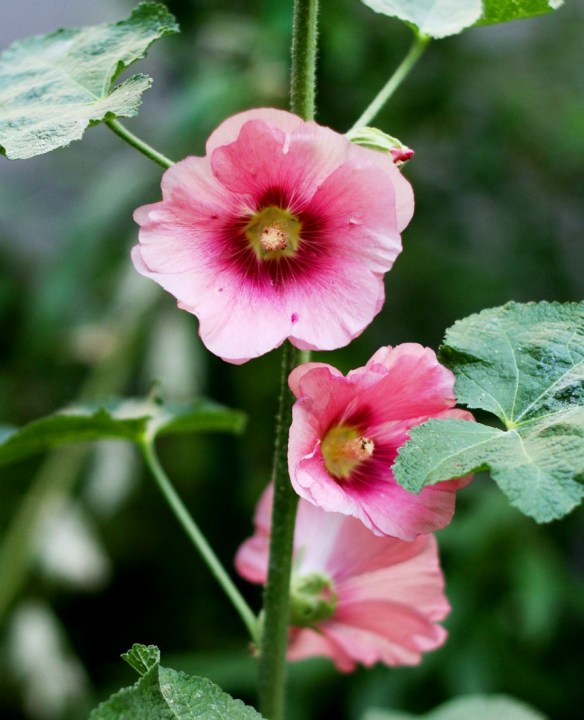
BLOG-Pink-Hollyhocks1Here  is an article for about hollyhocks. I was interested to see that the “Antwerp”, a fig leaf variety is almost rust free. Good to know. Click on the link. Not sure why it didn’t capture the entire story.
A few that flower the first year, if they’re planted early enough. One is fig leaf hollyhock

Source: Quick-blooming fig leaf hollyhocks – Garden Making –

Chinese Five Color Hot Peppers

ted's-5-colorted-chinese-five-color-2015

These are screaming hot little peppers. And beautiful too! The two pictures above are taken from my friend’s garden in Rathdrum, Idaho. He absolutely loves them. Since I don’t eat hot peppers, I have to take his word for it. Ted says he puts one into a pot and it flavors the chili quite nicely.

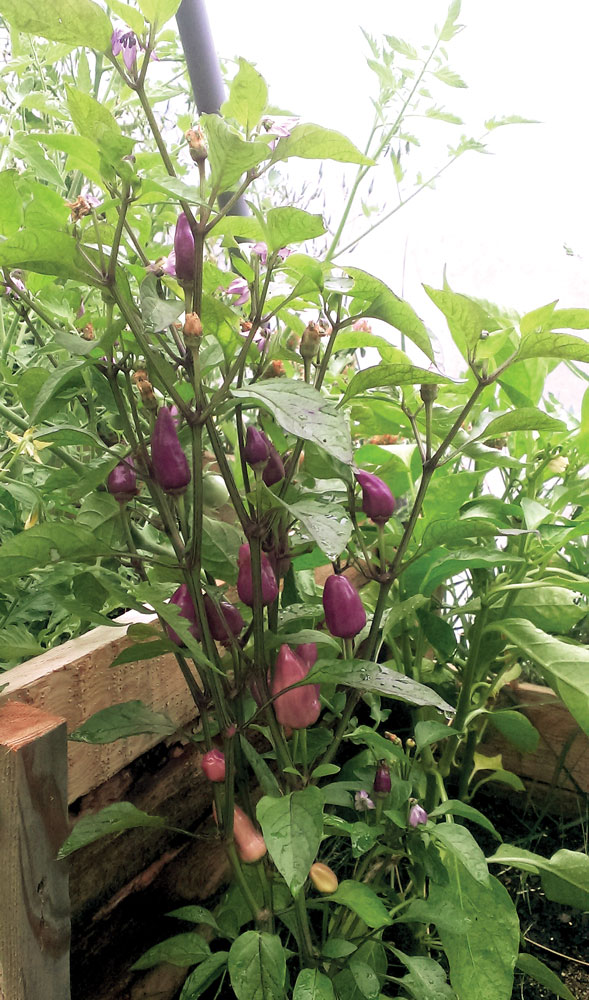
These peppers turn a rainbow of vibrant colors; from purple, cream, yellow, orange to red as they ripen. They would work as an interesting ornamental if you don’t eat hot peppers. The plants are great for containers. Just pick a few any time to liven up your salsa.

I transplanted 67 of them yesterday. Funny thing is, I only had 7 come up last year and Ted took 5 of them. This year, I should have at least a hundred for sale this year.

pepper chinese five color

Archaeologists Dig Up An 800-Year-Old Native American Pot. What They Found Inside Is Changing History | Dustin McGladrey | Blogs | On Air | CFWE

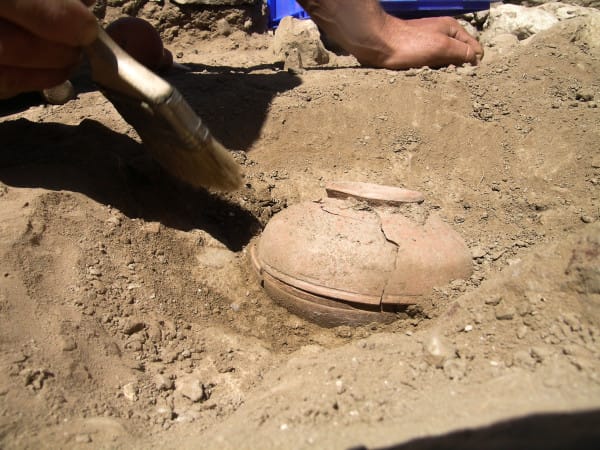
In 2008, on a dig in the First Nation’s Menominee Reservation in Wisconsin, archaeologists made a small but stunning discovery: a tiny clay pot.

Though it might not have seemed very impressive at first glimpse, this little piece of pottery was determined to be about 800 years old.

And inside that pot? Something that changes how we’re looking at extinction, preservation, and food storage, as well as how humans have influenced the planet in their time on it.

It’s amazing to think that a little clay pot buried in the ground 800 years ago would still be relevant today, but it’s true! It’s actually brought an extinct species of squash that was presumed to be lost forever. Thank our Indigenous Ancestors! Even they knew what preservation meant. They knew the importance of the future, Is it not amazing that they are affecting our walks of life even to this day?

Here it is! The pot was unearthed on the Menominee Reservation in Wisconsin, where it had laid buried for the past 800 years.

This pot was unearthed on the Menominee Reservation in Wisconsin, where it had laid buried for the past 800 years.

Inside, archaeologists found a stash of seeds. The seeds were probably buried in the pot as a method of storing food supplies. They were determined to be an old, now-extinct species of squash.

Inside, archaeologists found a stash of seeds. The seeds were probably buried in the pot as a method of storing food supplies. They were determined to be an old, now-extinct species of squash.

Now, seven years after making this stunning discovery, students in Winnipeg decided to plant the 800-year-old seeds… To everyone’s amazement, something grew!

Now, seven years after making this stunning discovery, students in Winnipeg decided to plant the 800-year-old seeds — and, to everyone's amazement, something grew!

The squash was named Gete-okosomin. It means “Big Old Squash” in the Menominee language. (Respect to the Science people for respecting the Indigenous people who’s land this was found on, We See Your Good Nature!)

The squash was named Gete-okosomin. It means "Big Old Squash" in the Menominee language — and big it certainly is!

Now, they’re working to cultivate the squash so that it doesn’t go extinct ..again.

Now, they're working to cultivate the squash so that it doesn't go extinct — again.

It may be just a humble squash, but it’s also a symbol of First Nations’ community and history, as well as a fascinating look into how amazing plants can be.

It may be just a humble squash, but it's also a symbol of First Nations' community and history, as well as a fascinating look into how amazing plants can be.

It just goes to show you that plants can be pretty incredible.. and that sometimes, history has a funny way of coming back around. The Wheel of Life really stands out in this instance of history. Our Indigenous roots are strong and very much tied to the land. I was taught once that the people of Turtle Island were keepers of the land, not owners. I feel like this Squash is proof of that teaching.

If you love history, science, or you’re just curious about what this would taste like in soup, please SHARE!

For me personally, I find that evolution is just one big circle that keeps spinning and altering its path. Like the medicine wheel, which symbolizes the never ending circle of life.

Source: Archaeologists Dig Up An 800-Year-Old Native American Pot. What They Found Inside Is Changing History | Dustin McGladrey | Blogs | On Air | CFWE

Time To Tell Me Your Favorite Tomatoes and Peppers

It is time to hear from my customers about what tomatoes and peppers they want to see on my list this year. I have allready ordered some that I always plant but want to be sure to include your favorites. Remember if I don’t hear from you, I plant the ones I like! The tomato in the picture is Indigo Cherry Drops and Marglobe. Two of my new favorites from last year. I loved the Marglobe so much that I wondered why I hadn’t grown it in my own garden! The pepper is called Islander and I loved it’s colors. What did you particularly like?