New To You Plants: Tomato Varieties and Why You Should Try Them

Every year I grow the same varieties that I have grown in previous years. Either they have become a customer’s favorite, or I just plain like them. I know it is overwhelming when you come to our house and are faced with 387 varieties (this year), and that is just the tomatoes!. It does not include the peppers, herbs, flowers or veggies. My goal is to introduce you to different varieties . . . of well, everything! Life is too short to eat store tomatoes. The old adage,”If it ain’t red, it ain’t a tomatah” keeps a lot of my customers from experiencing the broad range of colors and tastes. A lot of my plants have stories of their own.
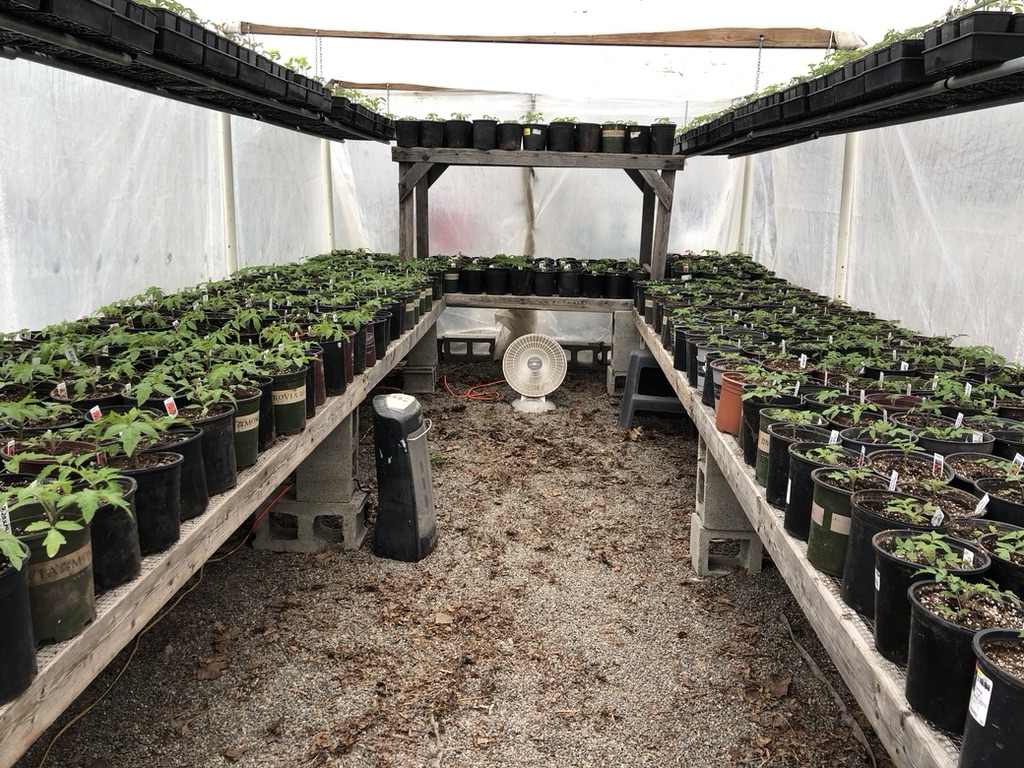
I can almost guarantee that I have more tomato varieties for sale than anyone in the world. Granted, some of them are in limited quantities, seeds being somewhat scarce. Every year in the fall, I am so done with gardening. I think about having the garden paved over into a parking lot. Then, I start getting, THE CATALOGS. Yup. All my resolutions go out the door. Thoughts of Super Sweet 100’s, Romas and Early Girls are suddenly forgotten, as I thumb through the colorful pages of exotic looking tomatoes. Blue, green, striped, even white. Its a rainbow of colors. I consider myself the United Nations of tomatoes with varieties coming from all over the world. Russia, Ukraine, Italy, France, Mexico, Poland, Australia even Switzerland to name a few.

For the next several weeks, I am going to show you what you have been missing. Let the adventure begin!

But first, I should explain some basic things to you. I place my tomatoes into categories based on common uses, shapes, and maturity dates: Paste, Main Season, Patio, Cherry, Early, Heirloom, Oxheart, Dwarf, and Unusual.

Paste tomatoes are a type of tomato that have dense, meaty flesh, less juice, few seeds, and are usually cylindrical or pear-shaped. They can be snub-nosed like a Roma or San Marzano or large, long shape with a pointy tip such as the Polish Linguisa. They are what everyone thinks of when they think about tomato or spaghetti sauce.
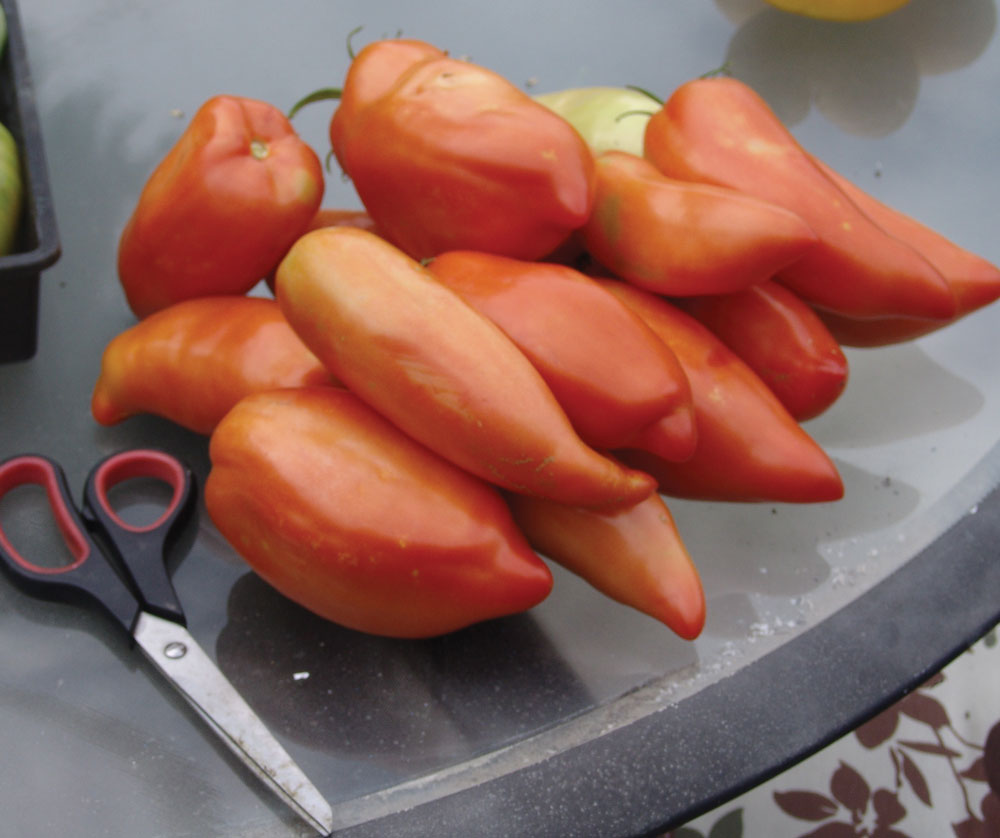
Polish Linguisa

Main-season tomatoes are classified (by me) as varieties that usually ripen 70 – 84 days. They also come in different colors, although most of the ones I know are red, medium-sized, and smooth-skinned. Big Boy, Better Boy, and Goliath come to mind.
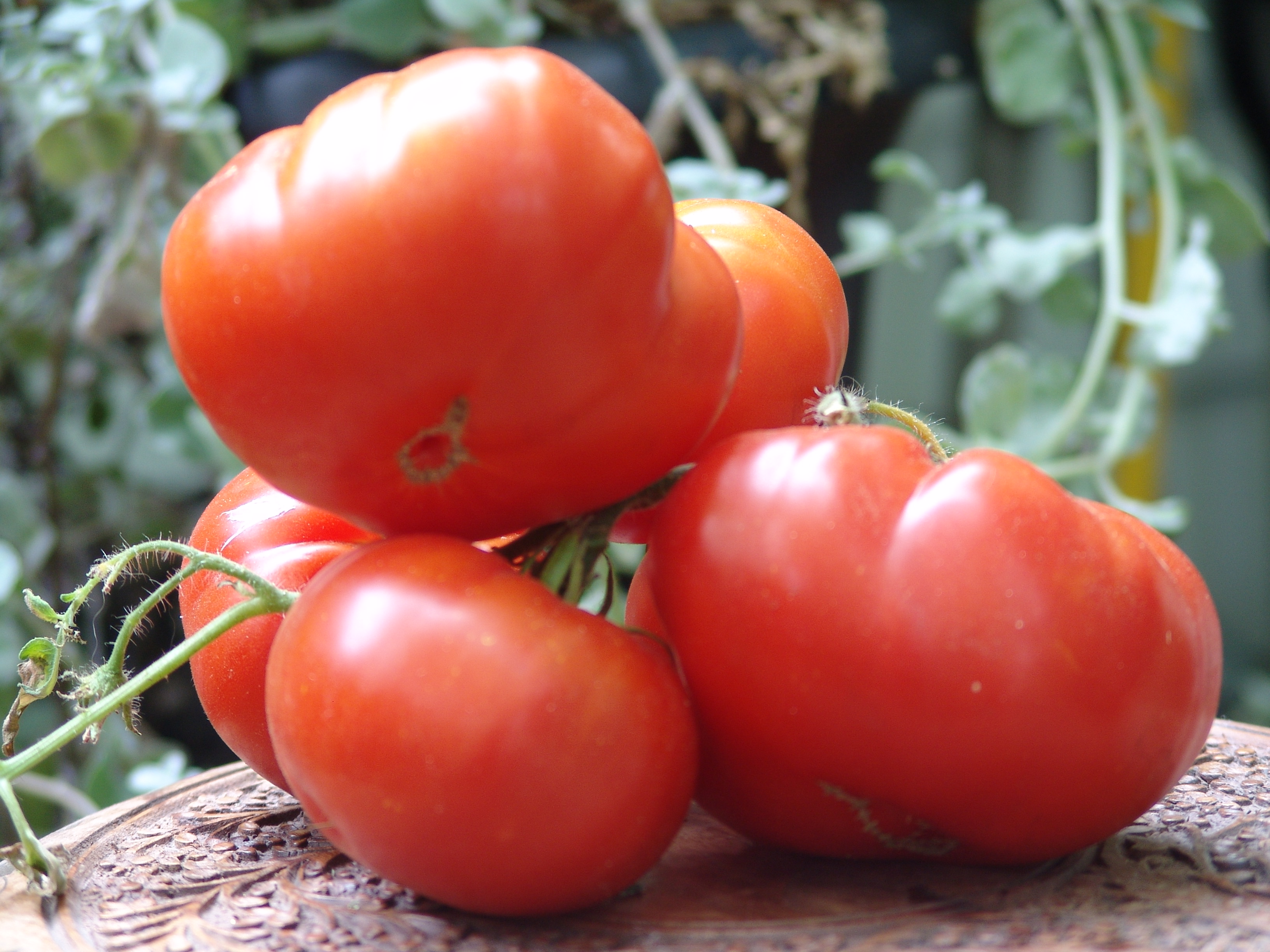
Supersteak

Patio/Container friendly plants are good for large or medium-sized containers. Smaller in stature, they include the bush varieties i.e. Bush Goliath, Better Bush, Bush Beefsteak, Bush Early Girl, Bush Campion II, , Bush Blue Ribbon, and Patio. The bush tomatoes can range from cherry sized to beefsteak sized. Not to be confused with the dwarf tomatoes, which I will explain further down. Most are shorter season and do well on a patio or patio table.
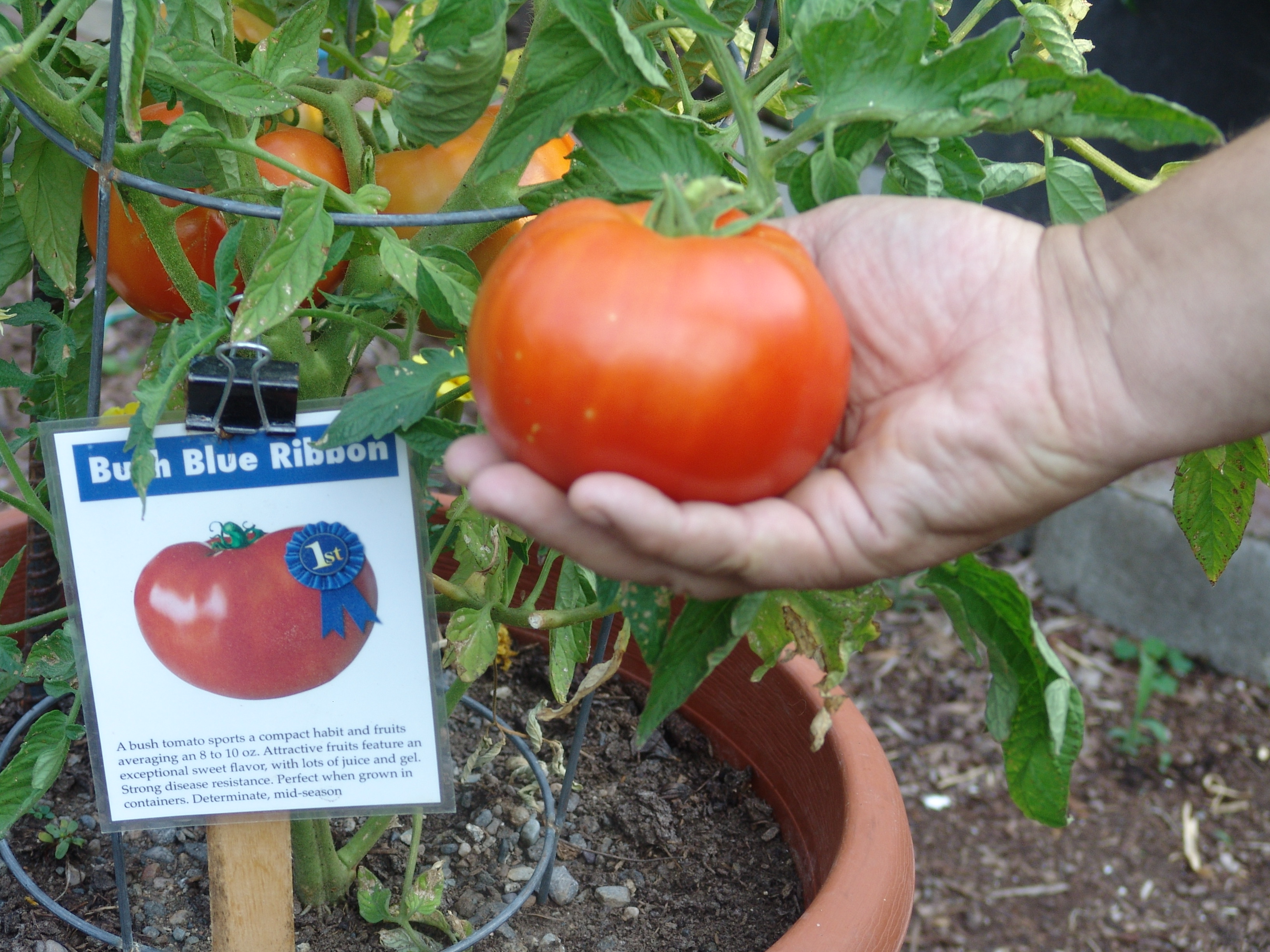
Bush Blue Ribbon

Cherry tomatoes No one needs an introduction to a cherry tomato. It usually grows on long vines that need staking. Smaller-vined ones are available, such as Sweet Valentine, Tumbler, Tumbling Tom Red and Yellow, and Tiny Tim. These are some that come to mind. All the colors of its larger brethren, some sweeter than others. Sweet Aperitif is my husand’s new favorite, small, red, and sweet.. Sungold is the sweetest cherry tomato I’ve ever had and is a favorite of most everybody. You have not lived until you picked a sun-warmed Sungold off the vine in the garden. (You can plant any tomato in a large container but it will be constricted by the size of the container.)
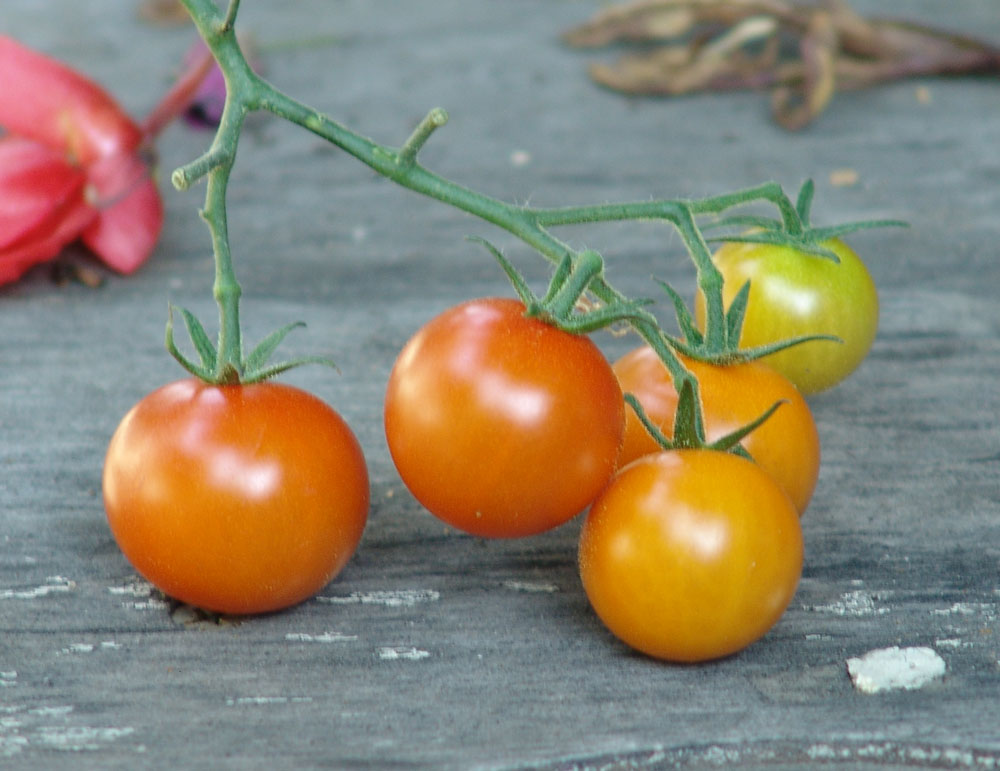
Sungold

Early tomatoes are just that: early, at 55-69 days. We also have some that are extra early, ripening 54 days or less. Early Girl, Subartic Plenty, Stupice, New Girl, and Moskvich are some early varieties. They are also mostly red and smaller sized. Taxi is the only heirloom that I know of that is early and produces beautiful, sweet, yellow fruit.
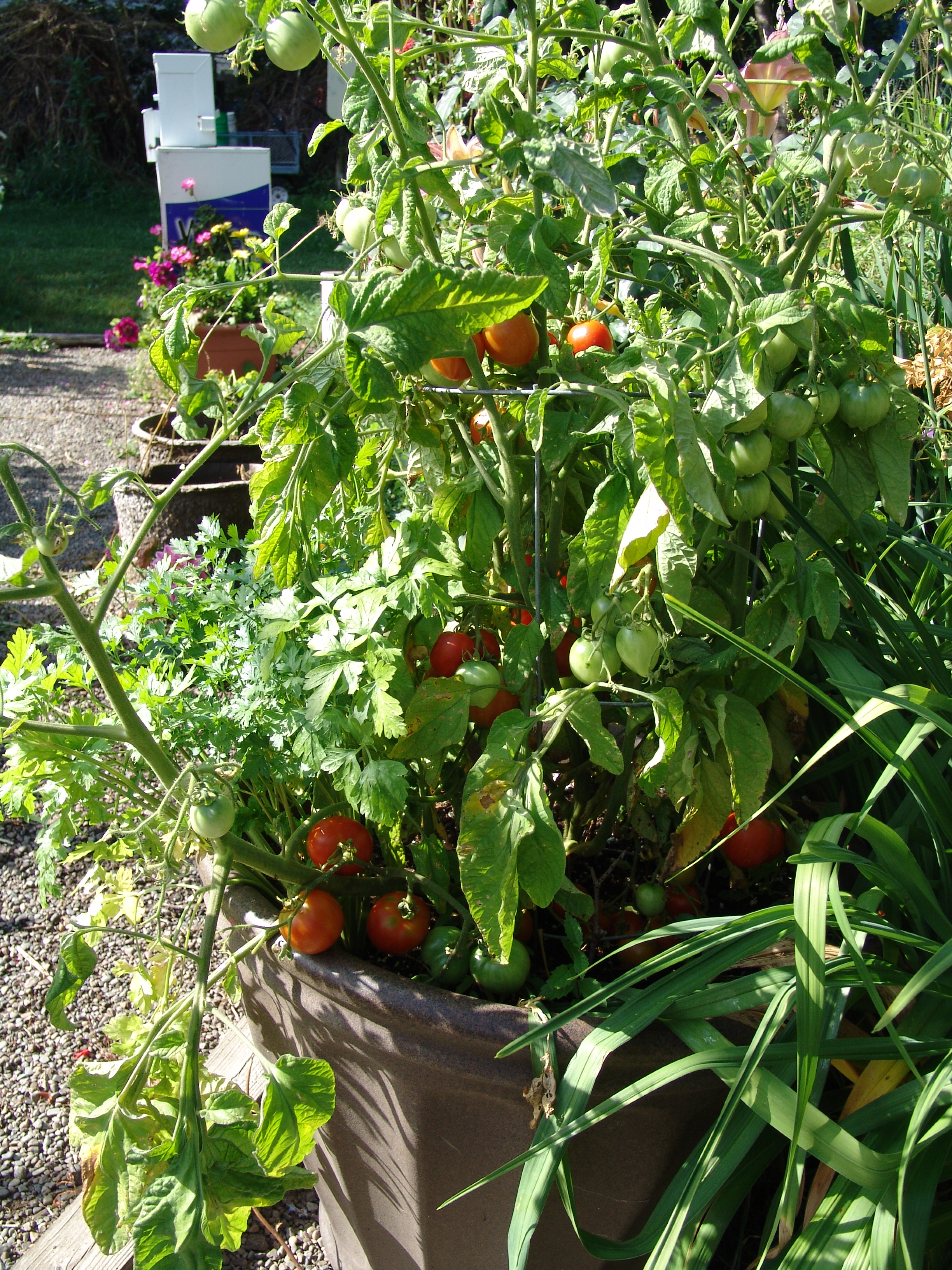
Glacier

Heirloom tomatoes are what I started with in the beginning of my journey. Their descriptions made them sound really yummy and I was tired of the standard, staid tomatoes I bought fro the store. Whether you call them “Heritage” or “Heirloom,” these are still the varieties you will want to grow for taste. Heirlooms come from seed that has been handed down for generations in a particular region or area, and hand-selected by gardeners for their taste or specific growing characteristics. Heirloom tomatoes are open-pollinated, which means they’re non-hybrid and pollinated by insects or wind without human intervention. How experts define heirlooms can vary, but typically they are at least 50 years old, and often are pre-WWII varieties. All heirlooms are open-pollinated but not all open-pollinated are heirlooms. Most of them have stories. Mortgage Lifter paid off a man’s house in the depression years. Amana Orange takes its name from Amana, Iowa, Paul Robeson was named after an operatic singer in Russia. 
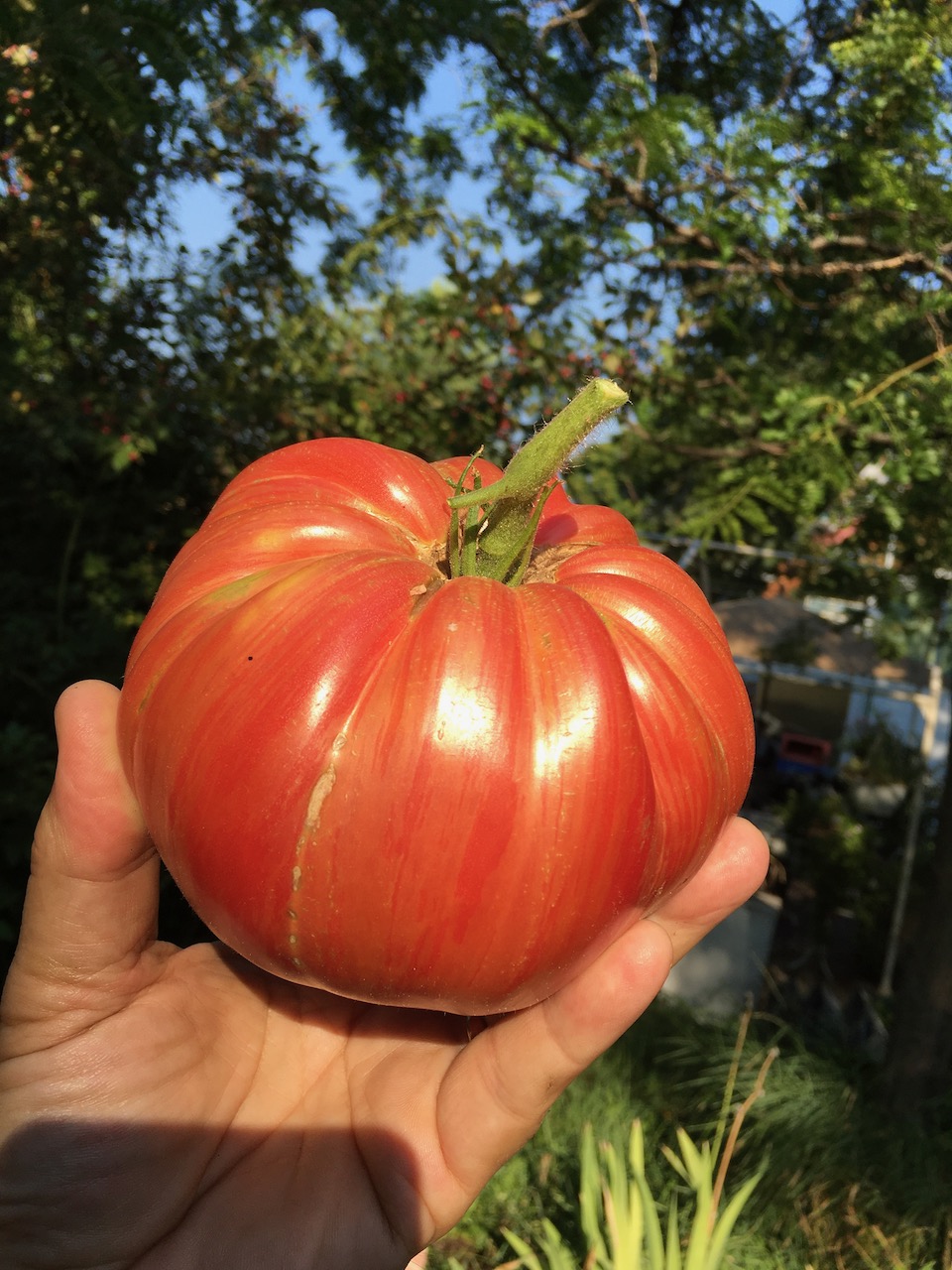
Pink Jazz

Oxheart tomatoes are very meaty, have less juice and fewer seeds, not unlike a paste tomato. The plants usually have wispy foliage, not unlike paste tomatoes.  There are exceptions to the rule. They can grow very large. Cuor di Bue is big, pink, and delicious. Colors range from deep, red, dark, pink to bicolors. My particular favorite is the Orange Russian. Steve loves German Red Strawberry and Kosovo.Those are huge! These work well for canning and preserving. As better, if NOT better, because they are usually larger than paste tomatoes and it takes fewer tomatoes to process in a jar.
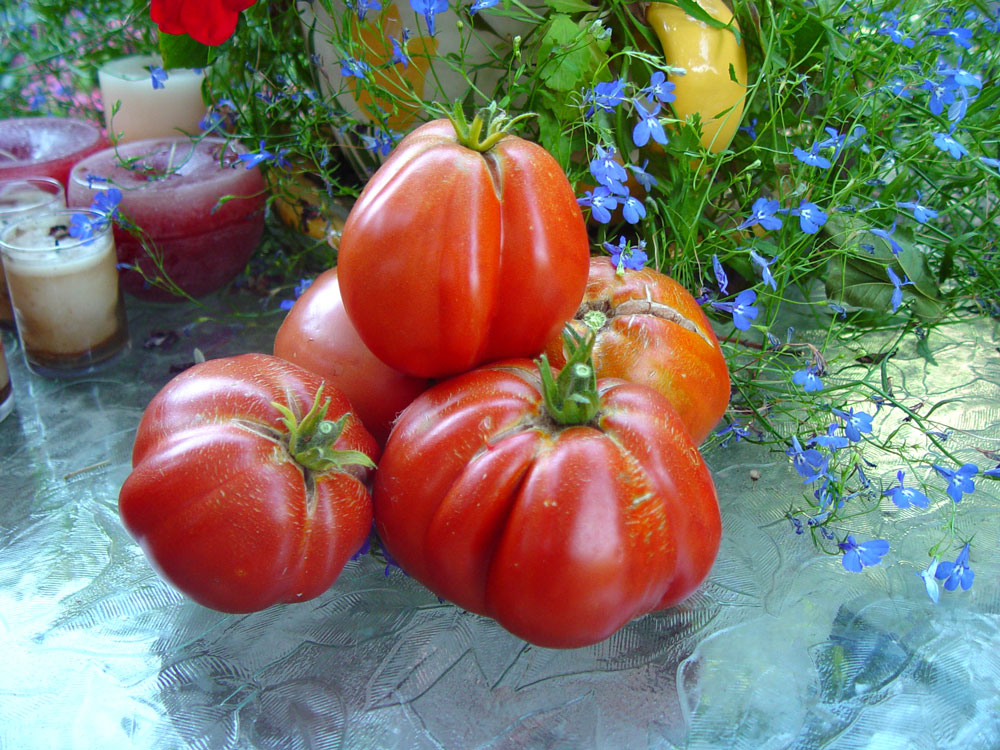
Cuore di Bue

Dwarf tomatoes They are perfect for a small space gardener who wants a slicer instead of the smaller tomatoes that are usually produced by most determinate tomatoes.This class of tomatoes exhibits characteristics of both determinate and indeterminate types. Historically called “tree-type,” they are now commonly referred to as” dwarfs”. Tree-type tomato plants have very thick main stems with minimal branching. Their foliage can be either regular or potato leaf but in either case, are rugose (e.g. dark green in color and crinkly in texture). Due to their slow growth rate, they appear from a distance to be determinate achieving three to four feet in height. However, like indeterminate, they continue to set fruit throughout the growing season. Compact and everbearing, what a great combination! They come in many color, shapes and sizes.
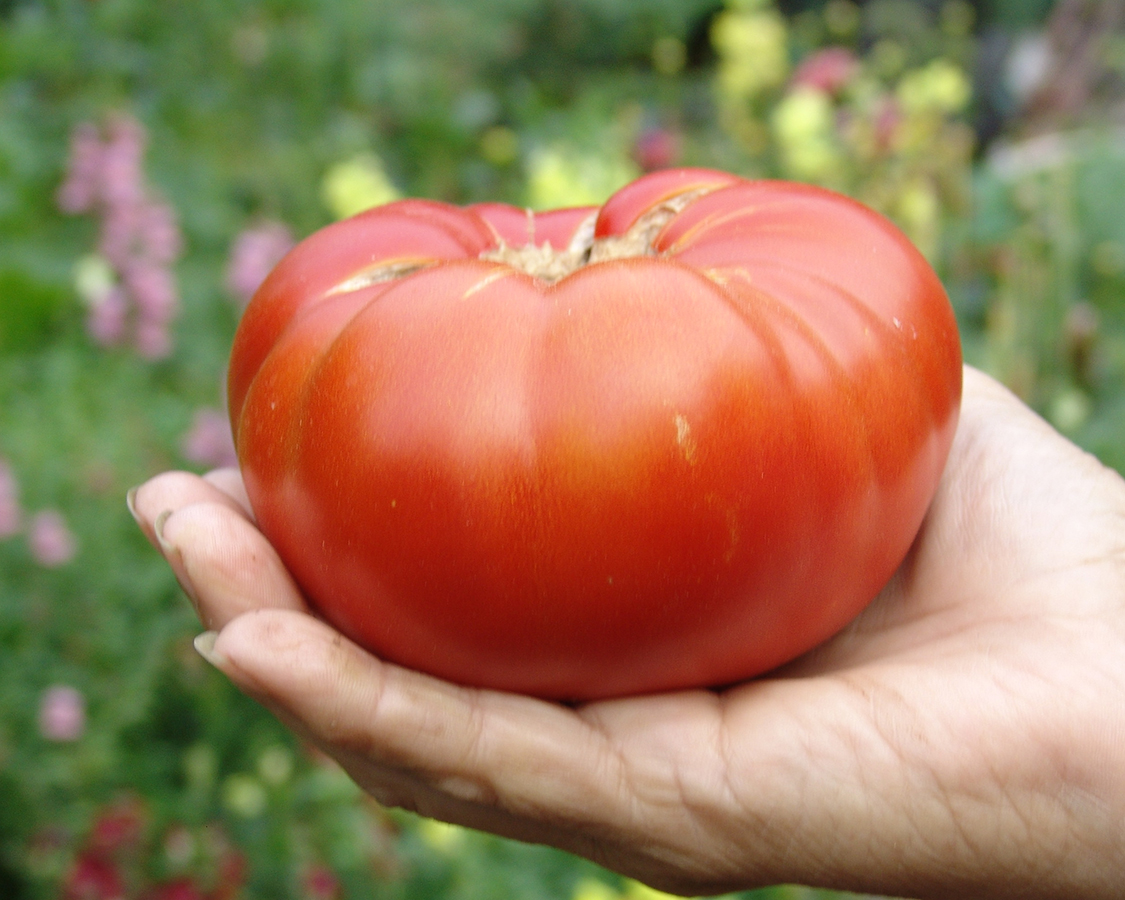
Dwarf Sweet Scarlett

Unusual tomatoes are some of my favorites. They have been placed in this category because some of their characteristics defy any other definition. These tomatoes can be large or small, multi-colored, striped, oddly shaped, sweet or not so sweet. I had to put them somewhere! Green Zebra is a a more tart tomato, this one is for you. This year I am bringing back varieties from the Indigo family, Indigo Cherry Drop, Indigo Apple, and Indigo Blueberries. They have more anthocyanins in them. (Think blueberries). 
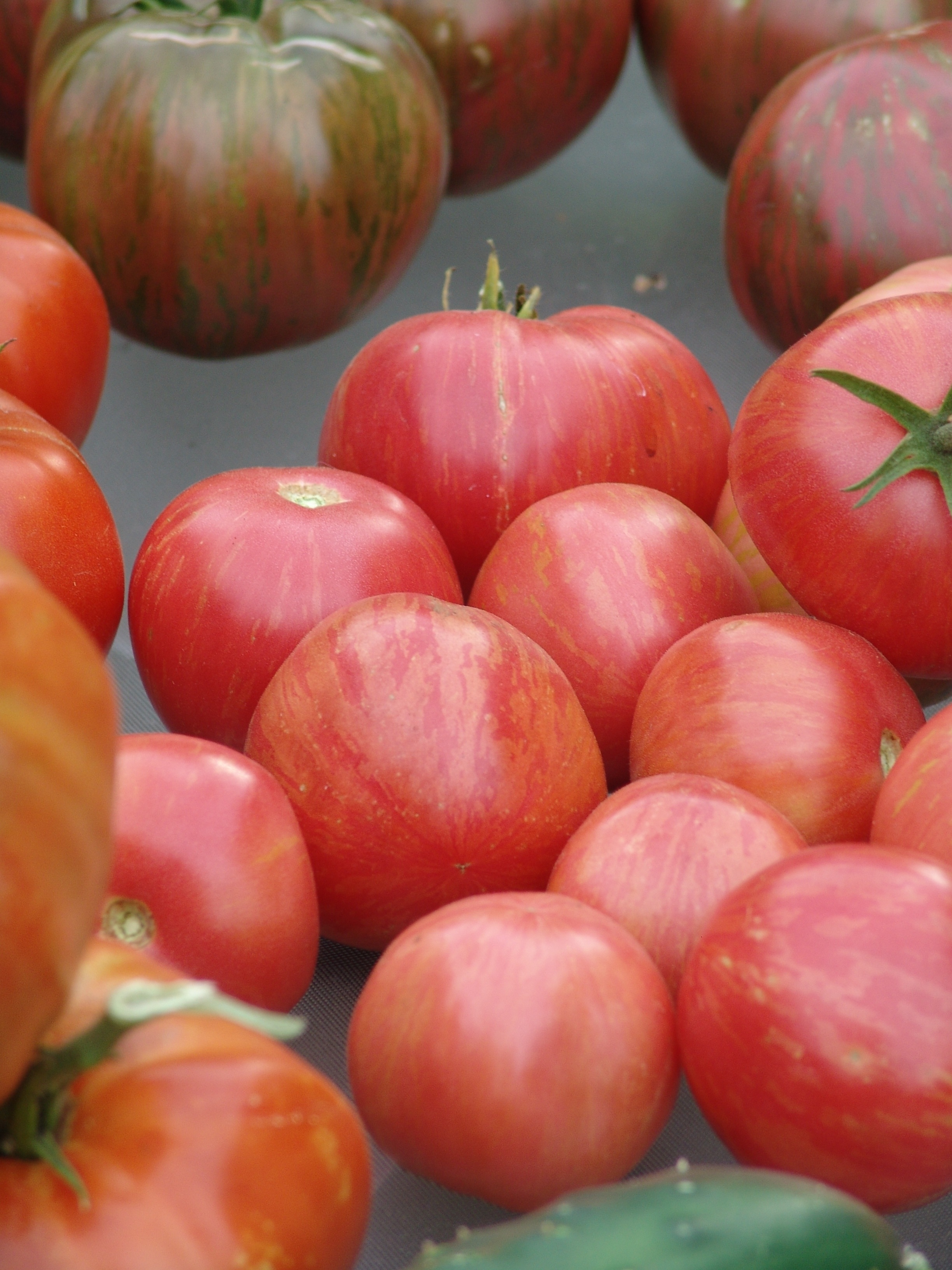
Sweet Carneros

Another thing you should understand are the growth characteristics. There are two basic growth habits:
Indeterminate – means that the vines will keep growing for the entire time it is alive. there are instances in the south where I’ve heard of a 20 foot vine. They keep producing the entire summer, just not as extravagantly as the determinate varieties.
Determinate – These plants grow shorter vines and stop at a pre-determined height. That varies from 2 to 4 feet. Romas, San Marzanos are determinates. They produce a large flush of tomatoes that ripen over a period of about two weeks and then they are done for the year. There are exceptions to the rule however, some, like Taxi will produce, take a rest and then produce more. These are good when you are putting up your harvests. Glacier is another early, determinate that produces for longer periods of time. Semi-Determinate and Dwarfs (see the entry about Dwarfs up above) are a couple of other types. (I have to be honest, not sure what a semi-determinate defines as.)

Wow, that is a lot of information. The next post will start showcasing tomatoes. Below is another tidbit I want to share.

I changed actual days to a seasonal range for our area of Eastern Washington. If you aren’t familiar with your climate, contact your local extension agency. Our weather is so unpredictable here, the days to maturity are from transplanting into the garden. On a seed packet it may say “72 days.” That means you should start seeing ripe tomatoes around 72 days from when you put the plant into your container or bed. It is not from the time when your seed has germinated. There are a lot variables that affect your plants. Weather, condition/health of your soil or planting medium, variety, microclimates, amount of sun, even the area of the country you live in, etc.
Very Early – 54 days or less.
Early – 55-69 days
Mid-season – 70-84 days (most of them are mid-season)
Late Season – 85 or more days (late yes, but worth the real estate)
Spring Is Here (Almost), Starting Seeds, Transplanting, and Other Garden Chores

I feel like I am just awakening from hibernation. The bears have it right, taking a nap in the winter. Although I wouldn’t exactly call it a winter. Very little snow. That makes a lot of people happy but I live HERE for the four seasons. What this does for me, is make me antsy. I hear the birds chirping, I don’t need a coat for the most part and I am chomping at the bit to start our plants.

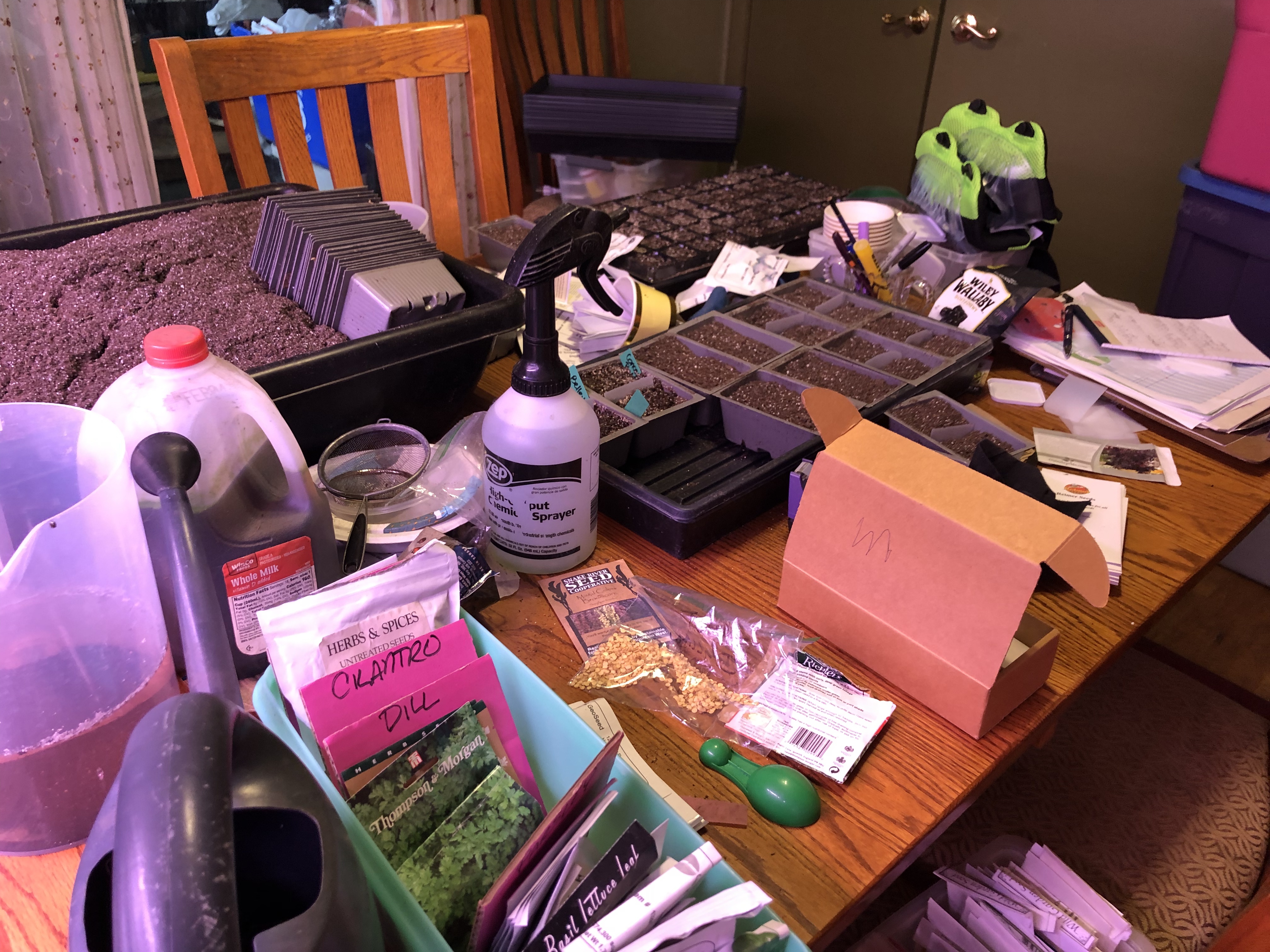
My table is filled with germination mix, seed trays, and seed packets, a sprayer, garden marking pens, tags, etc. All the paraphernalia you need to plant seeds. and I even have printed spreadsheets. I am trying to be organized.
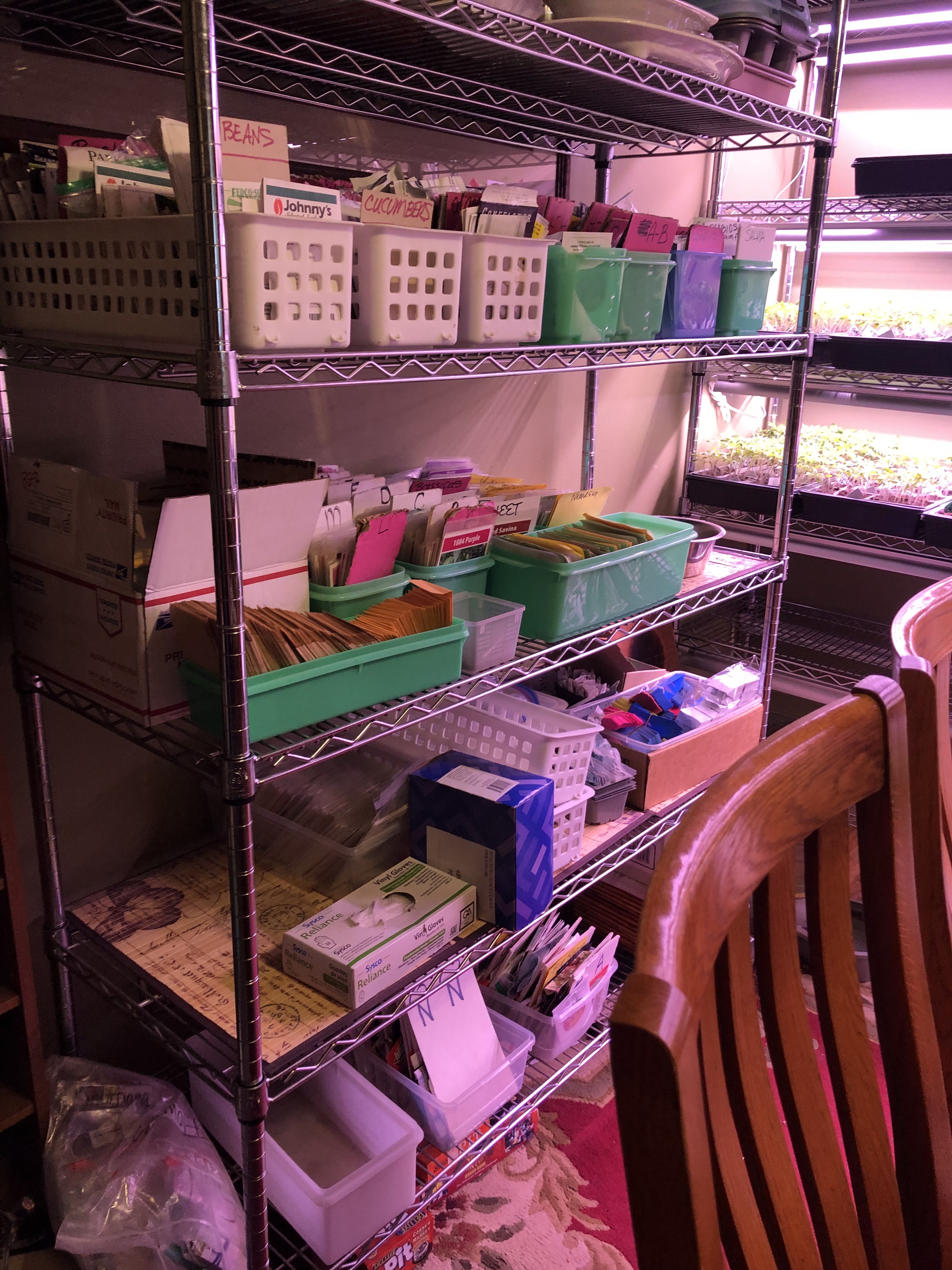
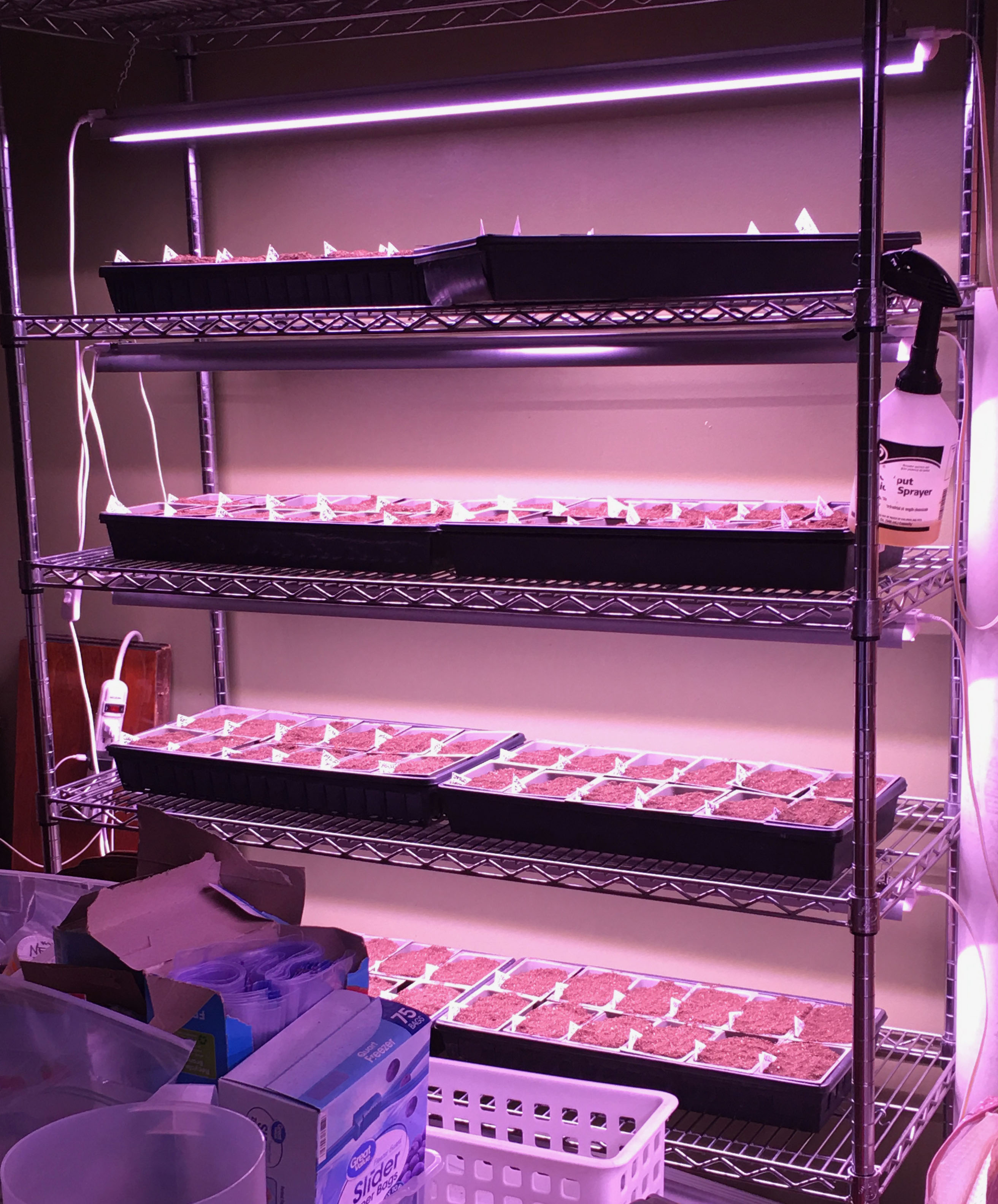
These are my seeds. I store them in the dining room, which at this time of year is no longer called a “dining room” but a “seed propagation” room. You can see in the background the racks and LED lights we use to germinate them.
Tomato babies, they look really good this year.
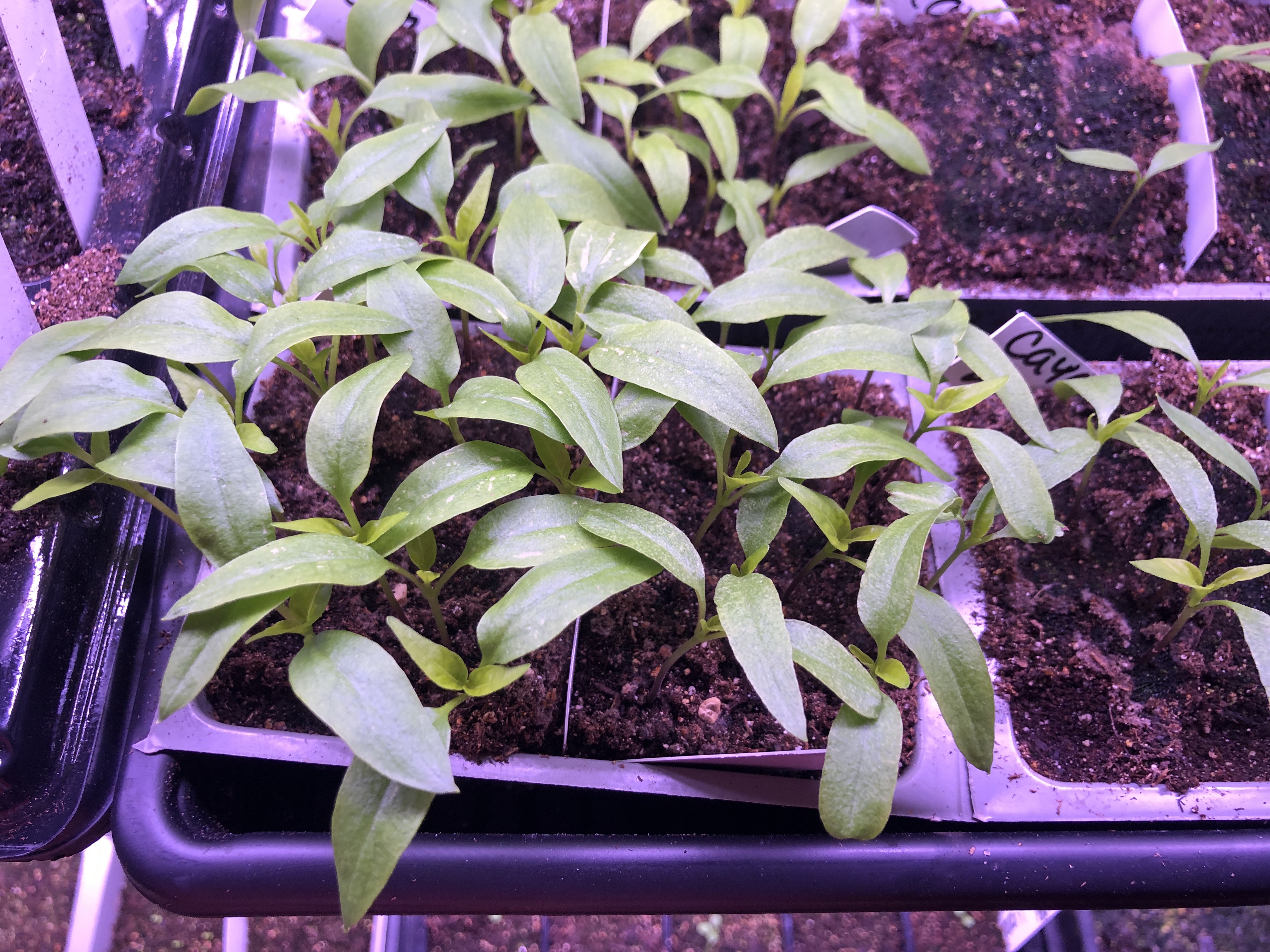
Pepper babies, they take a lot longer to germinate than tomatoes do.

I spend a lot of time looking online at seed catalogs, choosing new and old varieties of tomatoes, peppers, veggies, and flowers. It is a veritable buffet out there. So far, I have 357 varieties of tomatoes, 64 kinds of lettuce, and 126 kinds of peppers and the number of flowers is almost incalculable.

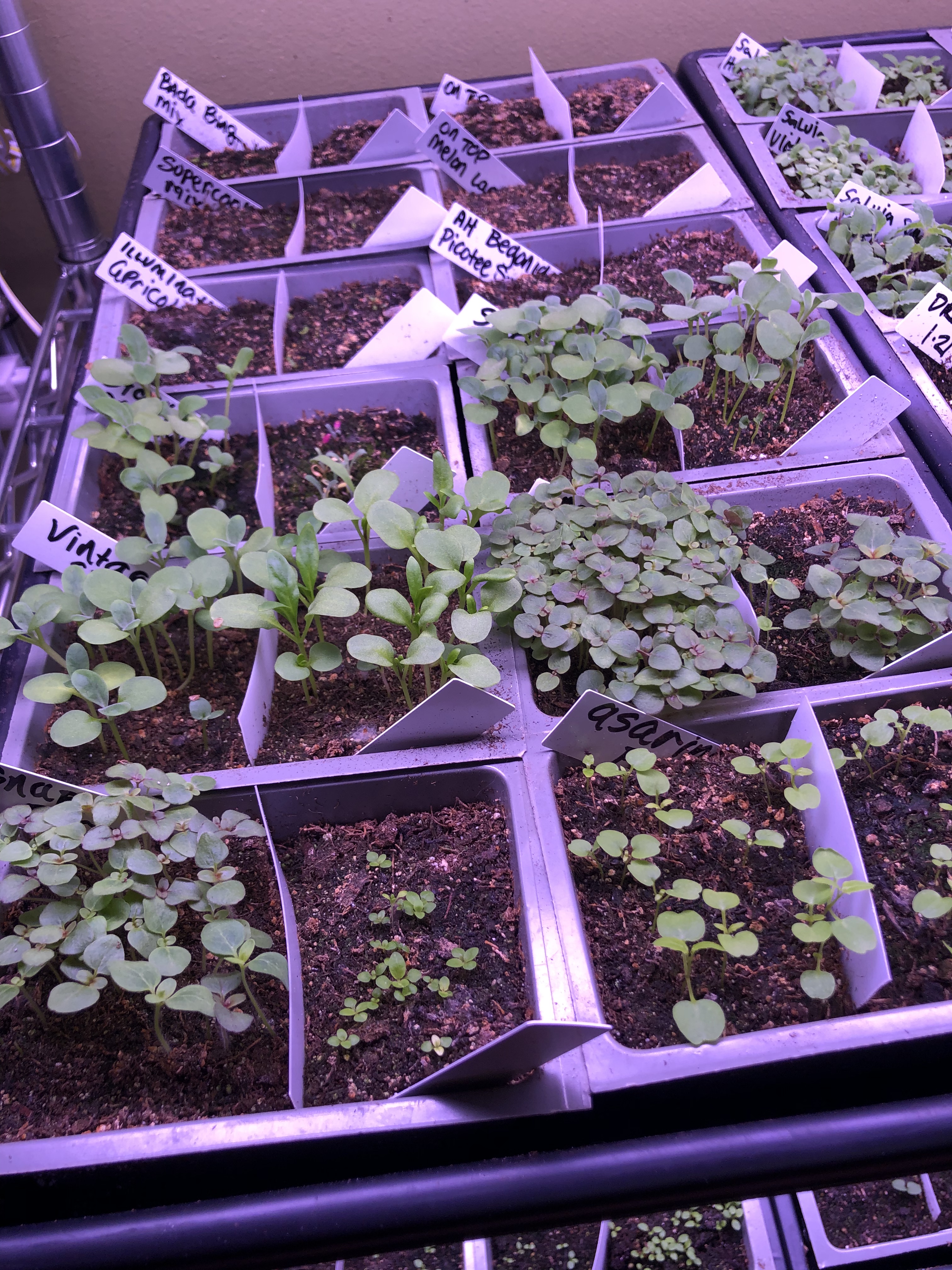
Flowers and more flowers. Snapdragons, stock, alyssum, asarina (a beautiful vining plant), begonias, salvia, and alyssum.

Now that I’ve found out I can grow teeny, tiny seeds that look like dust, I am growing all of them I can. Of course, for things like coleus, begonia, and petunias, I am finding the benefits of using pellleted seeds. I am even trying calceolaria. Talk about dust. You want to plant maybe 30 or 40 plants, no, what you have in your hand is more like 5000 seeds, or so it seems.

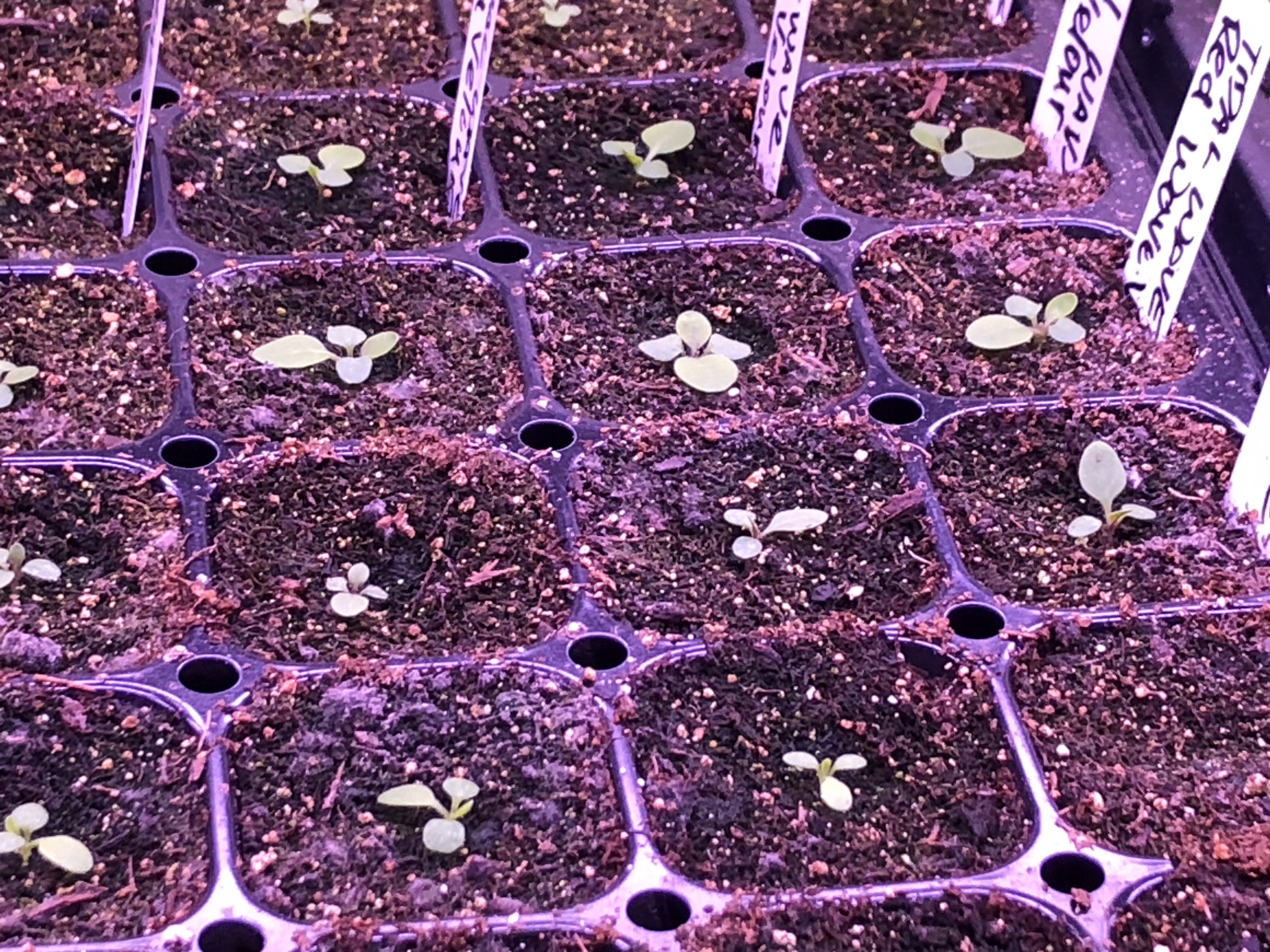
Petunias, I am trying something different using plug trays for individual flowers. It doesn’t necessarily save space but it should save time in the long run.
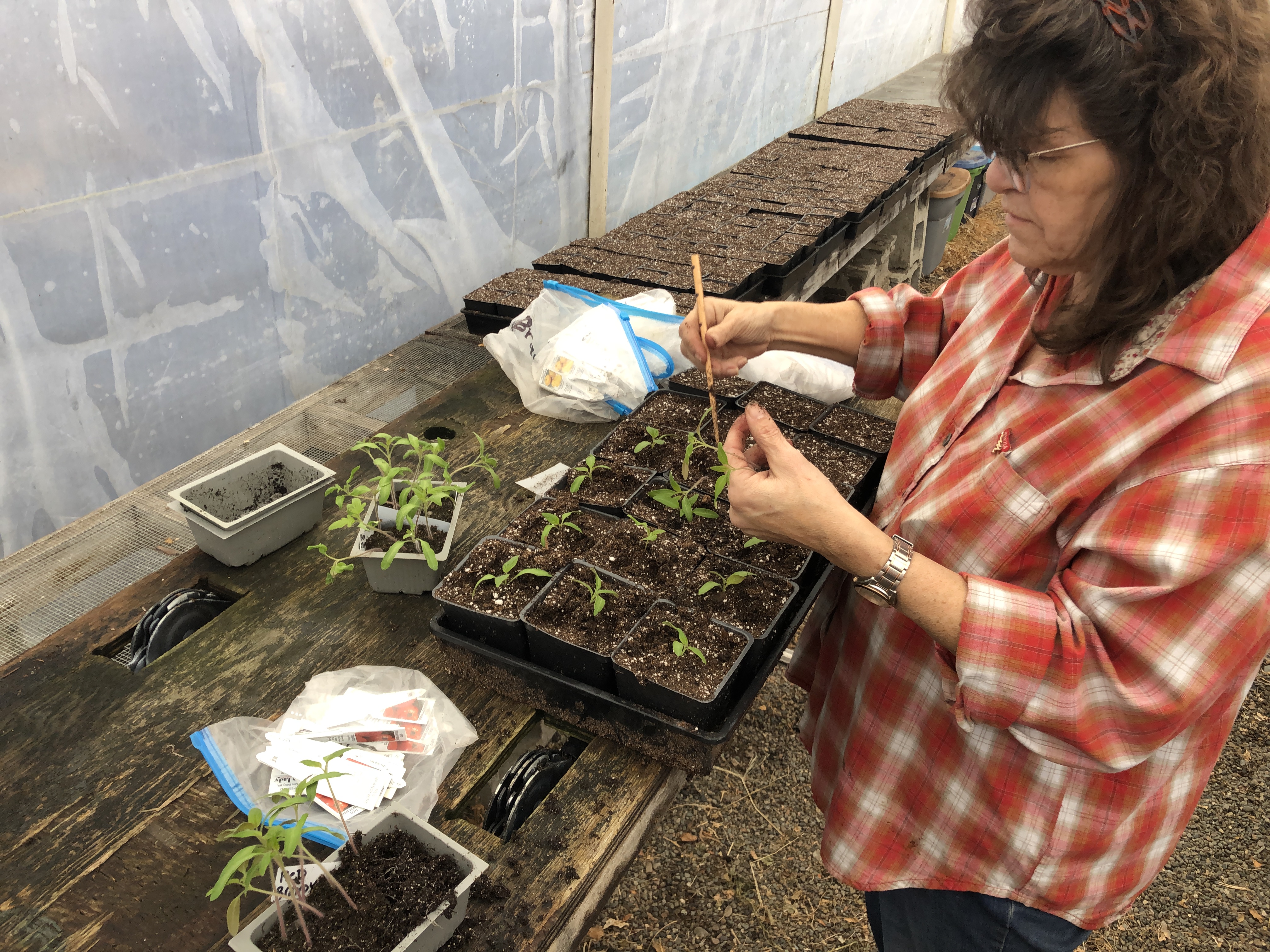
Here I am transplanting the first sets that are going to live in gallon pots

So it begins, transplanting. We put a couple of heaters out in the greenhouse for me to work and not freeze, a fine music system (well actually my iPhone and a Bose speaker) and I am happy as a clam. There’s something about playing in the dirt.

Today I have transplanted 600 tomatoes. Only a billion more to go. I am glad I love doing plants although it can be overwhelming at times. They say that if you find something you love, you’ll never work a day in your life!

The Tomato Lady Is Back!

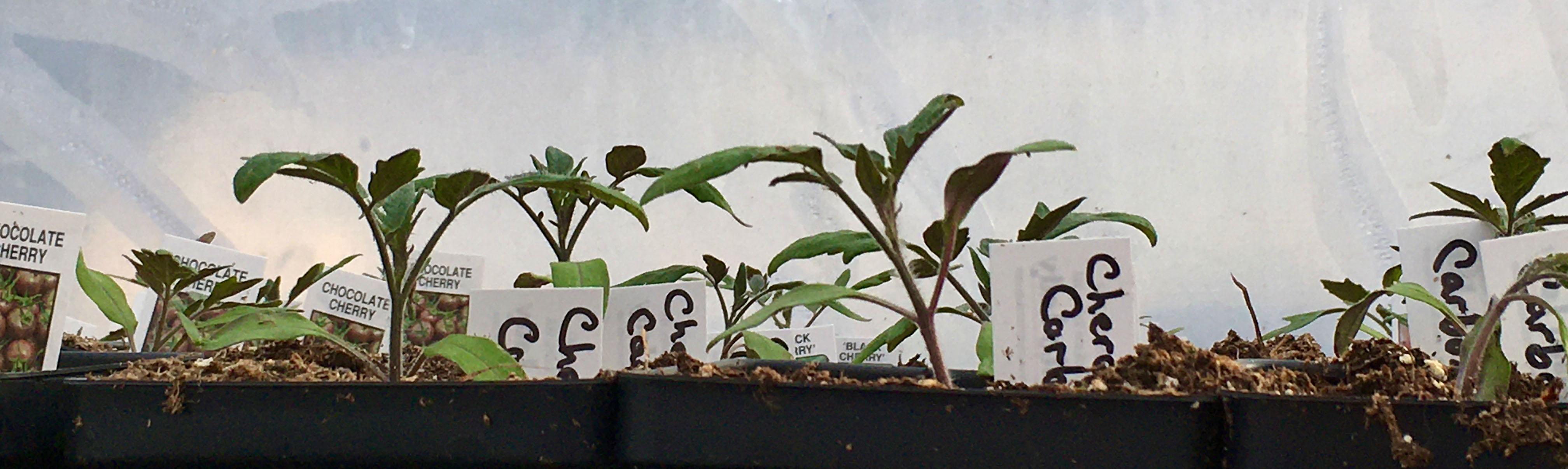
Cherokee Carbon and Chocolate Cherry seedlings

 It’s been a while. I must apologize as I guess I am not as invincible as I thought. Just a little catch-up here – I finally got my permanent knee replacement after dealing with a temporary one for 10 months. Every step hurt. November 10th it was put in, just 2 days after Thanksgiving, my knee collapsed and I fell down, breaking my femur in two places! Who does that? I guess go big or go home, right? I have been walking with full weight for the last two weeks after two months of being confined to a recliner. That was tough. I made it and am doing that overachieving thing again. I can’t tell you how happy I am to be on my feet although it still hurts a bit, unused muscles and all.

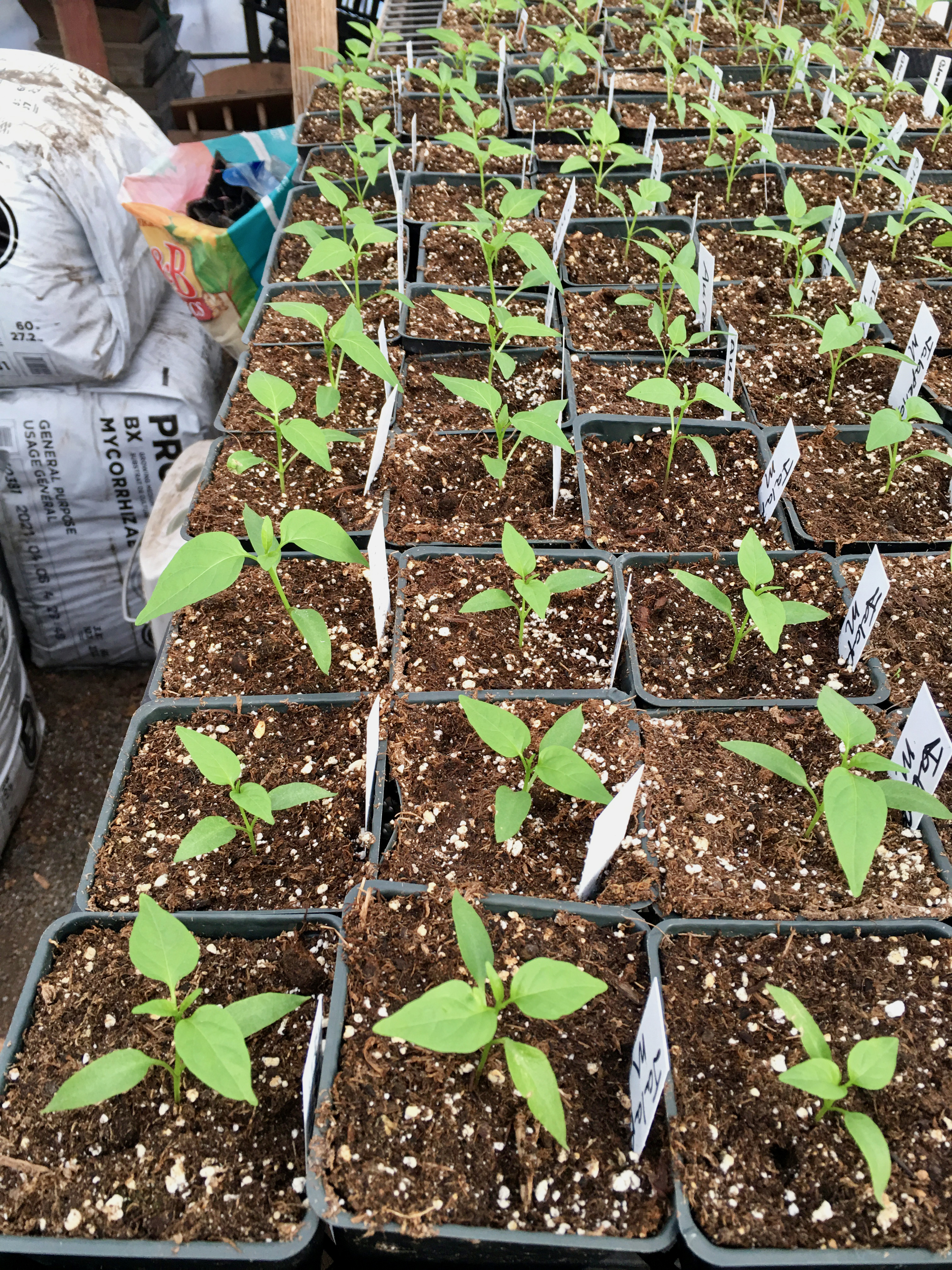
Jalapeno “M”

I currently have over 350 varieties of tomatoes this year and over a hundred varieties of peppers. I have the elusive Cougar Reds this year, and then some. Last year I couldn’t find them in stock anywhere. 

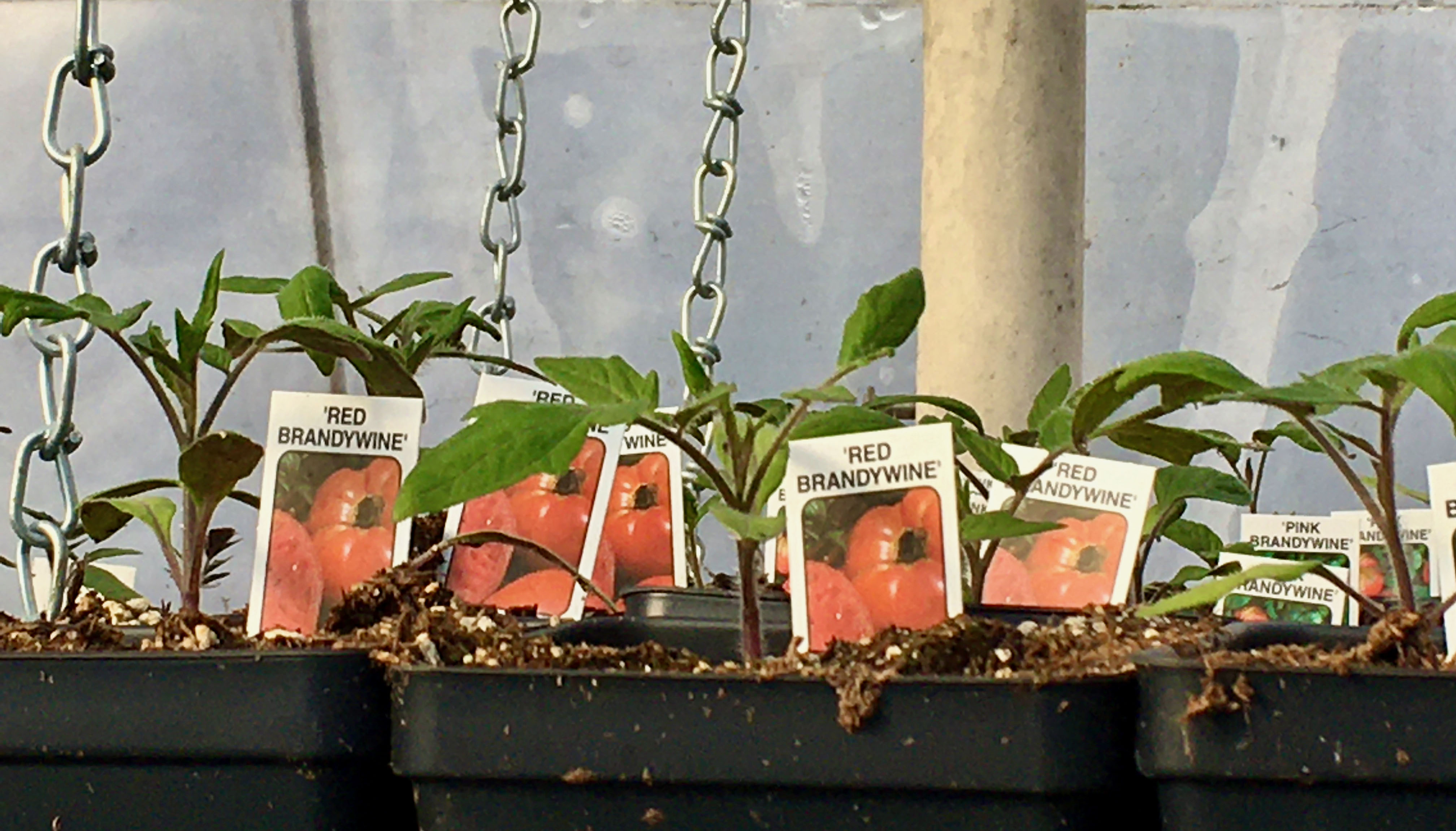
Red and Pink Brandywine seedlings grown for the gallon pots.

I just finished planting seeds for the main crop this morning and already have 3000 plants almost ready to go into gallon pots in a couple of weeks. We switched to LED lights and are really impressed. The peppers look amazing, better than any that I sold last year!

February 20 Main crop of tomato seeds
Cougar Reds

I will be starting vegetables soon, including cauliflower and broccoli and have flowers going also. 

I have had to redo my website which means learning another software program. It’s taking a while. Keep on eye out for it plus my Facebook page. I will have more news there. Hoping to open mid-April. 

Tomato Identifying as a Pumpkin! From The Tomato Lady’s Garden to Yours

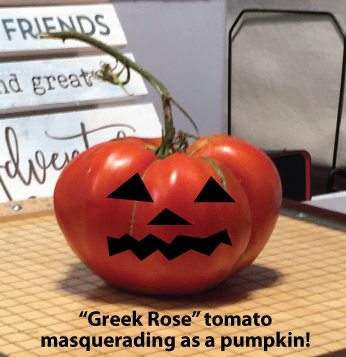
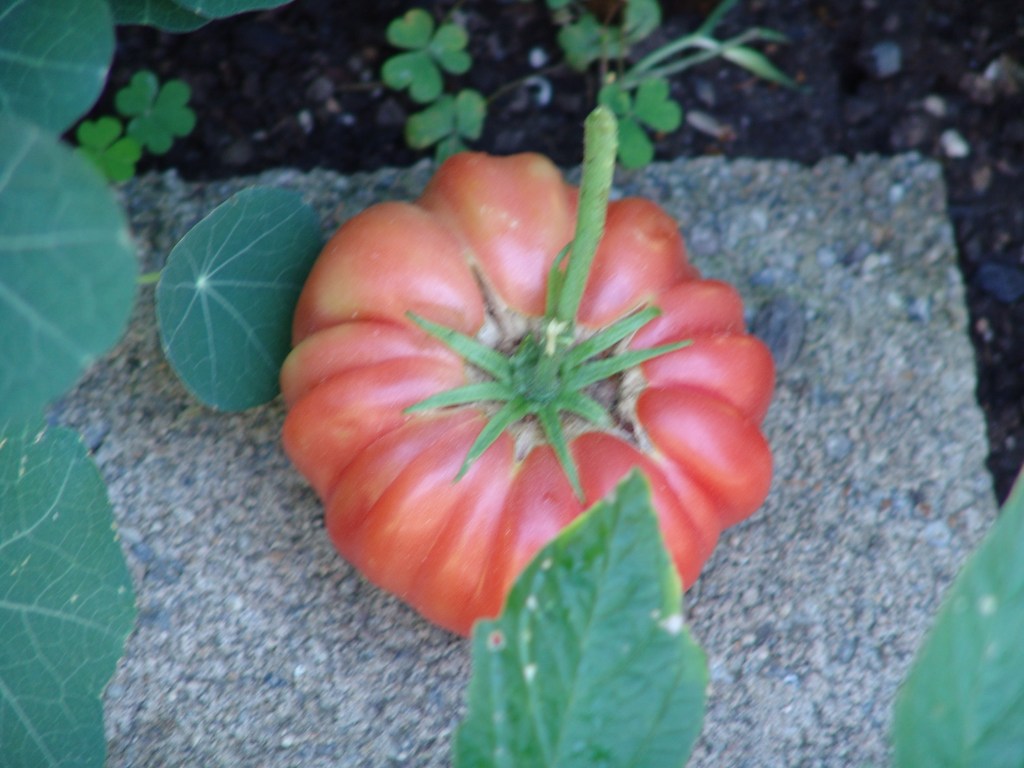
This is one of the last Greek Rose that we picked from our garden for this year. They are lovely and very large and delicious. This one was so big, it seemed to be identifying as a pumpkin! This one is just for fun! Happy Fall!

A Couple of My New Favorite Tomatoes

What a summer it has been. Cold then hot, hot then cold, little moisture, lots os smoke from the fires. It’s a wonder my stuff even grew. I did have record productivity though. Not sure why but I don’t look a gift horse in the mouth.

I grew some new tomatoes this year along with the usual suspects.

My 2020 list:
Cherry Tomatoes

Sungold
Fruit Punch
Velano

Dwarf Tomatoes
Chocolate Lightening
Sweet Sue
Golden Gypsy
Purple Heart
Mr. Snow
Rosela Crimson
Rosella Purple

Paste
San Marzano Redorta

Early
Siletz

Heirloom
Gold Medal
Greek Rose
Dester
Dagma’s Perfection

Black Beauty
Thorburn’s Terra Cotta
Copia
Lucid Gem
Taxi

Other
Lemon Boy
Mosccw

All of them did pretty well, I will try to share more later. My faves this year were Gold Medal, Greek Rose, Dester, Dagma’s Perfection and Lemon Boy. From those five varieties, I picked many that weighed well over a pound.

Greek Rose

The Greek Rose reminded me of an oxheart, more meaty and less juicy with a fluted top.

Dester

Dester was a very late to ripen tomato but when they did, yummm! Very sweet and big.

Dagma’s Perfection

Dagma’s Perfection was also a hit. Large and very sweet and very proflific.

Gold Medal

The Gold Medal, which I have grown before was exceptional, sweet and golden with red marbling. I will certainly grow all of these in my garden agaiin.

Lemon Boy

Lemon Boy – we had a customer several years ago who grew nothing but Lemon Boys. I couldn’t figure out why and now that I’ve grown them, I understand why. Prolific and sweet. Tasty on a sandwich.

Why is My Squash Turning Yellow?

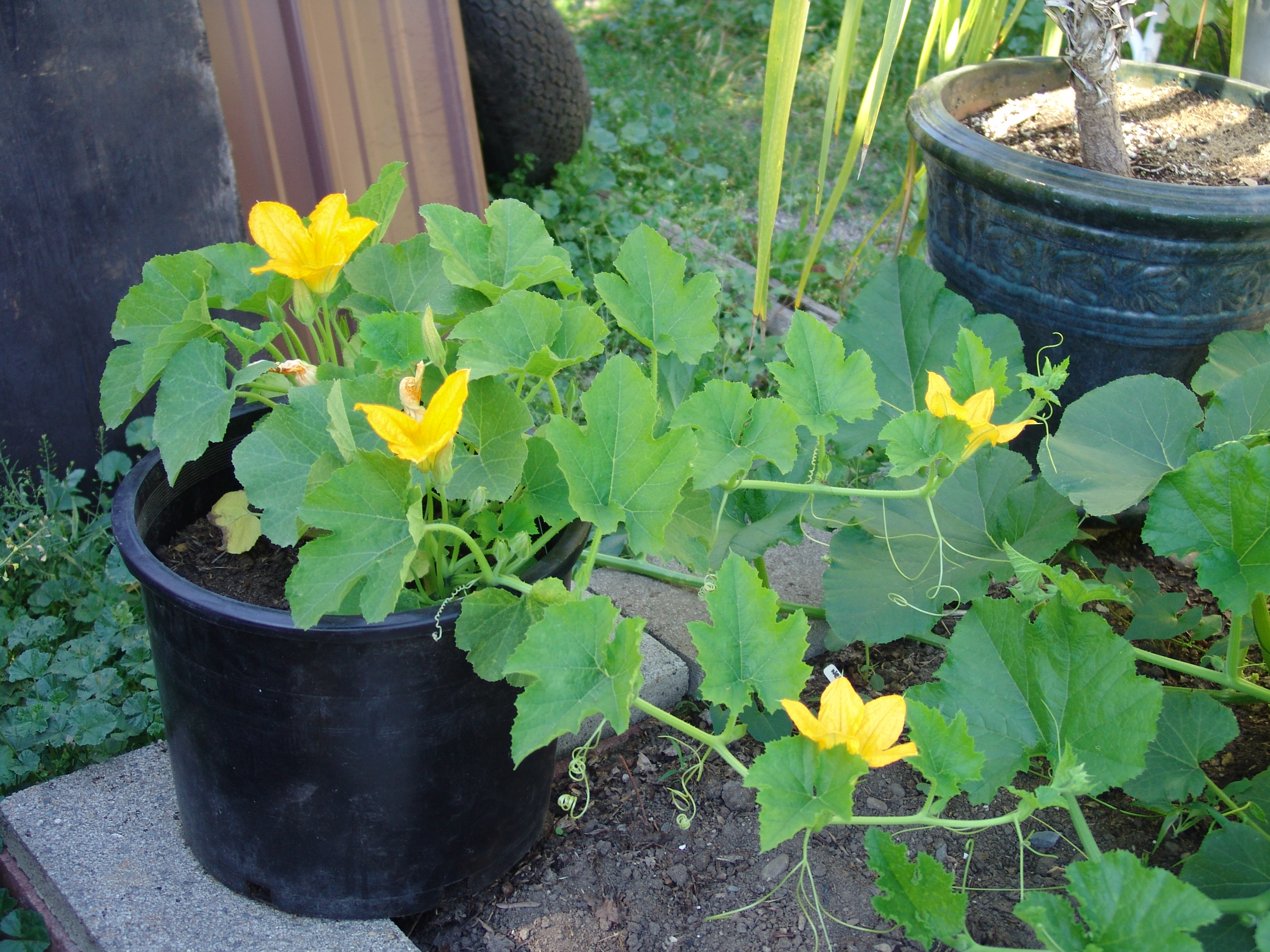
spaghetti squash 73118 - 1So many people come to me with questions about their gardens. I think one of the cutest things they tell me, is that they keep getting blossom end rot on their summer squash. You know, where, you get all excited because it is your first squash of the season. Every day you check on it with anticipation. Then, the horror of horrors, it starts turning yellow! Aaaahh! You babied it, watered it, fertilized it. Now, this.
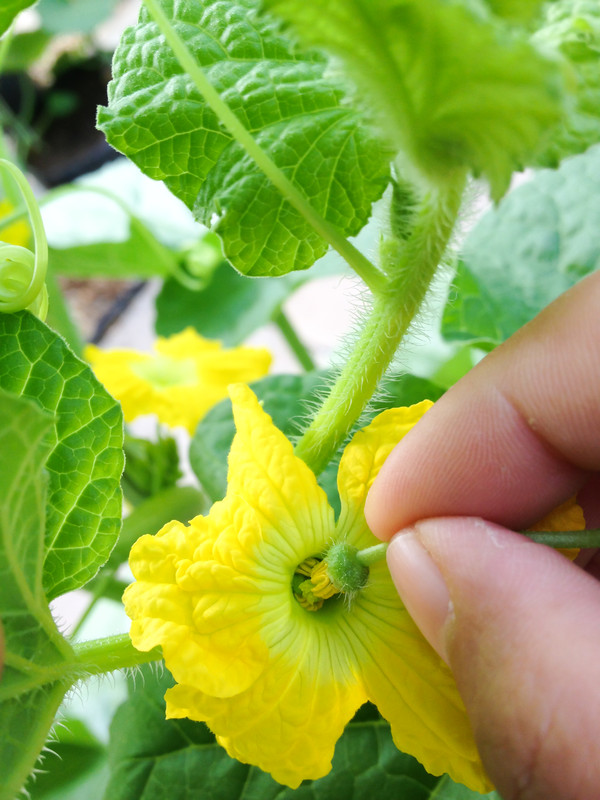
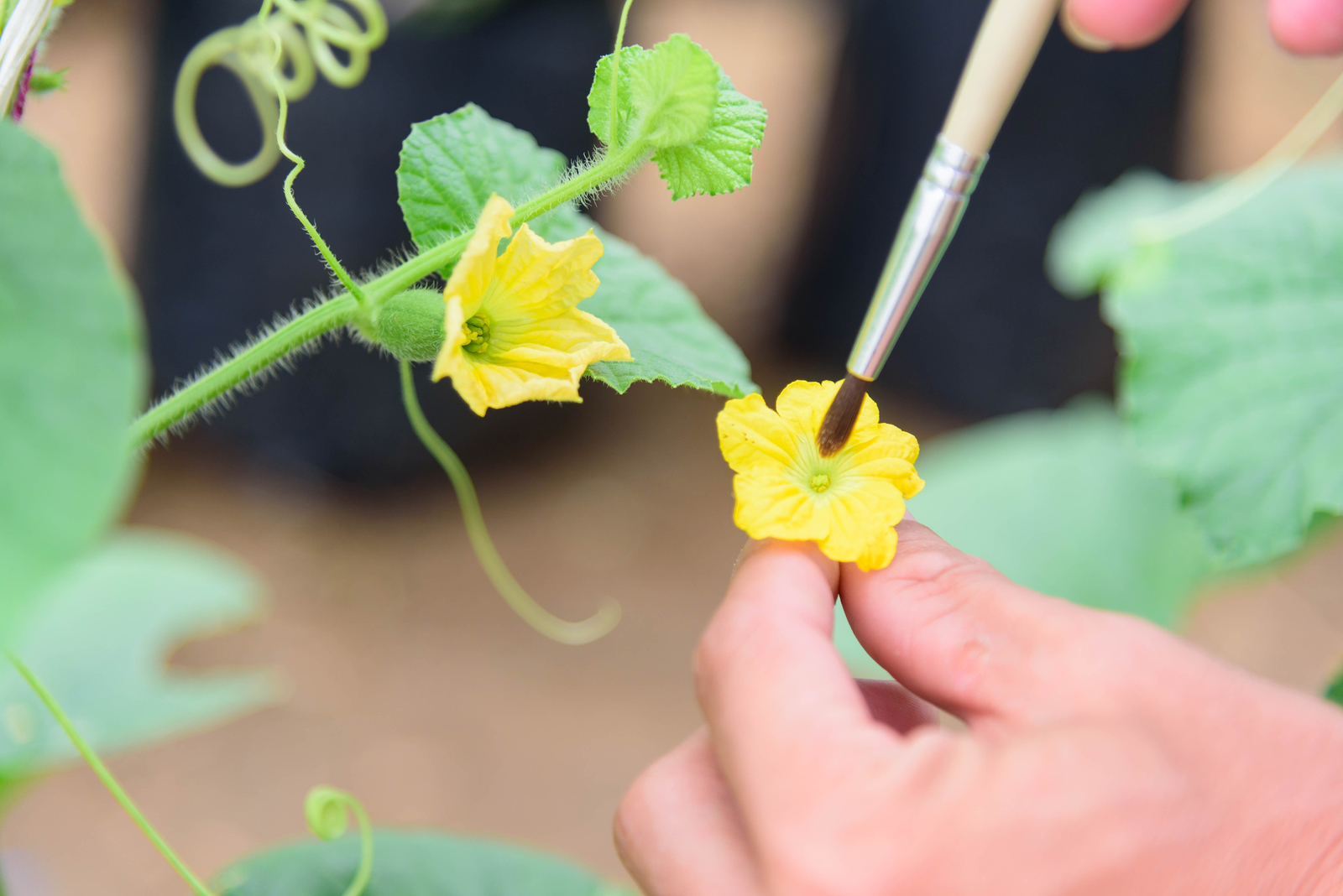
More than likely, it wasn’t pollinated. Wind and bees are the primary ways pollination gets done. Mommy flower and Daddy flower get together, and well, you know how it works.

Squash, melons, pumpkins, and cucumbers are members of the same family and they often have problems with pollination due to the male flowers falling off before the female flowers open. 

Here is a great article I read this morning that tells you, in simple terms, how to get around that. Easy peasy and soon you will be giving squash away, right and left!

Here is the link and I’ve included the article to. Thank you to Harvest to Table for the great read.

https://harvesttotable.com/hand-pollination-of-vegetables

hand pollination

Hand pollination is the manual transfer of pollen from the stamen of one plant to the pistil of another–that is from a male flower to a female flower.

Members of the Cucurbit family–squash, melons, pumpkins, and cucumbers–often have pollination problems because the male flowers commonly open days before the female flowers and so often drop before pollinators such as bees can transfer pollen from male to female flowers.

When female flowers are not pollinated, the fruit will never appear. The nascent fruits–bulging embryos–at the stem end of female flowers will shrivel and die if not pollinated.

If fruit is not forming on your Cucurbit family plants, you can help. Rub a small brush or cotton swab on the stamen of a male flower (it will be dusty with pollen) then rub the brush on the stigma of the female flower.

Hand pollination

Alternatively, you can remove the petals from a male flower and brush the stamen against the stigma of a female flower.

Which flower is male and which is female? Female flowers have a small bulge (a small immature flower) where the stem meets the flower. Male flowers are shorter than female flowers and often appear in clusters.

Storm Protection: The Tomato Lady Way

We planted our tomatoes into the ground a couple of days ago. They are big and beautiful. I have a video that I took of how we plant ours. You can find it on Youtube How to plant tomatoes The Tomato Lady Way! I hope you find it informative and interesting.

Since we planted, wouldn’t you know it, we have had some pretty nasty storms roll through. Nasty for our part of the country! My first thought was that my plants were going to be beat up, especially if we had hail. A couple of years ago we had some h ail damage and it wasn’t pretty. This is a picture of hail damage.

tomato damage hail sun

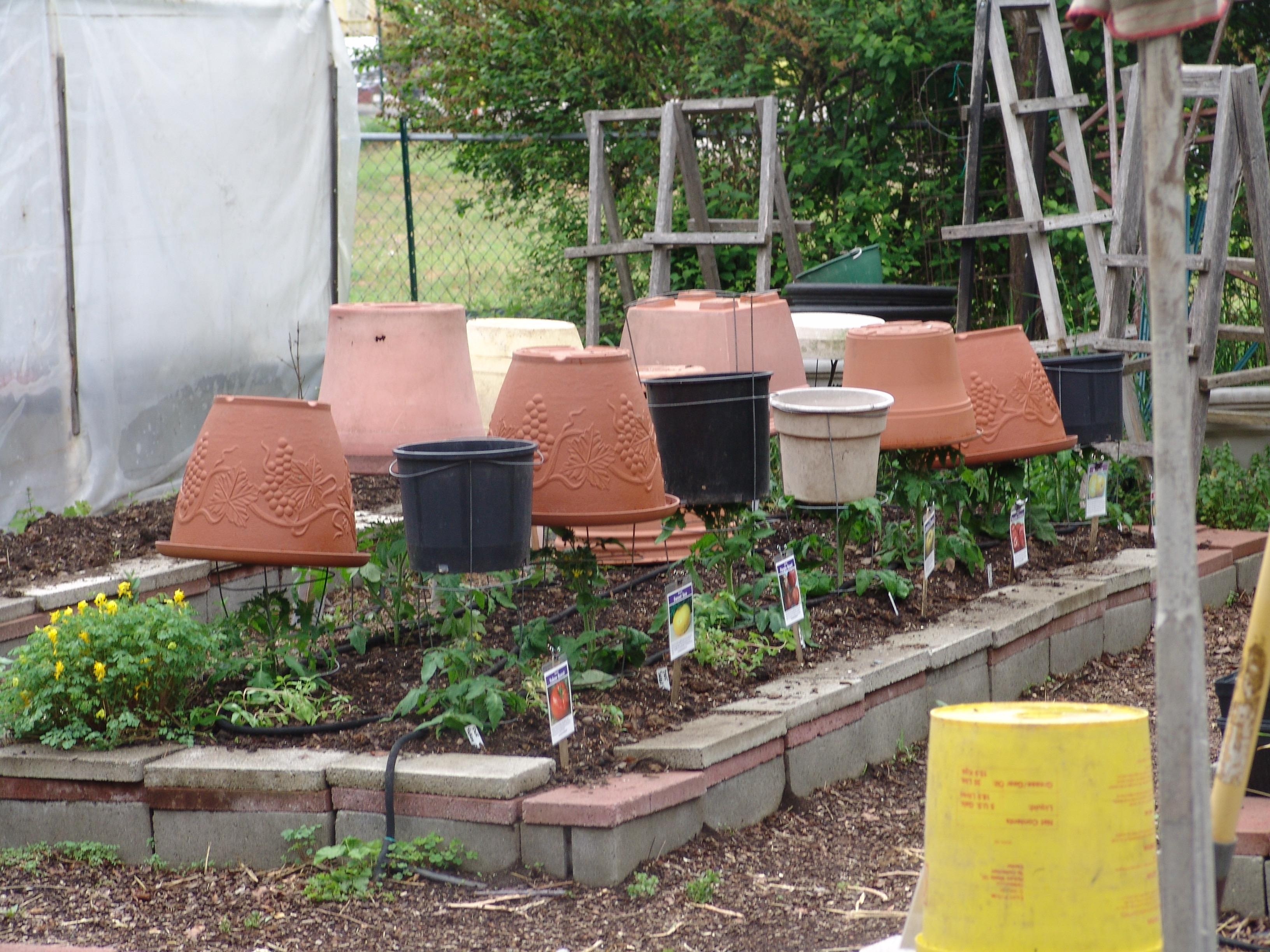
Luckily it was more aesthetic than harmful. This year we got a bit smarter and we covered every plant with a pot or a bucket. Of course, we take them off during the day (unless it hails or rains hard) so they don’t fry should the sun decide to make an appearance. It is also the way we would try to protect should we get some really cold temps.

storm protection 5192020 - 2

Just so you know, they aren’t levitating, there are small metal tomato cages that we put over them when they are small, then we put our heavy-duty wooden cages over all that.

This works for us!

Container Gardens And The Plants That Love Them

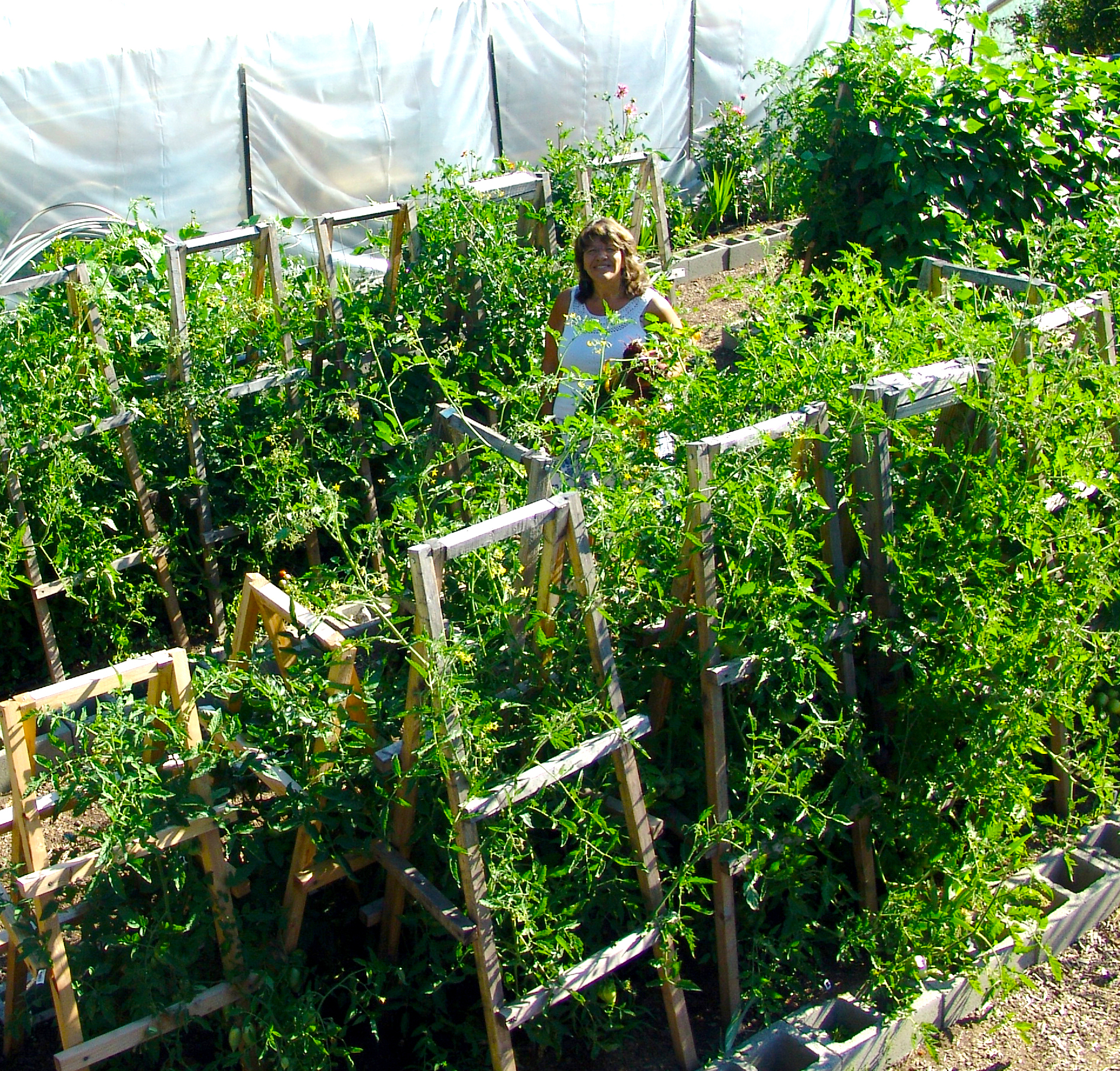
me in garden with tomatoes811

Wishful thinking, one summer in years gone by. Warm weather, monster tomato plants on our homemade tomato cages.

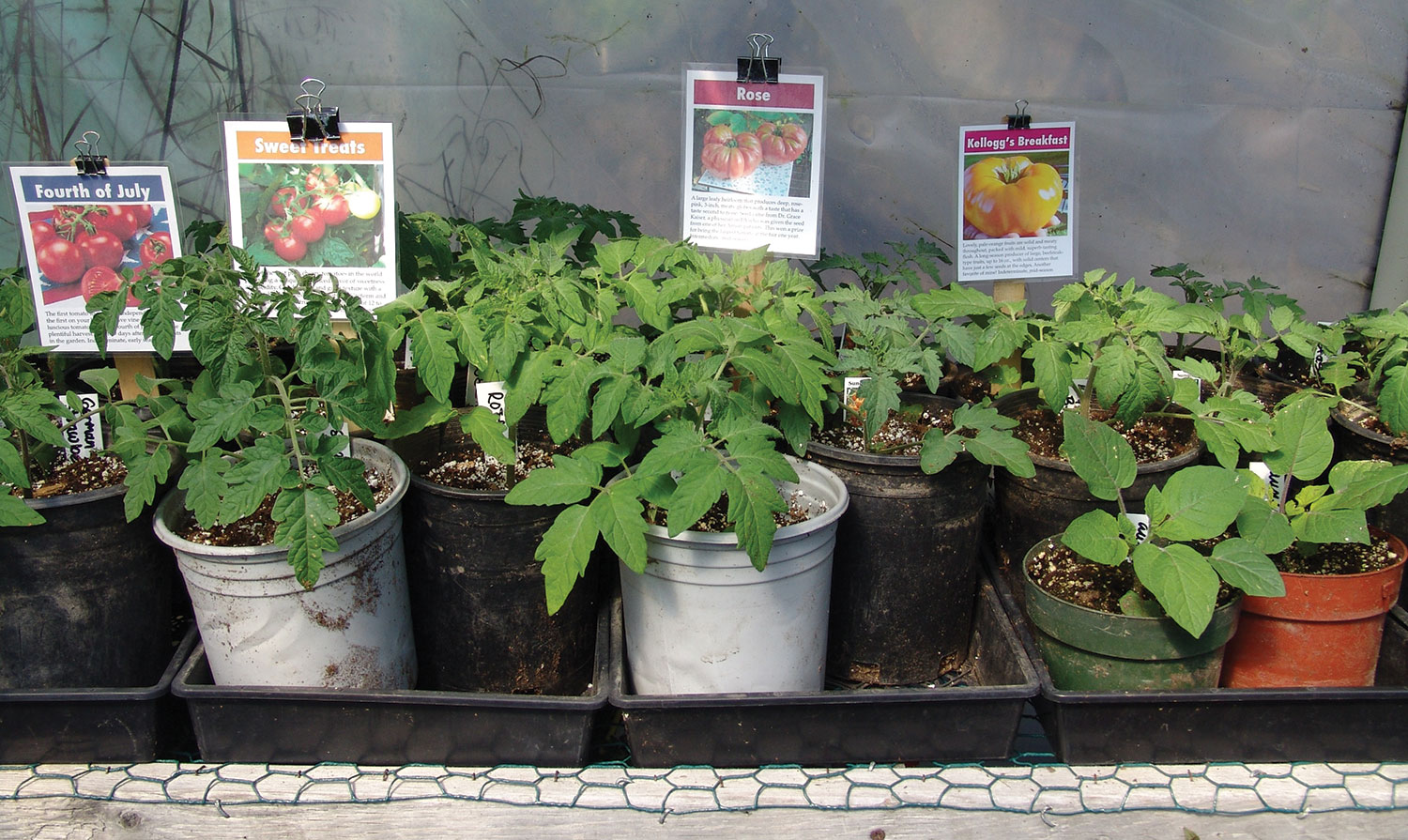
tomaotes-gallons

Our gallon pots that we are selling now

First, let me apologize, I fully expected to be able to continue this thread and then life got crazy! We started selling our plants much earlier than we had planned to. The Garden Expo we were camping up for was canceled due to the virus situation, and that is a third of our sales. I wish this was my “hobby” but it’s around 50% of our income so we had to scramble to figure out how we were going to overcome this serious setback. Instead of 1500 gallons, we had 3000! Thankfully, we are considered an essential business and we knew that the “new normal” would make selling a lot more difficult so we started to sell early. Everyone had been very generous and understanding. I lowered the price of my gallons by $2, they are now $8.00 and have changed the way we are getting plants to the customer. Curbside delivery, home delivery with minimum orders, appointments, social distancing, monitoring how many in a greenhouse at a time (1) husband and wife are considered as one person, if they haven’t caught it from each other at home they won’t be catching it in the greenhouse! Fun times! Apologies aside here is the long-awaited post.

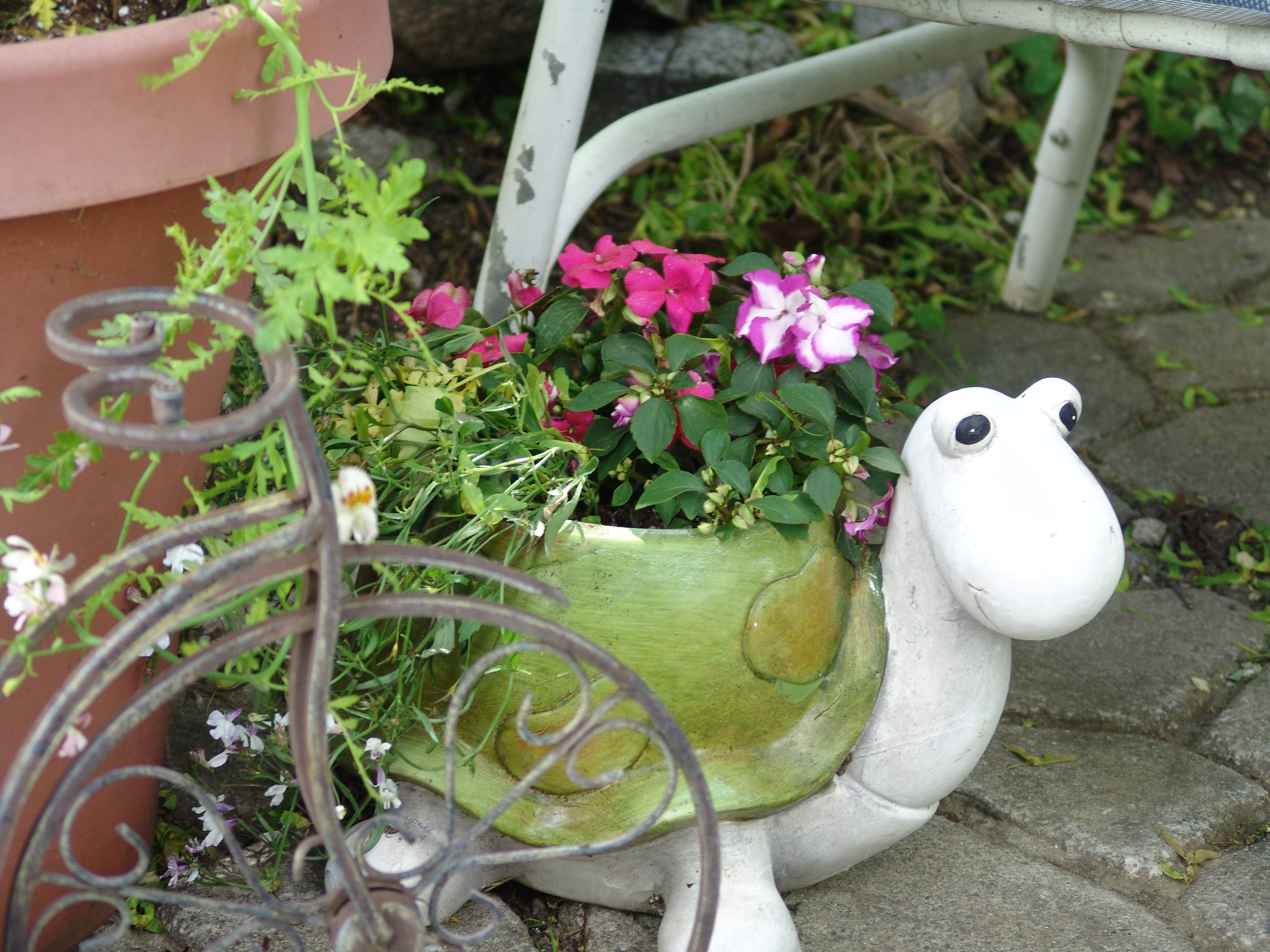
mixed flowers21

Cute little guy with impatiens. For a shade garden, small soil cavity so better for a shade garden where it won’t dry out as fast.

So far we have discussed basic tips on raised bed gardening, in-ground gardening and edible landscaping which simply means including vegetable plants in your decorative gardens. I am a big believer in container gardening, for vegetables, for flowers, and for both mixed together. Edible container gardens don’t need to be boring or plain or merely functional. In container gardens, there is a design principle that most of us learn, thrillers, fillers, and spoilers.

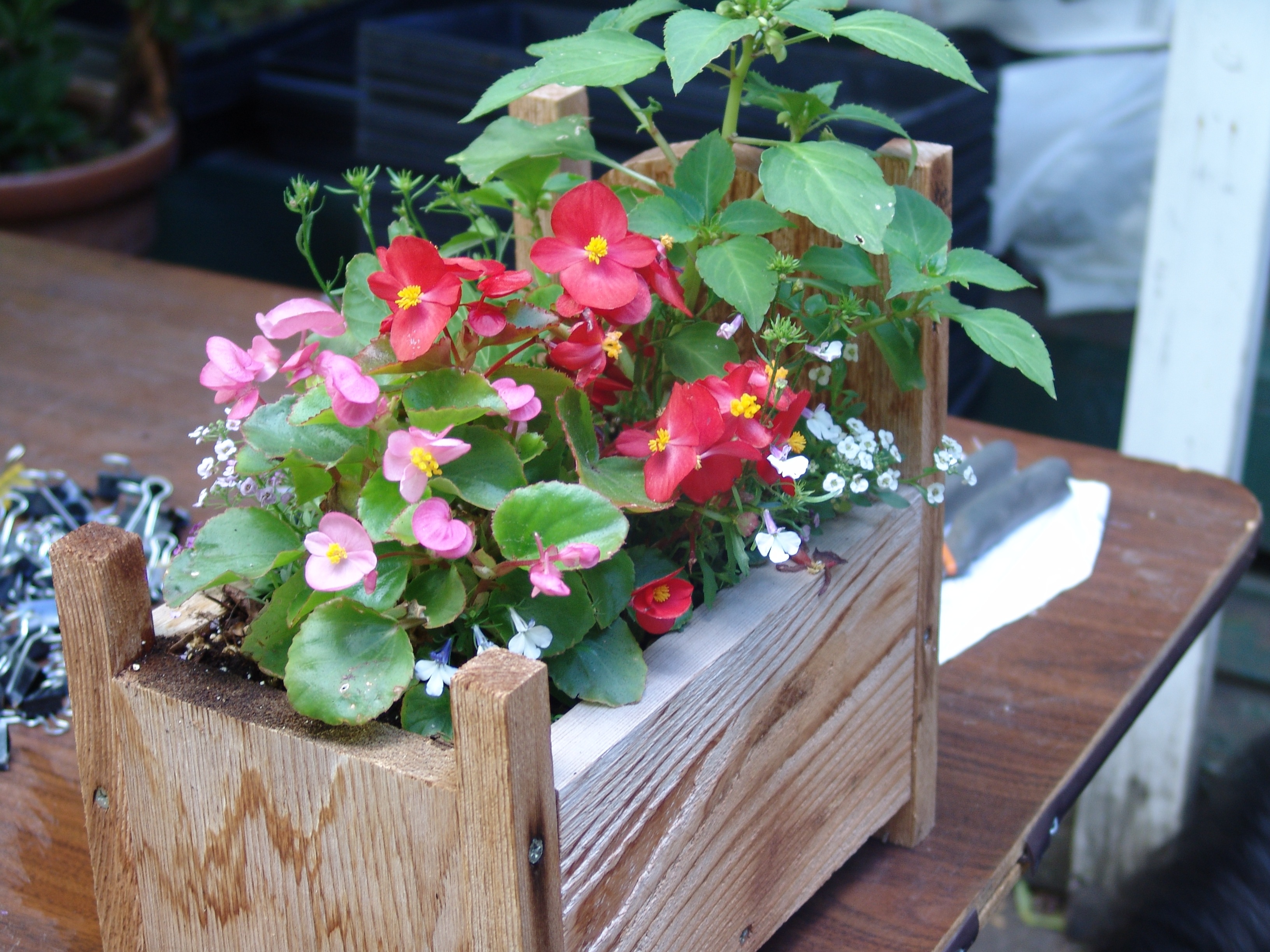
containers and bed12

For a shade garden – wax begonias, impatiens and alyssum in a “flower bed”

Thrillers are your focus plant. It is the dracaena spike, coleus, begonia, ornamental grasses anything that is a big, eye-catching focal point. In an edible container garden, it would be your tomato plant, cucumber vine, lettuce etc. Can you imagine growing carrots, with their ferny, frothy foliage in the middle of a large container surrounded by flowers? Sweet.

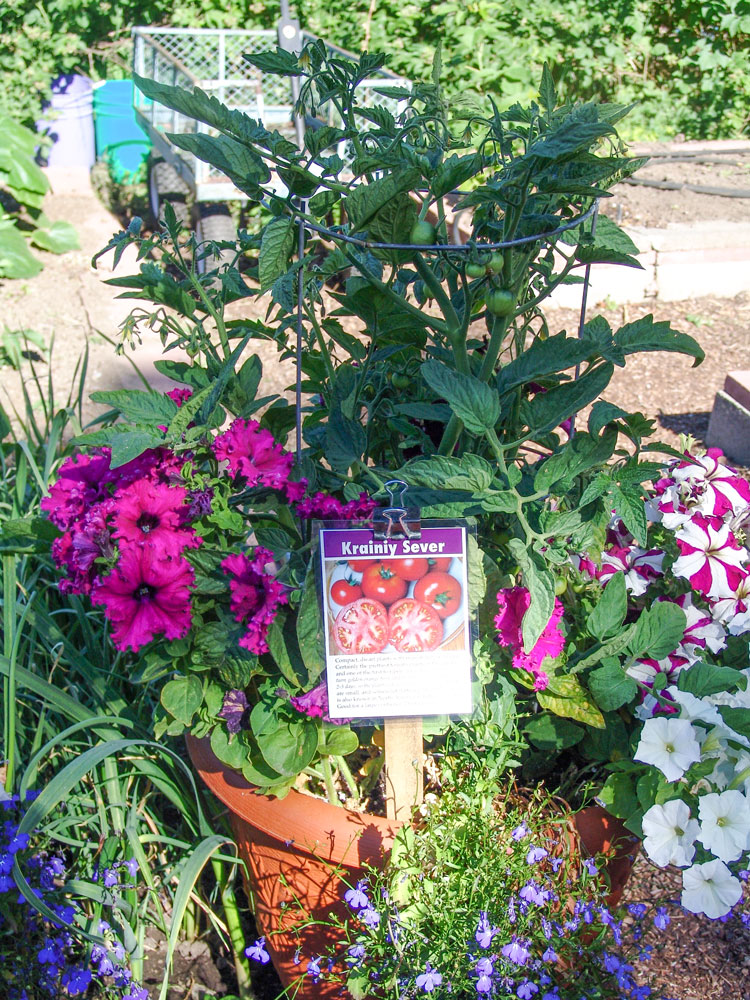
krainiy-sever--3-6-22-17

Krainy Sever, a dwarf tomato with petunias and lobelia

Fillers are mid-size, mounding or rounded plants that surround your focal plant. You can use it to complement or contrast the colors of the focal plant. If it is a dappled shade garden, wax begonias, gazania, ageratum, impatiens would be good choices. Petunias, mounding lobelia, alyssum, ivy geraniums, nasturtiums, and million bells, are all good choices for plants in containers in the sun.

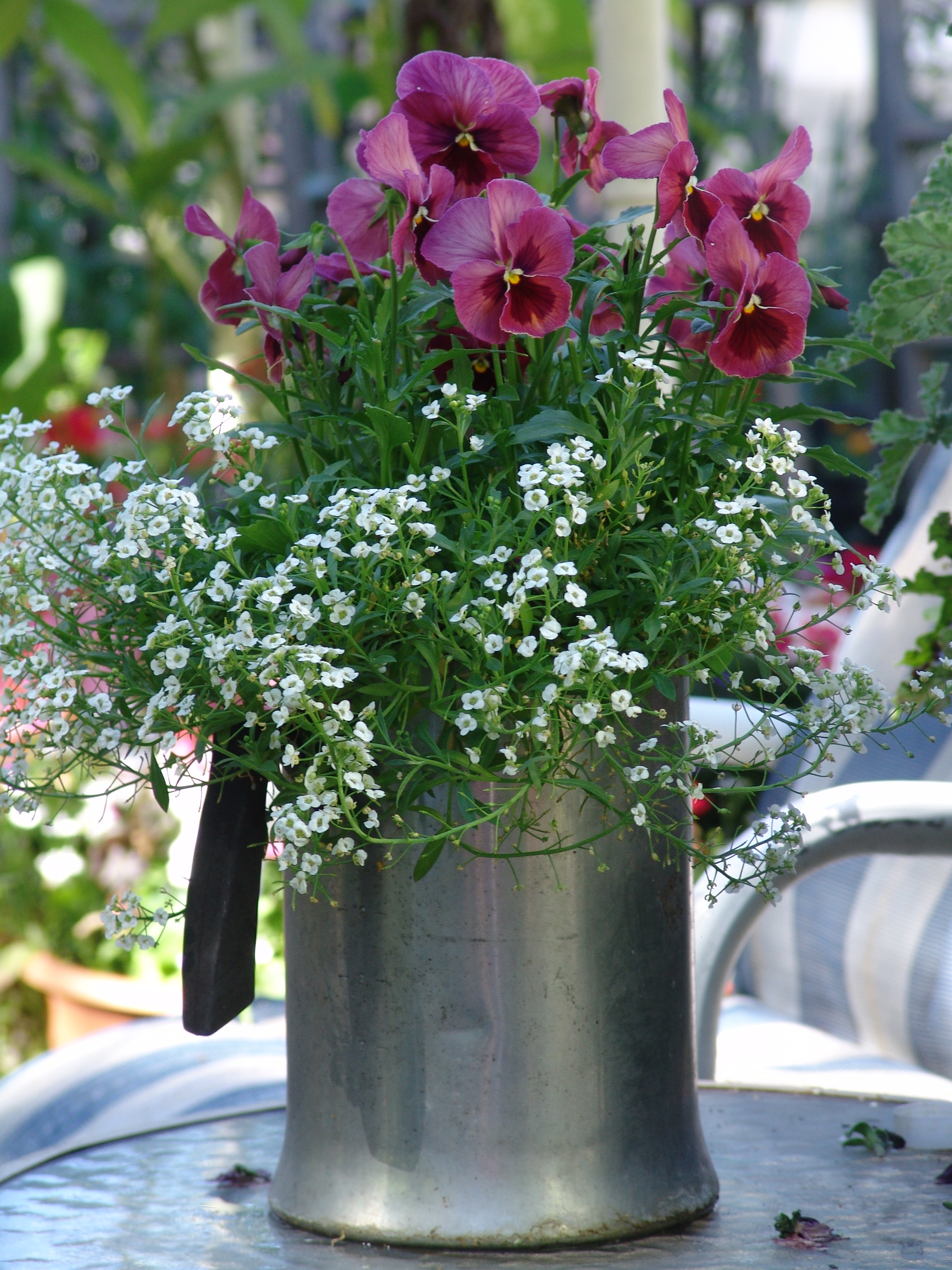
pansies in pots58

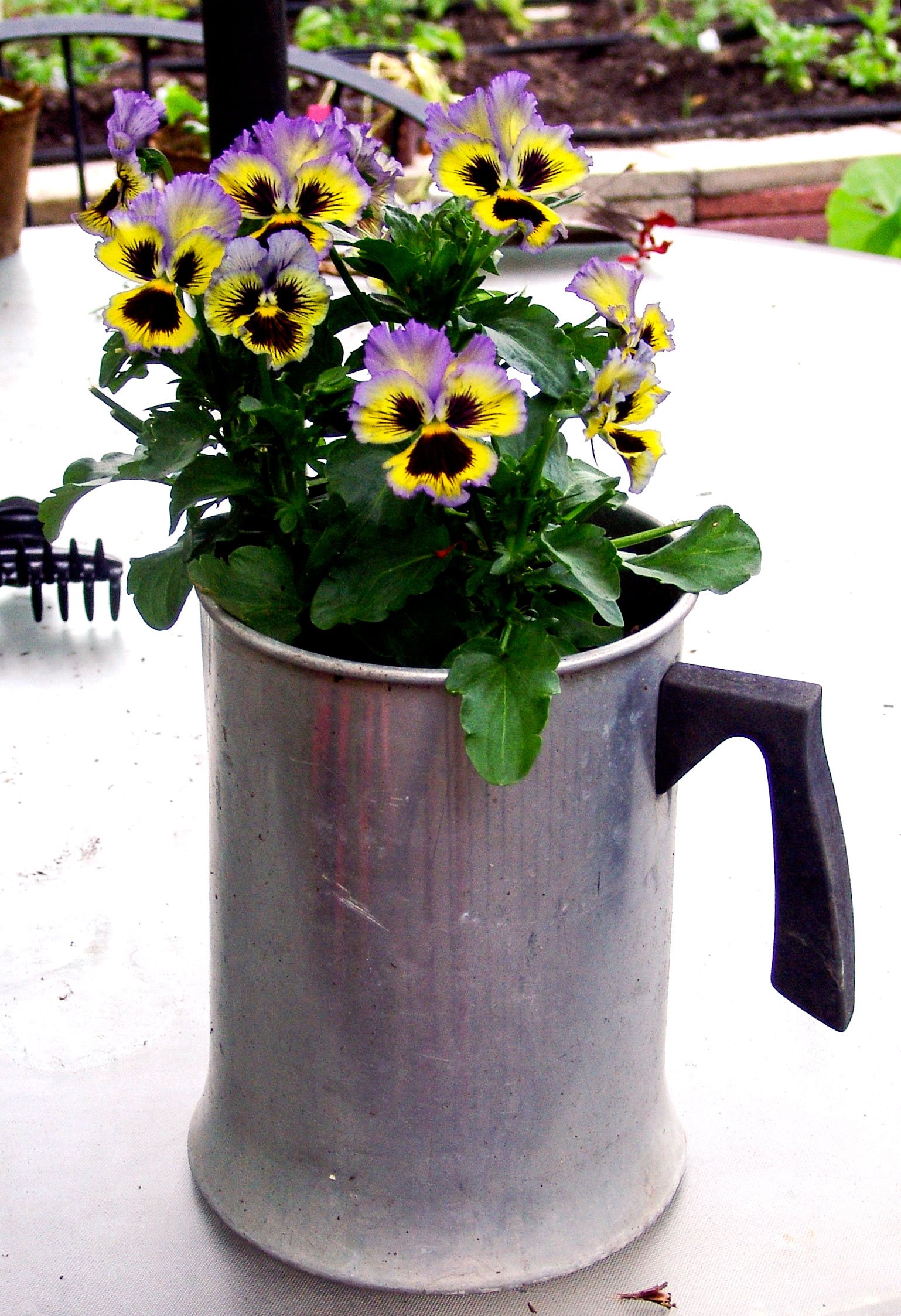
Pansies and alyssum as a fluffy white skirt in a coffee pot

Spillers are plants that tumble over the sides of the container, softening the edges and providing more color. Bacopa, petunias, alyssum, trailing lobelia, sweet potato vine, ivy, are good choices.

salad bowl pictures - 2

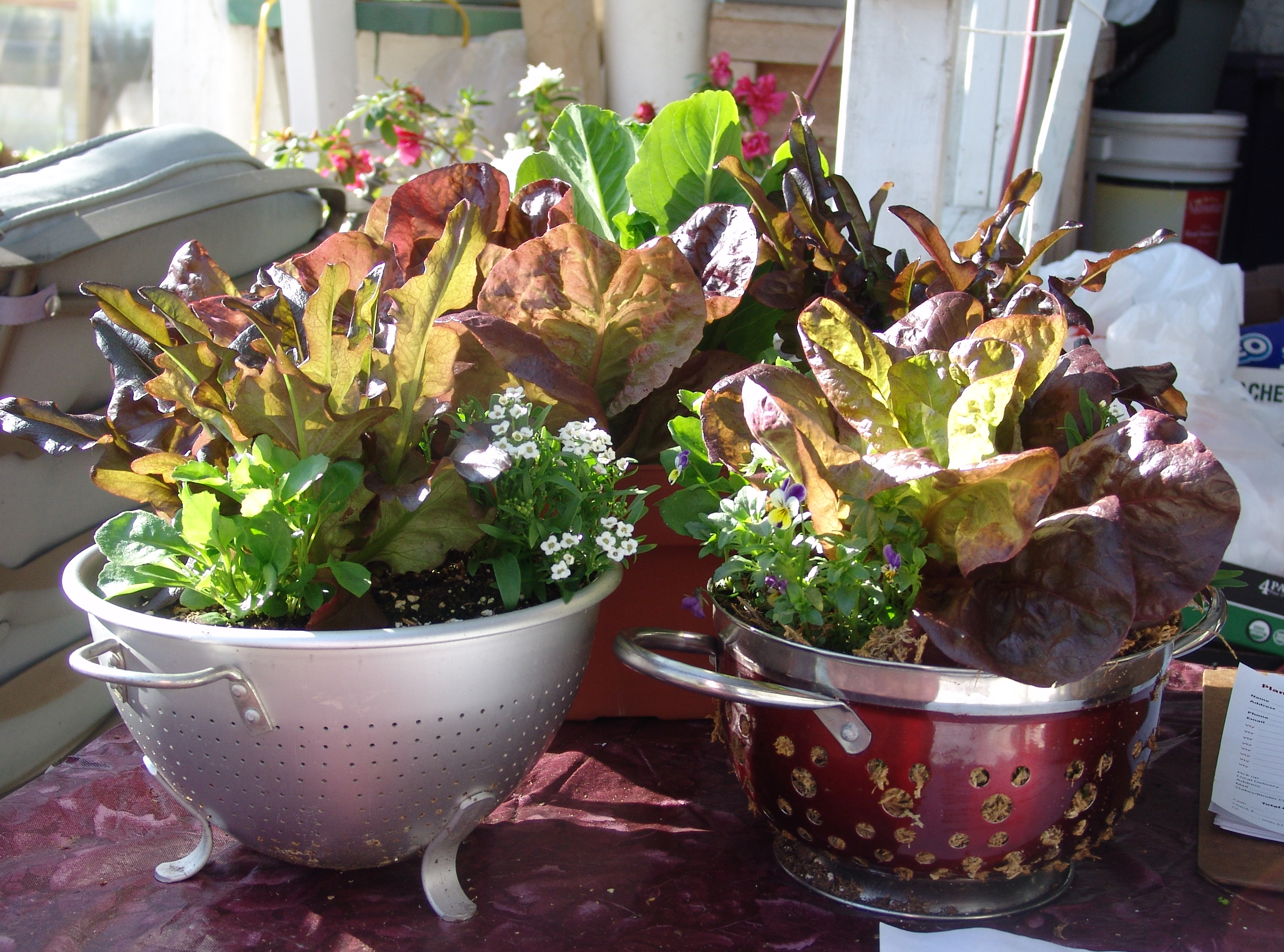
Salad Bowls – various lettuces in colanders with alyssum and lobelia

Light, Temperature, Nutrition
Some plants can work in partial, dappled shade, million bells, lobelia, alyssum, bacopa, petunias, and geraniums. Very versatile. This leads me to my next point: keeping in mind the various light, temperature and nutritional needs of the plants.

I would never put coleus and petunias in the same pot. Coleus, for the most part, like shade (although there are new sun-tolerant varieties coming out today), Petunias do better with more sun. Vegetables also do better with more sun. Lettuce would be a good filler or focus plant for partial sun. Tomatoes need a lot of sunshine to be prolific. anything that produces fruit, such as tomatoes or cucumbers, need a lot of energy to form it.

Think of putting drought-tolerant plants together, shade-loving plants, or sun-loving plants in the same pots. Temperature is another factor although I think of it more in terms of succession planting. Pansies and Schizanthus like cooler temperatures and lots of sun. One of my favorite combinations to plant is a tomato or lettuce plant (which also likes cooler temperatures), petunias, lobelia and alyssum. When the cool weather plants succumb to the heat, or I eat the lettuce, the petunias alyssum and lobelia take over. I can also insert other plants in their place. Two-season beauty!

container lettuce 2

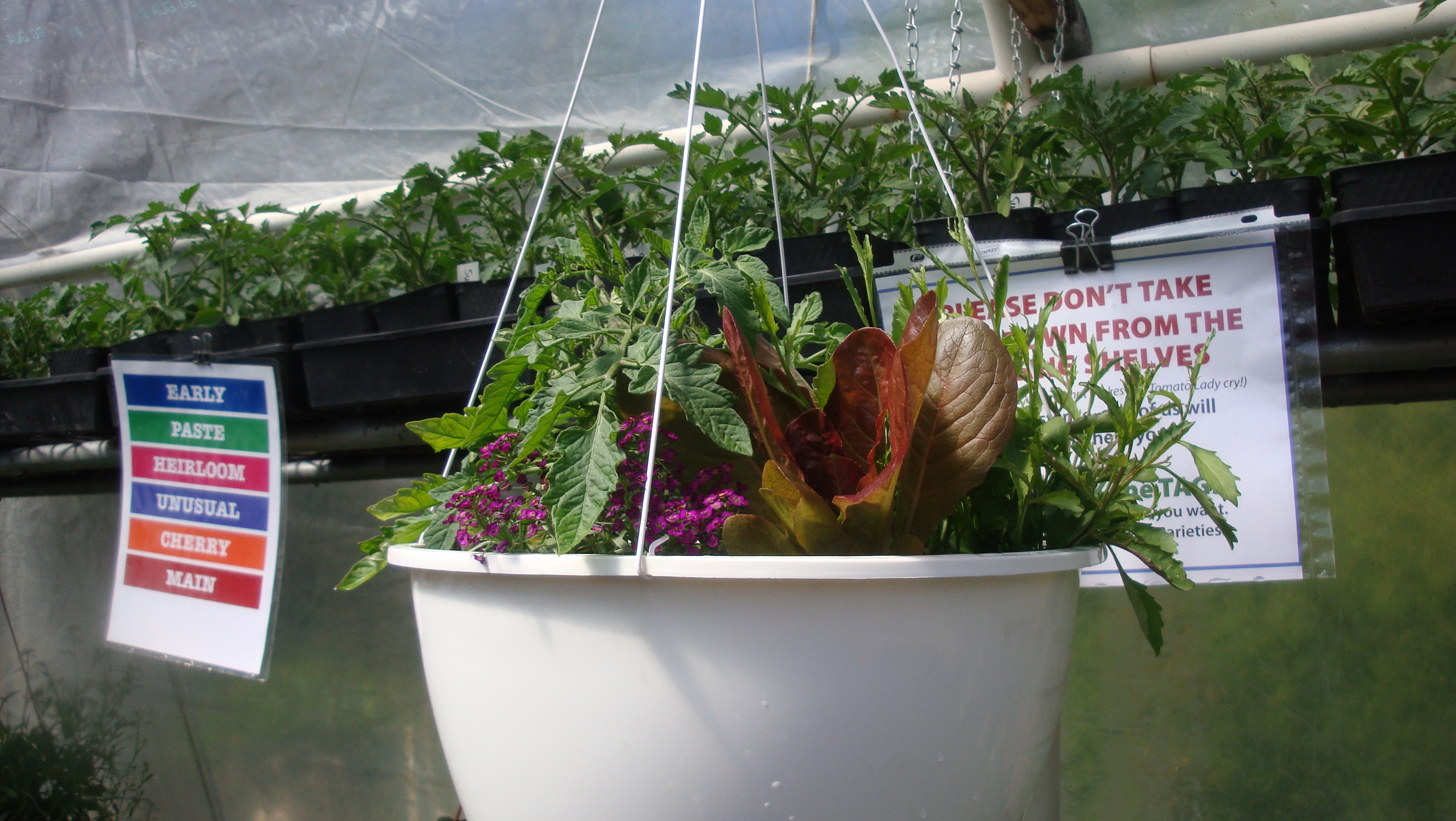
Lettuce, alyssum, and a tomato in a pot, probably a Tumbler

When choosing your vegetables for your pots, choose varieties that are developed for containers. Determinate or dwarf tomato plants, compact pepper plants, carrots that are short in length, cucumbers that don’t vine too much, squash with a more compact shape, bush beans, (if you had a large pot, you could do a pole bean and trellis it), spinach, beets. and even melons. Look for words like “compact”, “determinate”, “short vines”, “small” and “dwarf”.

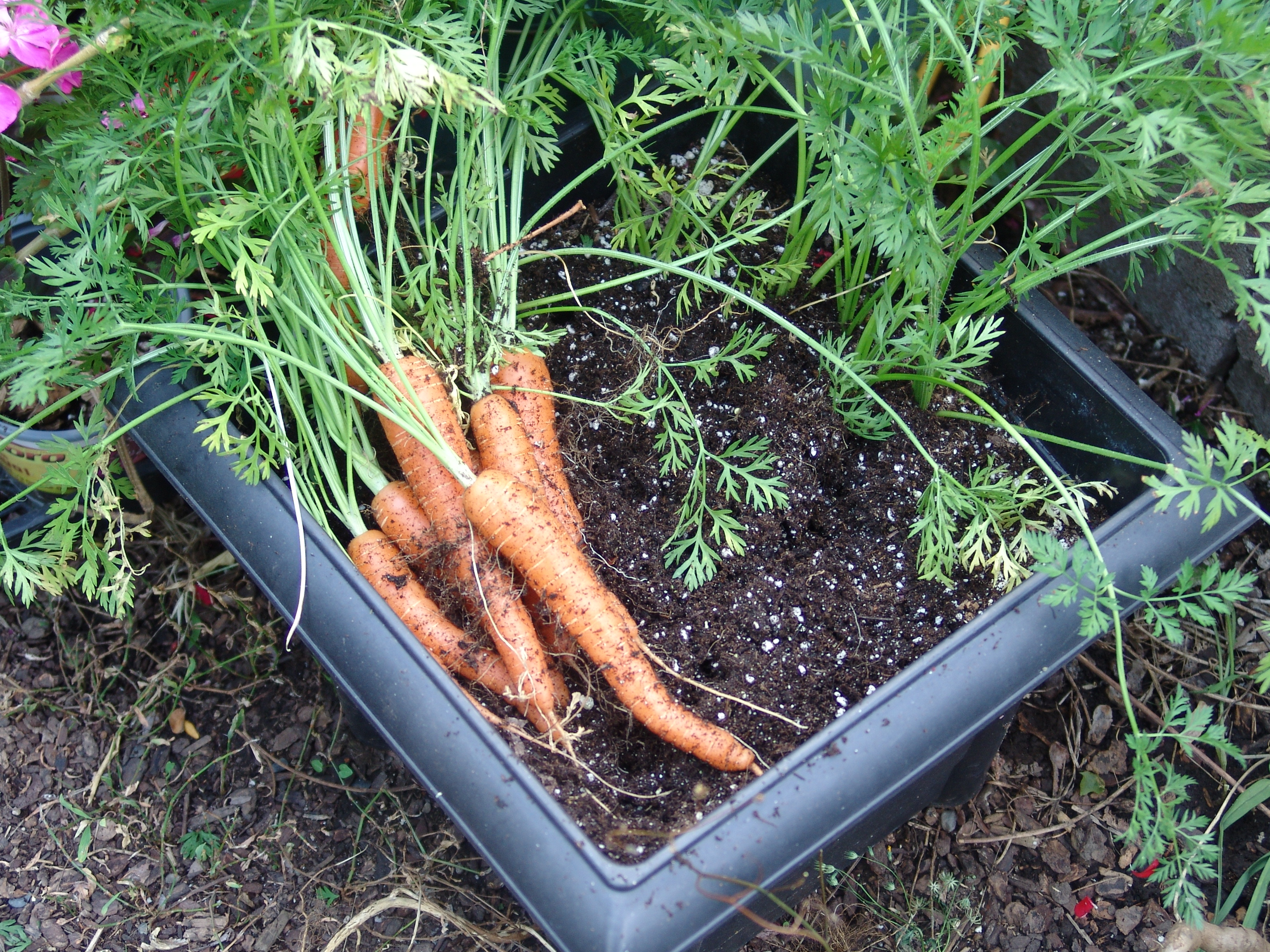
The picture above shows “Small Wonder” spaghetti squash, “Spacemaster” cucumber plant and fingerling potatoes in pots. Below are carrots that I grew as an experiment in pots. They were amazing!

carrots - 2

Carrots in a square pot

sweet rebas acorn

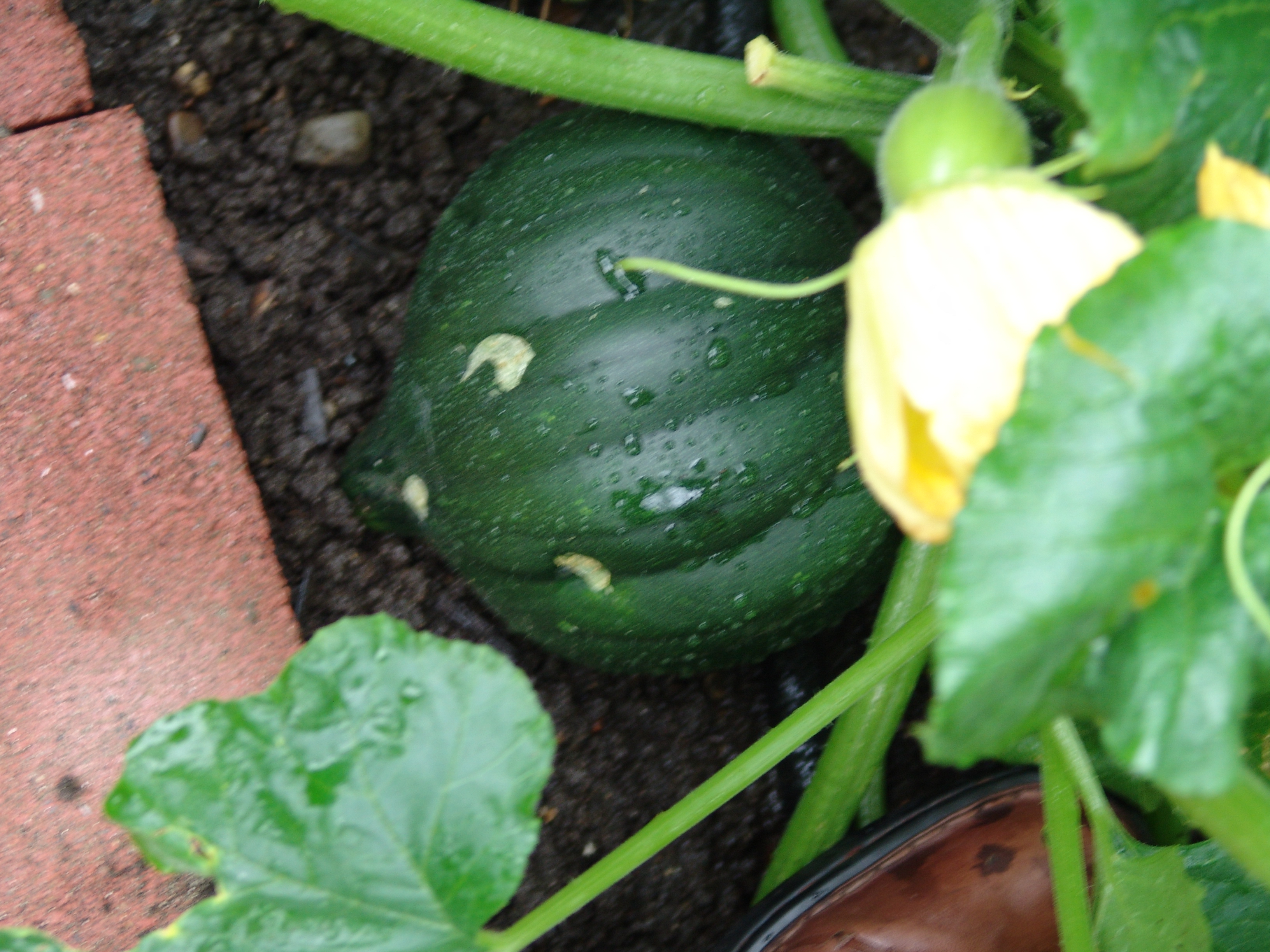
Sweet Reba acorn squash

“Sweet Reba” (above) is a good candidate for a large container since it is a compact plant.

Here are some good choices for vegetables:

pamsies99

Coffee anyone?

garden front big pots

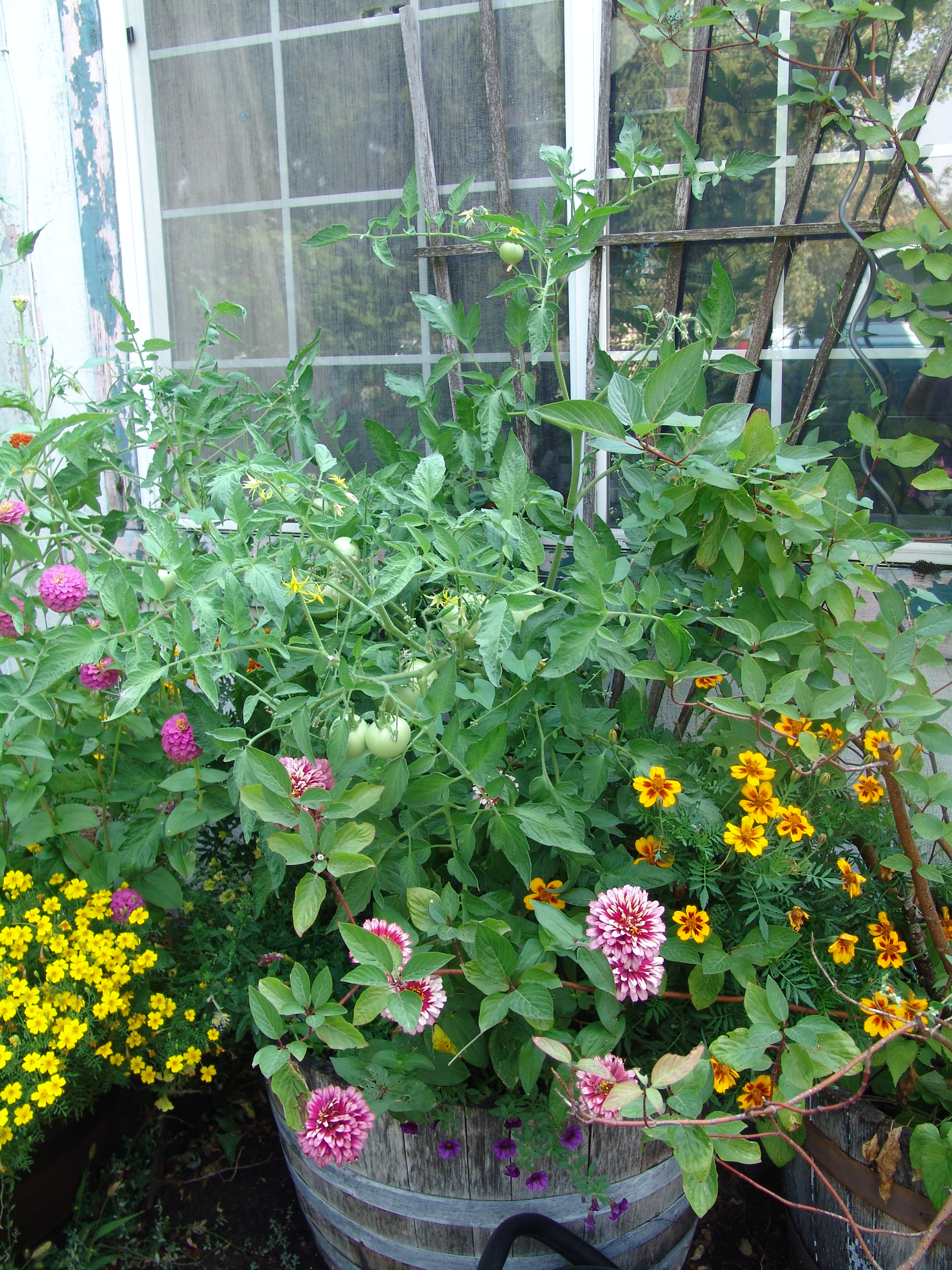
Tomatoes and flowers in a large pot

Let’s not forget herbs. Most herbs like to live in pots. Purple Basils add a nice punch to a container. Thyme would be a good spiller.


In the end, we are gardeners. We try everything, if it works great, if not we try again!

Here are a few pots that I have done over the years.

Costoluto Genovese and Costoluto Fiorintino: Old Heirloom Tomatoes from Italy

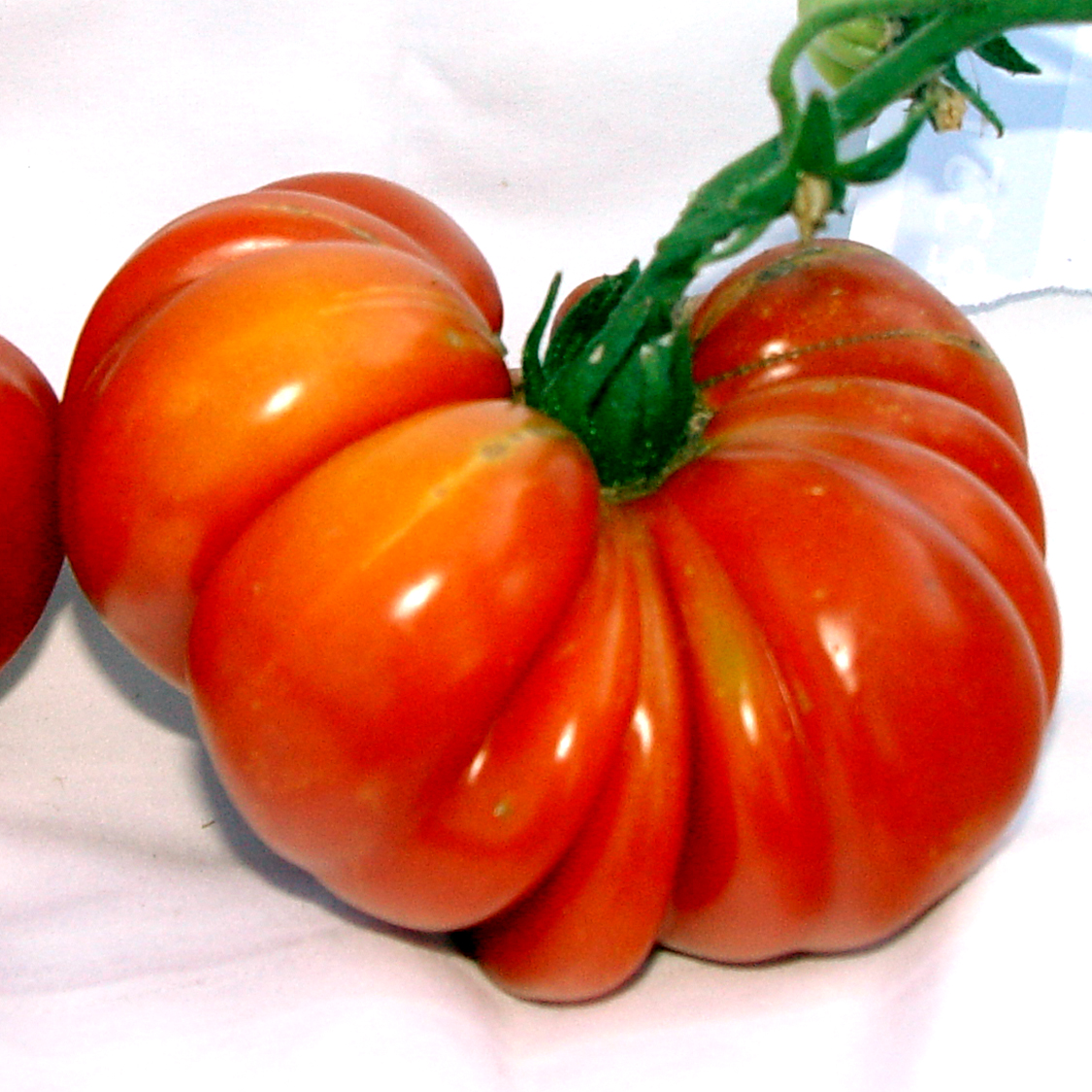
costoluto genovese

Costoluto Genovese The fluted, old Italian favorite that has been around since the early 19th century. Fruit is rather flattened and quite attractive with its deep ribbing. This variety is a standard in Italy for both fresh eating and preserving, and known for its intensely flavorful, deep red flesh. They were also one of the varieties planted at Thomas Jefferson’s home in Monticello in 1809.

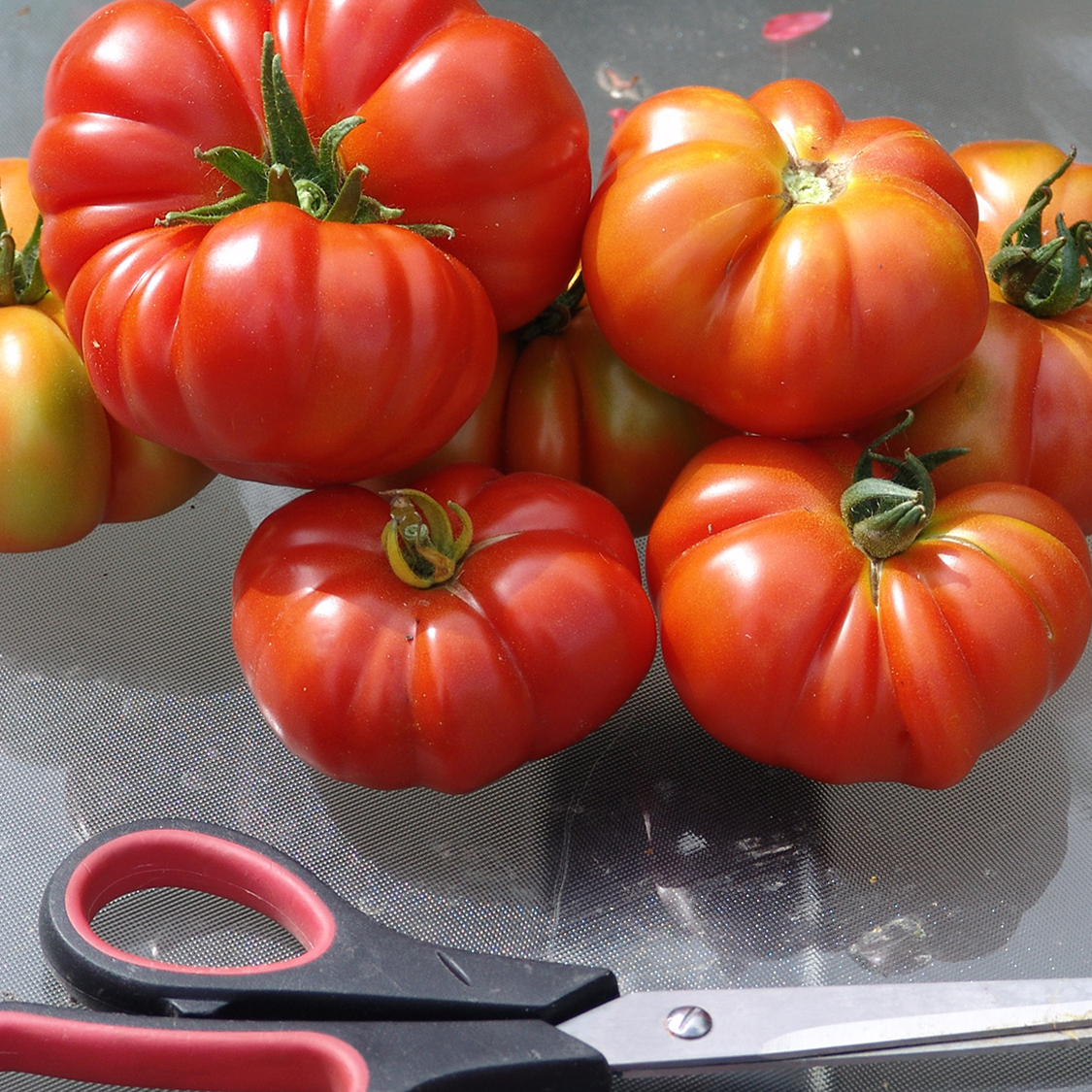
fiorintino with scissors tag.jpg

Costoluto Fiorentino Heavily ribbed (costoluta) flat Italian heirloom beefsteak type from Florence. Red, 12-16 ounces slightly flattened fruit. Outstanding taste. Large, vigorous, indeterminate plant with good production. Similar to Costoluto Genovese but slightly flatter and higher-yielding.

Costoluto refers to the distinct flattened, heavily-ribbed shape of various Italian heirlooms. Both of these tomatoes are shaped like this. some of my customers don’t like the ribbing but I think it is pretty and the taste is good. There is a reason these are heirlooms!

Both these pics are from my garden the year that I grew them.

Latah, Moscow, Sandpoint, and Shoshone: New Tomatoes from The Tomato Lady

We have some new tomatoes that I was just tickled to find. They were developed locally at the University of Idaho. Latah, Moscow, Sandpoint, and Shoshone, I have great expectations for these four. Here is what I found on the Snake River Seed Cooperative site. I discovered this company only just last year. I was happy to find seeds that are bred to be acclimated to our region, (although there are many microclimates in this area). I also believe in buying local whenever I can. This is what the Snake River Seed Cooperative has to say about themselves and their seeds (the short version):

“Snake River Seed Cooperative is a collective of family farmers in the Intermountain West who work together to produce a wide diversity of locally-adapted seeds.”


latah

LATAH Early, productive, and yummy variety bred by University of Idaho–perfect for containers! Latah county growers Kelly and Russell Kingsland grow this little gem, and they offer this description: Compact determinate. Bred at UI (in Latah County), Latah is well suited to Idaho’s cooler nights and relatively short growing season. A prolific producer of 2-3 oz, delicious well balanced, red fruits with good texture.

moscow tag

MOSCOW The largest of the U of I bred tomatoes. Good slicer and canning tomato. Not the earliest of the U of I bred tomatoes, but certainly the largest. Big, indeterminate plants spit out dozens of large, 4-5″ red fruits good for slicing and canning. Almost lost to the ether but for a Utah gardener who kept it as his main canning tomato.

sandpoint

SANDPOINT The smallest and earliest of Idaho bred varieties…great for containers! Extremely early variety bred by the U of Idaho in the 1960s. Small fruits range from cherries to saladette size, on very compact plants–excellent for containers, and for short-season areas.

Want a bumper crop of tomatoes? Listen to this guy

SHOSHONE Early-ripening Idaho-bred tomato! Compact plants with lots of round red fruits! Of all the varieties bred by the U of ID in the 1960s, Shoshone tied for the earliest harvest and blew the standard early-ripening varieties out of the water for taste, compact plant size, and productivity. Excellent for containers and small spaces. Fruits vary in size from cherry to large saladette tomato.

Keep in mind that I haven’t grown these yet in my garden so these aren’t my pictures. They are ones that I found in doing an internet search. Next year they will be my own. I love taking lots of pictures of everything I grow. Most of them I am pretty proud of.

I hope that these varieties will help some of my more northern customers be more successful with their tomatoes.