Wise Pairings: Best Flowers to Plant with Vegetables – Organic Gardening – MOTHER EARTH NEWS

adelaide festival 7 6 17This is a long article but I thought it is worth sharing.

Wise Pairings: Best Flowers to Plant with VegetablesPlant a profusion of pollen- and nectar-rich flowers among your edible plants to naturally control pests, boost pollination and provide pretty pops of color. Here, learn some of the best flowers to plant with vegetables and get tips for arranging your space.By Rosalind Creasy | February/March 2015     As you plant flowers in the vegetable garden, play with colors and textures as the author does in her beautiful central California edible landscape.Photo by Rosalind Creasy In the 1970s, when I was a budding landscape designer newly exciting about strategizing the best flowers to plant with vegetables, I attended the garden opening of one of my clients. As I walked around anonymously, wine glass in hand, I overheard many guests exclaiming, “Do you see that? She put flowers in the vegetable garden!”In the United States, segregating vegetables from flowers still seems like such a hard-and-fast rule that when I lecture on edible landscaping, one of the first things I mention is that I’ve checked the Constitution, and planting flowers in a vegetable garden is not forbidden. Not only can you put flowers in with vegetables, you should.I admit that, in the ’70s, I first intermixed my flowers and vegetables because I was gardening in the front yard of my suburban home and hoped the neighbors wouldn’t notice or complain as long as the veggies were surrounded by flowers. Soon, however, I discovered I had fewer pest problems, I saw more and more birds, and my crops were thriving.It turns out that flowers are an essential ingredient in establishing a healthy garden because they attract beneficial insects and birds, which control pests and pollinate crops. Most gardeners understand this on some level. They may even know that pollen and nectar are food for insects, and that seed heads provide food for birds. What some may not realize is just how many of our wild meadows and native plants have disappeared under acres of lawn, inedible shrubs and industrial agriculture’s fields of monocultures, leaving fewer food sources for beneficial critters. With bees and other pollinators under a chemical siege these days and their populations in drastic decline, offering chemical-free food sources and safe havens is crucial. Plus, giving beneficial insects supplemental food sources of pollen and nectar throughout the season means they’ll stick around for when pests show up.-Advertisement- Envision an Integrated Edible LandscapeOne of the cornerstones of edible landscaping is that gardens should be beautiful as well as bountiful. Mixing flowers and vegetables so that both are an integral part of the garden’s design is another key. Let’s say you have a shady backyard, so you decide to put a vegetable garden in the sunny front yard. Many folks would install a rectangular bed or wooden boxes, and plant long rows of vegetables, maybe placing a few marigolds in the corners, or planting a separate flower border. In either case, the gardener will have added plants offering a bit of much-needed pollen and nectar.Integrating an abundance of flowers among the vegetables, however, would impart visual grace while also helping beneficial insects accomplish more. Plentiful food sources will allow the insects to healthily reproduce. Plus, most of their larvae have limited mobility. For example, if a female lady beetle or green lacewing lays her eggs next to the aphids on your violas, the slow-moving, carnivorous larvae won’t be able to easily crawl all the way across the yard to also help manage the aphids chowing down on your broccoli.In addition to bringing in more “good guys” to munch pests, flowers will give you more control because they can act as a useful barrier — a physical barrier as opposed to the chemical barriers created in non-organic systems. The hornworms on your tomato plant, for instance, won’t readily migrate to a neighboring tomato plant if there’s a tall, “stinky” marigold blocking the way.Create Cool Combos of Flowers and VegetablesTo begin establishing your edible landscape, you should plant flowers with a variety of colors and textures, different sizes and shapes, and an overall appealing aesthetic. After you’ve shed the notion that flowers and vegetables must be separated, a surprising number of crop-and-flower combinations will naturally emerge, especially if you keep in mind the following six guidelines.1. Stagger sizes. Pay attention to the eventual height and width of each flower and food plant (check seed packets and nursery tags), and place them accordingly. Tall plants, for the most part, belong in back. They’ll still be visible, but they won’t block the smaller plants from view or from sunshine. A good rule is to put the taller plants on the north and east sides of your garden, and the shorter ones on the south and west sides.-Advertisement-2. Consider proportions. A 6-foot-tall sunflower planted next to an 18-inch-tall cabbage would look lopsided. Instead, place

Source: Wise Pairings: Best Flowers to Plant with Vegetables – Organic Gardening – MOTHER EARTH NEWS

The Biggest and Most Beautiful Petunias, Fluffy Ruffles, That I Grow (and Sell in the Spring)

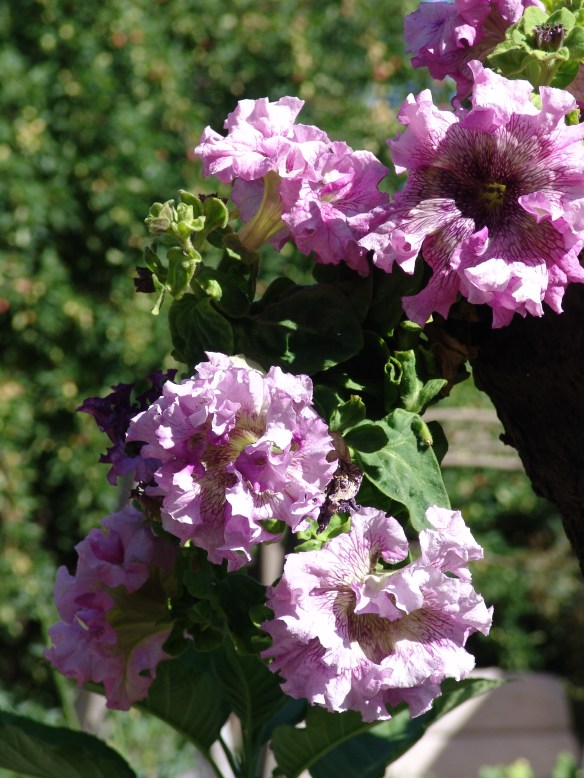
CA-Giant-3Also known as Superbissima Grandiflora. In fact that is the only name I had for them for the longest time. After doing some research, I found out they used to be called California Giants and are an heirloom petunia from way back. They are no longer commercially grown, at least I’ve never seen them at the big box stores or local nurseries.
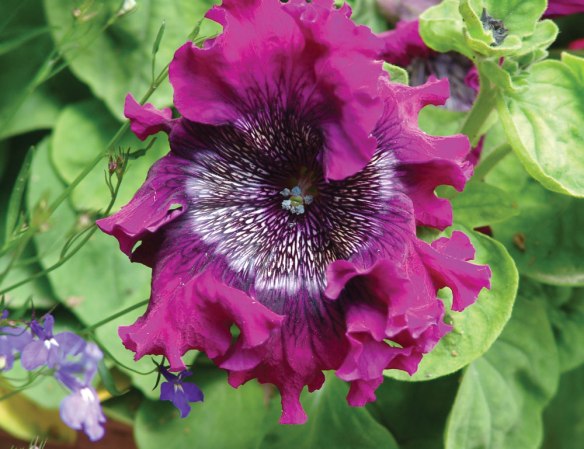
They are huge, sometimes reaching 5″ across! In colors of dark purple and lighter pink, they have fantastic, contrasting veining in their centers.

CA-Giant

Fluffy Ruffles

Fluffy Ruffles has, well, a lot of ruffling! Double Fluffy Ruffles has even more.

CA-Giant-4

Double Fluffy Ruffles

Dark green foliage, rounded leaves and thick stems compete the plant. Usually when a plant is not carried commercially in the petunia world, it’s because it doesn’t live up to the weather or produce reliably. I have not found this with this petunia. It hangs from a basket nicely, is a pleasure to deadhead, lasat for a long time and produces lots of blooms. I use it with other flowers to fill a pot. Because it is so stocky it holds up well to the weather in my garden.

floral-display

This is my favorite petunia! If you would like to come by and see it in my garden and the different ways I use it give me a call. I’ve had people come by and are stunned and perplexed when they see it. They don’t know what it is! You can buy them from me next spring as I will always grow it.

Planting Flower Seeds in the Snow

I started 36 kinds of flowers today, impatiens, petunias, pansies, lobelia, snapdragons, canterbury bells, stock and schizanthus. Was thinking I’d only need 12 seed flats for the pansies, then got to thinking about how much I’d like the other flowers to be blooming if possible and they take a long time from seed to flowering. This year I am starting them a little over 2 weeks earlier. Hard to believe I am in the greenhouse with no coat enjoying the sunshine before the incoming snowstorm…in December no less.

I wanted to start a petunia called petunia grandiflora superbissima  and couldn’t find any seed in the states. Thompson and Morgan used to have some retail outlets here and then for some reason stopped a couple of years ago. Made me sad, they had some really cool varieties. After doing an internet search for the seed, I found them available from three different seed houses in the UK. Two have agreed to sell them to me, I just hope shipping isn’t horrendous. Here is a picture of this flower. Beautiful. 4 to 5″ blooms, frilly with gorgeous and unusual veining in the throat. They are pinks and purples. They also have white but I haven’t had any that I remember. They come as a mixed color. One of my favorites.

big-petunia3big-petunias-3big-petunias-6

Sunflower Jelly – The Nerdy Farm Wife

And you thought there was nothing new under the sun! I might try this. If you do, let me know.


I first got the idea for making sunflower jelly whilst I was pondering the happy row of flowers in my garden and wondering what other uses I could extract from them besides the seed. I remembered reading that the petals were edible and could be sprinkled in salads. During further research, I read that Native Americans used a decoction from the head for respiratory ailments. Whether this is completely true or not, I have no

Source: Sunflower Jelly – The Nerdy Farm Wife

Cabin Fever Blues: Longing for Warmer Weather

Am spending the day ordering tomato and pepper seeds. I look outside and it is gray and dreary and cold. Doing this tasks makes me long for warmer temps, green grass, the warmth of the sun on my face.

Who knew? Every year I get tired of gardening and watering and thinking up ways to use my produce and start thinking about calling in an asphalt company. Then, long about Christmas, the seed catalogs start arriving and I start dreaming.

There is a new (to me) kind of nasturtium out, called Phoenix.51477-PK-P1

It’s petals have raggedy edges. The seed came a couple of days age. Looking forward to trying it. The first time I grew them, they were a major aphid magnet. Yuck. I tried again and haven’t had any problems since and they are on my list of favorite flowers now. I also love the variegated Alsaka

.SONY DSC

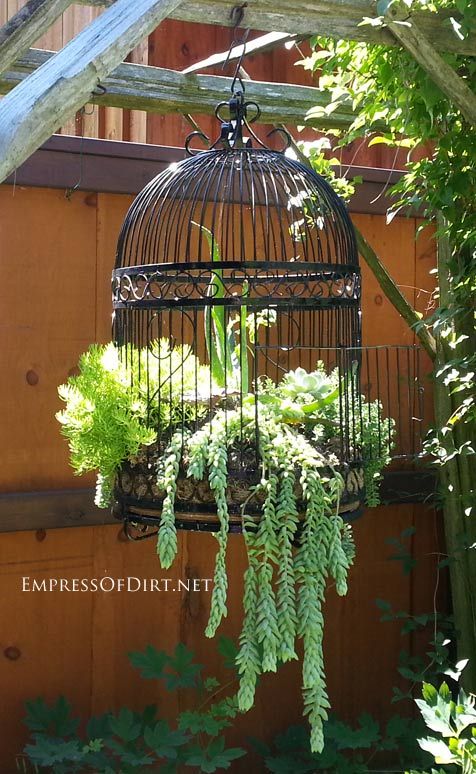
16+ More Creative Garden Container Ideas

Great way to reuse things. The idea of succulents is perfect since it needs less water.

16+ More Creative Garden Container Ideas.

13 Tips for Growing Beautiful Roses!

Not tomatoes but still something in the gard.

13 Tips for Growing Beautiful Roses!.

Onions are up and Hot Peppers planted

ImageImageImageearly jalapeno

Onions are up! Impatiens are up! Snapdragons and lobelia too! It’s nice to see signs of spring, even if it’s only under lights in the house.  Oh, and I have Yugoslavian Buttercrunch coming up too.

I tried something different with my onions, I planted them individually in plug trays since they don’t seem to like being transplanted at a young age.

Yesterday I planted hot peppers, Hot peppers are notoriously slow to germinate and then sometimes they are spotty. Depends on the freshness of the seed and the variety. First I soaked them in weak tea. Pain in the butt to separate them, stuck to my fingers. Here is the list: Arbol, Bhut Jolokia (yes, the infamous ghost), Cayenne, Early Jalapeno, Habanero, Hungarian Yellow Wax, Maules Red Hot, Pasilla, Pepperoncini, Serrano, Tabasco, Anaheim, Shishitso

I don’t like hot peppers although I have been know to use a smidgen of jalapeno in my salsa.

We’ve had snow and cold weather until the pineapple express rolled in last night. Now it’s 45 degrees. Melting all our snow.

First Seeds of the Year

Aside

I planted Candy onions in plug trays and Walla Walla Sweets in a broadcast method, the way I have always done them. We will see which does better when it comes to transplanting.

I also seeded some Lisanthus, Lobelia, Crytal Palace and Blue Wings,  pink Brugmansia, snapdragons and several varieties of Impatiens, including the uber expensive rosebud type.

Red Tomatoes and Crazy Weather in my Garden

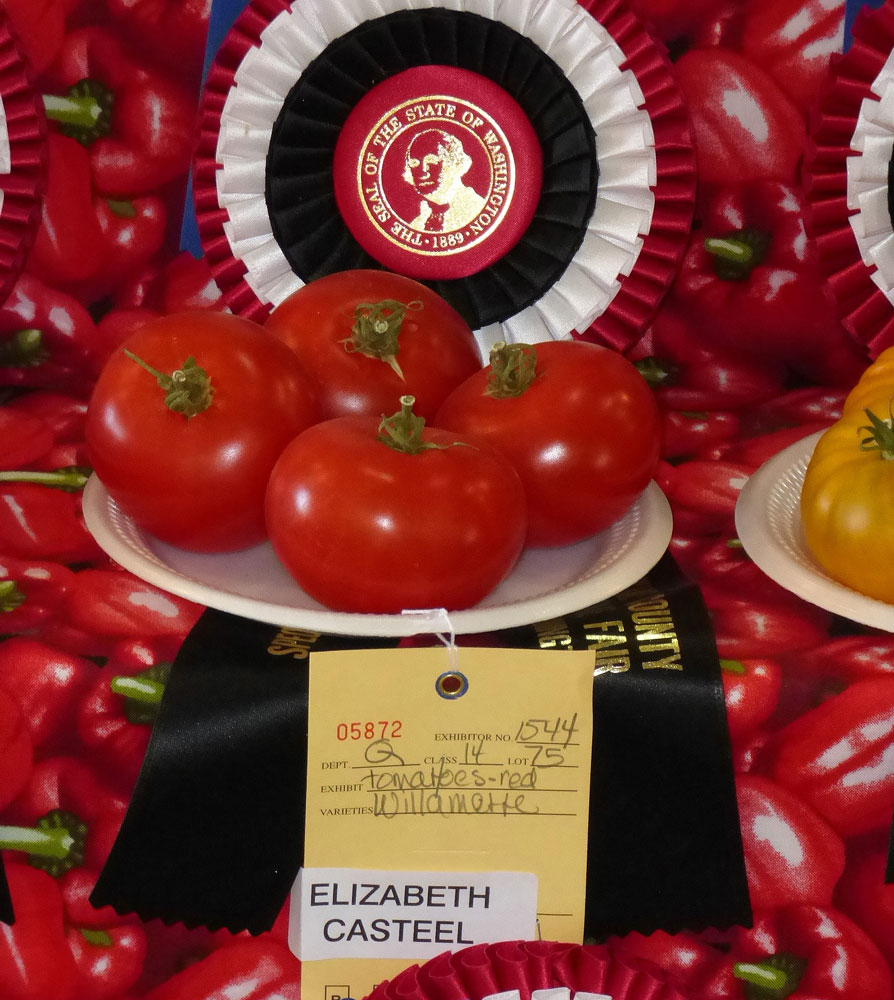
I rec’d an interesting question from one of my customers. He asked me how my garden was growing and what was my favorite red variety. Every year I grow different tomato varieties, not all of them red. This year, I am loving the Marbella, Red Pear, Willamette and Giant Tree Tomato, all of which are red and very prolific. I won a grand prize at the fair for my Willamettes, an aspiring early heirloom from Oregon.

As for how my garden is doing, I’ve had the worst season ever. Every slug, every flea beetle, aphid and spider mite for miles afround has attacked my vegetable and flower garden. Powdery mildew, early blight, physiological damage (ie curly leaves) from the hot/cold/wet/dry weather we’ve had this summer, has blessed my plants too. Aaaagh!

Image