Tomatoes You’ve Probably Never Heard Of

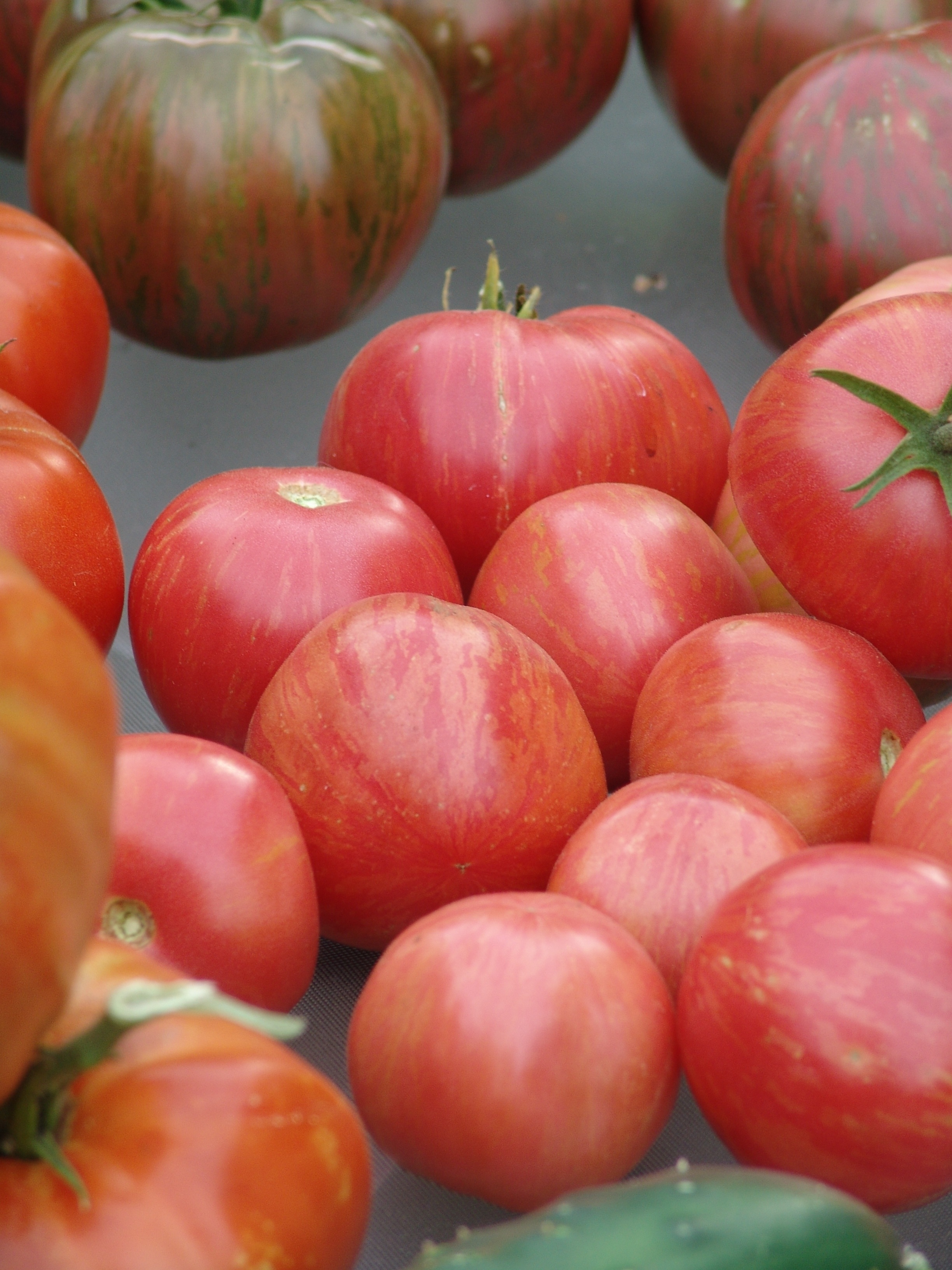
There are a lot of folks out there who feel that if it ain’t red, it ain’t a tomato. I’m here to tell you that they’ve missed the boat! if you’ve never tasted a golden yellow with a red blush or a dark pink tomato with light green stripes, you really need to.

Today, I am going to discuss some of my more uniquely colored tomatoes.

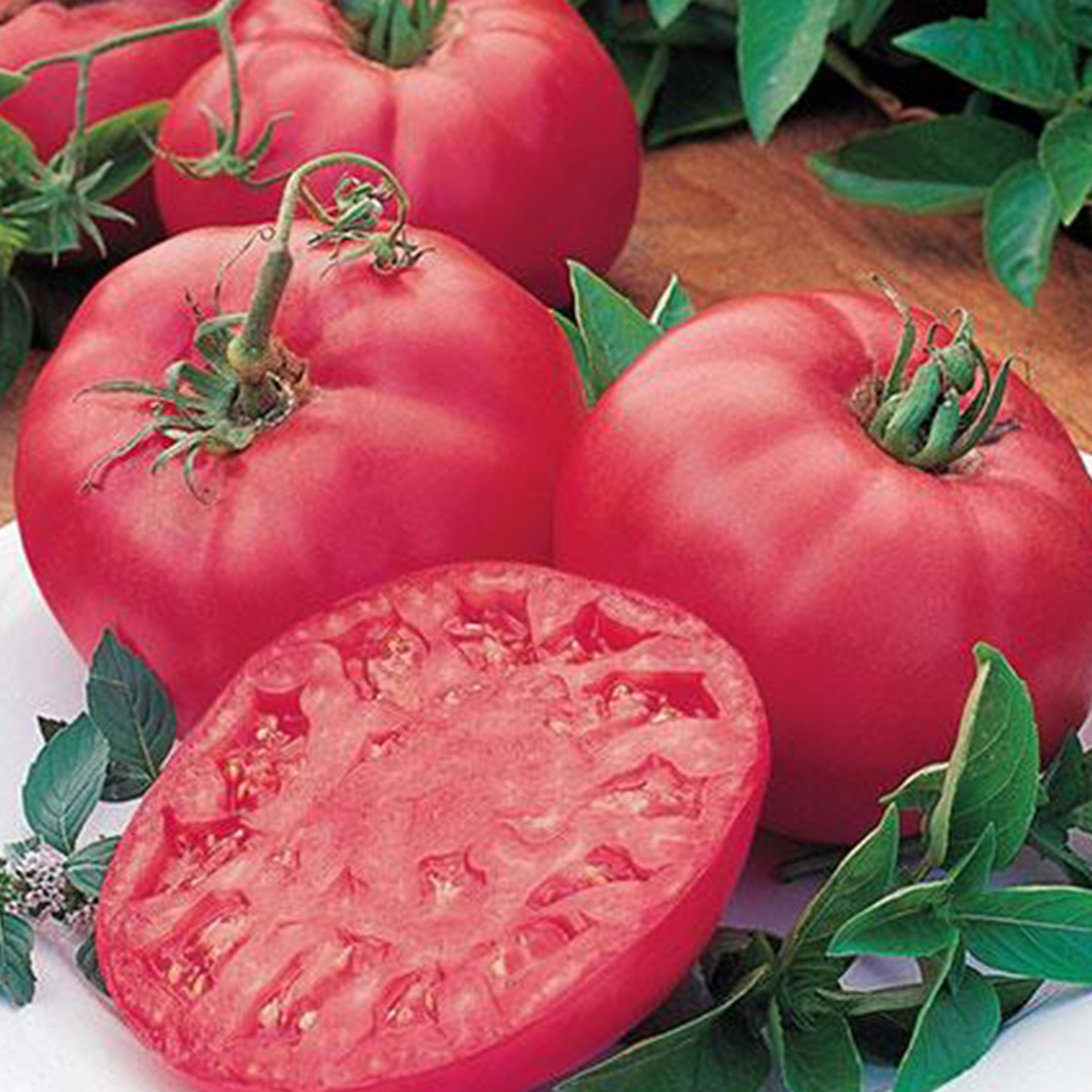
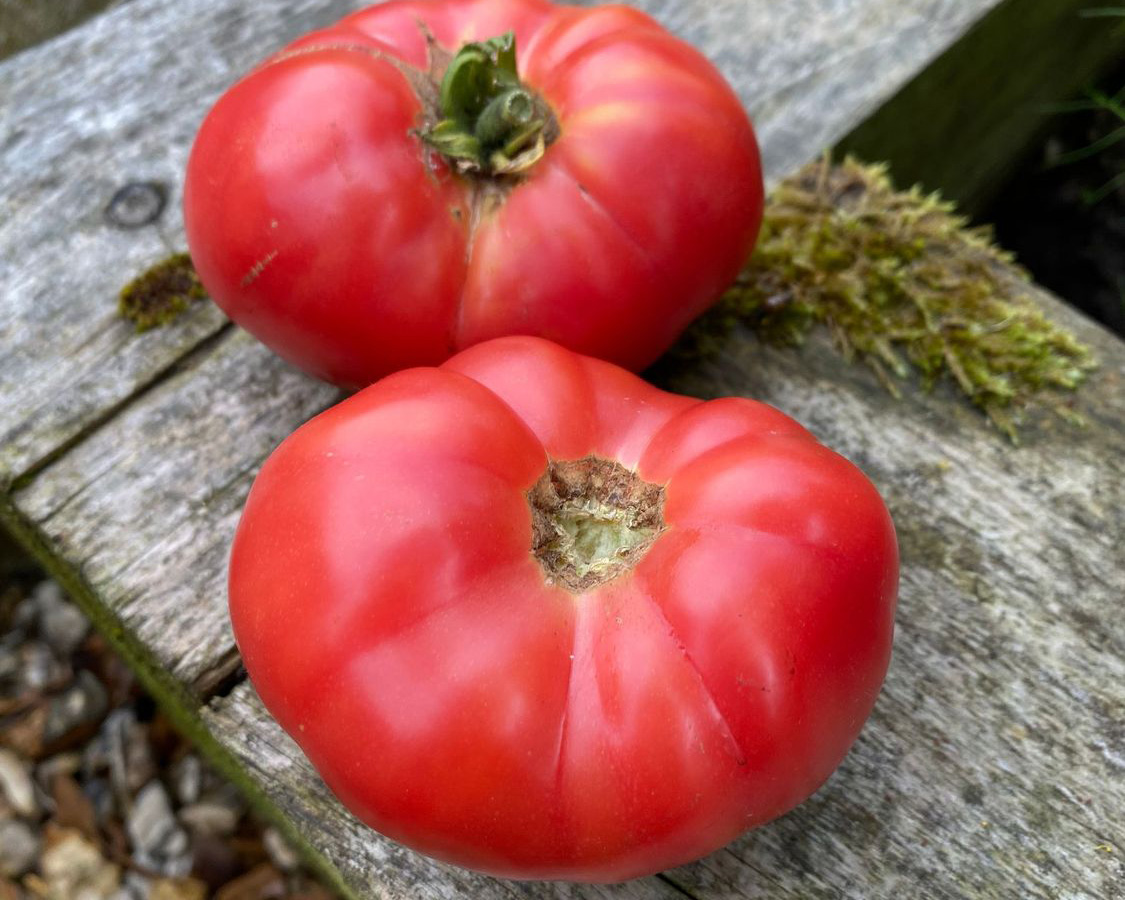
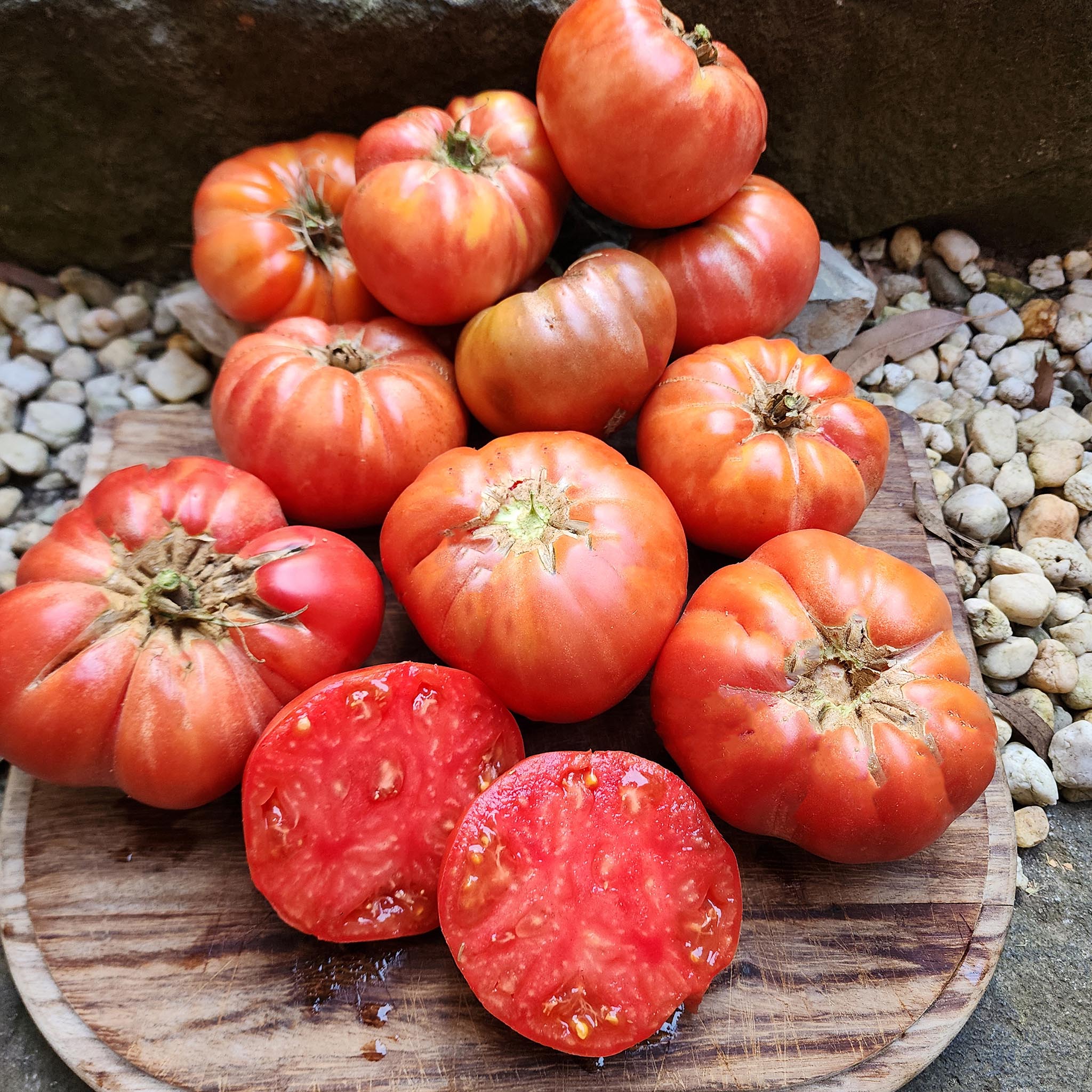
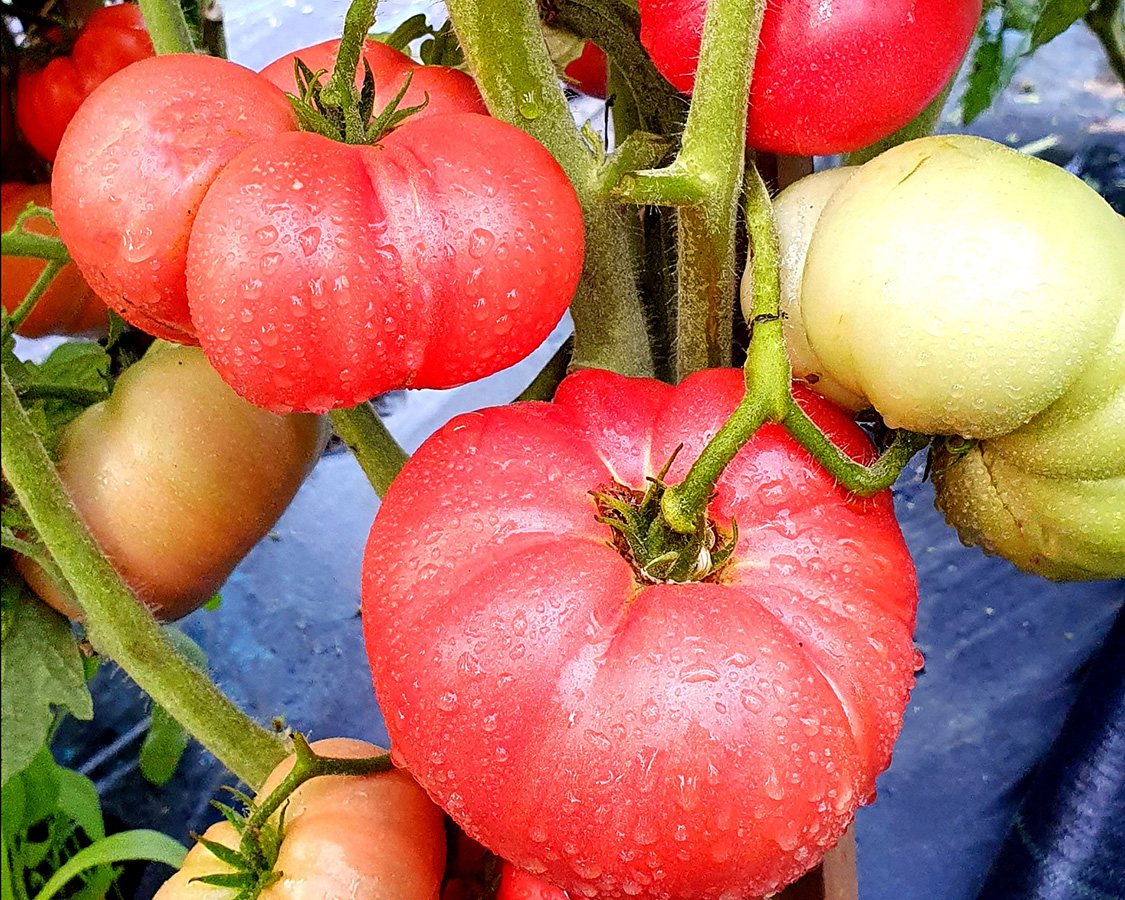
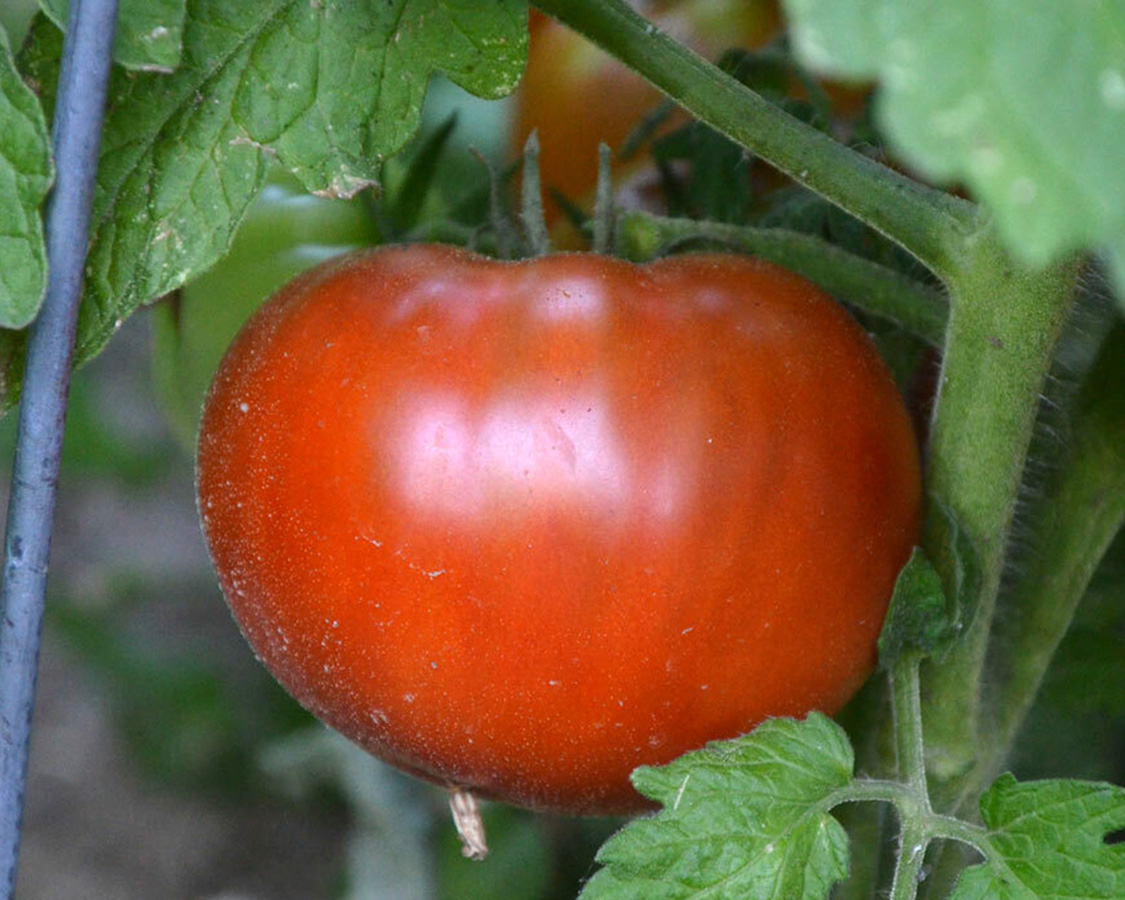
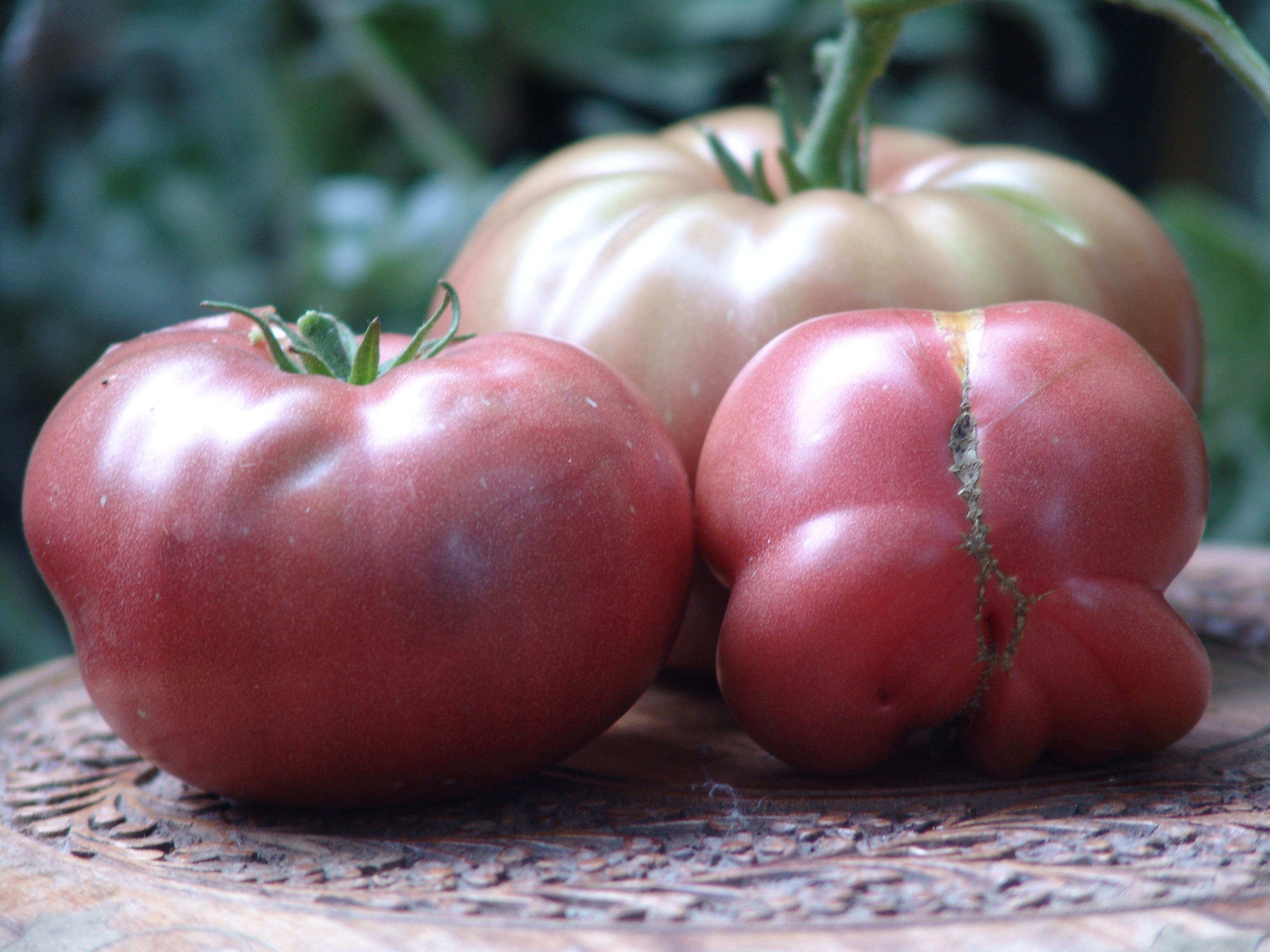
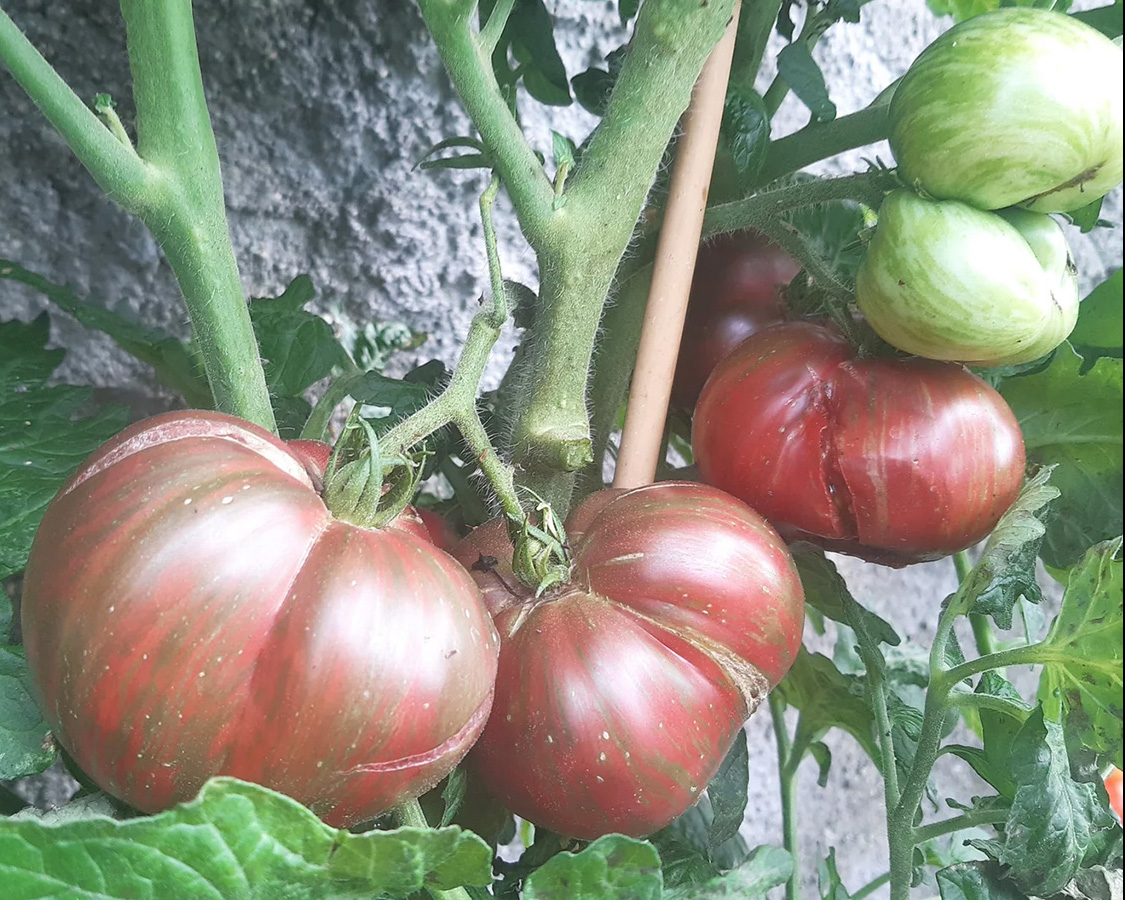
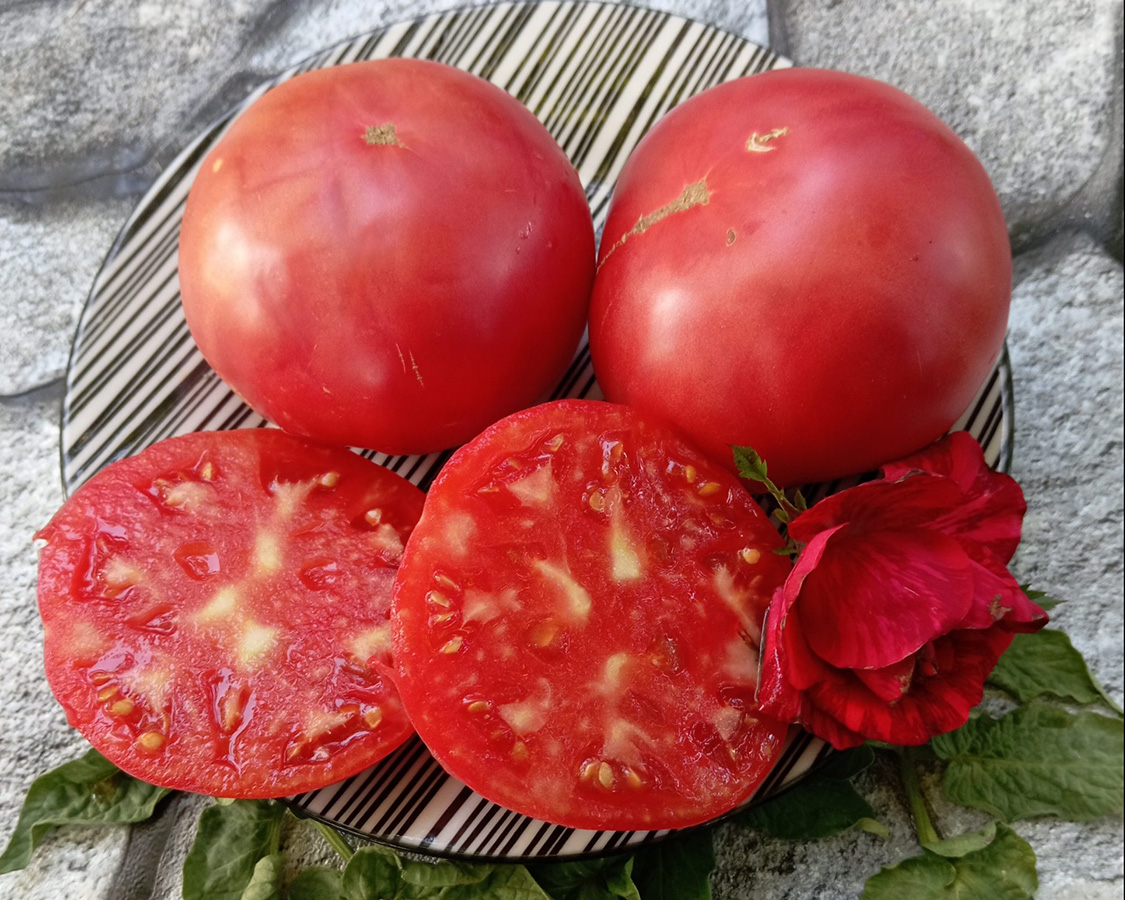
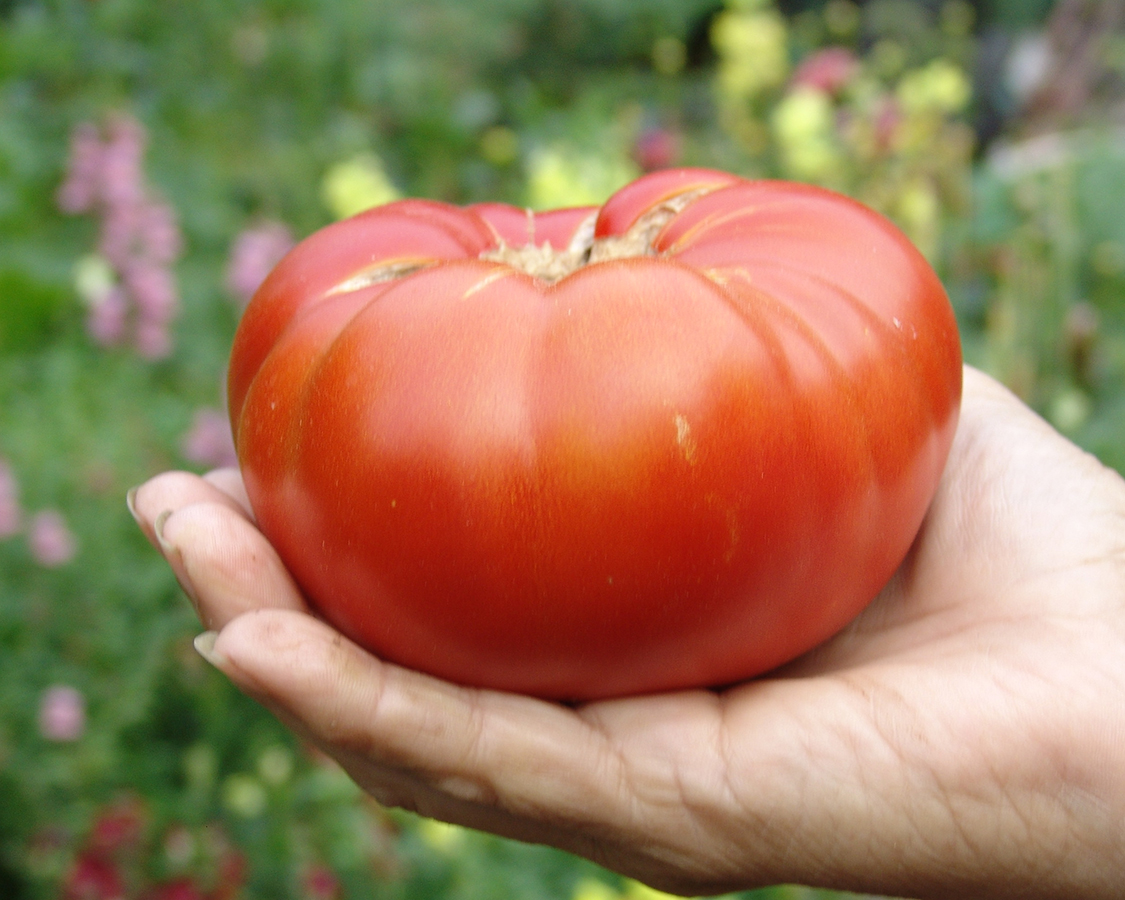
Brandy Boy is a gorgeous, dark pink, beefsteak. It can reach up to 5″ across and has the wonderful texture and flavor of a Brandywine tomato. Improved disease resistance, indeterminate

Brandy Boy

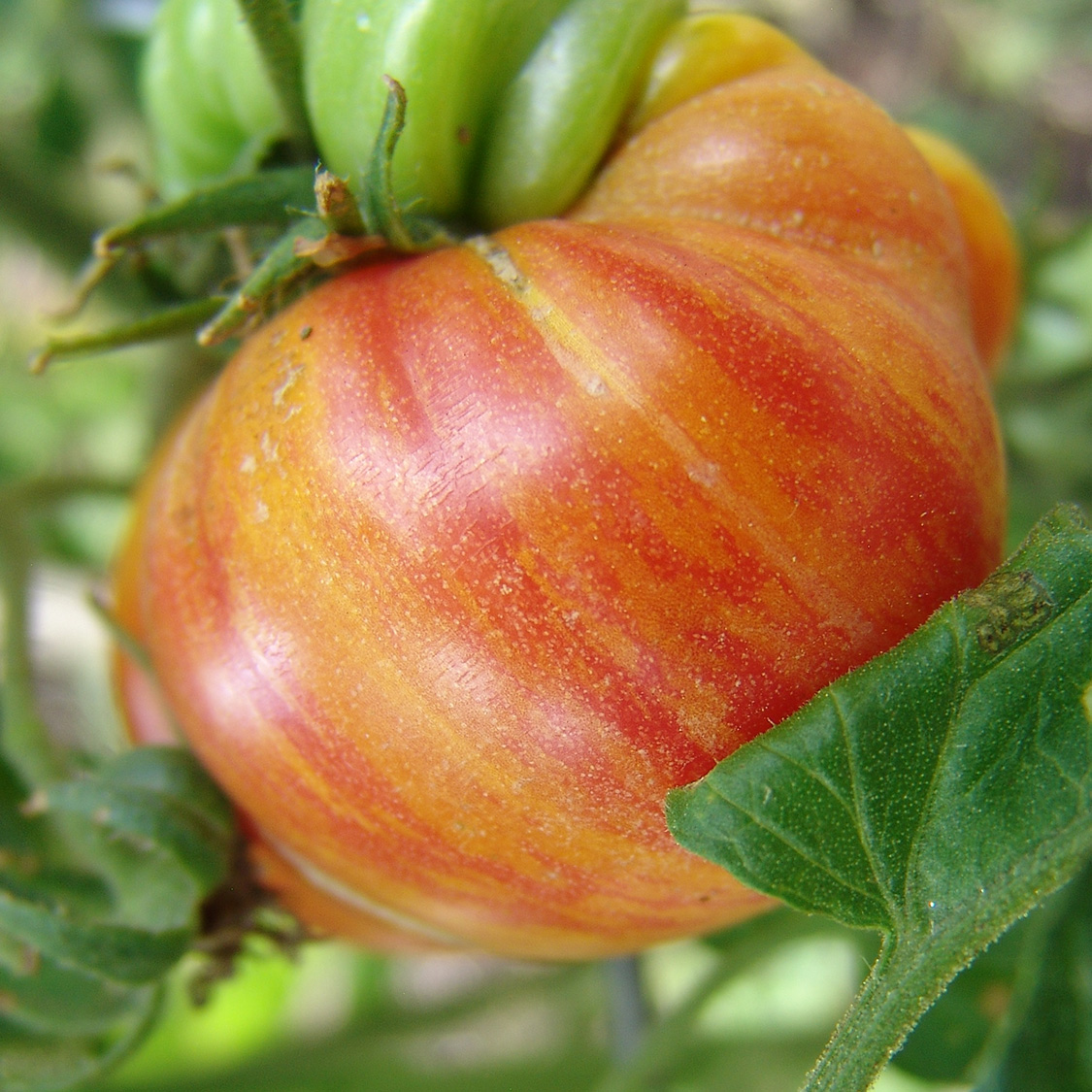
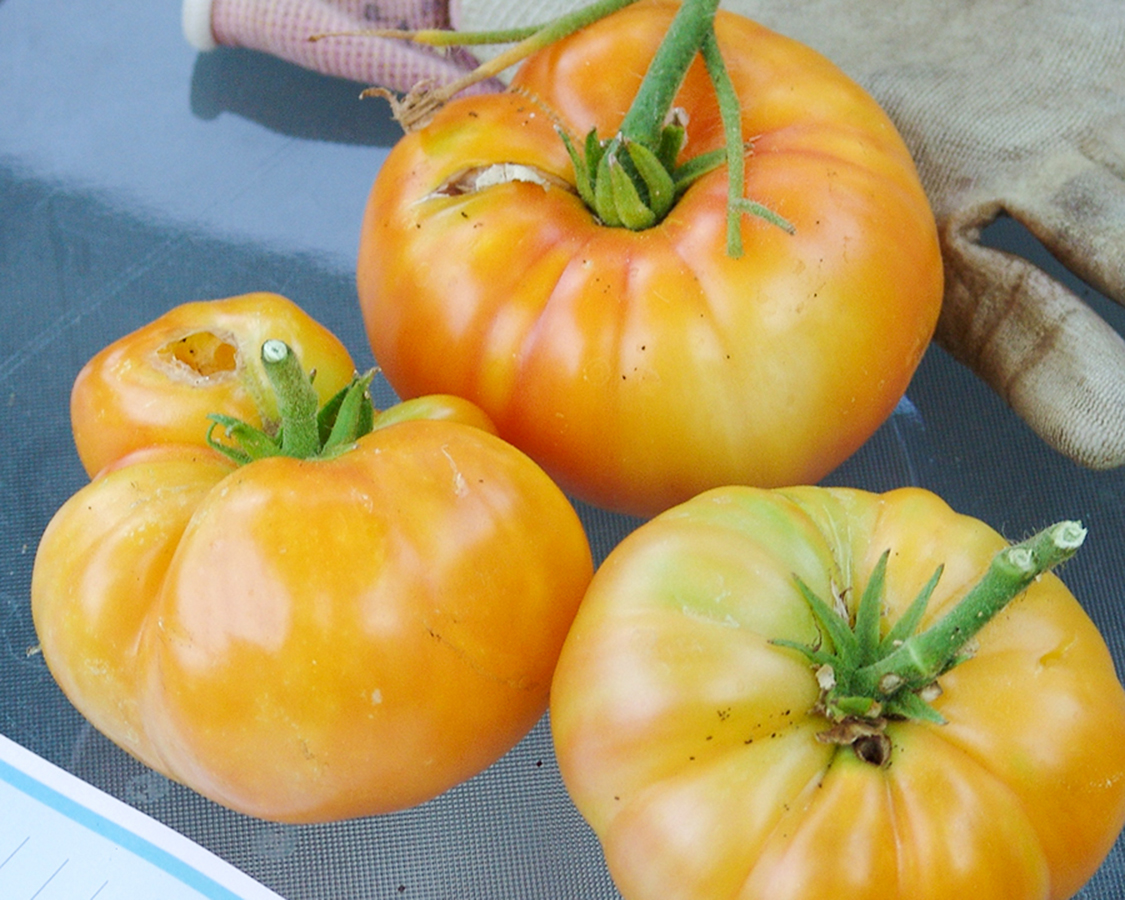
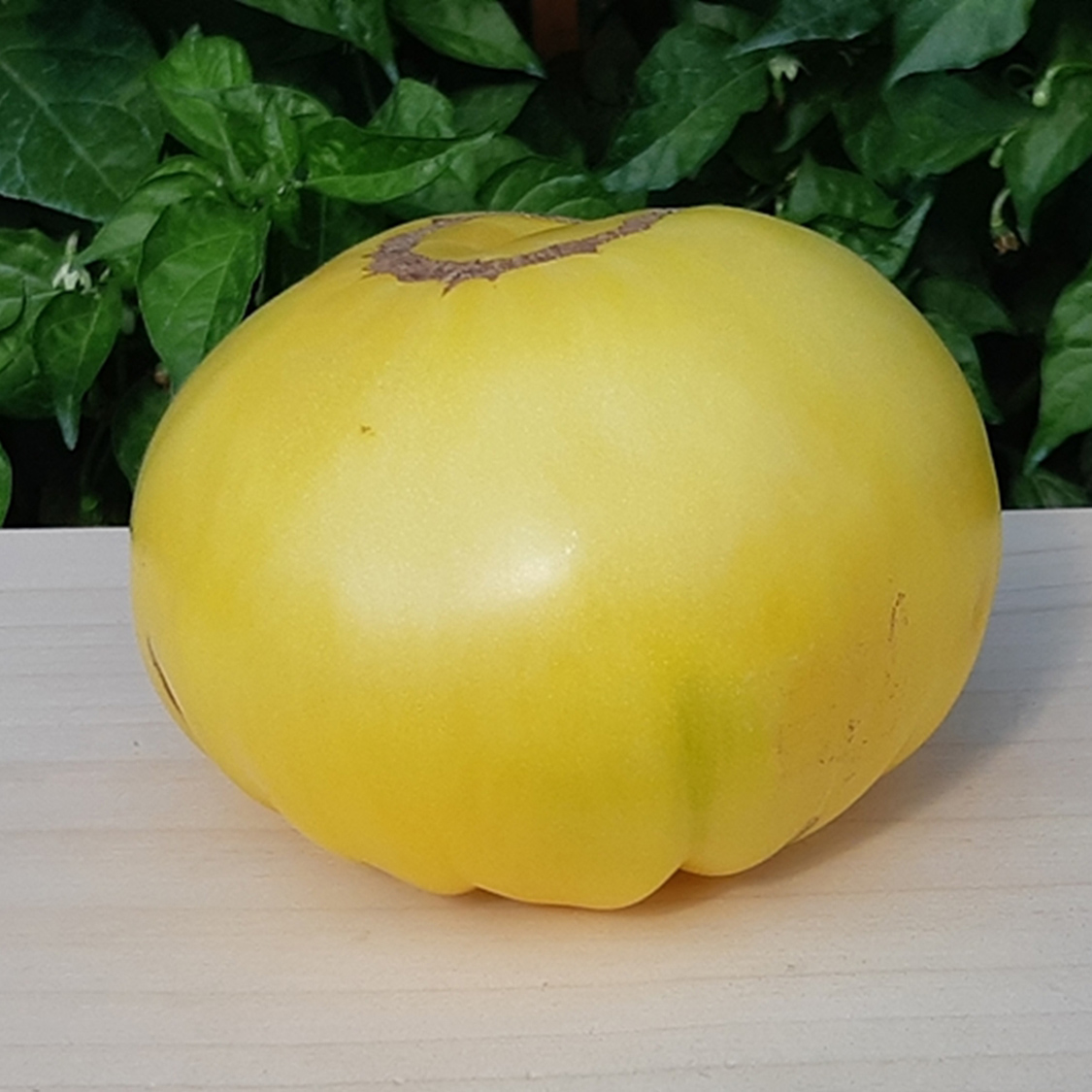
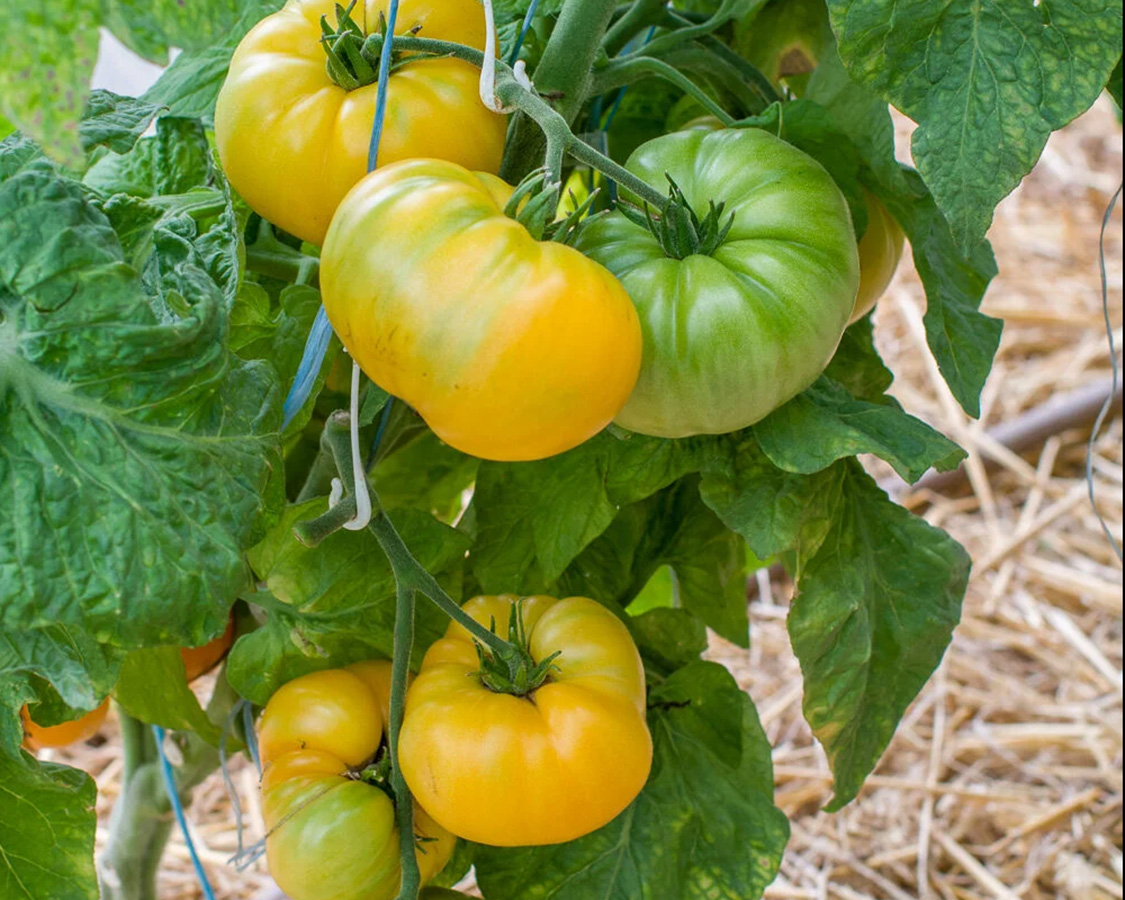
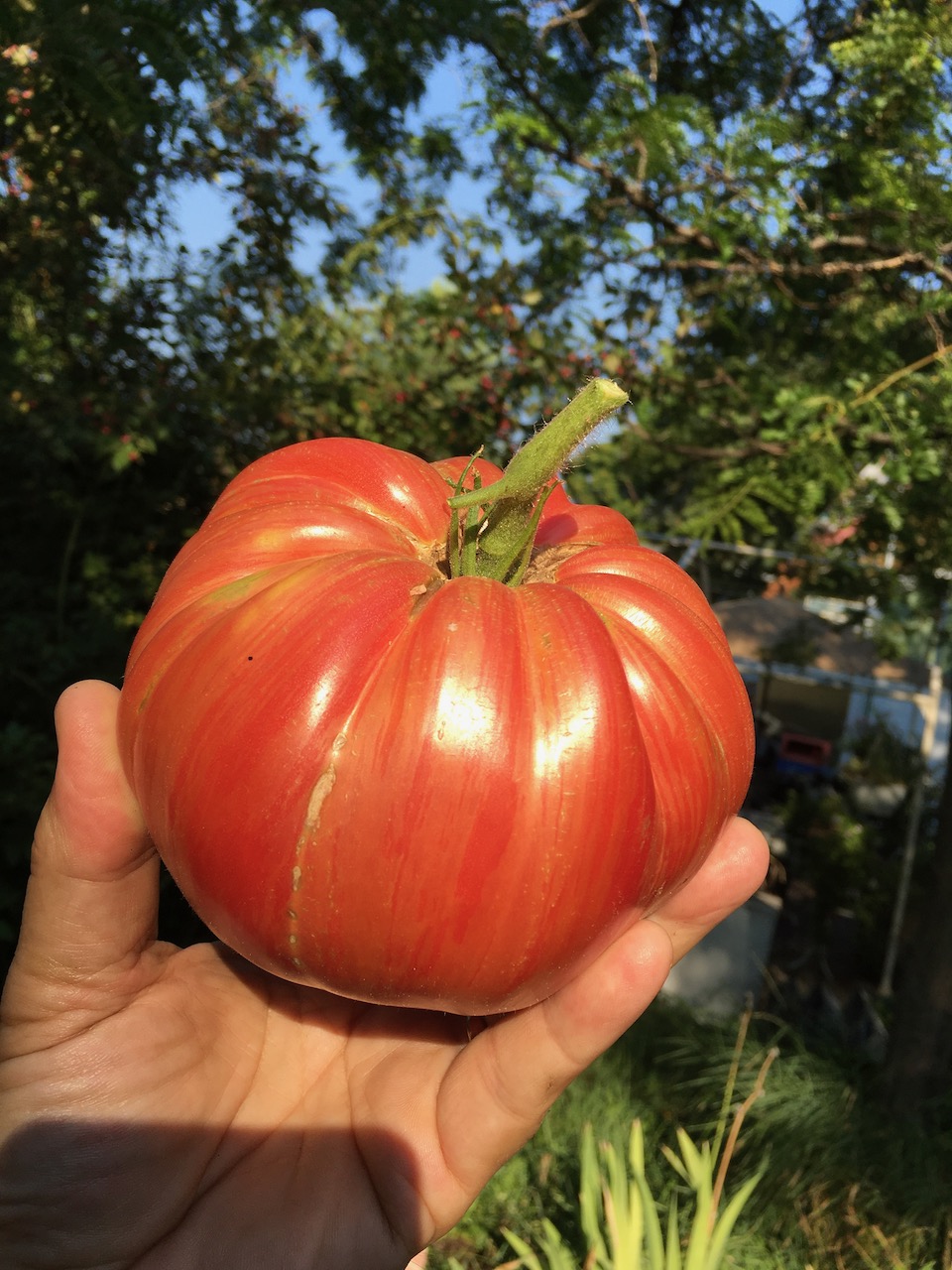
Copia is another beautiful tomato with great taste. It is a golden yellow with red stripes. This is a stabilized cross between Green Zebra and Marvel Stripe. Sweet, juicy flesh, they can weigh up to a pound.

Copia

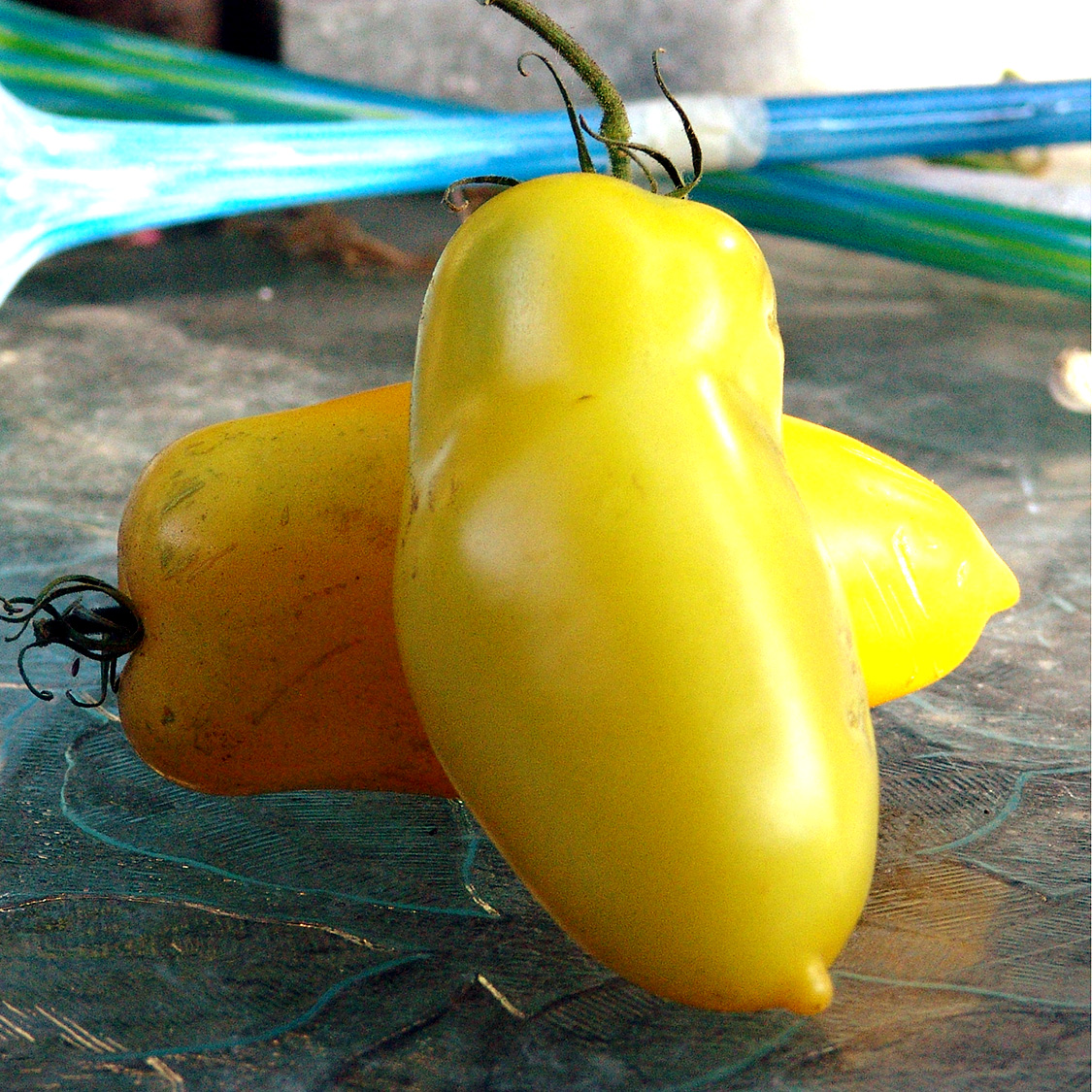
Roman Candle is a lovely, bright yellow paste tomato with light green stripes. When you pluck it from the vine, it shines like a star. Very easy to pick. It makes the most beautiful soup and looks great in salsas and salads.

Roman Candle

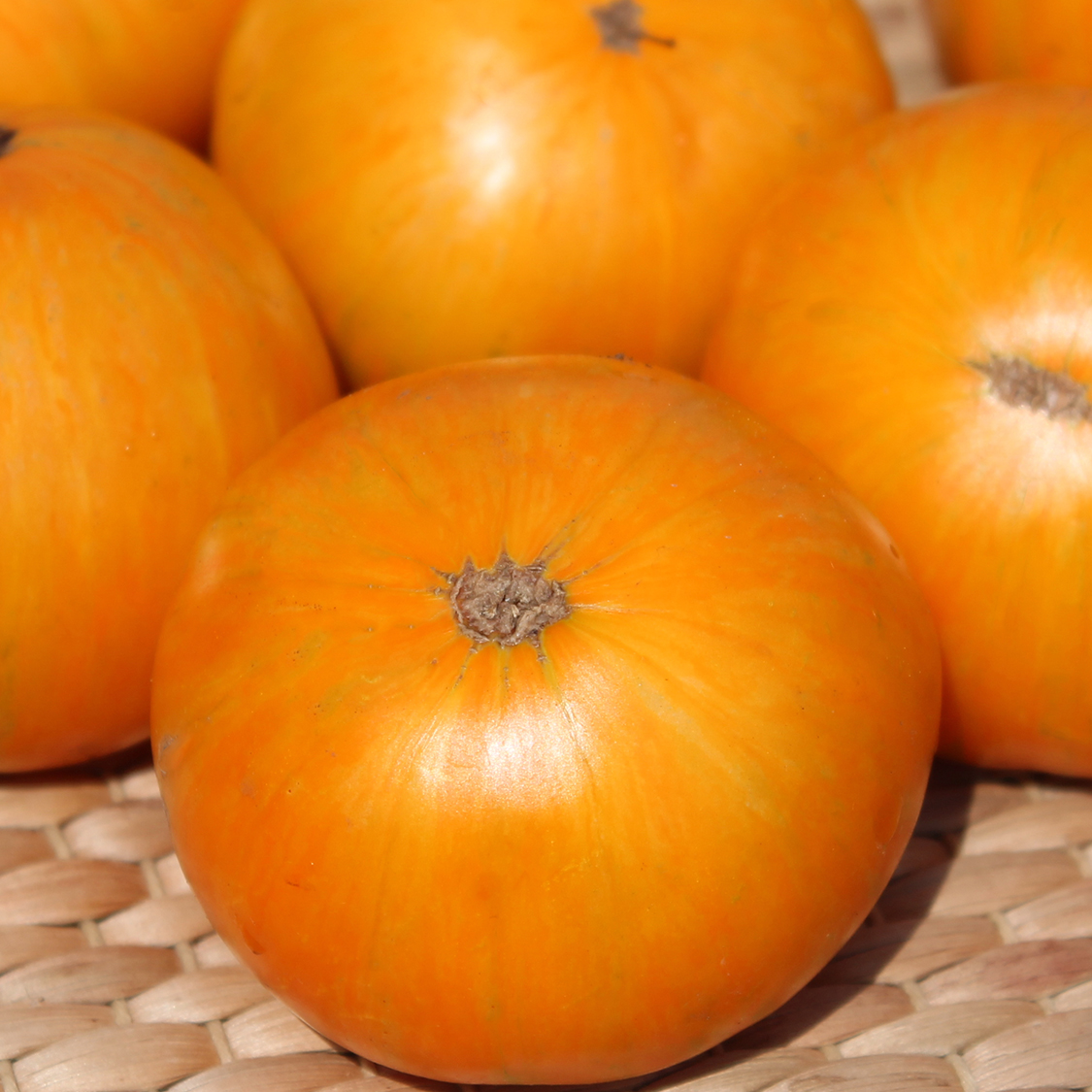
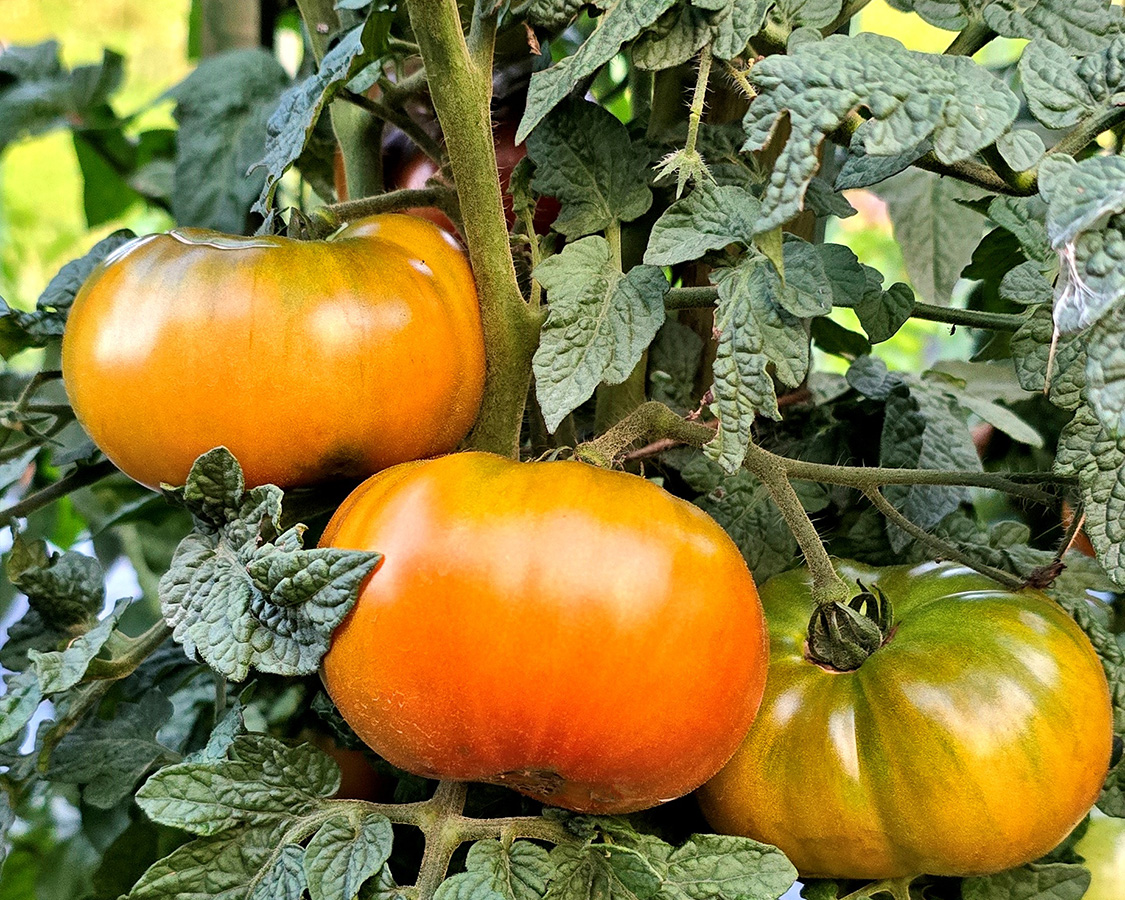
Janet’s Jewel from Wild Boar Farms is a stunning, large, bright orange striped beefsteak. It is very meaty and tasty, sweet with some fruity notes, and has great production. As you know, striped and tomatoes with a blush of some kind are my favorites.

Janet’s Jewel

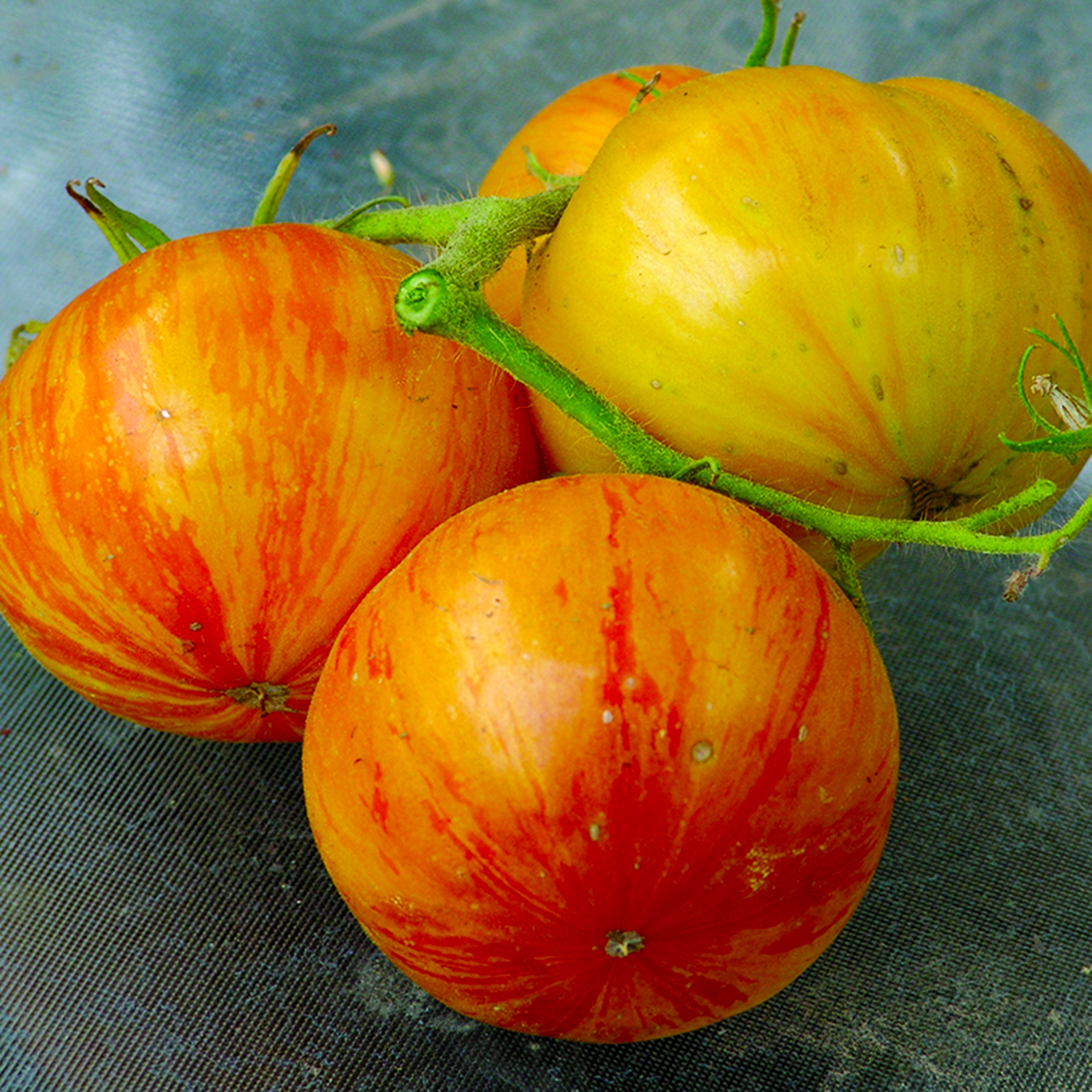
Beauty King A striking with its base color of yellow and orange and stripes of red. Another Wild Boar introduction. This variety is likely the result of a cross between Big Rainbow and Green Zebra. Large, bi-color fruits; yellow with red stripes outside and red streaks inside. Very meaty fruits have an excellent, sweet tomato flavor

Beauty King

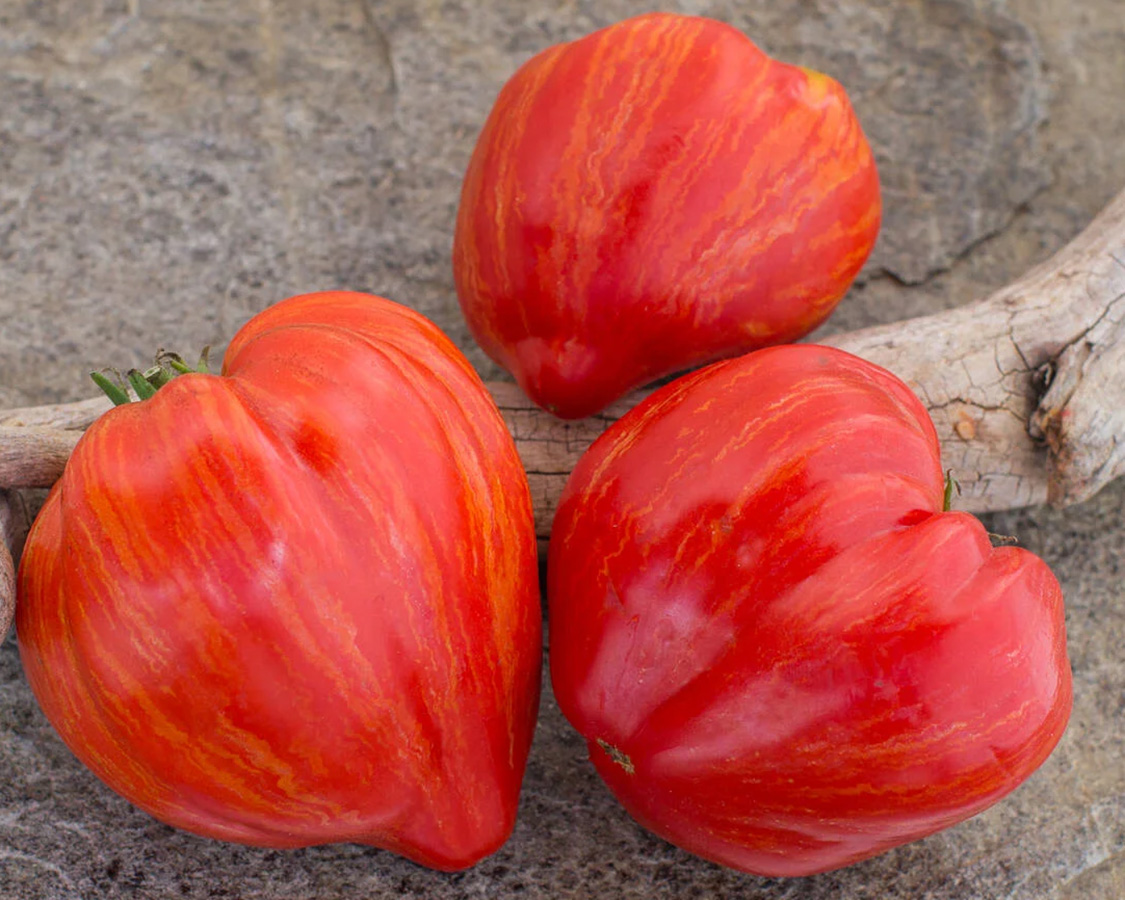
Solar Flare This 6-10 oz. beefsteak is red with gold stripes and has very meaty flesh with sweet tomato flavor. Developed by Brad Gates (Wild Boar Farms) and selected for flavor, production, increased earliness and scab resistance.

Solar Flare

These are just a few of the ones I carry. If you asked me what my favorite tomato was, it certainly wouldn’t be red!

More Dwarf Tomatoes

These are perfect for anyone who wants to garden but suffers from a lack of space. Use the largest containers you can afford, quality potting soil, and put them where you can easily access them. Full sun is also important. As promised, here are a few more tomatoes.

Dwarf Awesome
I am hoping this one lives up to its name.
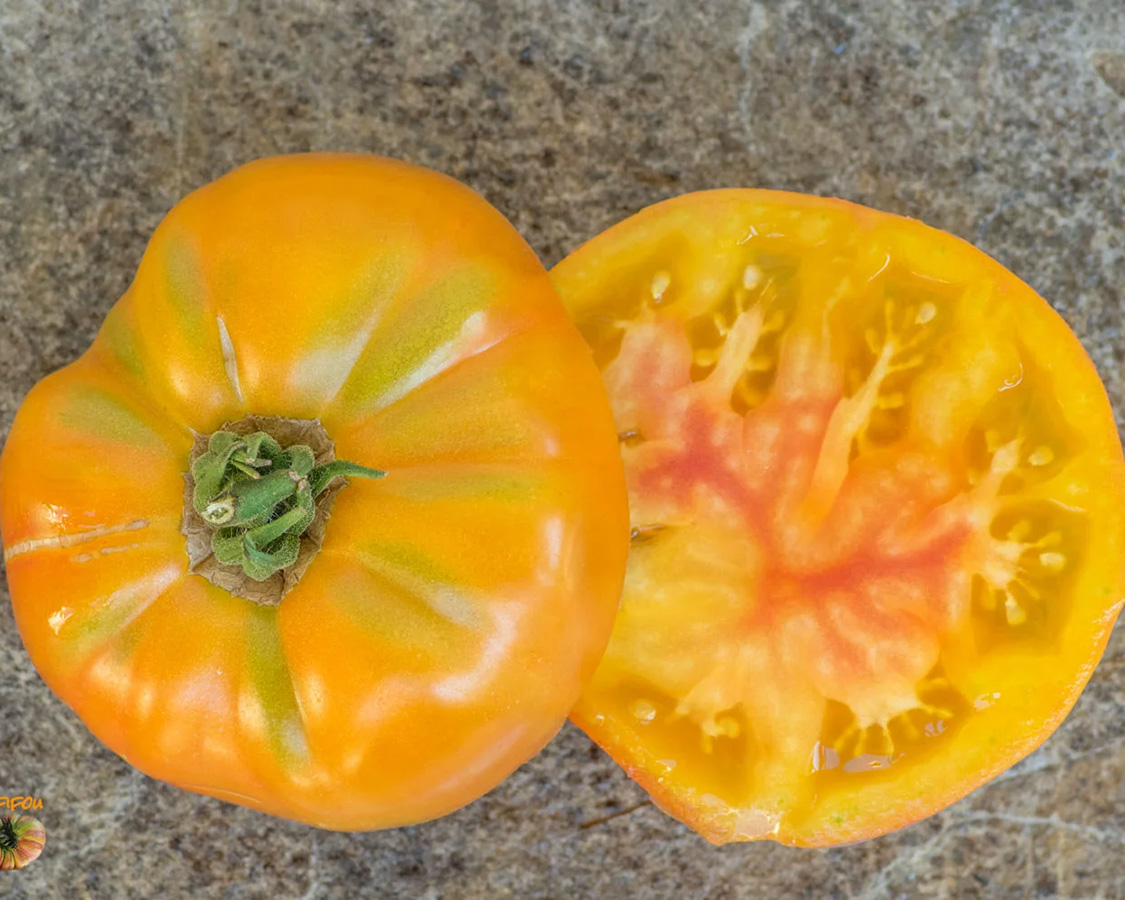
Round to oblate-shaped, deep yellow colored tomatoes with red blushing.Inside is juicy flesh displaying a combination of orange, yellows, pink, and red. Good for a container as yellow tomatoes tend to have a richer flavor when not over-watered.

Dwarf Awesome

Dwarf Betty’s Smile
These grow to about four feet and are quite bushy. Their fruit is oblate shaped, pink in color, medium to large size, and mild, balanced in flavor. They are on the sweeter side.

Dwarf Betty’s Smile

Dwarf Russian Swirl
Vigorous dwarf (tree-type) plants with regular leaf rugose foliage. Excellent yields of smooth oblate yellow tomatoes with red swirls and streaks, 6-12 oz. The flavor is well balanced and tasty, reminiscent of the best bicolor types Good for a large container. 3 – 4 feet tall  Mid-season

Dwarf Russian Swirl


Dwarf Shackelford Giant Pink
If you want to grow a giant tomato, this old heirloom variety is a great choice.They have vigorous, spreading vines that produce amazingly huge, raspberry-pink tomatoes of varying shapes that are very meaty and juicy and have a well-balanced, slightly sweet, pleasant flavor. Mid- season

Dwarf Shackelford Giant Pink

Dwarf New Big
These plants stay relatively small and manageable. They thrive in containers or small garden beds, making them a great choice for those with little area to garden. Maturing early, you enjoy homegrown, full-sized tomatoes. Exceptional taste and compact nature, a great choice for those looking for great flavor and a smaller footprint.

Dwarf New Big

Dwarf Pink Passion
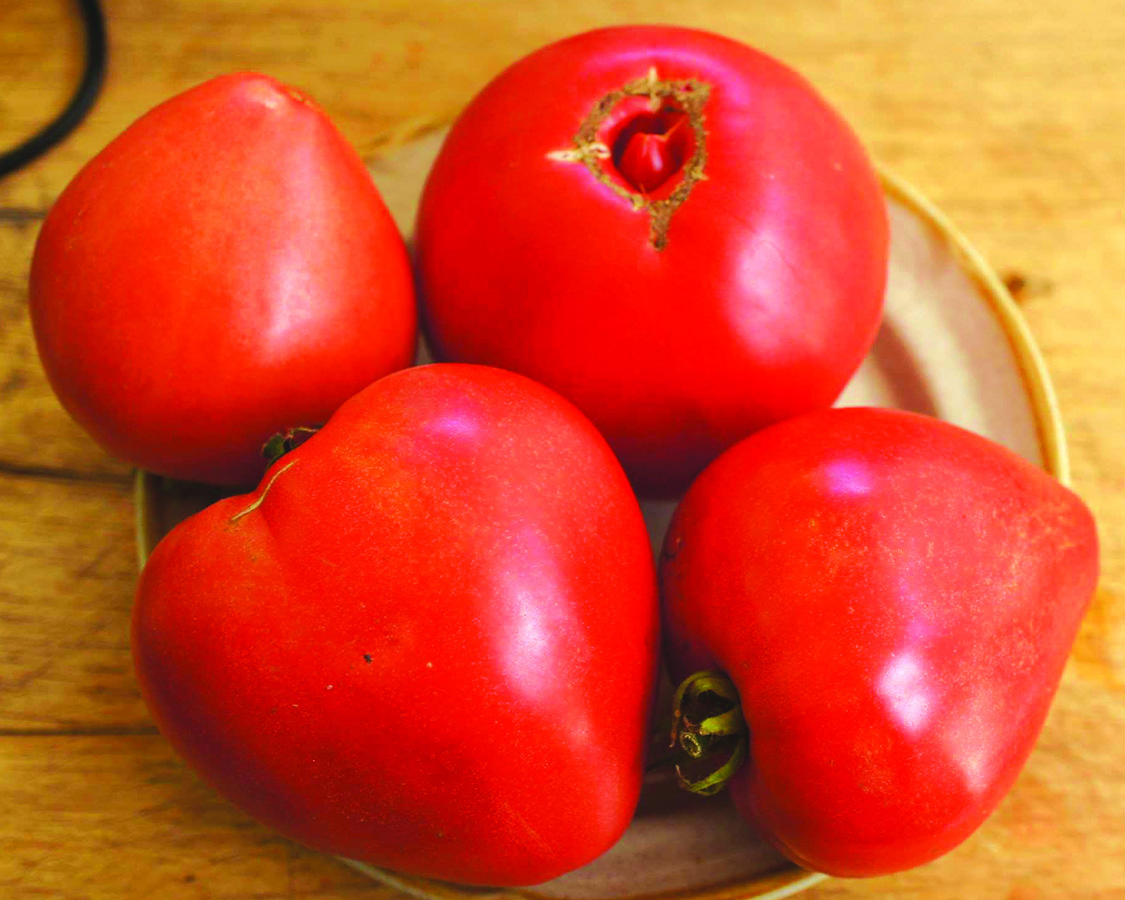
Dwarf (tree-type) large regular leaf plant produces heavy yields of 4-8 oz., pink, medium-sized, heart-shaped fruits with delightful, balanced, sweet flavors. Good for a large container.

Dwarf Pink Passion

Dwarf Maralinga
It produces heavy yields of rich-brown tomatoes with deep crimson flesh and medium to large slicing tomatoes. They are full flavored. Plants grow to about 3 1/2’ feet tall. They produce 6-8 oz fruits that are balanced, earthy and satisfying. 

Dwarf Maralinga

The ones I have shared with you are not the only dwarfs that I have. Come by and see what we have. Live a little and try something that may be a little different than what you are used to. You won’t regret it!

Dwarf Tomatoes – Hi Ho, Hi Ho Off to Garden We Go

I think most folks are wary of Dwarf tomatoes, thinking they are miniature plants with miniature fruit. I am here to show you they aren’t any of those things. They are dwarf only in stature, most growing between 3 and 4 feet. They also do really well in large pots if you don’t have the real estate for a garden. You can still enjoy a homegrown tomato instead of those nasty, red things that they call tomatoes at the store.

I started out with a couple of varieties. I was intrigued by the story of how they came to be. For years, if someone wanted smaller plants, they chose determinate varieties that didn’t get very big, the plant or the tomatoes. There’s not a whole lot of variety there. Smaller fruits, almost all of them were red, a lot of the early tomatoes fall into the diminutive category and their flavor, while head and shoulders above store tomatoes, were still not as flavorful as one would hope. (Mostly because they don’t have time to develop the flavors in longer season tomatoes.)

Dwarf (Tree Type) tomatoes from The Dwarf Tomato Project. I grew 6 of them in 2016 and was very impressed with most of them. They are perfect for a small space gardener who wants a slicer instead of the smaller tomatoes that are usually produced by most determinate tomatoes.

 This class of tomatoes exhibits characteristics of both determinate and indeterminate types. Historically called “tree-type,” they are now commonly referred to as” dwarfs”. Tree-type tomato plants have very thick main stems with minimal branching. Their foliage can be either regular or potato leaf but in either case, are rugose (e.g. dark green in color and crinkly in texture). Due to their slow growth rate, they appear from a distance to be determinate achieving three to four feet in height. However, like indeterminate, they continue to set fruit throughout the growing season. Compact and everbearing, what a great combination! They come in many colors, shapes and sizes.

To learn more go the link below, it’s really quite fascinating. The Dwarf Tomato Project grew out of a comment made in a Tomato Forum at Gardenweb when Craig LeHoullier lamented the fact that the dwarf category in tomatoes was very restricted. He suggested it would be good to cross dwarfs with heirlooms to remedy this situation and mentioned New Big Dwarf being listed in a 1915 Isbell Seed Catalogue which noted how the variety was developed by crossing Dwarf Champion (known since the late 1800s) with the largest known tomato at that time, Ponderosa. Patrina, a friend thought this sounded like a fun thing to do and decided to have a go at crossing some dwarfs with heirlooms in her next summer season in Australia.

Patrina and Craig decided to use this material to start a project where anyone (who wanted to help grow the many generations that would be needed to stabilise new varieties) could volunteer to grow some plants. The goal was to create a selection of tastes, colours and sizes that would equal heirloom varieties with plants having an advantage of being more compact and therefore more manageable. Volunteers were given the opportunity to name any new novel dwarf tomato type they discovered in appreciation for helping in the project.

I bought the majority of my seeds for these Dwarfs from Tatianas Tomatobase, Victory Seeds, and Tomatofest. As more people become aware of them, they are becoming readily available in limited varieties from other online seed companies.

Check out their story and pictures at the following link:
www,dwarftomatoproject.net

These plants are wonderful for containers (the larger, the better) as long as they have enough sunlight. Remember that ripening times start when the plants are transplanted into the garden. This year, I have 29 dwarf varieties available.

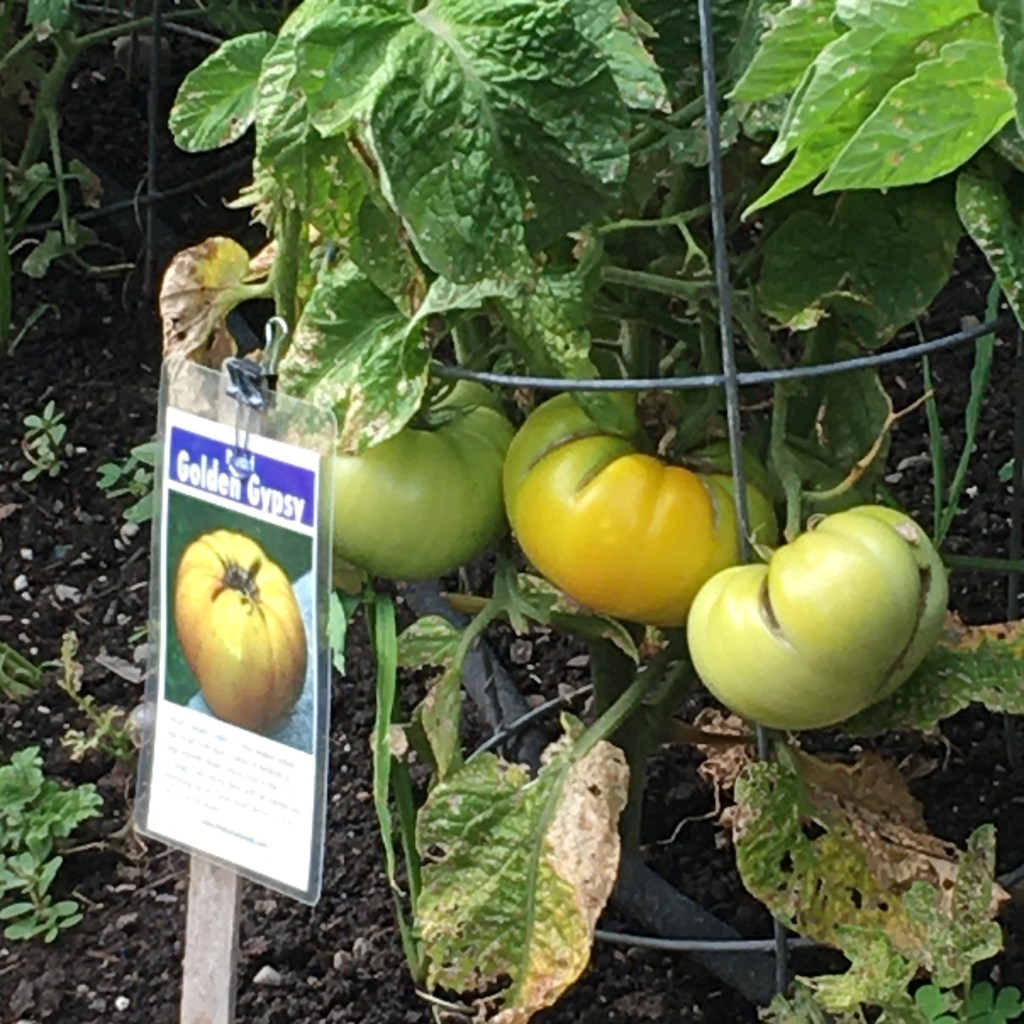
Of the varieties I have grown, I have some favorites: Dwarf Fred’s Tye-Dye, Dwarf Purple Heart, Dwarf Golden Gypsy, Dwarf Tasmanian Chocolate, Dwarf Brandy Fred and Dwarf Sweet Sue.

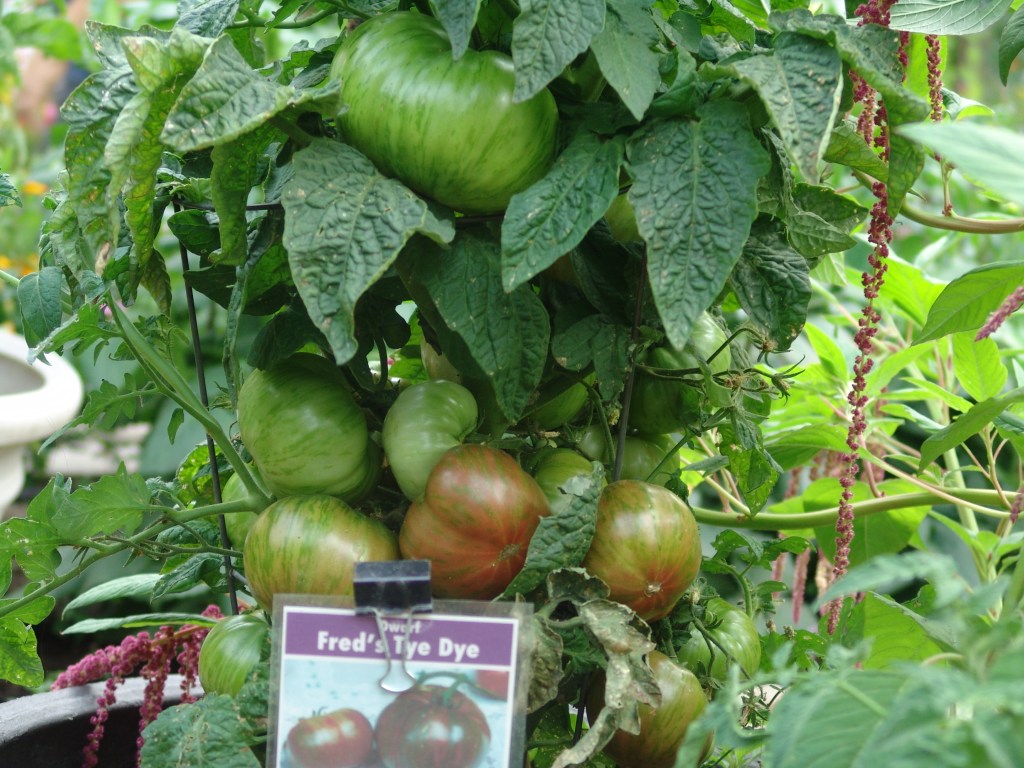
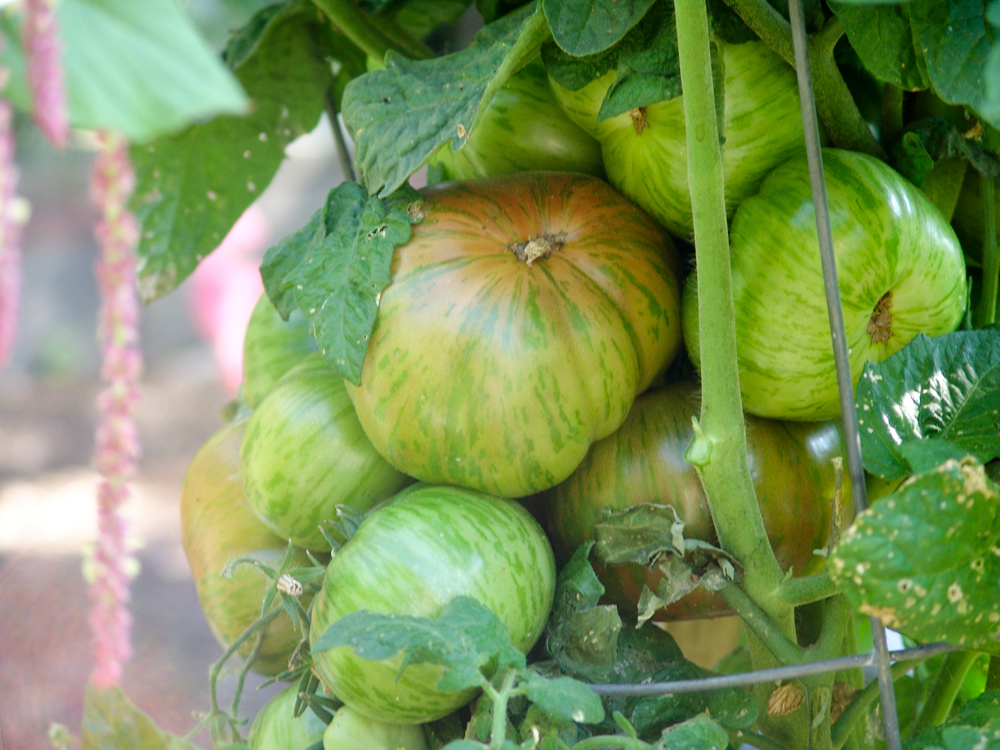
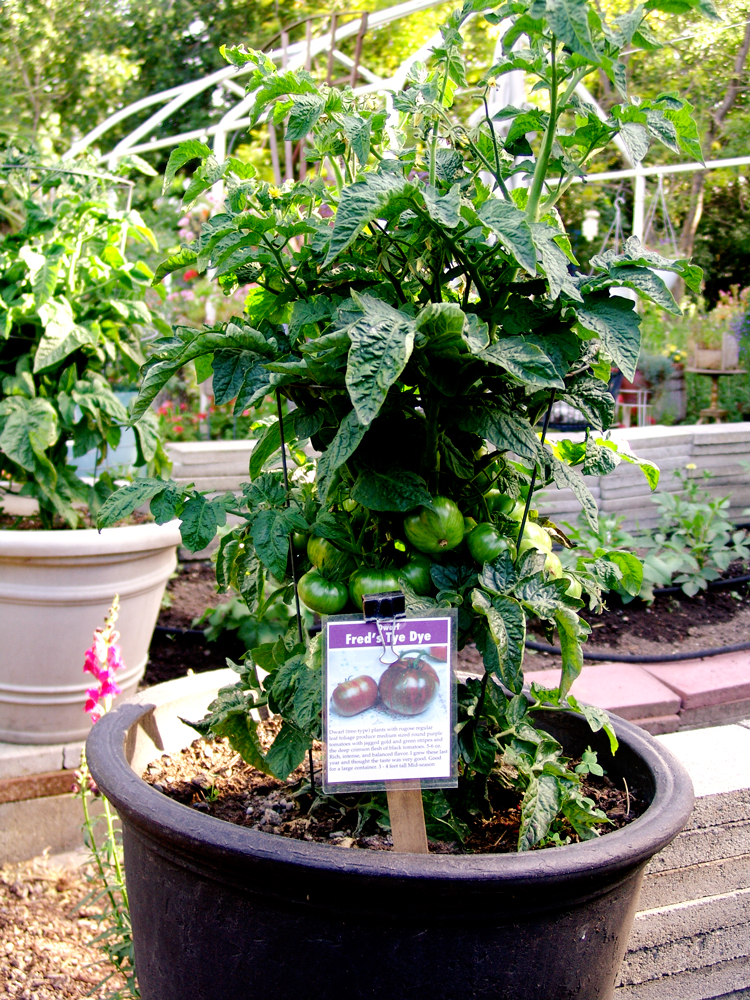
    Dwarf Fred’s Tye-Dye
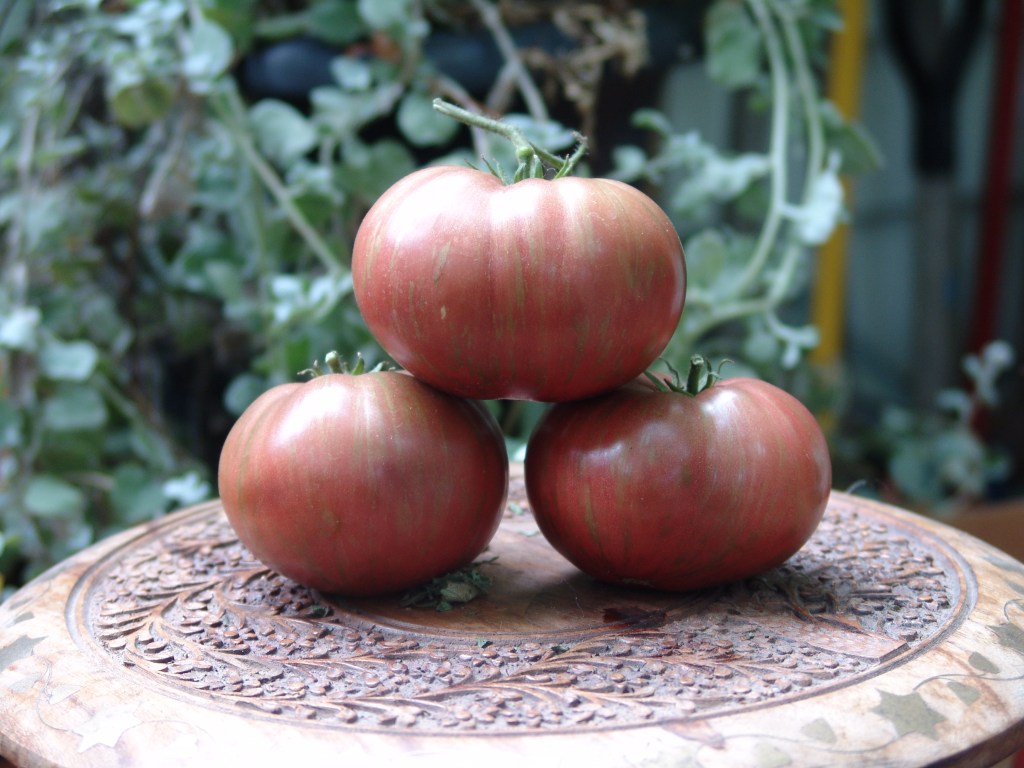
    A beautiful, purplish-colored fruit, it is sweet, large, and abundant. I think this is the one I fell in love with in the beginning. A medium-sized tomato, purple with jagged gold and green stripes and the deep crimson flesh of that black tomatoes are known for.

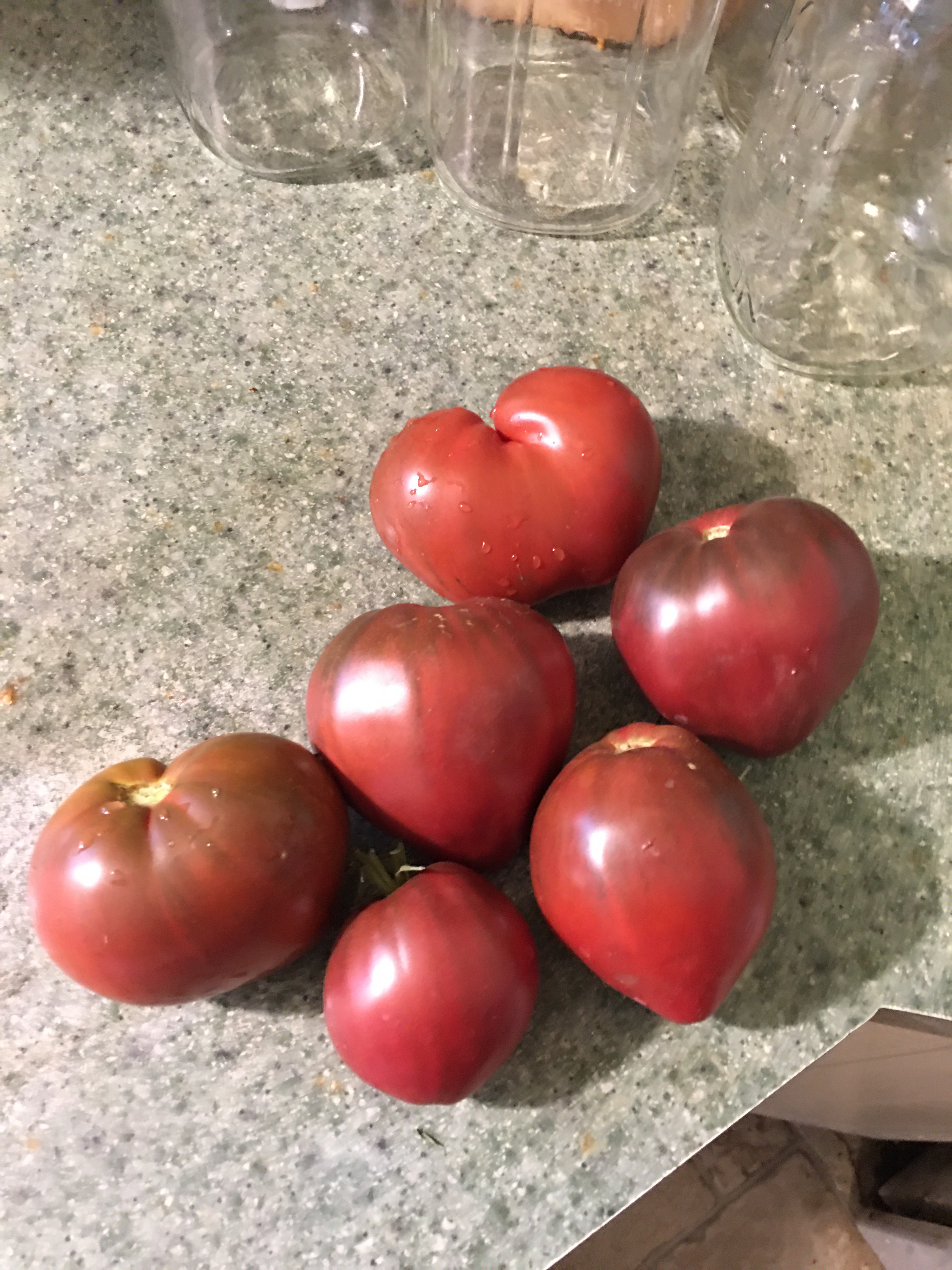
    Dwarf Purple Heart
    This plant produces heart-shaped, medium- to medium-large fruit that ripens to a dusky rose purple hue. The flavor is well-balanced, sweet, intense, and prolific. As with all heart-shaped tomatoes, some are more of an oblate shape, but most are shaped like hearts.

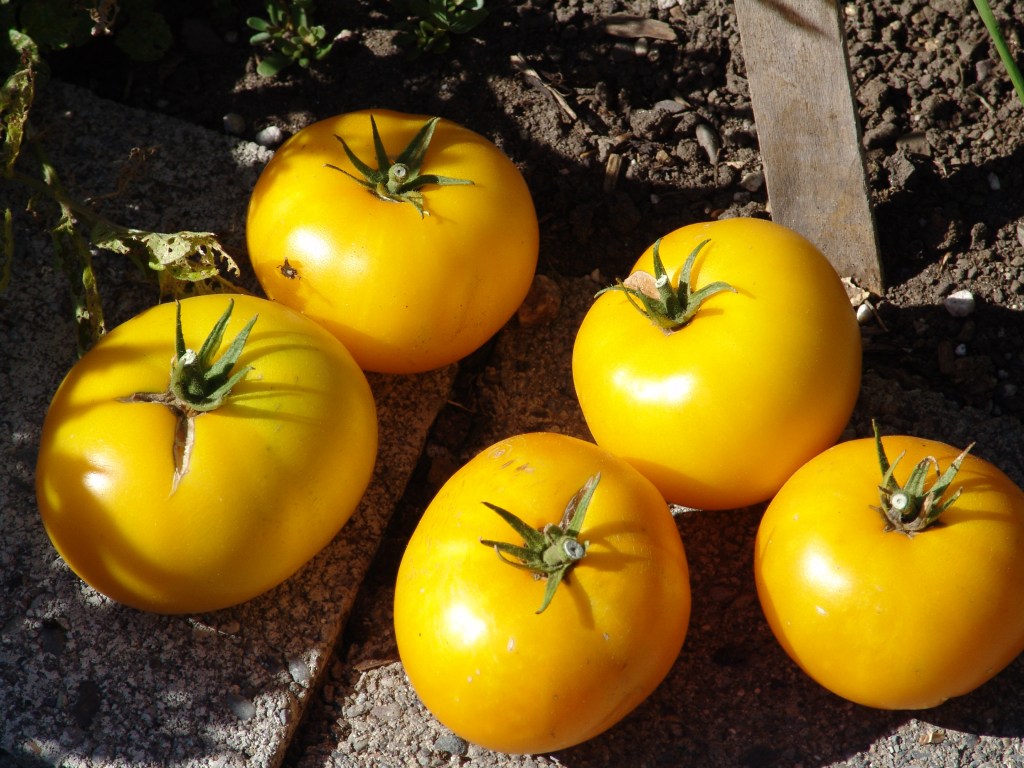
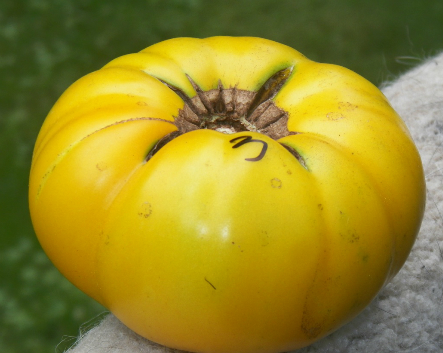
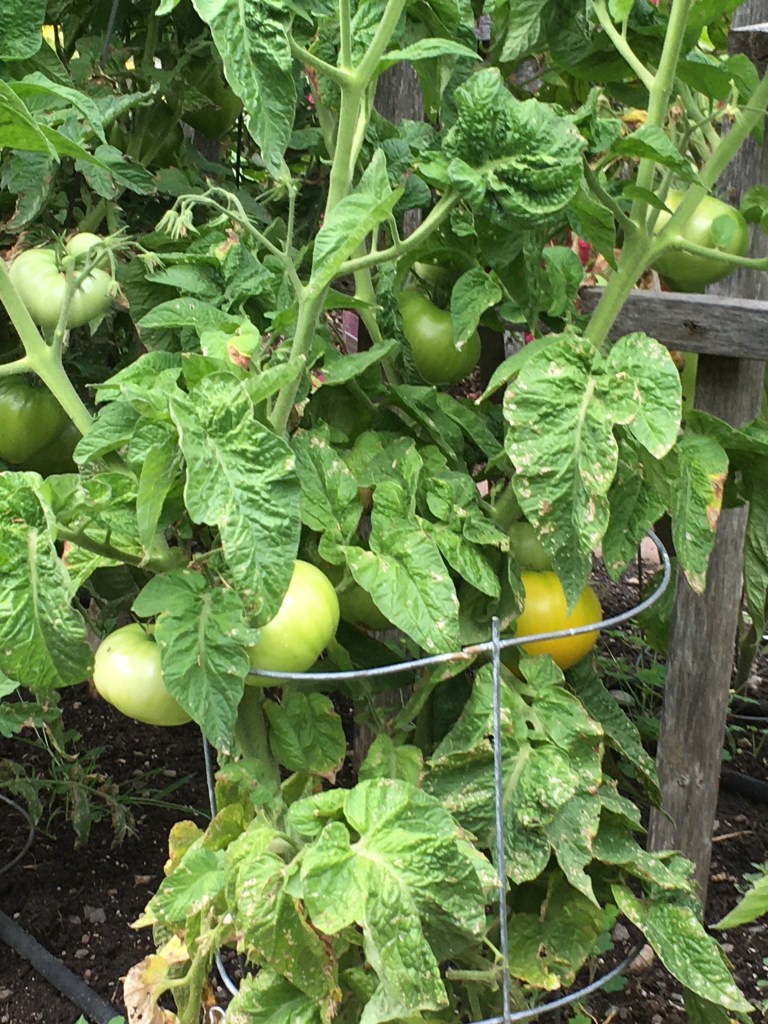
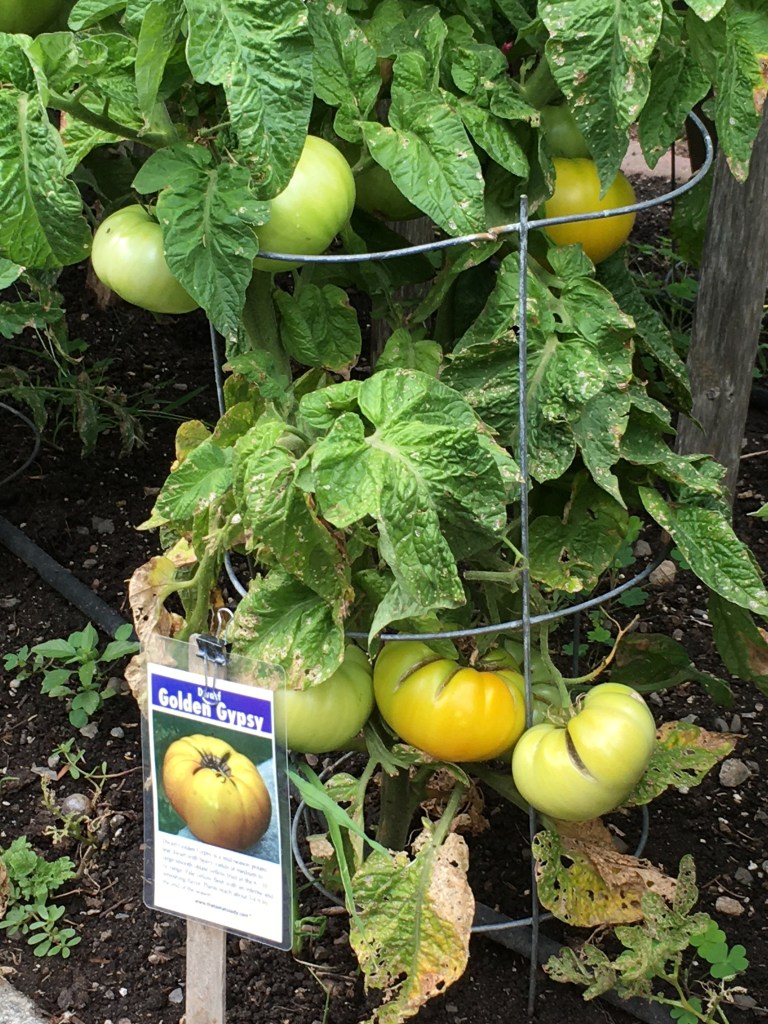
    Dwarf Golden Gypsy
    A potato leaf dwarf with heavy yields of medium to large smooth oblate yellow fruit. Pale yellow flesh with an intense and refreshing flavor. 

    Dwarf Tasmanian Chocolate
    Strong-yielding, short, sturdy vines bear heavy crops of beautiful, plump, mahogany red faintly striped tomatoes with a delicious, well-balanced flavor. Perfect for large containers on a deck or balcony. I was surprised at how well it did in a larger pot. Isn’t this one a beauty!

    Dwarf Brandy Fred
    Oblate medium to medium large fruit that ripens to a dusky, rosy purple hue. The flavor is well-balanced and intense, and the variety is quite prolific. It reminds me of a Pink Brandywine, which I believe is in its parentage.

    Dwarf Sweet Sue
    A medium-sized fruit that ripens to a bright yellow with a pink blossom end blush. The flavor is outstanding, well-balanced, and sweet. I like pretty tomatoes that taste good as well.

    These tomatoes are the ones I can vouch for having grown and eaten them myself. .

    Now for some new ones that I am looking forward to trying,

    Stony Brook Heart
    Compact, reaching 3’ to 4’ and very productive. The distinctly heart-shaped tomatoes are a beautiful scarlet color with distinct jagged golden stripes. Average size run between six to ten oz, but they can reach one pound or more. The meaty flesh has a classic tomato flavor with an initial burst of sweetness

    Dwarf Perfect Harmony
    Orange-yellow skin, a beefsteak type, flattened at the poles and with more or less plump shoulders. Grows 4’ – 5’ tall, and produces a good quantity of medium-large, up to twenty oz, bright-orange colored, with a distinctly tart, full flavor.

    Dwarf Metallica
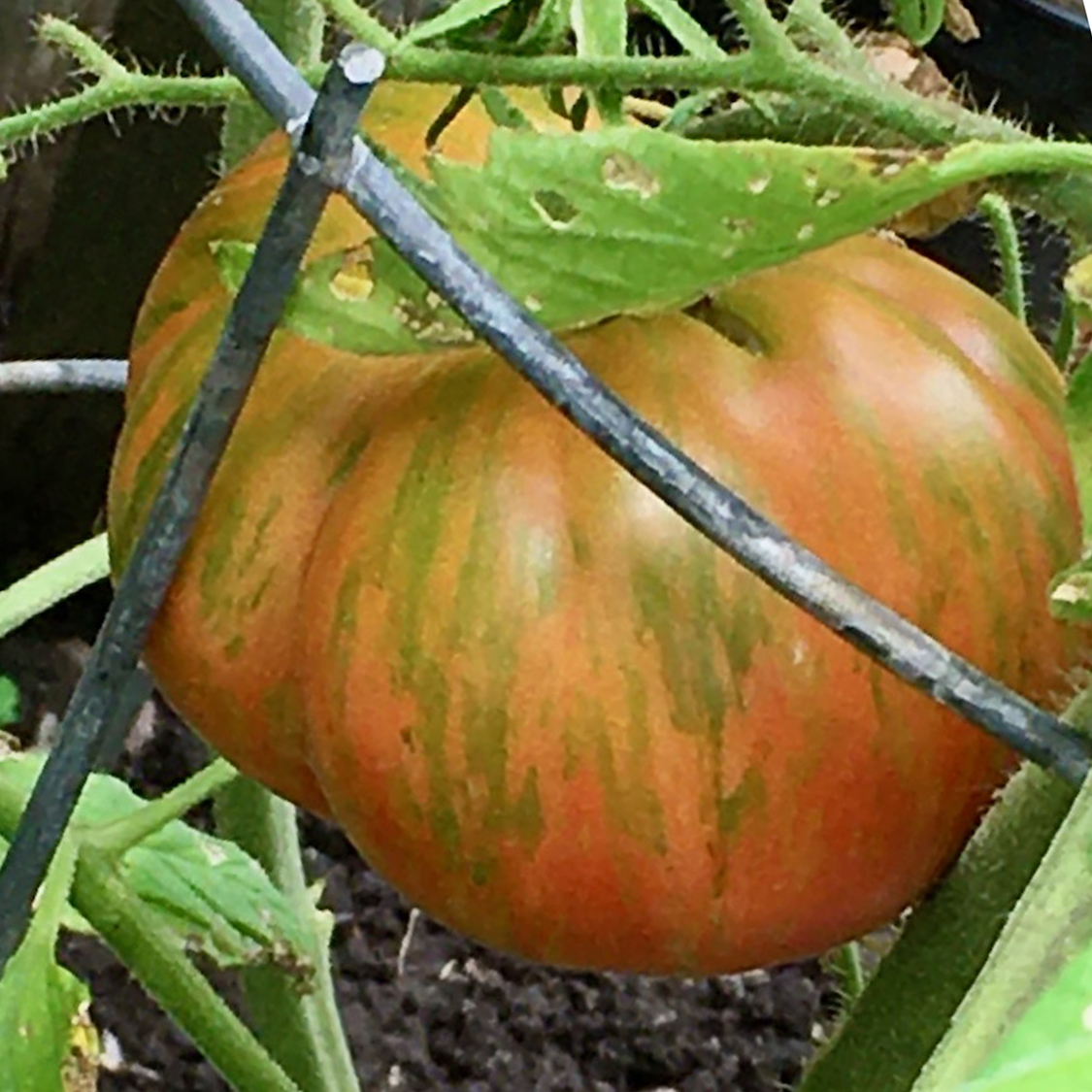
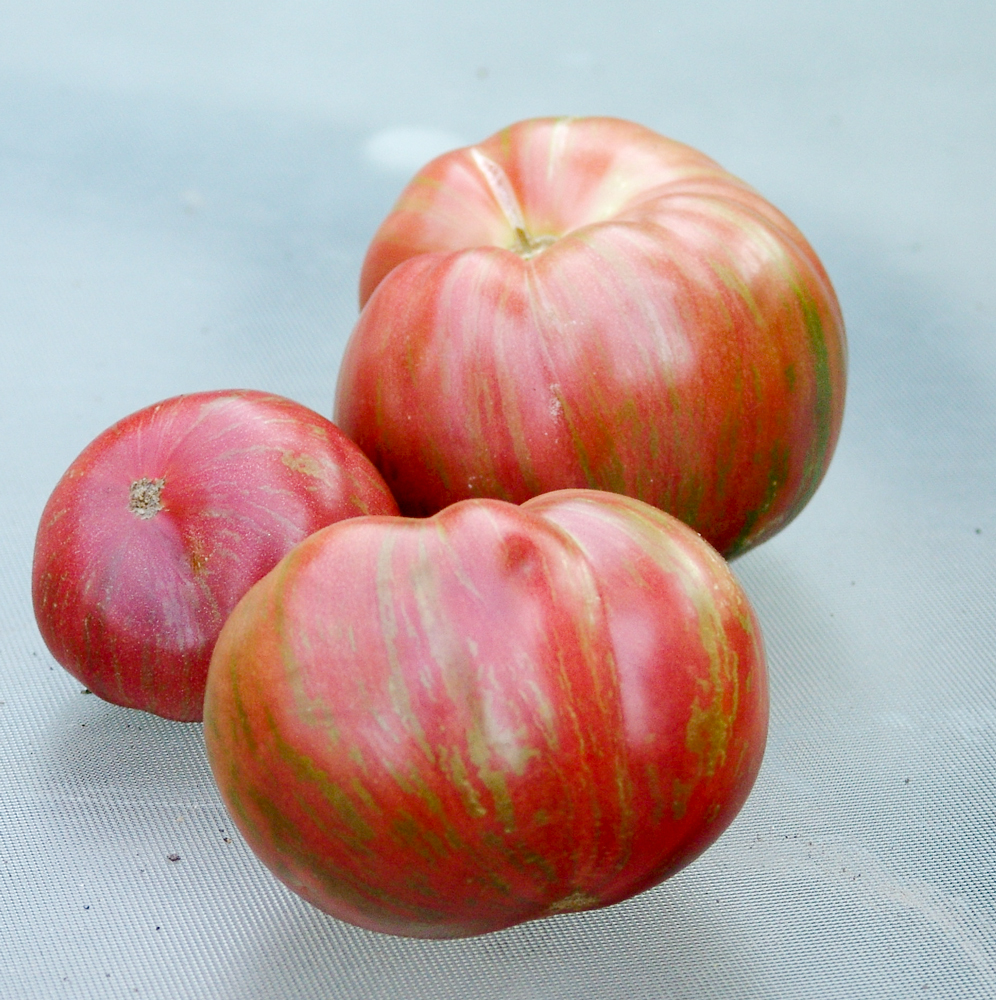
    All you rock fans unite. I wanted to try this one, partly because of the name. Not necessarily my favorite band, but hey, I know some of you like them. This tomato is a looker, with it’s dark pink color with metallic green striping.  A beefsteak I can see a BLT in it’s future.Mild and well-balanced flavor, slightly sweet and tangy. Very productive. Can be grown in large pots.

    Dwarf Idaho Gem
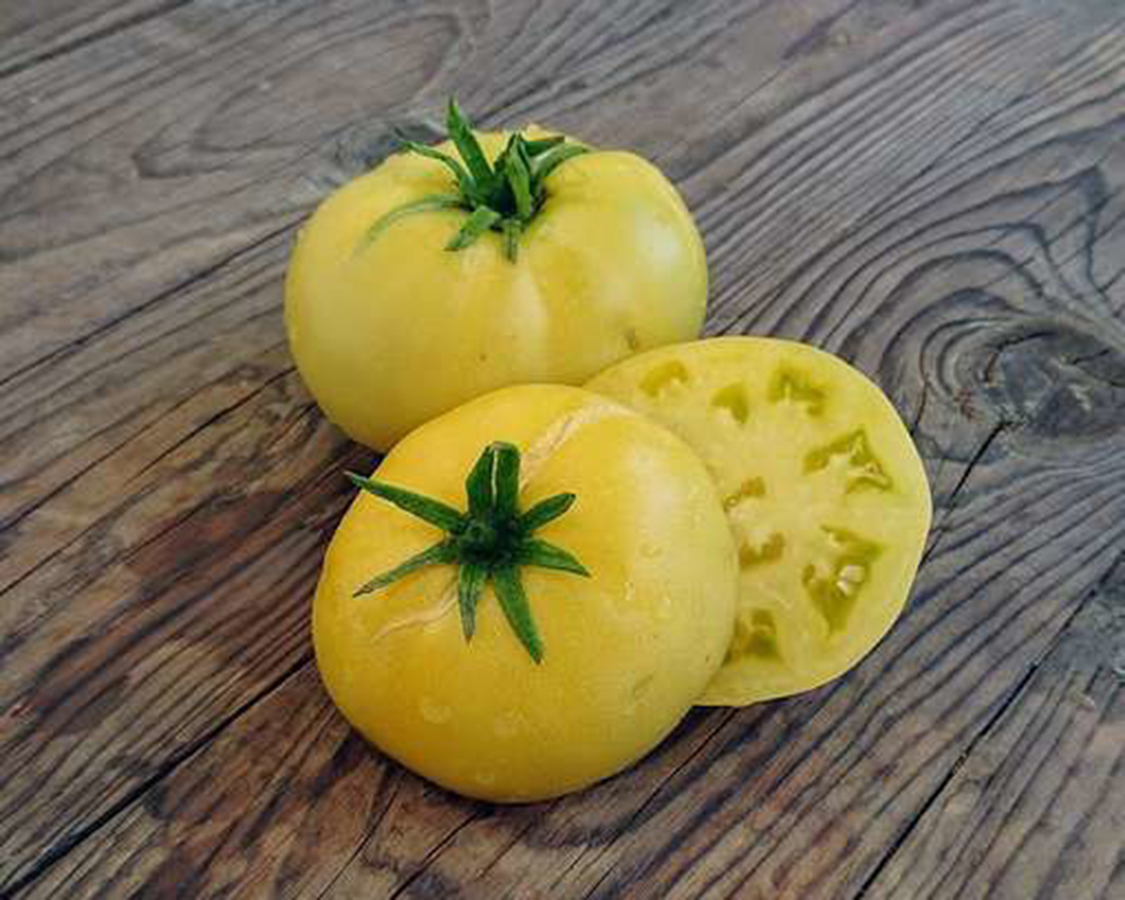
    Any Idaho fans out there? I personally love Idaho. This variety produces lots of medium to large fruits, ranging from 4 to 14 oz, a true yellow (not orange), that are juicy, sweet, and flavorfully mild; a well balanced, delightful flavor. This is a perfect meaty slicing tomato that helps prove that yellow tomatoes are not bland or too mild.

    There are many more to choose from. Unfortunately, I can’t showcase them all in this one post. Otherwise, no one will want to finish reading this. I fear I have gone on far too long. However, my next post will be on a few more.

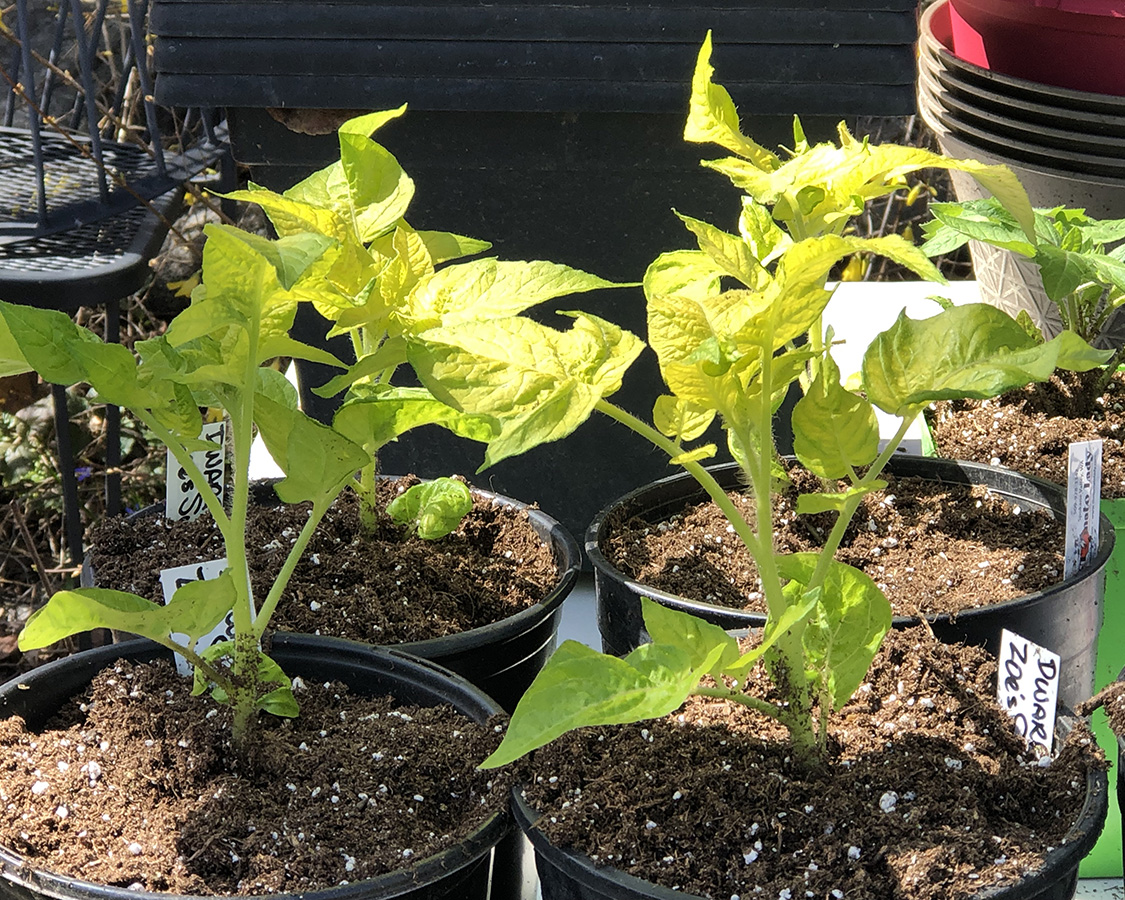
    I have a treat for you now. This is one of the prettiest tomato plants I have ever seen. It is called Dwarf Zoe’s Sweet. It is named after the developers own daughter. This has the most interesting chartreuse-green foliage. When it germinated I about had a stroke thinking it had contracted a virus or had a serious nutrient deficiency. I rushed over to pull them until I realized all 9 plants were the same color. Whew! After doing some research, I find that it isn’t any of those things. These tomatoes are supposed to be very sweet. The chartreuse gene that causes that color, also encourages it to grow a little taller than other dwarfs. Most dwarfs only grow 3″ to 4″ feet (hence the name), this one can reach 4″ to 5″. I am excited to try it this year. Without further adieu, I introduce you to my shining star (literally):

    Dwarf Zoe’s Sweet
    Don’t be put off by the chartreuse-colored leaves. The first time I saw them I rushed to pull them thinking they had a virus, except that all of them had it! The fruit are oblate shaped, 6 – 16 oz each, and pink. Flavor i son the sweet side, the texture is meaty The chartreuse gene causes plants to grow a bit taller, so be sure to stake it well.

    Isn’t that a beauty! Until next time, God bless!

    New To You Plants: Tomato Varieties and Why You Should Try Them

    Every year I grow the same varieties that I have grown in previous years. Either they have become a customer’s favorite, or I just plain like them. I know it is overwhelming when you come to our house and are faced with 387 varieties (this year), and that is just the tomatoes!. It does not include the peppers, herbs, flowers or veggies. My goal is to introduce you to different varieties . . . of well, everything! Life is too short to eat store tomatoes. The old adage,”If it ain’t red, it ain’t a tomatah” keeps a lot of my customers from experiencing the broad range of colors and tastes. A lot of my plants have stories of their own.

    I can almost guarantee that I have more tomato varieties for sale than anyone in the world. Granted, some of them are in limited quantities, seeds being somewhat scarce. Every year in the fall, I am so done with gardening. I think about having the garden paved over into a parking lot. Then, I start getting, THE CATALOGS. Yup. All my resolutions go out the door. Thoughts of Super Sweet 100’s, Romas and Early Girls are suddenly forgotten, as I thumb through the colorful pages of exotic looking tomatoes. Blue, green, striped, even white. Its a rainbow of colors. I consider myself the United Nations of tomatoes with varieties coming from all over the world. Russia, Ukraine, Italy, France, Mexico, Poland, Australia even Switzerland to name a few.

    For the next several weeks, I am going to show you what you have been missing. Let the adventure begin!

    But first, I should explain some basic things to you. I place my tomatoes into categories based on common uses, shapes, and maturity dates: Paste, Main Season, Patio, Cherry, Early, Heirloom, Oxheart, Dwarf, and Unusual.

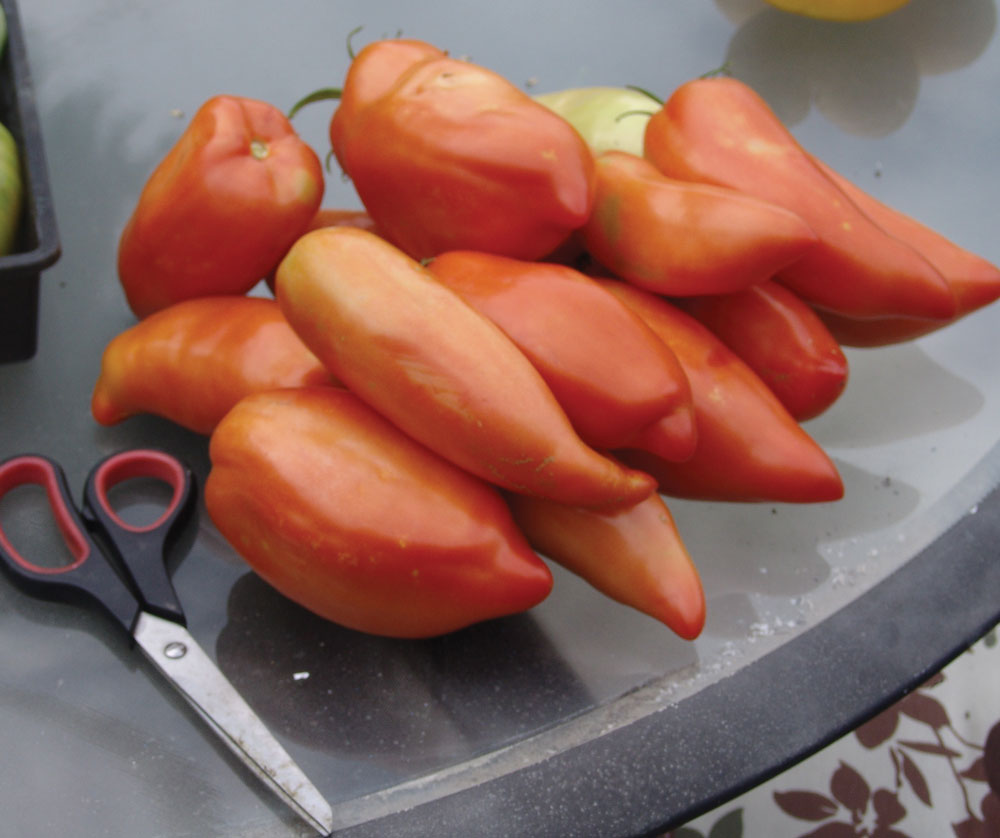
    Paste tomatoes are a type of tomato that have dense, meaty flesh, less juice, few seeds, and are usually cylindrical or pear-shaped. They can be snub-nosed like a Roma or San Marzano or large, long shape with a pointy tip such as the Polish Linguisa. They are what everyone thinks of when they think about tomato or spaghetti sauce.

    Polish Linguisa

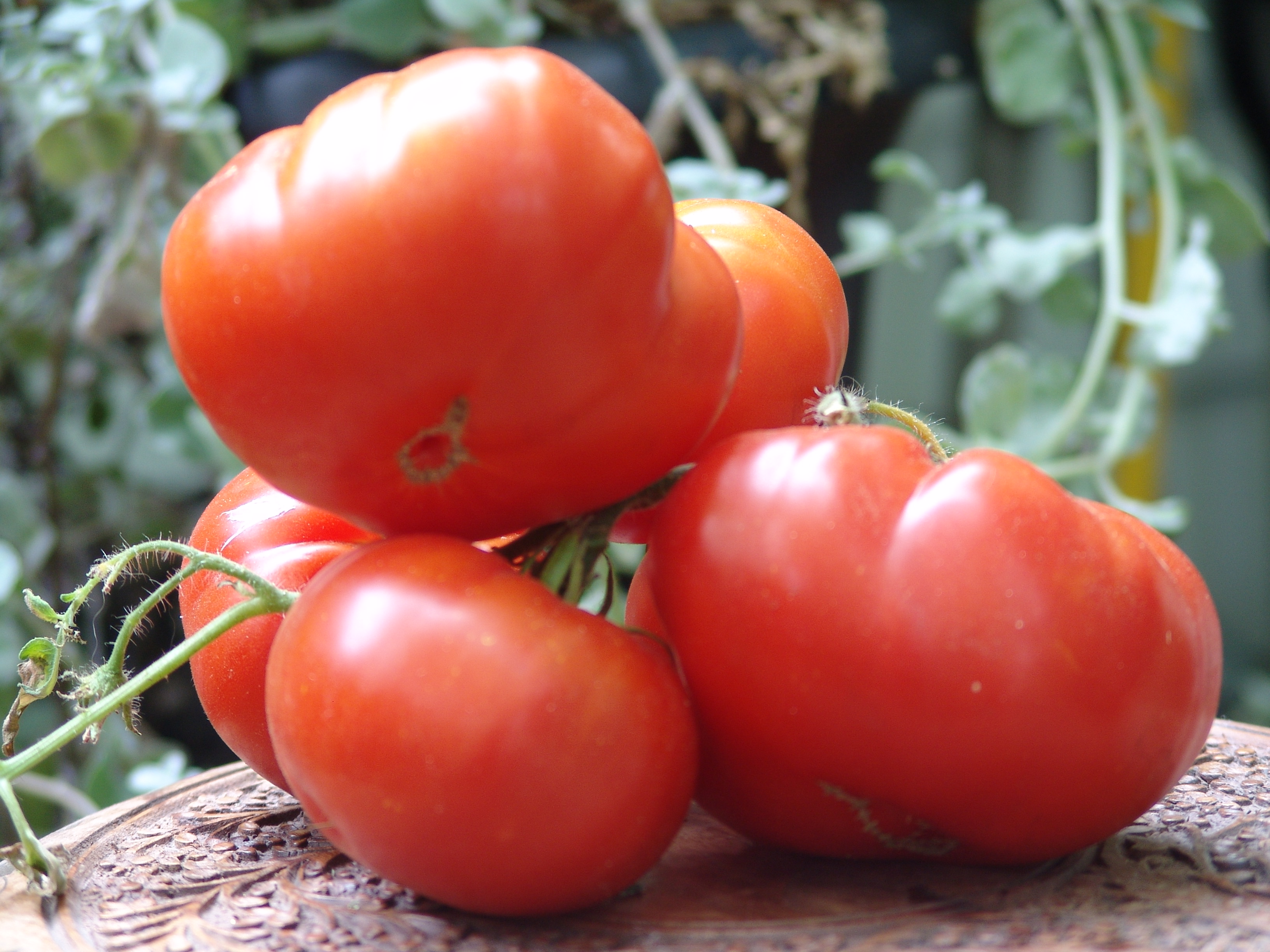
    Main-season tomatoes are classified (by me) as varieties that usually ripen 70 – 84 days. They also come in different colors, although most of the ones I know are red, medium-sized, and smooth-skinned. Big Boy, Better Boy, and Goliath come to mind.

    Supersteak

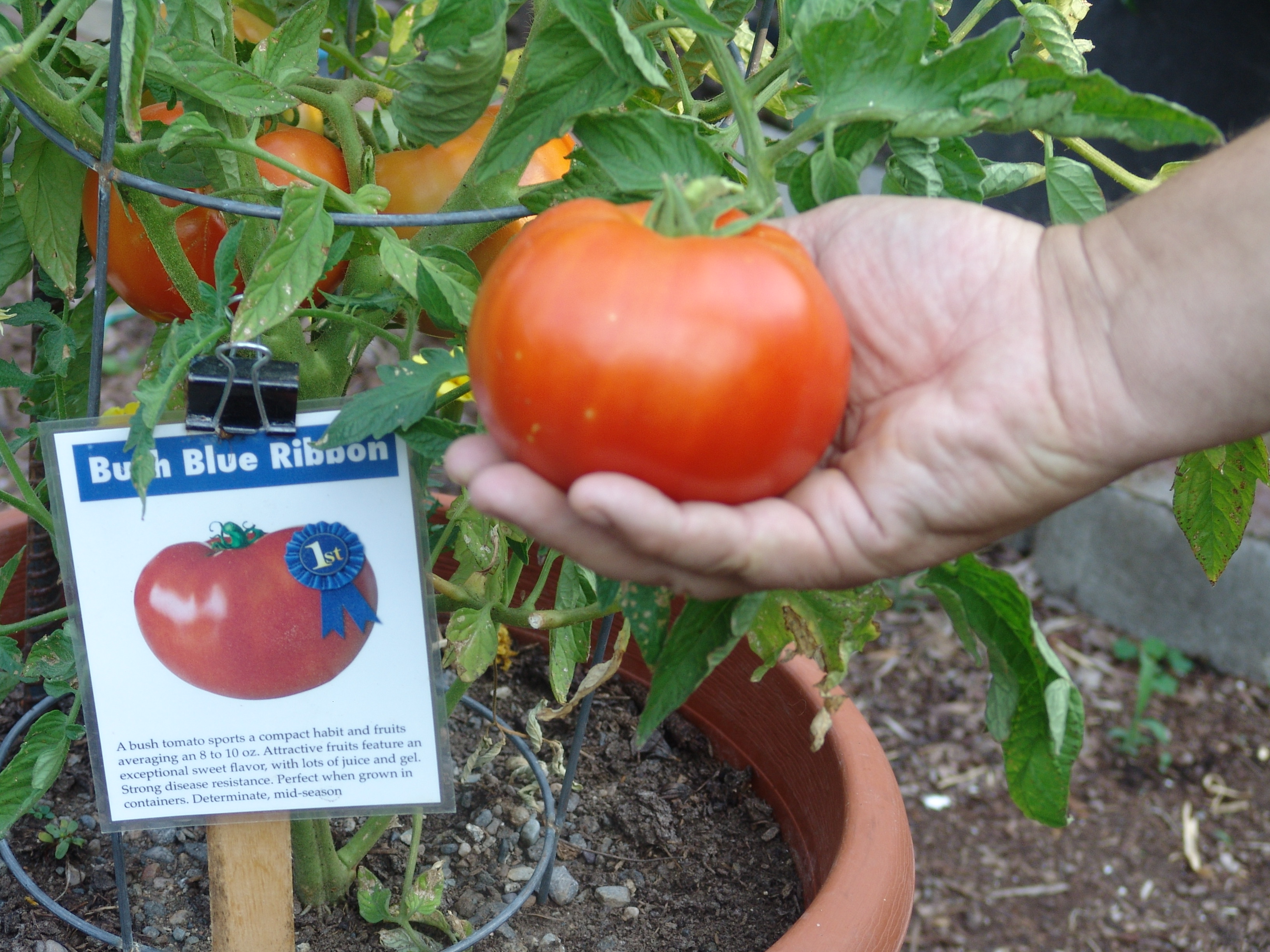
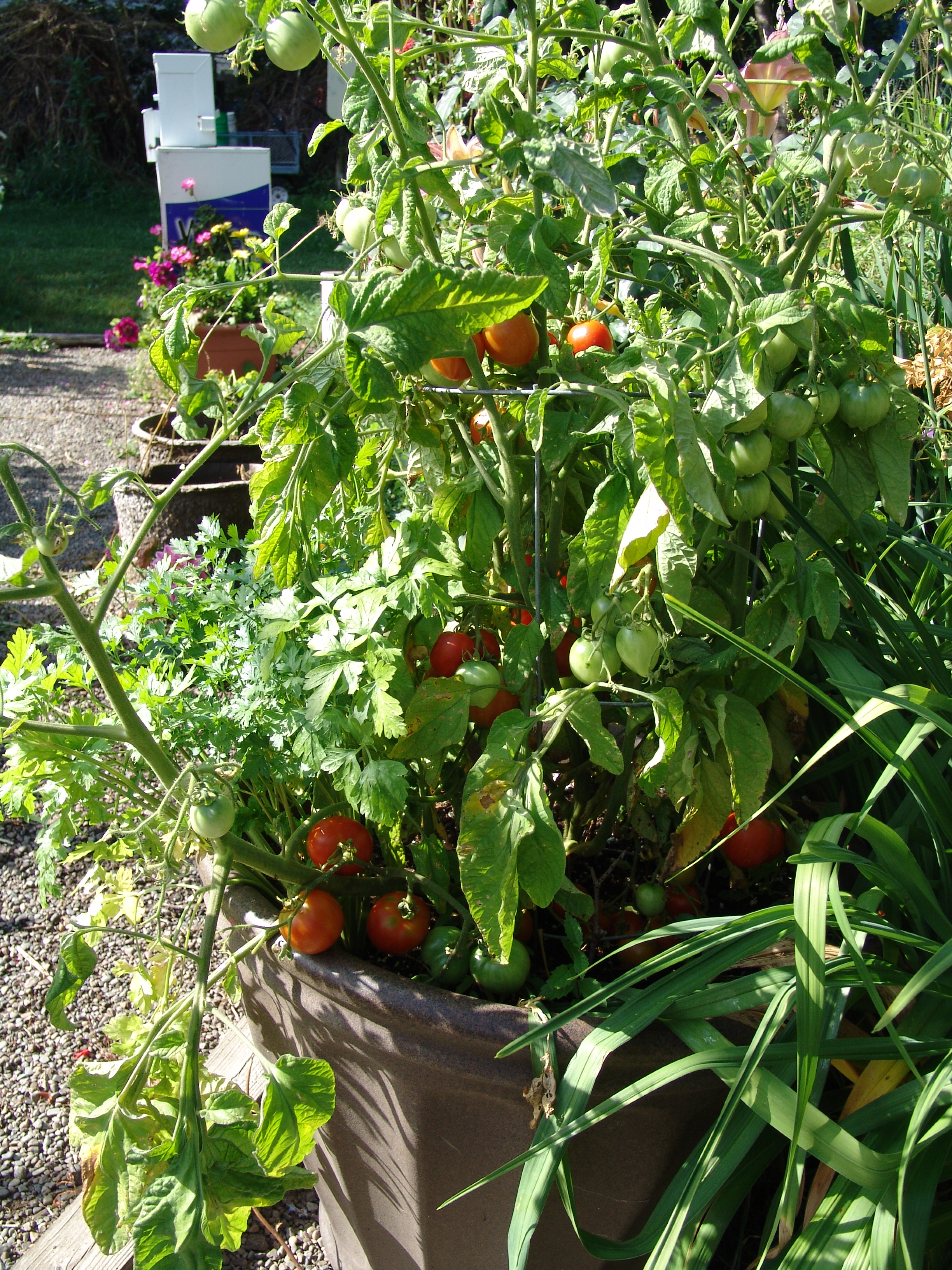
    Patio/Container friendly plants are good for large or medium-sized containers. Smaller in stature, they include the bush varieties i.e. Bush Goliath, Better Bush, Bush Beefsteak, Bush Early Girl, Bush Campion II, , Bush Blue Ribbon, and Patio. The bush tomatoes can range from cherry sized to beefsteak sized. Not to be confused with the dwarf tomatoes, which I will explain further down. Most are shorter season and do well on a patio or patio table.

    Bush Blue Ribbon

    Cherry tomatoes No one needs an introduction to a cherry tomato. It usually grows on long vines that need staking. Smaller-vined ones are available, such as Sweet Valentine, Tumbler, Tumbling Tom Red and Yellow, and Tiny Tim. These are some that come to mind. All the colors of its larger brethren, some sweeter than others. Sweet Aperitif is my husand’s new favorite, small, red, and sweet.. Sungold is the sweetest cherry tomato I’ve ever had and is a favorite of most everybody. You have not lived until you picked a sun-warmed Sungold off the vine in the garden. (You can plant any tomato in a large container but it will be constricted by the size of the container.)

    Sungold

    Early tomatoes are just that: early, at 55-69 days. We also have some that are extra early, ripening 54 days or less. Early Girl, Subartic Plenty, Stupice, New Girl, and Moskvich are some early varieties. They are also mostly red and smaller sized. Taxi is the only heirloom that I know of that is early and produces beautiful, sweet, yellow fruit.

    Glacier

    Heirloom tomatoes are what I started with in the beginning of my journey. Their descriptions made them sound really yummy and I was tired of the standard, staid tomatoes I bought fro the store. Whether you call them “Heritage” or “Heirloom,” these are still the varieties you will want to grow for taste. Heirlooms come from seed that has been handed down for generations in a particular region or area, and hand-selected by gardeners for their taste or specific growing characteristics. Heirloom tomatoes are open-pollinated, which means they’re non-hybrid and pollinated by insects or wind without human intervention. How experts define heirlooms can vary, but typically they are at least 50 years old, and often are pre-WWII varieties. All heirlooms are open-pollinated but not all open-pollinated are heirlooms. Most of them have stories. Mortgage Lifter paid off a man’s house in the depression years. Amana Orange takes its name from Amana, Iowa, Paul Robeson was named after an operatic singer in Russia. 

    Pink Jazz

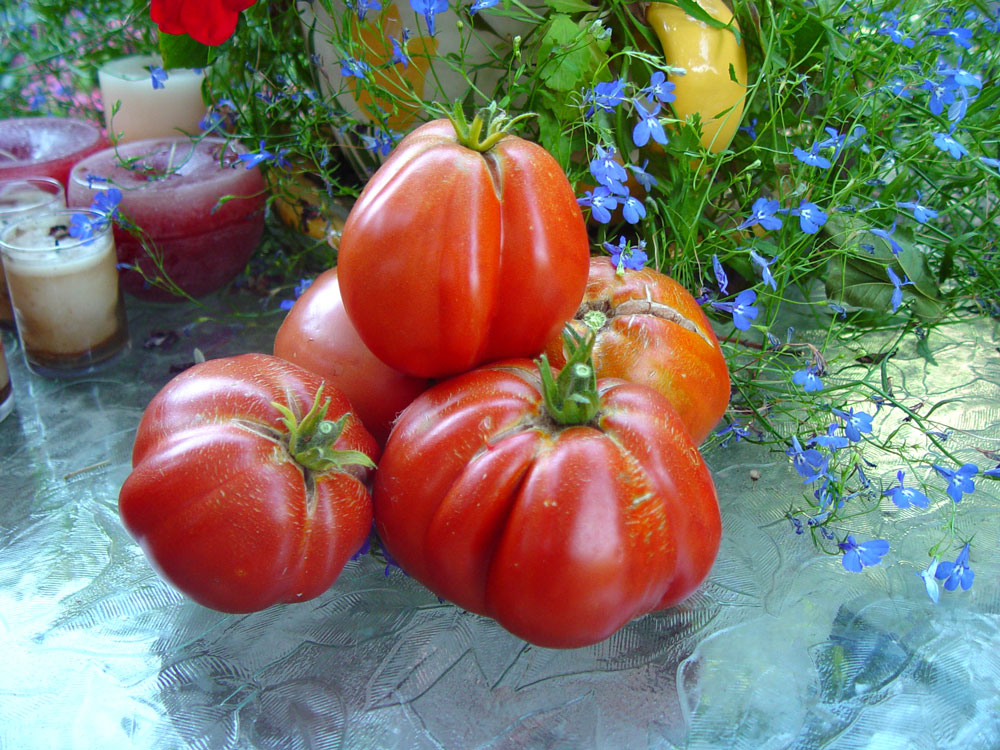
    Oxheart tomatoes are very meaty, have less juice and fewer seeds, not unlike a paste tomato. The plants usually have wispy foliage, not unlike paste tomatoes.  There are exceptions to the rule. They can grow very large. Cuor di Bue is big, pink, and delicious. Colors range from deep, red, dark, pink to bicolors. My particular favorite is the Orange Russian. Steve loves German Red Strawberry and Kosovo.Those are huge! These work well for canning and preserving. As better, if NOT better, because they are usually larger than paste tomatoes and it takes fewer tomatoes to process in a jar.

    Cuore di Bue

    Dwarf tomatoes They are perfect for a small space gardener who wants a slicer instead of the smaller tomatoes that are usually produced by most determinate tomatoes.This class of tomatoes exhibits characteristics of both determinate and indeterminate types. Historically called “tree-type,” they are now commonly referred to as” dwarfs”. Tree-type tomato plants have very thick main stems with minimal branching. Their foliage can be either regular or potato leaf but in either case, are rugose (e.g. dark green in color and crinkly in texture). Due to their slow growth rate, they appear from a distance to be determinate achieving three to four feet in height. However, like indeterminate, they continue to set fruit throughout the growing season. Compact and everbearing, what a great combination! They come in many color, shapes and sizes.

    Dwarf Sweet Scarlett

    Unusual tomatoes are some of my favorites. They have been placed in this category because some of their characteristics defy any other definition. These tomatoes can be large or small, multi-colored, striped, oddly shaped, sweet or not so sweet. I had to put them somewhere! Green Zebra is a a more tart tomato, this one is for you. This year I am bringing back varieties from the Indigo family, Indigo Cherry Drop, Indigo Apple, and Indigo Blueberries. They have more anthocyanins in them. (Think blueberries). 

    Sweet Carneros

    Another thing you should understand are the growth characteristics. There are two basic growth habits:
    Indeterminate – means that the vines will keep growing for the entire time it is alive. there are instances in the south where I’ve heard of a 20 foot vine. They keep producing the entire summer, just not as extravagantly as the determinate varieties.
    Determinate – These plants grow shorter vines and stop at a pre-determined height. That varies from 2 to 4 feet. Romas, San Marzanos are determinates. They produce a large flush of tomatoes that ripen over a period of about two weeks and then they are done for the year. There are exceptions to the rule however, some, like Taxi will produce, take a rest and then produce more. These are good when you are putting up your harvests. Glacier is another early, determinate that produces for longer periods of time. Semi-Determinate and Dwarfs (see the entry about Dwarfs up above) are a couple of other types. (I have to be honest, not sure what a semi-determinate defines as.)

    Wow, that is a lot of information. The next post will start showcasing tomatoes. Below is another tidbit I want to share.

    I changed actual days to a seasonal range for our area of Eastern Washington. If you aren’t familiar with your climate, contact your local extension agency. Our weather is so unpredictable here, the days to maturity are from transplanting into the garden. On a seed packet it may say “72 days.” That means you should start seeing ripe tomatoes around 72 days from when you put the plant into your container or bed. It is not from the time when your seed has germinated. There are a lot variables that affect your plants. Weather, condition/health of your soil or planting medium, variety, microclimates, amount of sun, even the area of the country you live in, etc.
    Very Early – 54 days or less.
    Early – 55-69 days
    Mid-season – 70-84 days (most of them are mid-season)
    Late Season – 85 or more days (late yes, but worth the real estate)

    Behind the Scenes: Planting Peppers Seeds,, Petunias, Lobelia, Alyssum, Pansies and Million Bells

    pepper-seeds

    Here you are looking about 1000 or so peppers seeds.

    planting-peppers-2-2018

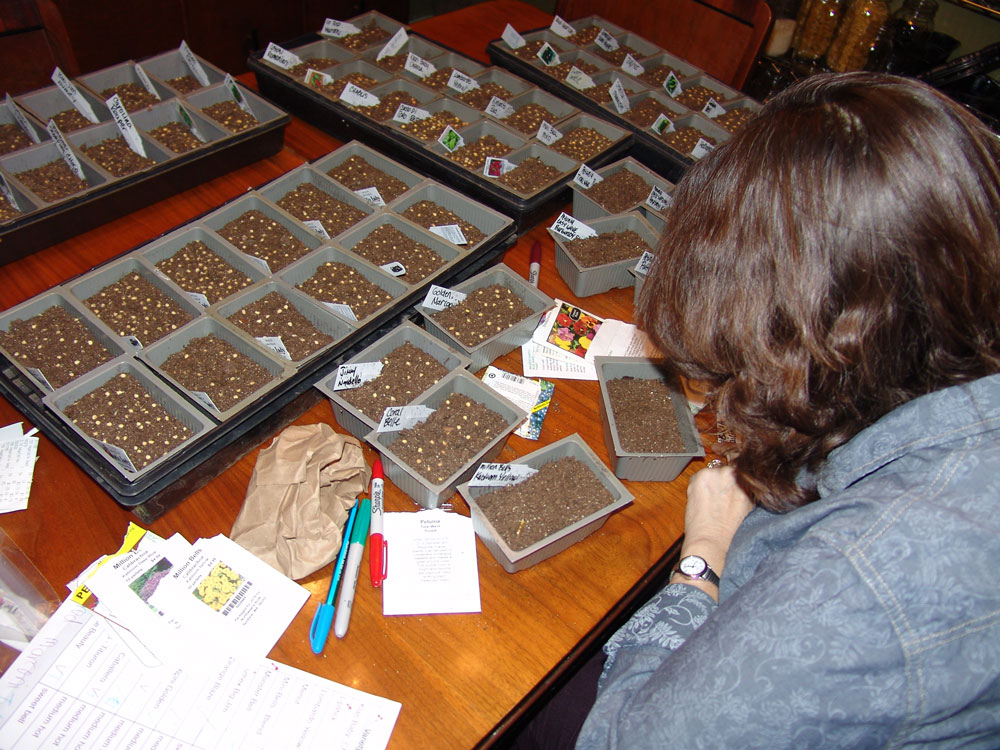
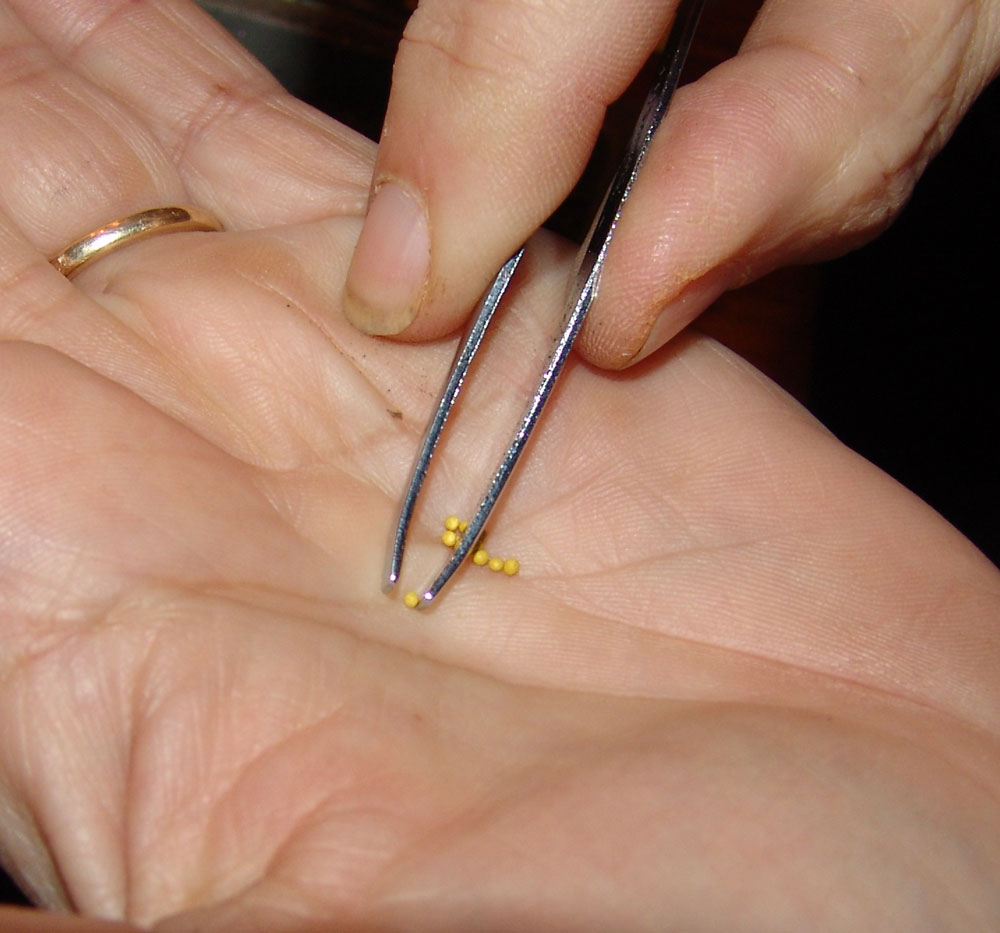
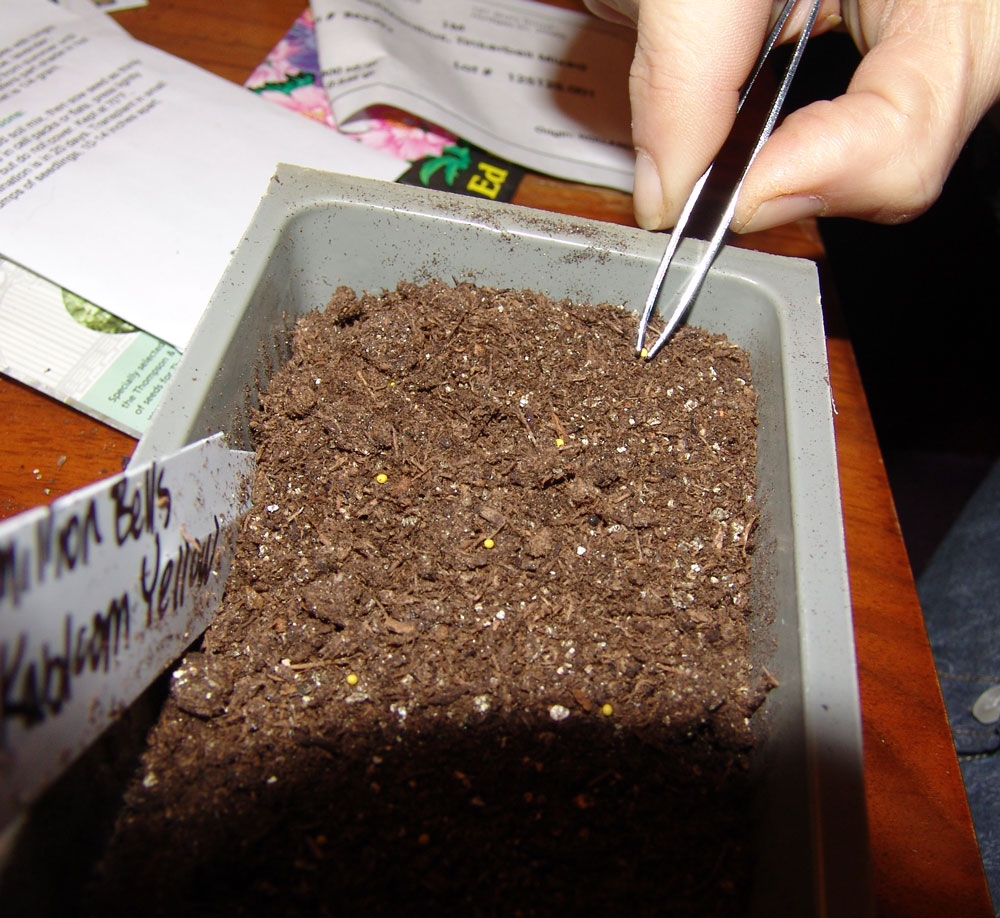
    Here I am planting pepper seeds and some flowers. I planted 50 different varieties of peppers, superhots, sweet bell, non sweet bells, hot and medium hot peppers. I was scared to death to touch the seeds from the superhots so I used tweezers to place them in the seedling pots. My luck, I would have touched them and then my eye, not thinking! Ouch! This was on January 15. They have almost all come up now. We have a ton of baby jalapenos. For all of my seeds I use a sterile seed starting mix and clean single pots. Damping off is an ugly thing!

    planting-petunias-2018

    This is how my pelletized petunia seed came. It is put into a gel cap, and looks sort of like Contact cold medicine. Depending on variety, there are 5 to 10 seeds. I love working with it in this form, much easier to not over sow. In it’s “wild” form, it is like brown dust. You might think you used 25 seed but in reality, you just dispensed 349 seeds!

    planting-petunias-2-2018planting-petunias-3-2018

    Such tiny little seeds.

    planting-petunias-4-2018

    Petunia and Million Bells seeds don’t like to be covered. They need light to germinate. Peppers on the other hand need a thin scattering of seed starting mix over them. Always read your seed packet to see what the light requirements are for germination.

    planting-petunias-5-2018

    Million Bells is another one that I like to work with pelletized. They are coated with a clay like substance. the seed lays on top (press into the seed starting mix) and wet with water. This softens the clay coat and they are able to germinate. I use tweezers to distribute as evenly as I can so they can grow after germinating and not crowd each other. They take a long time to obtain a size that I like transplanting. I have found there is no point in rushing them.

    planting-petunias-6-2018

    Softneck Garlic

    by Darius Van d’Rhys

    Softneck garlics are well adapted to warmer climates. It is softneck garlic that you are likely to find in the grocery store, because softneck garlic stores and travels better than hardneck. The types of softneck garlic you are most likely to encounter are Artichokes (with a sub-group of Turbans) and Silverskins.

    Artichoke Garlic
    Artichoke garlics (sativums or softnecks) are the most commonly grown commercial garlic because they are easier to grow and produce larger bulbs than most other garlics. They store well and this is what you probably buy at the grocer’s. In fact, most people aren’t even aware that there is more than one kind of garlic.

    Artichoke garlics are generally very large, and have a wide range of flavors with some like Simoneti and Red Toch being very mild and pleasant and others such as Inchelium Red and Susanville, have greater depth of flavor. Purple Cauldron (in the sub-group Asiatics, now considered a hardneck garlic) is much stronger and sticks around for a while. Chinese Purple (another hardneck Asiatic) is instantly hot!

    The Turban sub-group of artichoke garlics tend to be the most colorful artichokes and have fewer cloves per bulb than the others. The turbans also harvest earlier and store less long than the other artichokes and a good bit stronger in taste as well. (I didn’t find much information on the turban garlics, sorry.)

    Some Artichoke Garlic Varieties
    Kettle River Giant’, giant bulbs, 10-15 cloves/bulb, early harvest, medium, stores 6-7 months.
    Inchelium Red’ Harvests mid-season – stores 6-7 months. Grows very well in warm winter areas. In 1990 Rodale Kitchens, part of the parent organization of Organic Gardening magazine, sponsored a garlic tasting contest. Inchelium Red won. It usually has anywhere from 12 to 20 cloves and is large enough that even the interior cloves are generally of good size. Bulbs are usually over 2 and a half inches in diameter and will weigh several ounces each.
    Red Toch’ Harvests early in season – stores 6-7 months. Semi-rich but very mellow. Grows very well in warm winter areas. It is not quite as mild as Chet’s and not quite as strong as Inchelium Red. Red Toch averages fairly large bulbs that are a little larger than Chet’s but not as large as Simoneti or Inchelium Red.
    California Early’ Harvests Mid-late season – stores 6-7 months. This one of the two Gilroy cultivars is the one you’re least likely to find in the local supermarkets because it is processed into dried and pickled and otherwise processed garlic products. California Early is a little bigger and sweeter than California Late, which is definitely on the hot side. Cal Early is an excellent all- around general use garlic and a wonderful baker.
    Applegate’ is a mild and mellow artichoke garlic and is a good garlic to grow in warm winter areas.
    Early Red Italian’ Harvests early in season – stores 6-7 months. It has a semi-rich flavor and a little bite, but is still on the light side.
    Lorz Italian’ An Heirloom Garlic. Excellent strong garlic for warm winter gardeners. Harvests mid season – stores 6-8 months.
    Thermadrone from France, Harvests in early-mid season – stores 6-7 months.
    Simoneti‘ Harvests in mid-season – stores about 6 months.
    California Late’ Harvests Mid-late season – stores 6-7 months. One of the two cultivars you’re most likely to find in the local supermarkets, along with California Early. California Late is a little on the hot side and has more color. it is a prolific grower and a good commercial garlic
    Siciliano Harvests mid season – stores about 6 months. Rich flavor, zesty medium pungency. Its richness makes it excellent for raw eating as in pesto or salsa.

    Some Turban Artichoke Varieties
    Chinese Purple’ Harvests VERY early in season – stores 5-6 months. Very strong garlic taste with a fierce heat.
    Shantang Purple’ – Limited supply, Hot, 6-8 cloves/bulb, good for many climates.
    Maiskij’ – This Turban garlic originated in Turkmenistan, one of those small, mountainous Islamic republics near Chechnia. The taste is medium strong, leaning toward being bold, but not overpowering.
    Silverwhite’, almost mellow taste for 15 to 20 seconds before you experience an intense heat that lasts for about 30 to 45 seconds. Good to Fair for Warm Winter Areas, Harvests late season – stores 8-10 months.

    Silverskin Garlic
    Silverskins have silvery, white skins and are composed of many small cloves. They also have a nice sturdy neck that is easily braided. The flavor of Silverskins is usually stronger than Artichokes. ‘Nootka Rose‘ and ‘Rose du var‘ are both full-bodied Silverskins.

    Silverskin garlics are in a class by themselves. They are the last garlics to mature and they store the longest. They also have a great range of taste, pungency, and size as well as time of maturity. No other garlics braid better than Silverskins and they will grow well in most of the USA.

    S & H Silverskin has a musky, earthy taste with very little bite when eaten raw. Locati can be fiery hot. Silverwhite has a richness to it and seems almost mellow for 15 to 20 seconds before you experience an intense heat that lasts for about 30 to 45 seconds. Nootka Rose has that same richness but with only a medium heat. Silverskins have more cloves per bulb, on the average, than the artichokes and some, like Mexican Red Silver have a lot of tiny cloves while others, like S & H Silverskin and Silverwhite have almost all large cloves with very few small ones.

    Some Silverskin Garlic Varieties
    S & H Silverskin has a musky, earthy taste with very little bite when eaten raw.
    Nootka Rose’ Heirloom from Washington State, rich, bold taste with medium heat, large mahogany cloves, 15-20 per bulb. , Fair for Warm Winter Areas, Long storing.
    Locati’, can be fiery hot. Fair for Warm Winter Areas, 11-12 cloves/bulb. Harvests late season – stores 8-10 months.
    Rose du Var’, bold, strong and long French garlic taste. 8-12 cloves/bulb Harvests late season – stores 8-10 months.
    Other Silverskin varieties include ‘Mexican Red Silver’, ‘Sicilian Silver’ ,’Silver Rose’, and ’Mild French’.

    Hardneck Garlic

    By Darius Van d’Rhys

    Are you a hardneck or a softneck kinda garlic lover? Do you know?

    Most of us only know the supermarket variety, which is a softneck grown for shipping qualities rather than range of flavor. Hardneck and softneck are the broadest terms used for all varieties of garlic, and there are several hundred sub-species within those varieties. We’ll look at a few of the hardnecks here, and some taste notes you might consider in growing one variety over another.

    A separate article will cover softneck garlic for Southern climates.

    All garlics are Alliums, the species sativum, and originated in central Asia. Garlics fall into two broad categories, the hardnecks which usually grow a woody, hard neck or scape in the stem center are var. ophioscorodon. The softnecks which usually don’t grow a scape, are var. sativum. The climate in central Asia is damp and cold, which the hardnecks prefer. The softnecks were later developed from hardnecks and do better than hardnecks in warmer climates.

    History
    Most of the early garlic in the US came with immigrants from Poland, Germany and Italy. In 1989 the Soviet Union finally invited the Americans into the Caucasus region to collect garlic varieties. They were only allowed to travel at night (in military areas) and as they went from village to village along the old Silk Road, they named the cultivars from the towns where they were purchased. Hence, we often have a variety known by more than one name.

    Hardnecks
    According to many garlic lovers, hardnecks have the only ‘real’ garlic flavor although I am a garlic lover and I heartily disagree. Hardnecks are distinguished by the stiff “neck” or stalk in the center of the growing plant and they tend to have fewer but more uniform cloves around the stalk. There are three distinct groups of hardnecks: Rocambole, Purple StripePorcelain. Three additional groups have recently been added, Marbled Purple Stripe, Glazed Purple Stripe and Asiatic. Unfortunately, I found very few variety references for them.

    The most readily seen garlics are Rocambole and the term is often used as a generic name for all garlic. Rocamboles have thin, parchment-like skins and do not store as well as softnecks. However, they do peel easier. The term ‘serpent garlic’ comes from Rocamboles, which have curling top scapes that produce seeds called bubils. Bubils may be planted which in 2-3 years will mature into full-sized garlic bulbs.

    Purple Striped garlic is aptly named for the stripes which all have to some degree. The differences in Purple Stripes in taste are from mild to pungent, and in time to maturity. I have ‘Chesnok’ growing in my garden, mainly for roasting whole.

    Porcelain garlics have a thick, tough skin making them excellent for storing. The heads are plump with just a few large, fat cloves. Only the Silverskins (a softneck) store longer. Porcelains are all full-flavored, generally running to musky hot and pungent in taste. They are usually more expensive to buy and have the fewest cloves per bulb… sometimes as few as 4 although 6-8 is more typical.

    I no longer wonder where fire breathing dragons come from in Chinese folklore – they’re ordinary people who have eaten too much of the Asiatic garlics. Asiatic garlics were originally classified as a separate group that was part of the Artichoke garlics (Softnecks) but recent DNA research done independently by Dr. Gayle Volk[2] of the USDA in Fort Collins, Colorado and Dr. Joachim Keller of the Institute for Plant Research in Gaterslaben, Germany, shows them to be weak-bolting hardnecks.

    Here is a list of a few hardneck garlic varieties, with some notes about them and taste descriptions:

    Rocambole:
    ‘Baba Franchuk’s’, endangered and hard to find, excellent flavor with punch
    ‘Carpathian (Polish)’, very strong, hot and spicy and sticks around for a long time
    ‘Colorado Black’, smooth, medium bite
    ‘Dan’s Italian’, good strong bite
    ‘German Red’, rich, strong flavor, hot and spicy, lingering flavor, 8-9 cloves/bulb
    ‘Killarney Red’, perhaps originated from ‘Spanish Roja’ or ‘German Red’ but said to grow better than either of those. Rich flavor, 8-9 cloves/bulb, heritage, endangered and hard to find
    ‘Korean Purple’, hearty delicious flavor, heritage, endangered and hard to find
    ‘Purple Italian’, rare, rich and strong and not overly hot and spicy, 8-9 easy to peel cloves/bulb
    ‘Purple Max’, strong rough flavor, heritage, endangered and hard to find
    ‘Puslinch’, excellent lively flavor, heritage, endangered and hard to find
    ‘Spanish Roja’, heirloom, huge bulbs, strong hot and spicy, full flavor, 8-9 cloves/bulb

    Purple Stripe:
    ‘Bogatyr’ stores well, 5-7 cloves/bulb
    ‘Brown Tempest’, a marbled purple stripe, heritage variety, 5-9 cloves/bulb
    ‘Chesnok’ or ‘Chesnok Red’ (aka Shvelisi) roasts well, rich hot medium flavor, lingering taste, 4-10 cloves/bulb
    ‘Chrysalis Purple’, large, dependable, hardy, easy to peel, 8-12 cloves/bulb
    ‘Duganskii’, heritage variety
    ‘Khabar’, smooth mellow taste
    ‘Metechi’, very strong, heritage variety
    ‘Persian Star’ (aka Samarkand), rich elegant medium flavor, heritage
    ‘Purple Glazer’, tall with large bulbs, sweet hot and warm richness like ‘Red Toch’ and ‘Burgundy’, heritage, hard to find, 9-12 cloves/bulb, stores 5 months
    ‘Red Rezan’, hot, mid harvest, needs very cold winters, 9-12 cloves/bulb, stores 5 months
    ‘Siberian’, mild delightful flavor, not overpowering, 5-7 giant cloves/bulb, heritage, thrives in cold climates, stores 5 months
    ‘Skuri #2’, very strong
    ‘Starbright’ has a somewhat nutty flavor

    Porcelain:
    ‘Dan’s Russian’, full flavor that starts strong and then fades
    ‘Fish Lake 3’, heritage, good taste and strength, endangered and hard to find
    ‘Georgian Crystal’ is very mild with fat bulbs, 4-6 large cloves/bulb, stores 6 months
    ‘Georgian Fire’, rich, robust, strong and lingering flavor, endangered and hard to find, 5-9 cloves/bulb, stores 6-7 months, Hottest
    ‘German Stiffneck’ is often called ‘German Extra-Hardy’, ‘German White’ and ‘Northern White’, strong and robust flavor, stores 10 months or longer
    ‘Leningrad’, hot and strong, endangered and hard to find
    ‘Music’, large bulbs, hot, sweet and pungent, 4-7 cloves/bulb, stores 6 months
    ‘Northern Québec’, endangered and hard to find
    ‘Polish Hardneck’, sometimes called ‘Polish Carpathian’, rich flavor, hot searing pungency that sticks around for a long time. Good hot strong long storing garlic.
    ‘Romanian Red’ is fiery hot and has a lingering tanginess
    ‘Rosewood’, very strong and robust and sticks around for a long time and can nearly be overpowering at times
    ‘Susan Delafield’, very HOT, tolerates wet soils, endangered and hard to find
    ‘Ukrainian Mavniv’, good strong flavor
    ‘Wild Buff’, very strong and robust and sticks around for a long time and can nearly be overpowering at times
    ‘Yugoslavian Porcelain’, strong with good taste, 2-5 cloves/bulb
    ‘Zemo’, hot, strong and spicy robust flavor, grows well, stores 5 months

    Asiatic Garlics
    ‘Asian Rose’ – A strong garlic, Harvests VERY early in season – stores about 5-6 months.
    ‘Asian Tempest’ – A strong garlic. Harvests VERY early in season – stores about 5-6 months.
    ‘Japanese’ – Early harvest, 4-8 cloves/bulb, stores 5 months, Hot
    ‘Korean Red’ – rich yet mellow. Harvests VERY early in season – stores about 5-6 months.
    ‘Pyong Vang’, Mid-harvest, 7-10 cloves/bulb, stores 6 months, hottest
    ‘Russian Redstreak’, A rare early season mild garlic; delightfully mild and full flavored with only a little heat, productive, stores very well, presents a nice appearance with an excellent raw flavor.
    ‘Gregory’s China Rose’, Harvests early in season – stores around 6 months. – Excellent for growing in Warm Winter Areas. Rich earthy flavor.

    Footnotes:
    [1] http://www.gourmetgarlicgardens.com/growing.htm
    [2] Genetic Diversity among U.S. Garlic Clones, Gayle M. York, Adam D. Henk, and Christopher M. Richards, J. Amer. Soc. Hort. Sci. 129(4): 559-569. 2004

    Photo Credits: Many Thanks to Hood River Garlic Farm, http://www.hoodrivergarlic.com/

    Garlic for planting should be pre-ordered now (or before late summer) to assure availability. By mid-to–late summer when I usually start to think of planting garlic, very few varieties are still available.

    Some sources for buying garlic:
    http://www.garlicfarm.ca/garlic-varieties.htm

    http://www.gourmetgarlicgardens.com/boutique.htm
    http://www.hoodrivergarlic.com/

    http://www.seeds.ca/rl/rl.php
    http://rareseeds.com/seeds/Garlic
    http://www.seedsavers.org/products.asp?dept=89
    http://www.johnnyseeds.com/catalog/search.aspx?scommand=search&search=garlic
    http://www.nicholsgardennursery.com/store/dept.asp?dept%5Fid=130&mscssid=Q08K9VW4TVWG8LUA9MFUQ5M750188FWD
    http://www.sandhillpreservation.com/catalog/allium.html
    http://www.seedsofchange.com/garden_center/browse_category.asp?category_id=6345
    http://www.goodseedco.net/garlic.html
    http://www.filareefarm.com/asi.html

    Why Grow Garlic?

    by Darius Van d’Rhys (darius) June 3, 2008

    The first benefit to the home gardener is the opportunity to grow and use some of the magnificent garlic varieties seldom, if ever, found in the supermarkets and rarely even at farmer’s markets or roadside stands. Out of over 600 sub-varieties, only 2 are commonly found in grocery stores. If you like cooking and eating garlic, expand your repertoire!

    The second benefit (besides eating the garlic) is the growing garlic has natural fungicide and pesticide properties. Garlic companion planting is especially beneficial to lettuce by deterring aphids, and to cabbage. Garlic oil is effective at repelling and even killing snails and slugs.
    As well as protecting other plants, garlic can also improve their flavor. Beets and cabbage are reported to be good companions that benefit from this. However, not all companion planting with garlic is beneficial. Garlic doesn’t cooperate well with legumes, peas or potatoes so do not plant your garlic too near these.

    ImageWhat Kind to Grow, and Where

    Garlic isn’t just garlic, there are many different kinds of garlic and they’re almost all different in size, color, shape, taste, number of cloves per bulb, pungency and storage times.

    Botanists classify all true garlics under the species Allium Sativum. There are two subspecies; Ophioscorodon, or hard-necked garlics (Ophios for short) and Sativum, or soft-necked garlics.
    Hardnecks further divide into Rocambole, Purple Stripe, and Porcelain sub-groups although 2 more sub-groups have recently been added: Marbled Purple Stripe and Glazed Purple Stripe. Softnecks have 2 main groups: Artichokes and Silverskins. Artichoke garlics now include the Turban and Asiatic sub-groups. There is yet another group called Creole, long thought to be a sub-group of the Silverskins but the latest DNA studies show them in a separate class by themselves.


    So, how do you decide what to grow? 
    I have separate articles covering each of these groups following this article and you will find good information in them. One is a general overview, this one is on basics of growing and cooking garlic, and the ones on hardnecks, softnecks and Creoles will help you decide which type for your climate and which varieties for your taste buds.

    Garlic is easy to grow. Great garlic is difficult to grow.

     Image

    Garlic developed in central Asia with long cold winters, damp cool springs and warm, dry summers. Since then it has been grown around the world and a few needs have changed. Varieties like Rocamboles still need those central Asian conditions. Porcelains and Purple Stripes are more tolerant but still won’t do well in a hot dry spring. Hardneck Rocamboles do poorly in warmer climates.

    Garlic tolerates most soils but if you want excellent large and beautiful garlic, you need a healthy soil full of micronutrients and minerals. High concentrations of NPK fertilizers can kill off the healthy microorganisms living in the soil, as can chemical herbicides and pesticides. “If the government requires applicators to wear ‘protective’ clothing (boots, gloves, hoods and masks) to apply it, why would you want to eat it?” [1] Garlic really needs the minerals and micronutrients more than an abundance of NPK. The soil should have manure and compost added on a regular basis. Rock dusts and minerals can be added; they act like long-time slow-release fertilizers and the garden will continue to maintain fertility for years to come, with fewer applications eventually needed.

    Garlic should be planted in the fall in the north. This gives time for sprouting roots to develop before the emerging plants die down with cold winter temperatures. After a few frosts but before the ground freezes hard in my Zone 5b, I cover my garlic bed with 6-8” of straw which helps prevent frost heave. When the ground begins to warm in the spring, I remove the straw so the sun can warm the emerging stalks. Sometimes the fall planted bulbs will sprout enough to send up green shoots before winter. That’s okay… they will die back and grow again in spring.

    Garlic likes fertile, well-drained soil so that the bulb is above the water level and the roots deep into the moist soil. Plant the cloves root end down, about 4” deep and 6” apart in the north, and 2-3” deep in the south. Bubils (from the scapes) can be harvested and planted but they will take 2 or more years to produce a large bulb. Some vendors and growers recommend soaking individual cloves in water with bicarbonate of soda for a few minutes, and then dipped in rubbing alcohol (or 140 proof vodka) for 3-4 minutes to kill any pathogens. Use the largest cloves to grow the best bulbs for next year.

    If your soil is healthy and fertile you may choose (or not) to add a foliar spray in the spring. A tablespoon each of molasses, seaweed and baking soda in a gallon of water makes a good spray used 2-3 times in spring. Do not use a foliar spray on dry plants, nor spray close to harvest. The leaves will become lush at the expense of the bulb.

    When the tops just start to turn yellow/brown and fall over, gently dig the bulbs. There should still be some green inner leaves. When only about 8 green leaves remain, stop watering and let the soil begin to dry. After digging the bulbs, do not wash, just brush off loose dirt and store in dry shade for 2-4 weeks to cure. Treat them gently as they can bruise easily and thus not store well.Image

    Store garlic warm (55-65ºF), dry (40-60% humidity) and in the dark to keep it dormant. Garlic is usually hung to dry and good air circulation is very important.

    Here’s a photo journal of the whole process of preparing beds, planting, harvesting and storing:http://www.gourmetgarlicgardens.com/gardenyear.htm

    Tips on Cooking with Garlic

    When the cell walls in a garlic clove are cut, diced, chopped, crushed, etc., the cloves release allicin which gives garlic its smell and taste. Peeling cloves is tedious but you can easily peel them without breaking cell walls by soaking individual cloves in plain water for an hour or two, or by dropping them in boiling water for 60 seconds. When you want to add garlic to a dish, the larger the pieces, the milder will be the flavor. James Beard’s recipe for Chicken with 40 Cloves of Garlic is at the end of this article. It surprisingly has the barest hint of garlic due to long cooking of whole cloves.

    The finer you cut garlic, the more allicin is released, creating a stronger flavor. For a bold, assertive garlic taste, finely chop or crush the garlic. Let it rest for a few minutes, and then add it just before cooking is complete.

    A good health practice to fight E. coli found in supermarket meats is to rub crushed raw garlic all over the meat. Crushed raw garlic is a powerful antibiotic that can kill E. coli, but it will not kill the bacteria INSIDE the meat. To do that, you must cook the meat thoroughly.

    I personally don’t find garlic breath objectionable. However, sunflower seed oil and parsley taken together will drastically reduce or even eliminate primary garlic breath. After eating a garlicky meal, eat a spoonful of sunflower seeds and a sprig of fresh parsley and you will find your breath much less offensive to others.

    When you cook garlic long and slow, it becomes creamy and less strong. Most garlic odor on your hands can be eliminated by rubbing them on a piece of stainless steel flatwear under running water.

    Footnotes:
    [1] http://www.gourmetgarlicgardens.com/growing.htm

    Photo Credits: Hood River Garlic Farm http://www.hoodrivergarlic.com

    Read my other garlic articles here:
    Why would anyone grow A Stinking Rose? For Garlic of Course!
    http://davesgarden.com/guides/articles/view/613
    Hardneck Garlic for Northern Climates
    http://davesgarden.com/guides/articles/view/1030/
    Softneck Garlic for Southern Climates
    http://davesgarden.com/guides/articles/view/1031/
    Creole Garlics
    http://davesgarden.com/guides/articles/view/1032/


    Chicken with Forty Cloves of Garlic
    by James Beard

    2/3 cup olive oil
    8 chicken drumstick and thighs (or 16 of either)
    4 ribs celery, cut in long strips
    2 medium onions, chopped
    6 sprigs parsley
    1 tablespoon chopped fresh tarragon, or 1 teaspoon dried
    1/2 cup dry vermouth
    2 1/2 teaspoons salt
    1/4 teaspoon freshly ground black pepper
    Pinch of nutmeg
    40 cloves garlic, unpeeled

    1. Put the oil in a shallow dish, add the chicken pieces, and turn them to coat all sides evenly with the oil.

    2. Cover the bottom of a heavy 6-quart casserole with a mixture of the celery and onions, add the parsley and tarragon, and lay the chicken pieces on top. Pour the vermouth over them, sprinkle with salt and pepper, add a dash or two of nutmeg, and tuck the garlic cloves around and between the chicken pieces. Cover the top of the casserole tight with aluminum foil and then the lid (this creates an air-tight seal so the steam won’t escape). Bake in a 375°oven for 1 1/2 hours, without removing the cover.

    3. Serve the chicken, pan juices, and whole garlic cloves with thin slices of heated French bread or toast. The garlic should be squeezed from the root end of its papery husk onto the bread or toast, spread like butter, and eaten with the chicken.


    About Darius Van d’Rhys

    I have a ‘growing my own food’ obsession that comes from my overlapping interests in cooking, nutrition and gardening. I am also a “teacher”, a writer, a builder… and a craftsperson and… and… and many other things, LOL. In fact, I guess I am a generalist, and a Seeker. I live in the southern Appalachian Mountains on a hillside with a creek in front, and drive a 15 year old truck I lovingly call “My Farmer’s Ferrari.” Editor’s note: Darius passed away on March 19, 2014. Her readers will miss her greatly and we are thankful for her legacy of wonderful articles.

    Largest Tomato I’ve Ever Laid Eyes On! Kellogg’s Breakfast

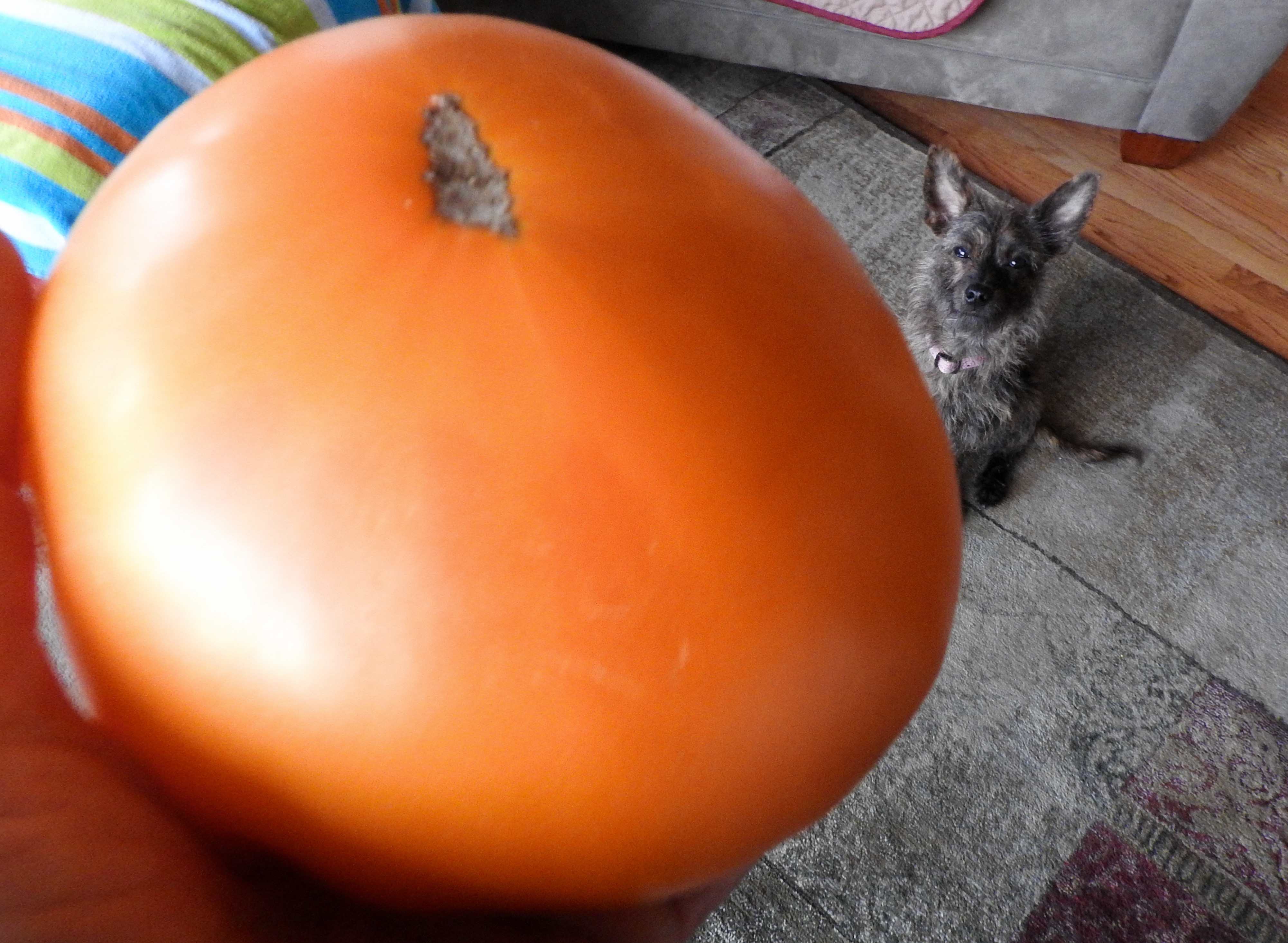
    No kidding, would you look a the size of that tomato! Compared to the dog anyways.

    Kellogg Breakfast & Scout

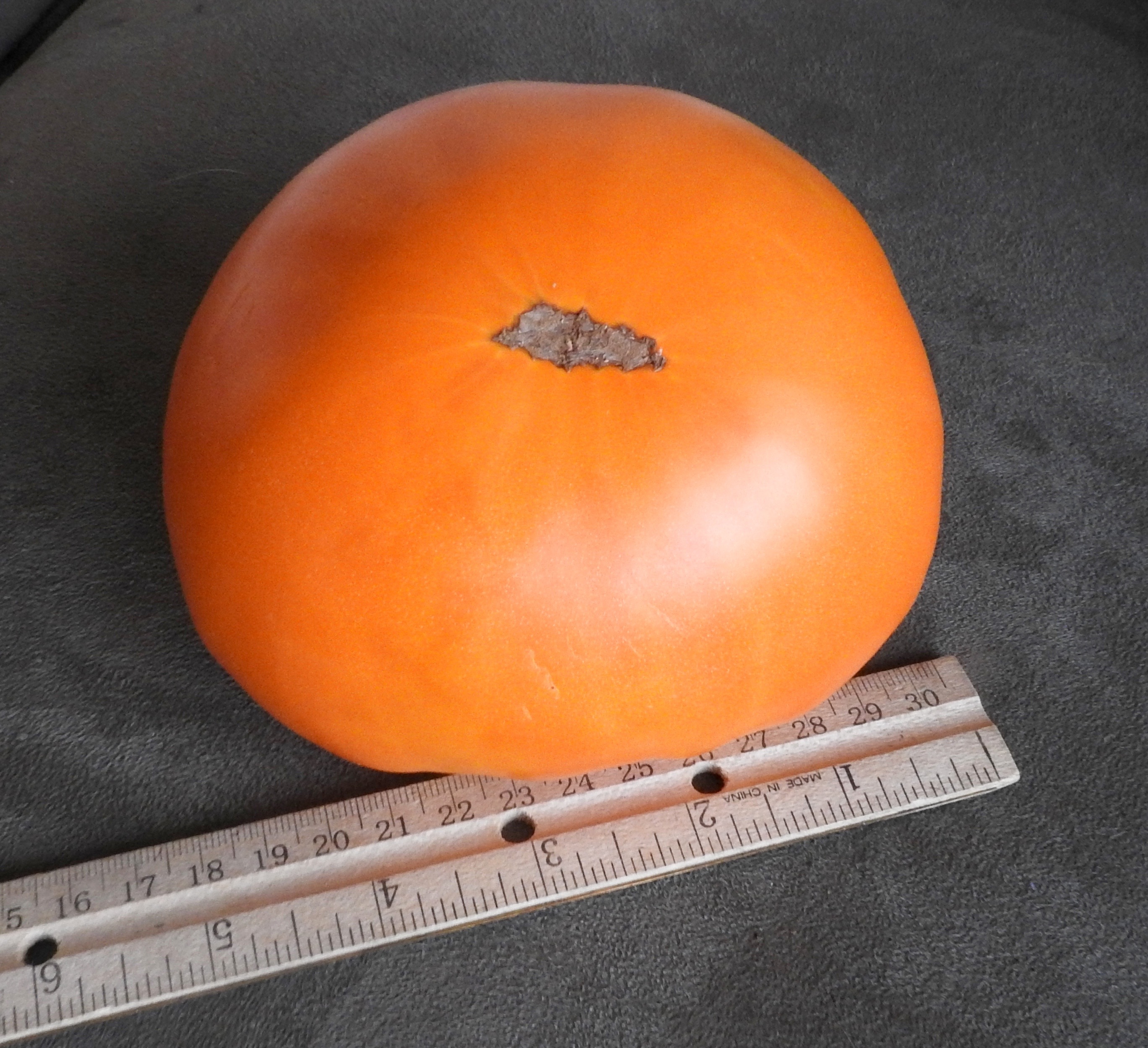
    This is a photo sent to me by one of my customers. Janet Y. It is a Kellogg’s Breakfast, one of our customer favorites. the second picture shows the scale with a ruler. Almost 5 inches! Wow! I see BLT’s in her future. Plus it is only the first part of August. Ours are just now starting to color up.

    Kellogg Breakfast

    The story goes like this: Ironically enough. this tomato is not named for the breakfast cereal developer of fame, Will Keith Kellogg, but for a humble gardener, Darrell Kellogg, a railroad supervisor in Redford, Michigan. He received his seed from a friend in West Virginia where it originated.

    Sweet and meaty, he liked the tomato so much he saved the seed and began to breed the variety. A brilliant orange and nearly blemish free, they can grow to weigh a pound or more.

    Kellogg’s breakfast tomato was voted one of the best tomatoes by Sunset magazine.

    Pink Passion Dwarf Tomato and Why Tomato Shoulders Stay Green or Yellow

    pink-passion-73017---6

    Pink Passion

    This is the first picking of tomatoes from one of my Dwarf Tomato Project plants. It is called Pink Passion. A bit blurry, I apologize. Some are slightly heart shaped, pinkish red with yellow, greenish shoulders. They range in size from golf ball to softball. The plant seems to be suffering in this heat, high 90’s.

    Tomatoes like heat. To a point. It can cause their flowers to dry up and fall off. It can also cause the green-yellow-orange shoulders. Lycopene, chlorophyll and carotene are all pigments present in tomatoes and work to give them their color.

    Lycopene is the pigment that gives the fruit it’s color red. Chlorophyll gives the plants their green color, Carotene gives them their yellow or orange color.

    The optimum temperature for lycopene production is between 65 degree and 75 degrees. After 75 degrees, lycopene production slows. The fruit’s exposure to direct sun dictates what happens to its shoulders. As sun strikes tops of tomatoes, temperatures in the fruit rise, inhibiting lycopene causing them to stay green.

    Tomatoes may stay green due to chlorophyll, the pigment that gives plants their green color. Excessive heat prevents chlorophyll from breaking down. When subjected to hours of hot sun, chlorophyll hangs on.

    Carotene, another pigment in tomatoes, produces yellow and orange. Less affected by heat carotene (yellow) shines through while lycopene (red) is inhibited, thus yellow shoulders.

    The part of the tomato most protected from direct exposure to the sun will be the color it is supposed to be.

    • This is one of the reason I crowd my plants and grow them up. I try to space them about 2.5 feet apart and use massive tomato cages. Planted in containers, it is more difficult to give them extra leaf coverage. Try placing them where they will get shade in the afternoon when the sun is hottest.
    • It is also why I don’t prune. Leaf cover is so important in protecting the tomatoes. It also protects against sunburn, a white flaky patch.
    • There are also tomato varieties, usually heirloom, that naturally have green shoulders. I’ve seen them a lot in dark tomatoes such as Japanese Black Triefle and Cherokee Purple.