Delicious Pumpkin Pie With Lower Sugar

This a delicious pumpkin pie recipe that uses splenda and a little bit of brown sugar. It’s very good and hard to tell it’s low sugar. I roast my own pie pumpkins.

30175_easy_pumpkin_pie.jpg

How to roast pumpkins: Buying cans of pumpkin is easy but in my opinion you never know how long that pumpkin has been in the can. It is incredibly easy to raost your own. Pie pumpkins are better for baking than the ones people use for jack 0’lanterns. They are smaller, less stringy and sweeter.

To roast a pumpkin, preheat your oven to 350 degrees. Cut pumpkin in half, scrape seeds out (you save them for roasting), place pumpkin halves, cut side down on a rimmed cookie sheet covered in foil. By placing them upside down, they don’t dry out (form a crust) and they steam.Bake pumpkin for about 30 – 50 mintues, dependent on size of the pumpkin, until they are easily pierced through the skin  with a fork. They sometimes look like they are collapsing. Let them cool. I scrape the pumpkin straight from the baking pan into the blender.

Here’s a tip: pour in the half and half (3/4 cup)and then place enough pumpkin that the liquid rised to the 2 3/4 cup line on the blender. 

I love this recipe because it is so simple and doesn’t dirty up every dish in the house. Put all your ingredients into the blender, blend and pour.

Ingredients:
1/2 Package pie crust
2 Cup mashed pumpkins
3/4 Cup splenda
1/3 Cup brown sugar
2 tsp cinnamom
2 tsp ground ginger
1/8 tsp ground cloves
Pinch Salt
3/4 Cup half and half
3 Large Eggs
1 tsp Vanilla

Note: You can use 1 tablesppom of premade pumpkin pie spice instead of mixing your own

Instructions : Preheat oven to 375 degrees. Fit piecrust to pie plate. Mix all ingredients in a blender, pour into pie plate. I put the pie pan on the oven rack and then fill, it keeps spills to a minimum. Bake 50 – 60 minutes or until set in the center

Update on the Uncle David’s Dakota Dessert Squash in My Last Post

I tried the smallest Uncle David”s Dakota Dessert squash and it was really good, First I roasted it with nothing on it to get the flavor. The first bite was a little vegetal, the next, in the thicker part of the piece was dry and slightly sweet. I was a little concerned I wouldn’t get full flavor since it was the smallest and least developed off the bunch.

pumpkins and squash 2016 - 3.jpg

Once I tasted it for unadulterated flavor, I threw some butter, brown sugar and spices; mace and allspice on top. You could also use apple pie spice or nutmeg. I put the dish back into the oven, at 350 degrees until it melted. Oh boy was it good!

Winter Squash Harvest 2016

pumpkins-and-squash-2016---2.jpg

Check out all my squashes! This is what we harvested after our first frost.New England Pie pumpkins (although two of them got a little ahead of themselves and grew a bit bigger than they should have, but I am sure they will be as delectable and sweet for pies as their smaller brethren), Aunt Reba’s acron squash and Uncle David’s Dakota Dessert squash. Whew, what a name. For those of you who wonder where I got my seed, I found a new seed company called Fedco . Frdco Seeds Can’t wait to try these. I like my winter squash sweet and dry so here’s hoping they are as good as their descriptions.

pumpkins-and-squash-2016---4.jpgThe pie pumpkins were not all the way orange but are turning. They also took over the garden, even running up into a pile of pots we had on the side of the shop.
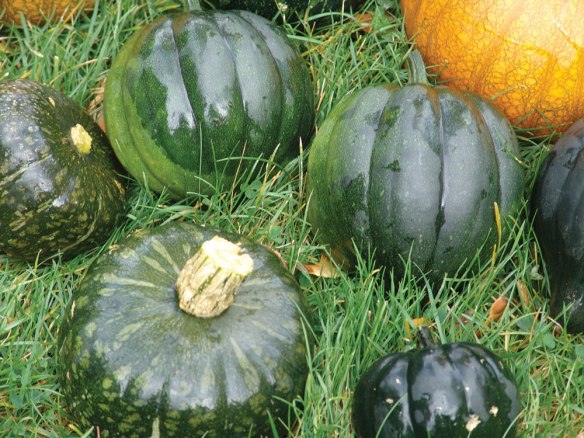
pumpkins-and-squash-2016---3.jpgUncle David’s Dakota was almost as exuberant. However, I am pleased to say that Aunt Reb’s, as advertised, was not about to take over the world. It stayed in a 3 to 4 foot area, behaving very politely to it’s neighbors. don’t we all wish our own neighbors were as well behaved!

So, you couldn’t feed the neighborhood with this harvest but there are only two of us now and it is enough. My husband would rather have a root canal without out anesthesia than eat winter squash so it’s all on me. Yummmmmmm/

What a Fabulous Idea: The Apple Dust Especially

This is from the blog site: One Tomato, Two tomato. Thanks to the blogger. Apparently you can do this with the skins taken off tomatoes when you are slipping them in order to can them. What a great idea!

Dried Apples and Apple Dust

I am constantly creating new healthy items that are easy to pop into lunches or have for snacks.  Since it’s the middle of winter, my local apple orchard isn’t exactly open.  But my coop had several bags of “seconds” organic apples for only 99¢ a pound.  Time to fire up the dehydrator.

My latest endeavor is apple dust and dried apples.  I got the idea for apple dust from drying leftover tomato skins from canning.  The skins are dried in the oven, then pulverized, and used to sprinkle on pasta, pizza, rice and beans.  Why not do the same for apple peels?  My dust (more like bran) had a lovely pink color from the apple varieties I used and a light apple flavor.  The best part of the dust is the kick of fiber, antioxidants and nutrients found in apple peels.  Don’t let them go to waste!  I like to add apple powder to yogurt, oatmeal, pancakes and muesli. The actual dried apples were pretty good, too.  They barely lasted a week in my house.

4 of 6 Zucchini Recipes (this one looks too good to pass up)

Zucchini Gratin.jpeg

Zucchini Gratin

2 tablespoons butter

1 medium onion, chopped

3 cloves garlic, chopped

6 zucchini, sliced into half moons 1/4-inch thick

2 plum tomatoes, chopped and seeded

1 tablespoon freshly chopped thyme leaves

2 tablespoons all-purpose flour

Salt and freshly ground black pepper

1 tablespoon brown sugar

2 eggs, beaten

1/2 cup half-and-half

1/4 cup grated sharp white Cheddar

1/4 cup grated Parmesan

Instructions :

Preheat your oven to 375 degrees F. Butter an 8 by 8-inch casserole dish.

In a large heavy bottomed saute pan over medium heat, melt butter. Saute onion and garlic until translucent. Add zucchini and tomatoes, about 7 minutes Add thyme, and flour. Season with salt and pepper. Add mixture to the buttered casserole dish.

In a medium size bowl, add brown sugar, eggs, and half-and-half. Season with salt and pepper. Pour the milk mixture over the zucchini and sprinkle with both of the cheeses. Bake for 30 minutes.

Recipe courtesy of The Neelys

Dwarf Tomato Project

I am trialing 6 dwarf tomatoes in pots this year.  So far I am happy with them. I will share some pictures and notes on it in a blog post to come. For now, check it out.

Here is some information on the project. Essentially, they are developing tomato plants that will not grow very large (2 to 4.5 feet) in order to give gardeners who have limited space a chance to grow larger tomatoes. It also works well for the rest of us with space. Slicers and dwarf plants don’t usually end up in the same sentence.


Source: Dwarf Tomato Project

How to Propagate Soft Fruit – Lovely Greens

Create new raspberry, red currant, black currant, and other soft fruit bushes for free.

Source: How to Propagate Soft Fruit – Lovely Greens

Home Canning Guide: Learn How to Can Your Own Food

Home canning is easier and more satisfying than you think. Once you learn how to can, you’ll be able to put up summer flavor for many seasons to come.

Source: Home Canning Guide: Learn How to Can Your Own Food

Tomato Problems: Blossoms Drying Up and Weather Stress

I have received several emails lately asking why the blossoms are drying up and falling off before making little tomatoes. Without actually seeing the conditions they are growing in, I can only guesstimate.

As farmers and gardeners, one of the worst things we face, is that we can’t control Mother Nature. Here in Eastern Washington, the weather has been crazy, cold one day and hot the next. We are talking 20 – 30 degree jumps over the course of a couple of days. This stresses the plants. They don’t know whether they are coming or going. The good news is that if you give it time and just wait, they will eventually come out of it. When it is cool, they work on root development, which is a good thing, and then when it is hot, they starting growing again. When it gets really hot and stays that way, you will lose blossoms on some varieties. Tomatoes don’t actually love super hot weather. Some less than others. That’s why they grow special varieties that can handle the heat in southern climes like Florida.

The second reason you might have blossom drop could be lack of pollination. If they don’t get pollinated they won’t form a tomato. (Have you ever seen little squashes that start turning yellow without getting any bigger? That is lack of pollination) Tomatoes are self pollinating. Wind and the bees are prime pollinators. That’s why I like to plant flowers that attract bees around my tomato plants. Not to mention it is pretty. One thing you can do to help things out is to take a Q-Tip or a paint brush and move from blossom to blossom, sharing the pollen.

Take heart, it’s only June, well almost July and things are moving right along. Keep them watered and fertilized (although not too much nitrogen (the first number in the ratio) or you will have beautiful bushes and no tomatoes) and you will be picking tomatoes soon enough.

Which Zucchini Should I Grow?

11507590-d52c-4832-8f8f-810762ae729f.jpgWhich zucchini should you grow?

Zucchini is an essential item on the summer menu. They can be grilled, sautéed, stuffed, deep fried, and grated for cakes and muffins. They can be pickled or just eaten raw. Zucchini are so popular in Italian cuisine that almost every region of Italy has a favorite variety. We carry 23 varieties, something for every regional specialty dish. Here are some factors to consider when choosing which to grow:

1. Plant size. Most heirloom zucchini varieties are big, sprawling plants. If you have a small amount of space to devote to zukes, choose a bush variety: Custard White, Nero di Milano, or Novodiamant.

2. Fruit shape. Most zucchini are long and slender, which makes them good for slicing lengthwise for the grill or crosswise for salads and sautés. Some are round like baseballs— Tondo di Piacenza and Tondo di Nizza — which makes them perfect for stuffing. Or go halfway with Bolognese, which has short, thick fruit.

3. Ribbing. If you like them smooth, try Genovese. If you like them heavily ribbed (which makes for interestingly shaped slices), try Romanesco. If you like them in between, try Striato d’Italia (photo at right by @backyardfoodie) or Verde d’Italia.

4. Flowers. If you want to grow squash exclusively for squash blossoms, try da Fiore, San Pasquale or Albarello sel. Valery, varieties selected for their high proportion of flowers. (If you don’t pick all the flowers, you will get some squash.) If you want both blossoms and a good zucchini, try Lunga Fiorentino.

5. Pest problems. If your zucchini plants are usually plagued by cucumber beetles or squash bugs, try growing a Zuchetta, which is a different species (Cucurbita moschata) and more resistant to pests. We have Tromba d’Albenga and Rugosa Friulana. Picked young, these two zuchettas have similar taste and texture to zucchini.

Courtesy of Seeds of Italy