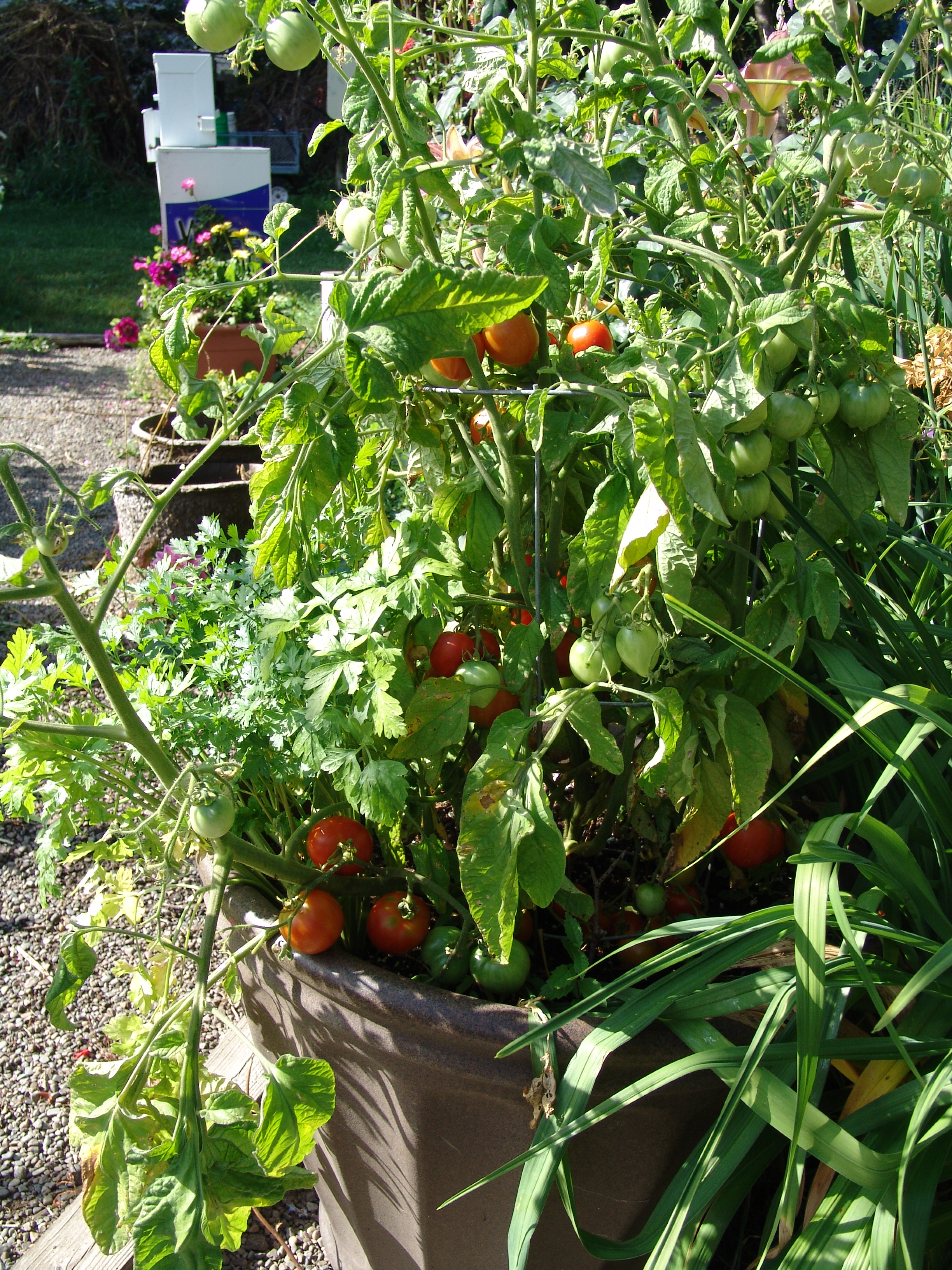
These are perfect for anyone who wants to garden but suffers from a lack of space. Use the largest containers you can afford, quality potting soil, and put them where you can easily access them. Full sun is also important. As promised, here are a few more tomatoes.
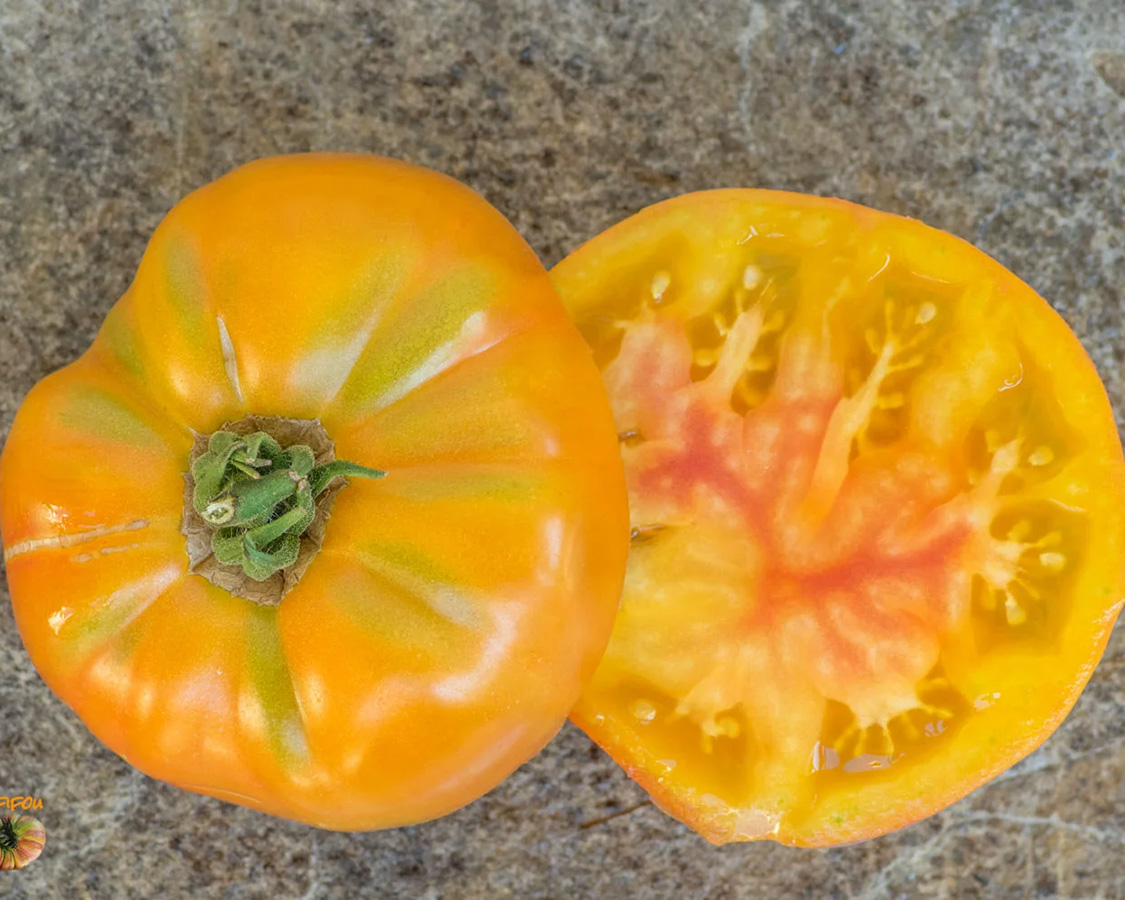
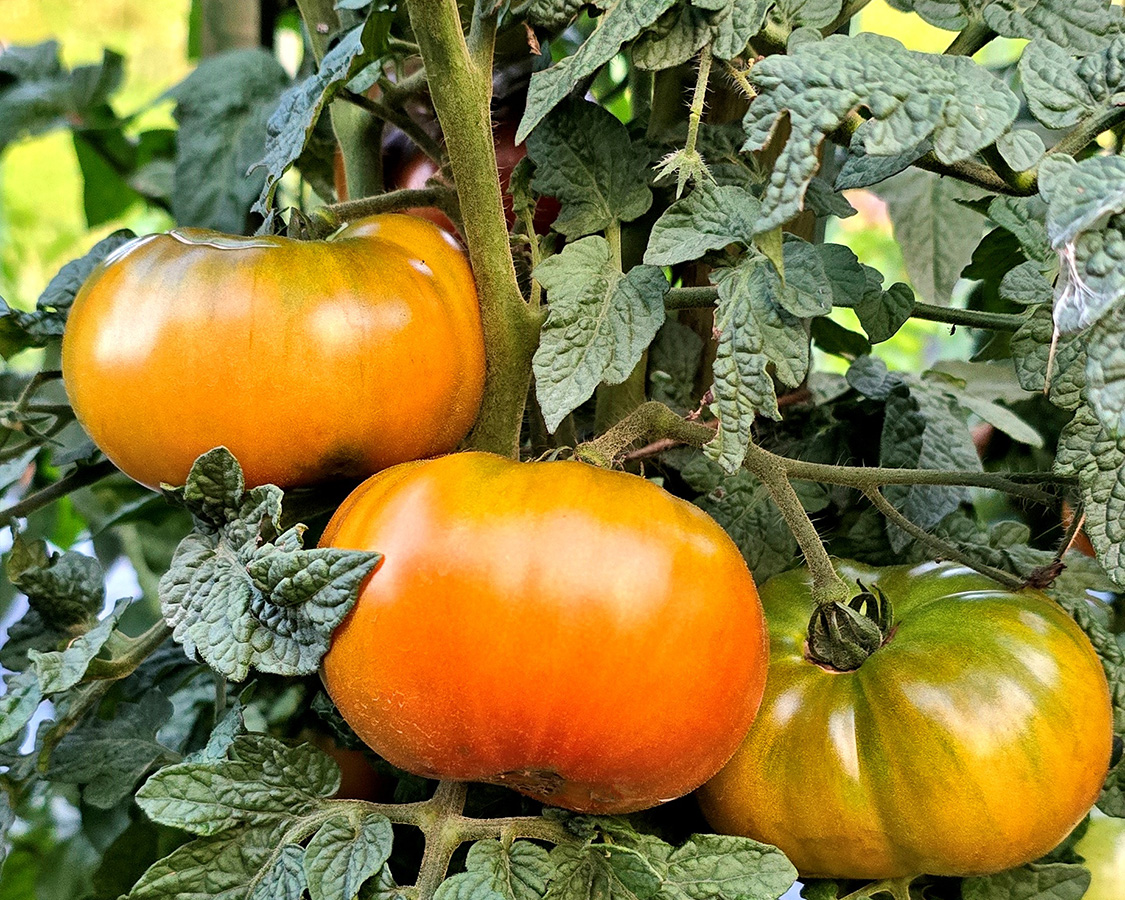
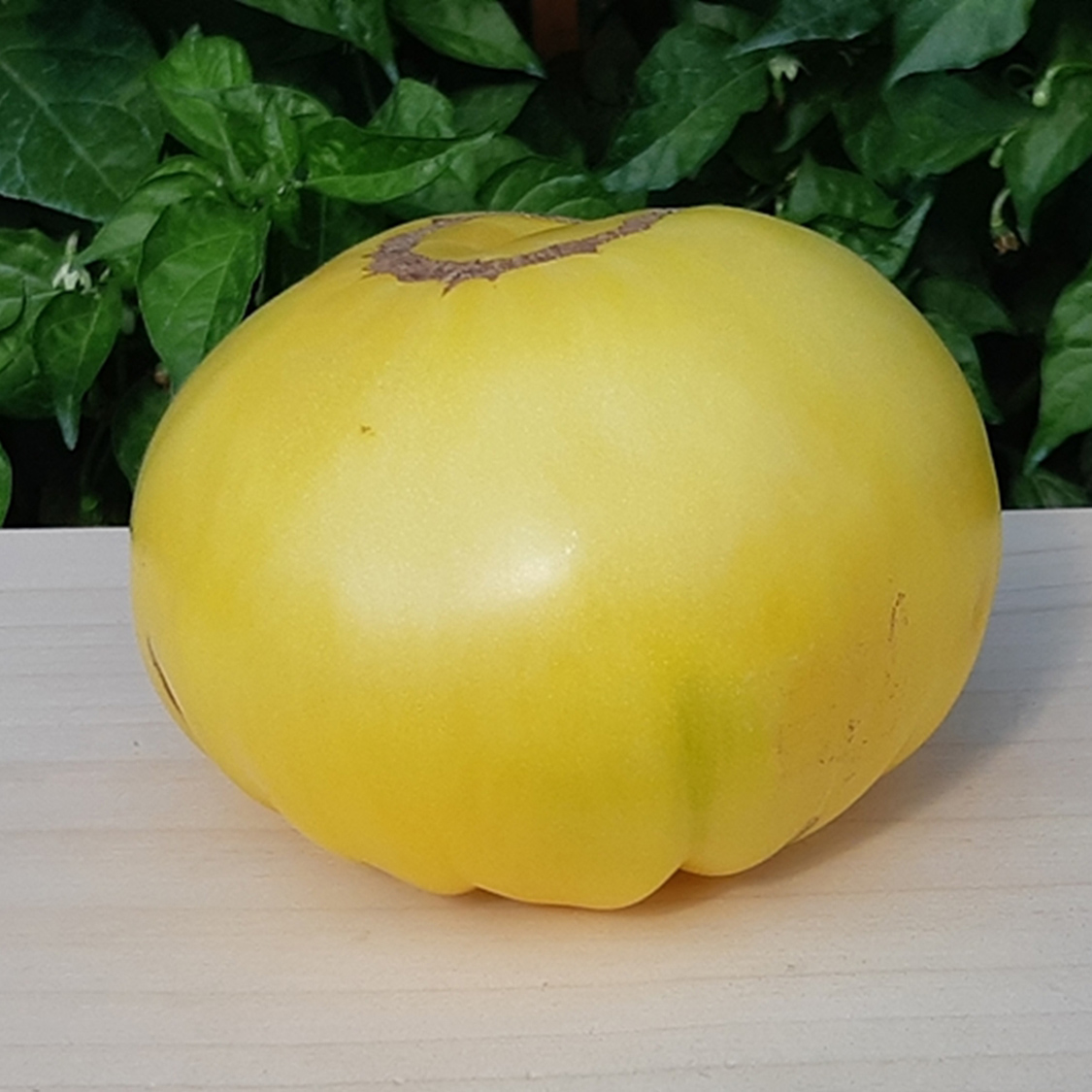
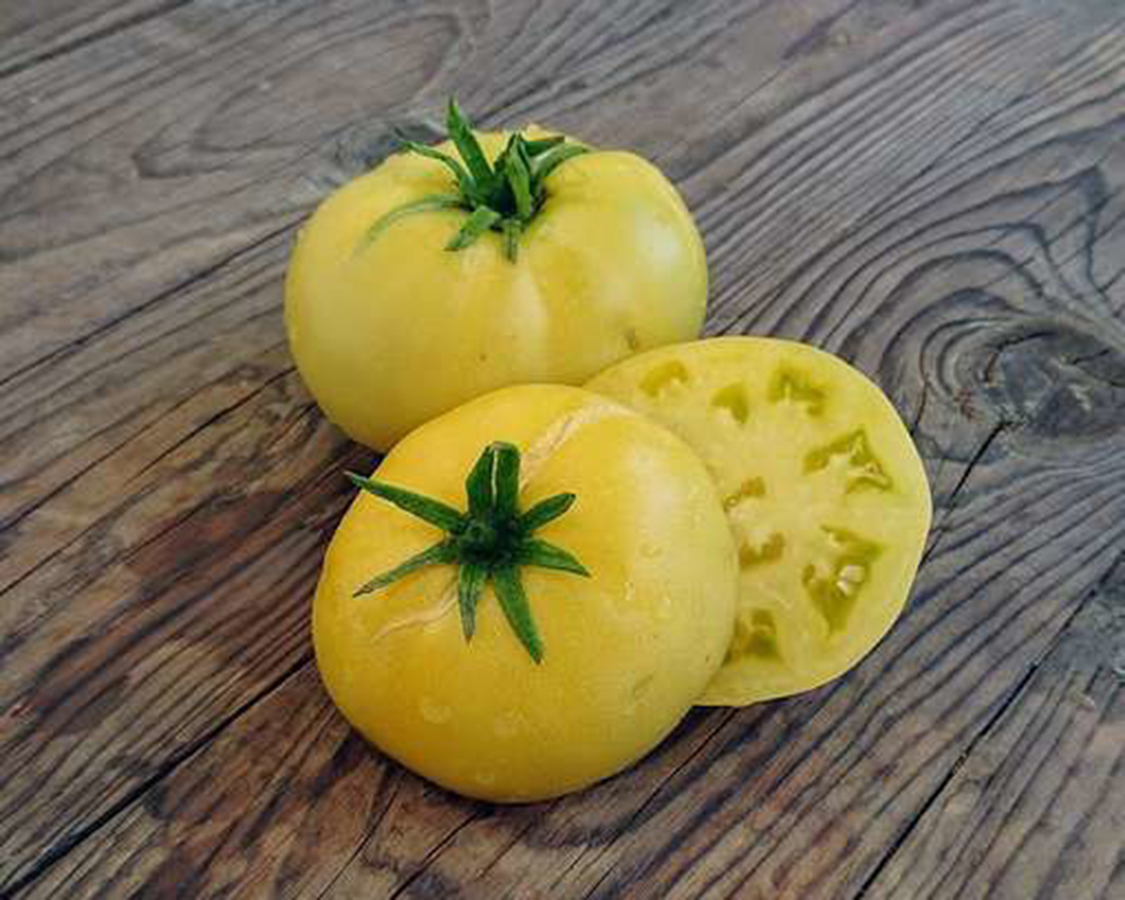
Dwarf Awesome I am hoping this one lives up to its name. Round to oblate-shaped, deep yellow colored tomatoes with red blushing.Inside is juicy flesh displaying a combination of orange, yellows, pink, and red. Good for a container as yellow tomatoes tend to have a richer flavor when not over-watered.
Dwarf Awesome
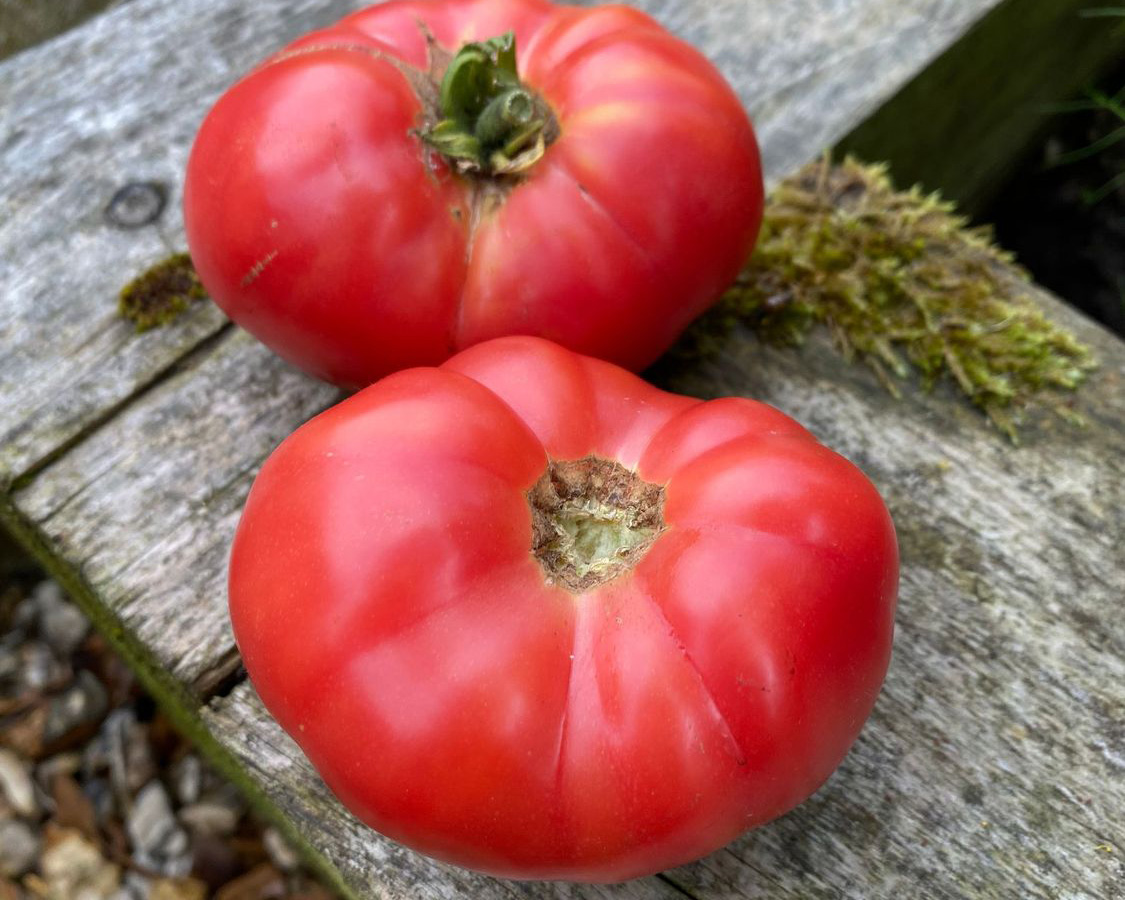
Dwarf Betty’s Smile These grow to about four feet and are quite bushy. Their fruit is oblate shaped, pink in color, medium to large size, and mild, balanced in flavor. They are on the sweeter side.
Dwarf Betty’s Smile
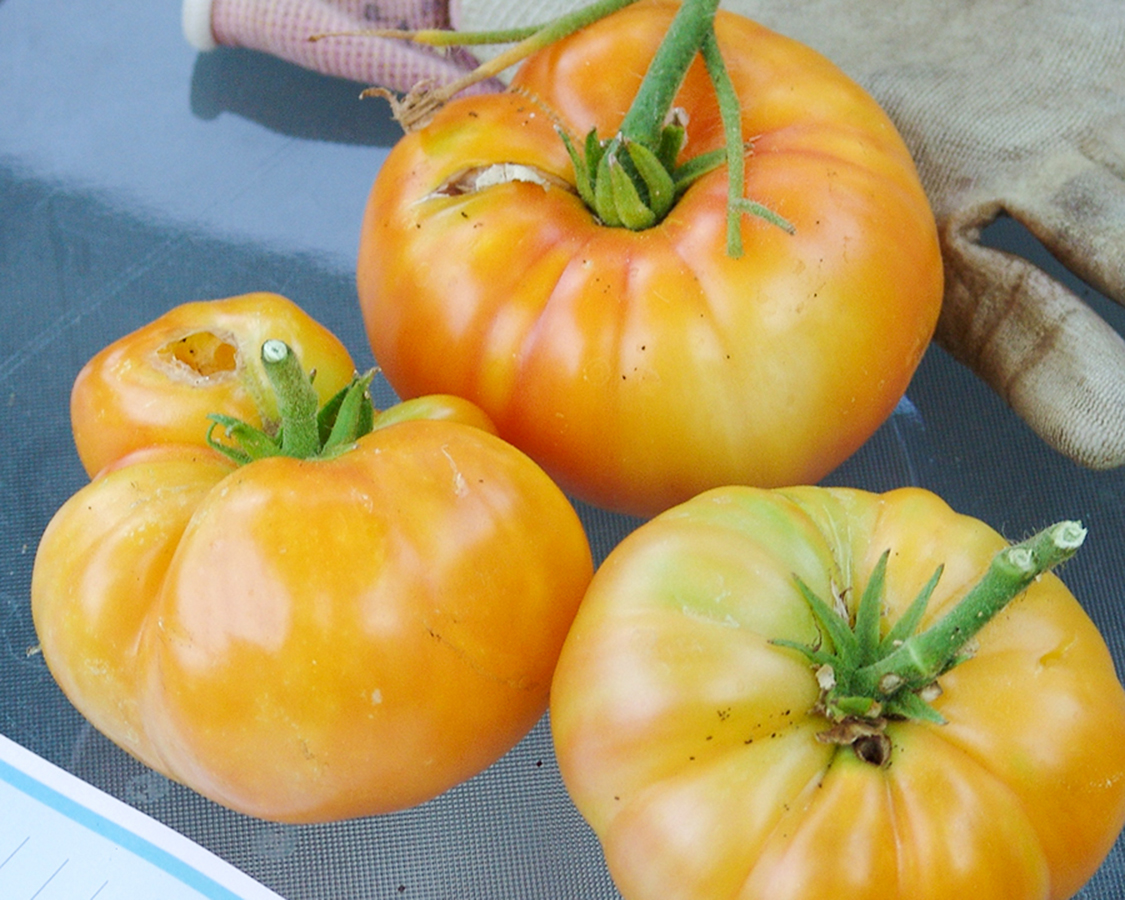
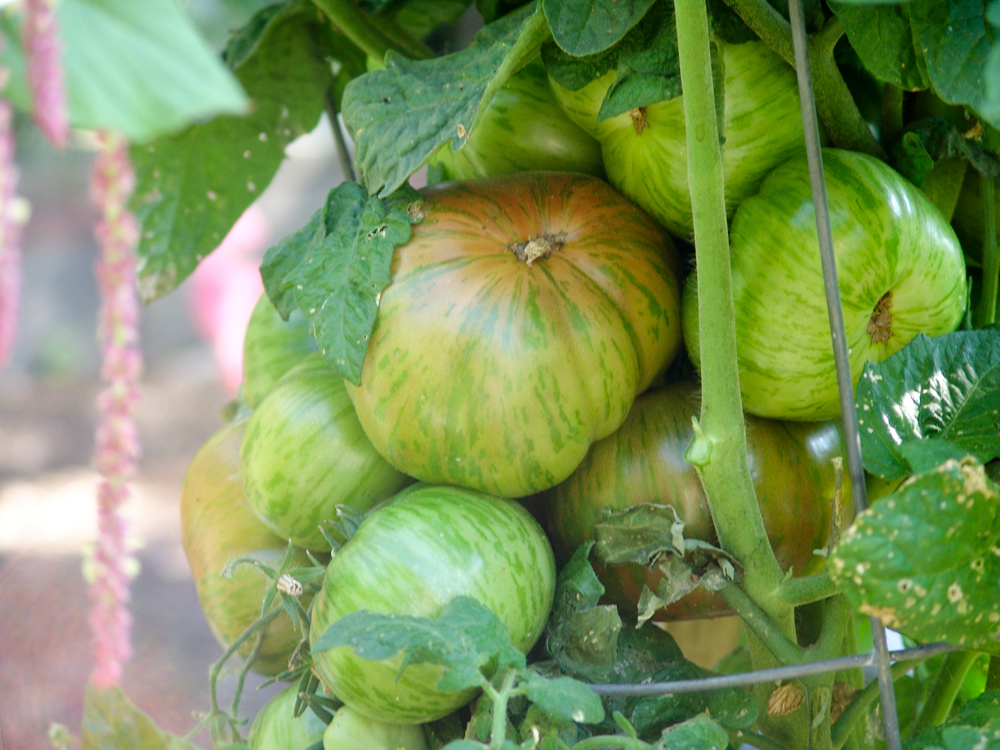
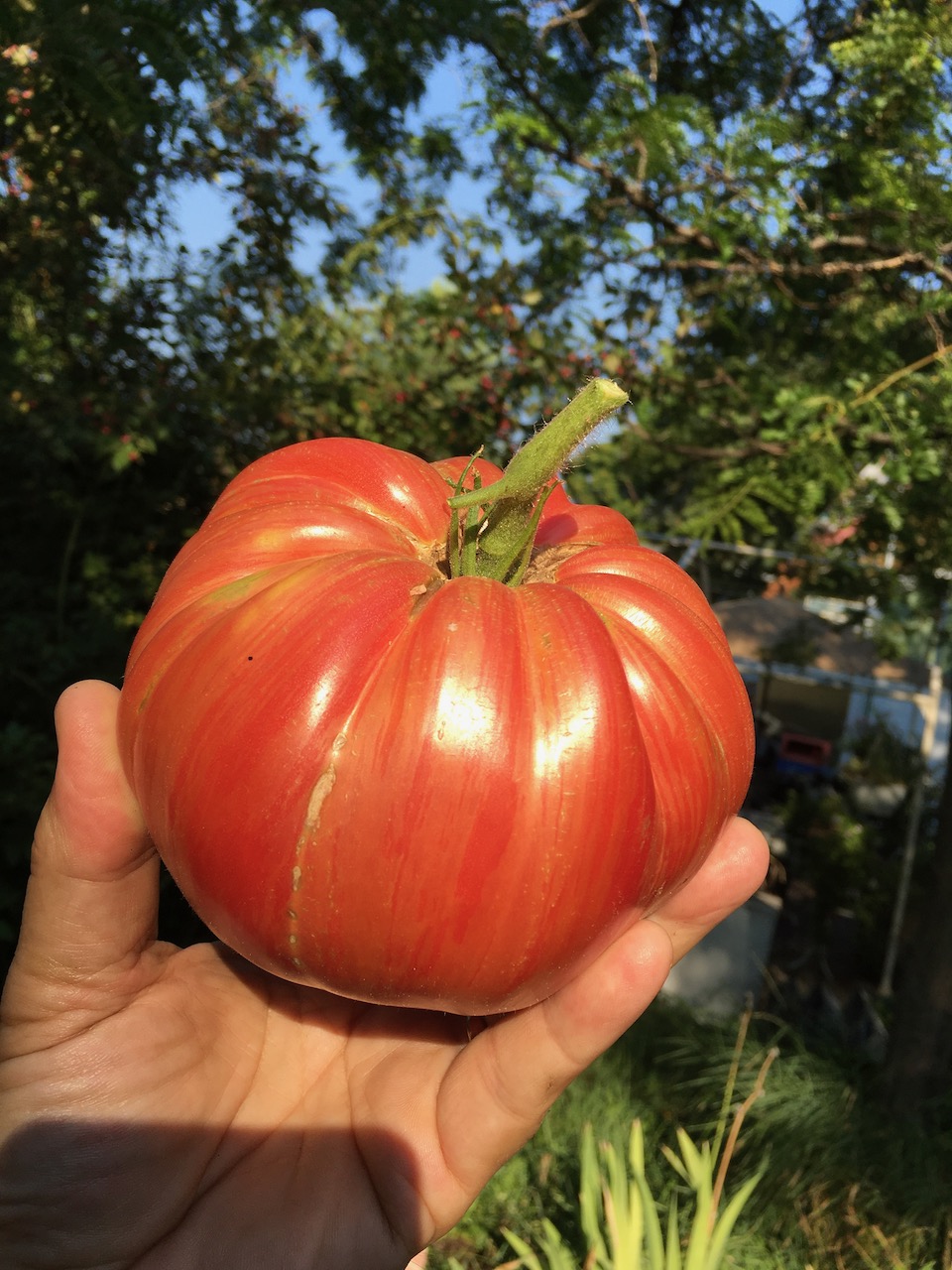
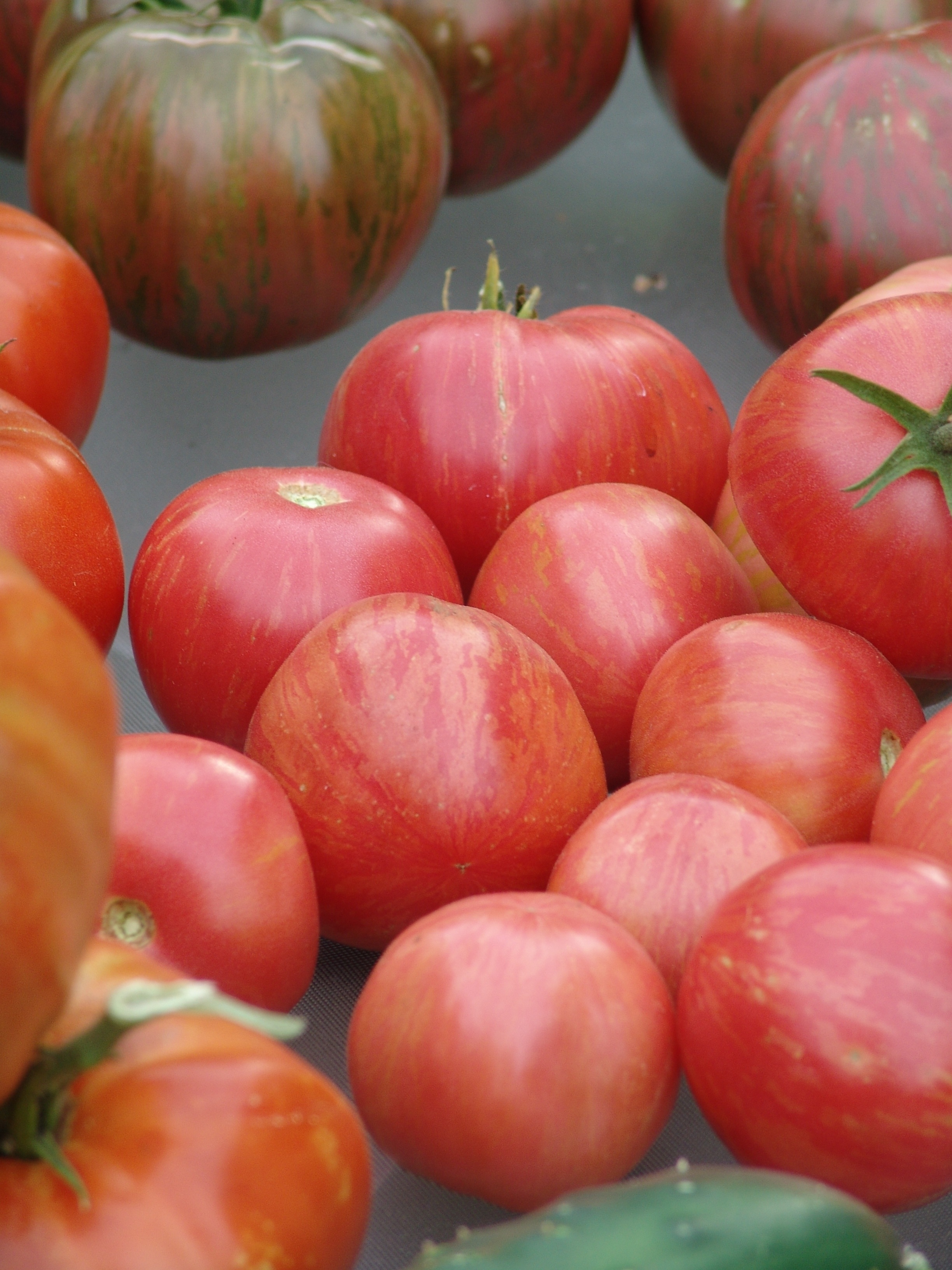
Dwarf Russian Swirl Vigorous dwarf (tree-type) plants with regular leaf rugose foliage. Excellent yields of smooth oblate yellow tomatoes with red swirls and streaks, 6-12 oz. The flavor is well balanced and tasty, reminiscent of the best bicolor types Good for a large container. 3 – 4 feet tall Mid-season
Dwarf Russian Swirl
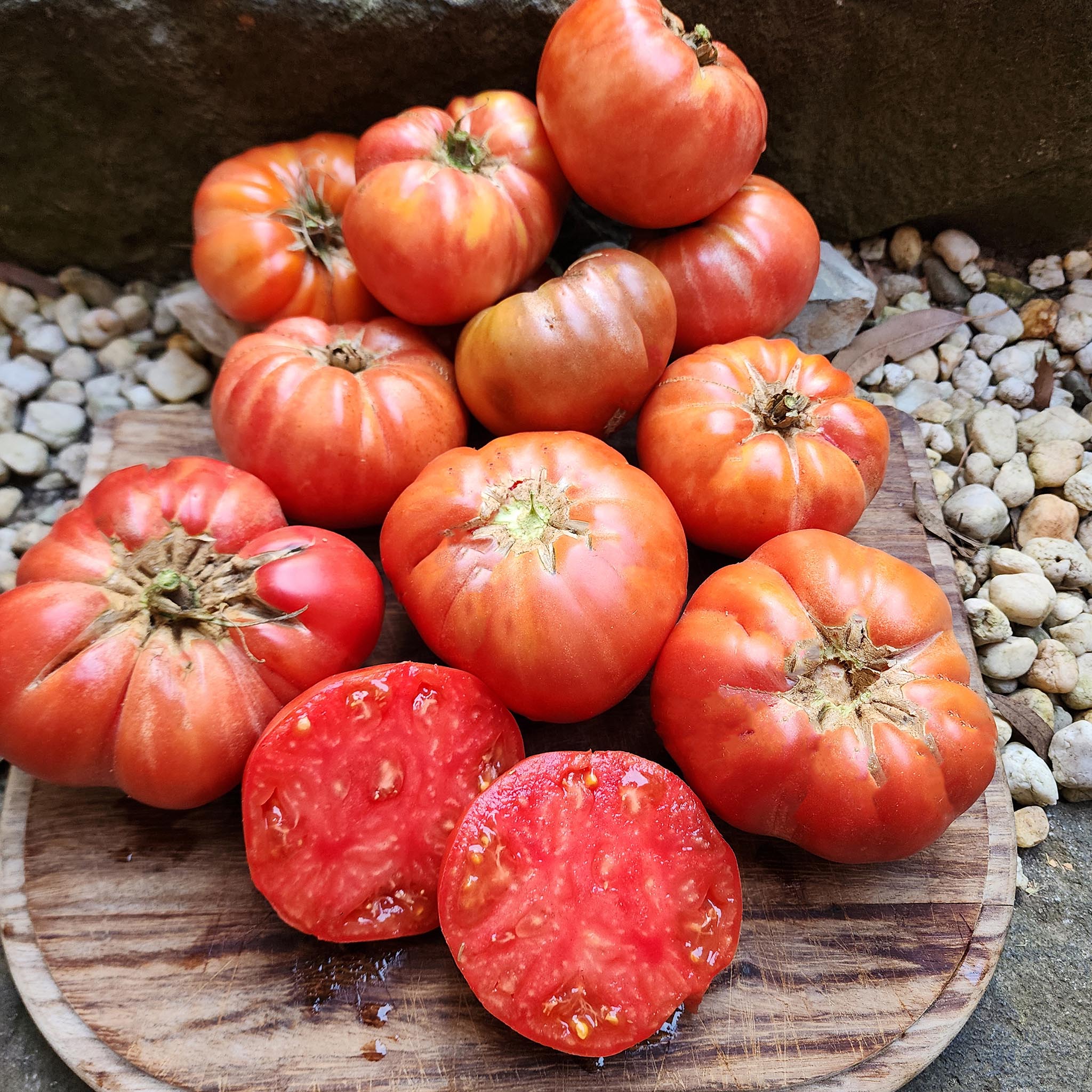
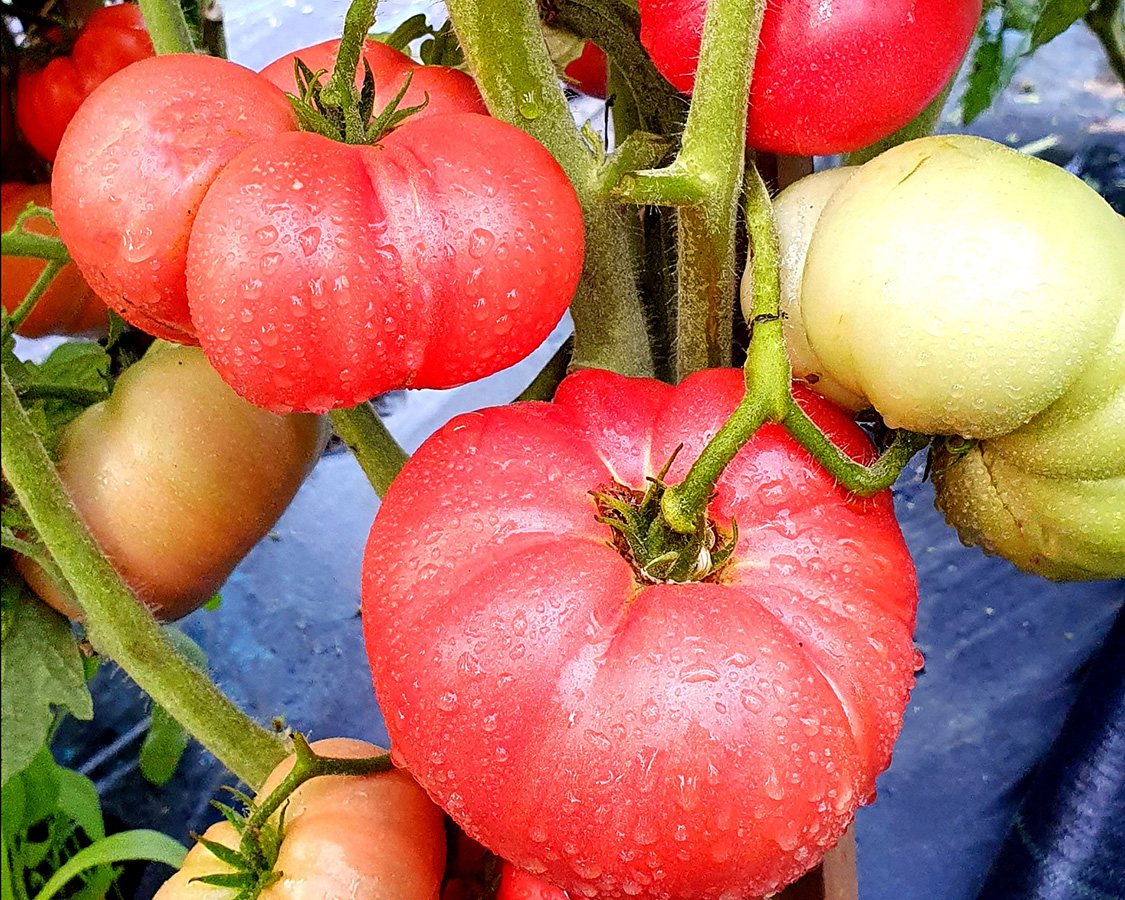
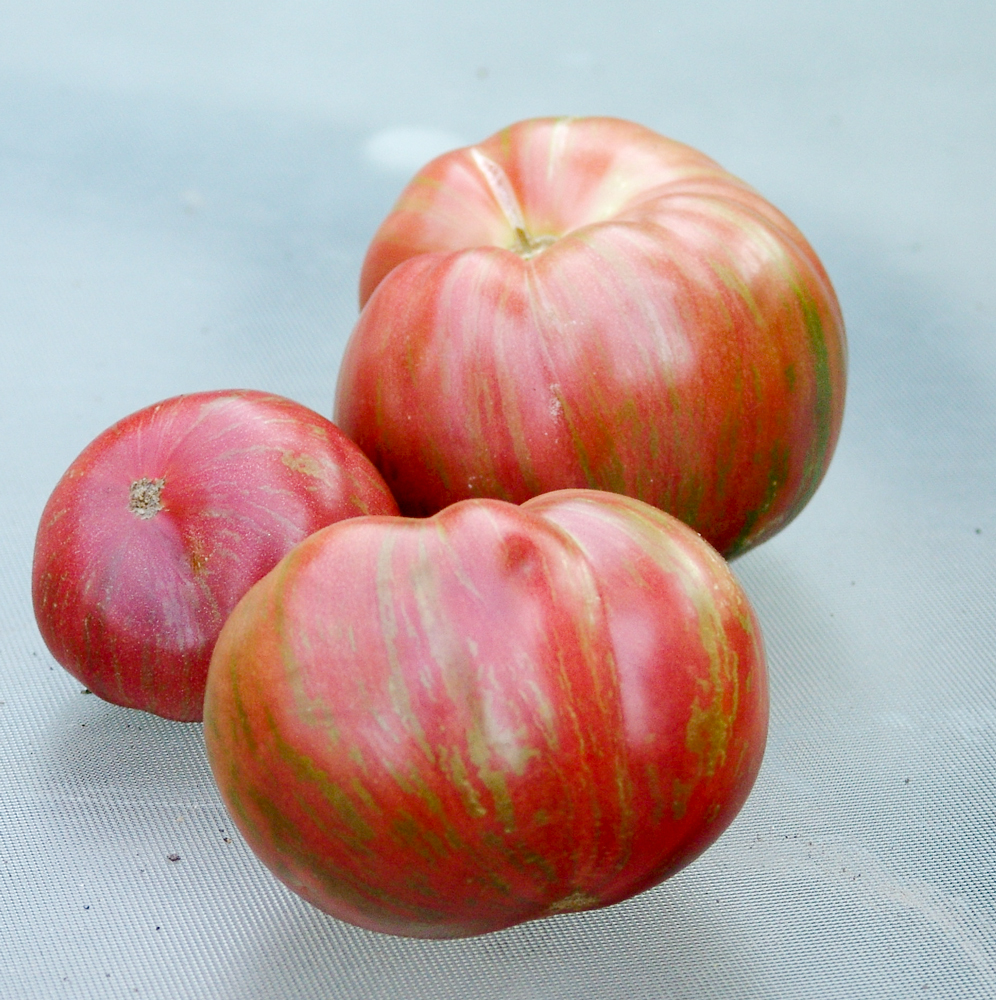
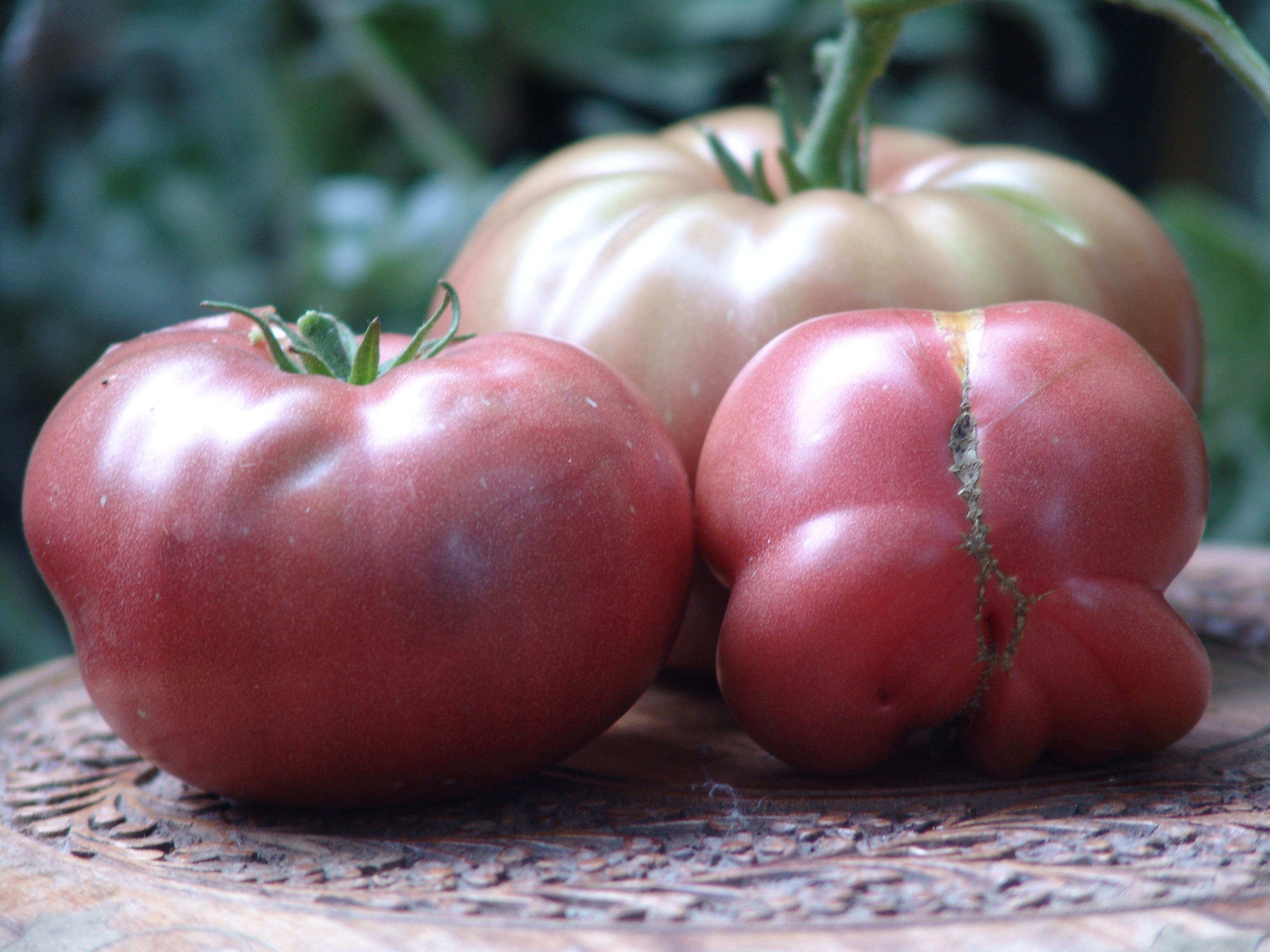
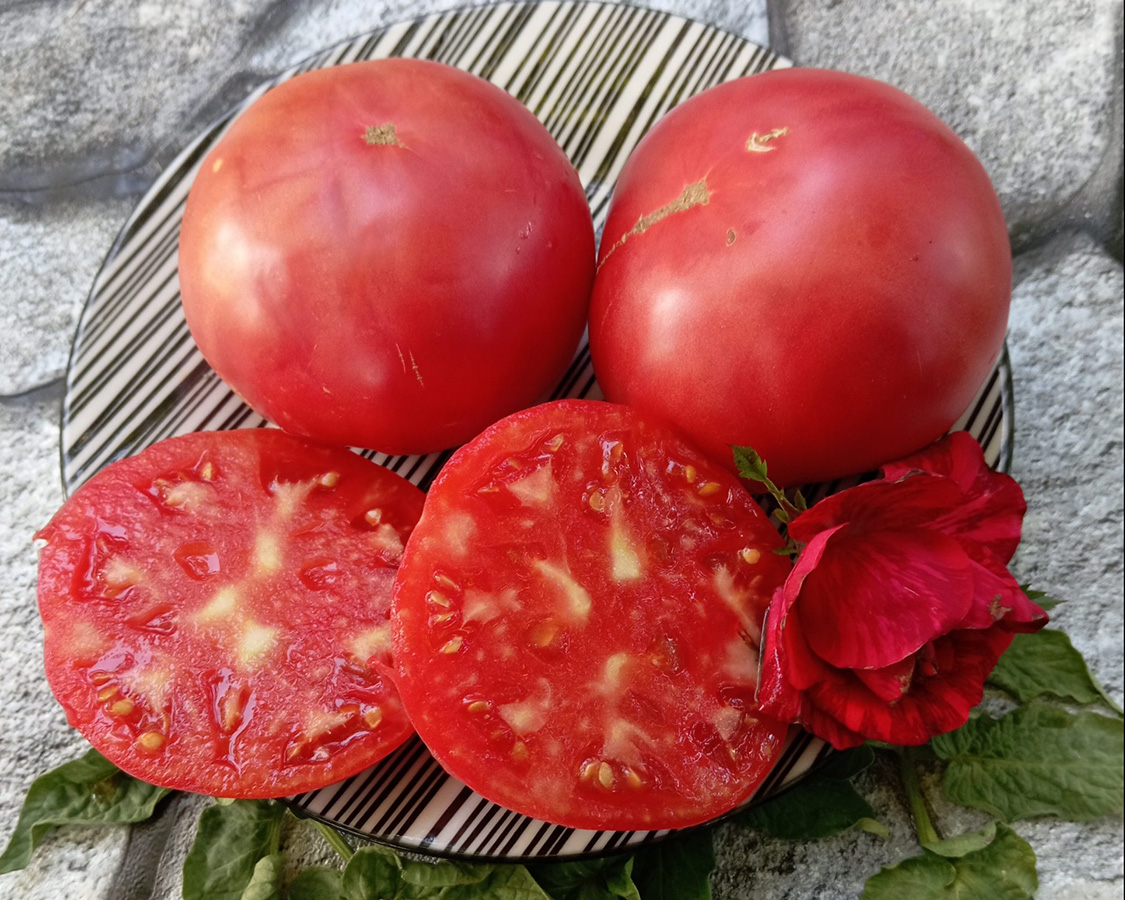
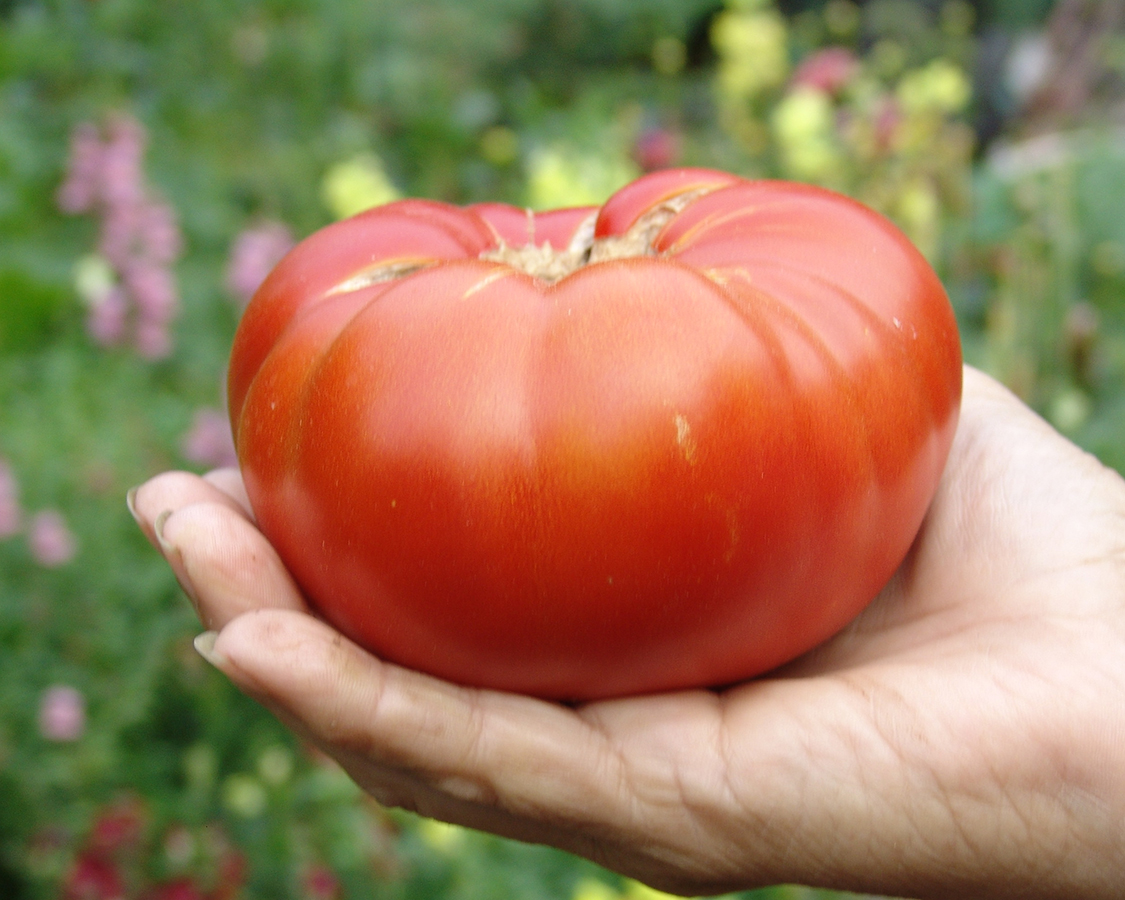
Dwarf Shackelford Giant Pink If you want to grow a giant tomato, this old heirloom variety is a great choice.They have vigorous, spreading vines that produce amazingly huge, raspberry-pink tomatoes of varying shapes that are very meaty and juicy and have a well-balanced, slightly sweet, pleasant flavor. Mid- season
Dwarf Shackelford Giant Pink
Dwarf New Big These plants stay relatively small and manageable. They thrive in containers or small garden beds, making them a great choice for those with little area to garden. Maturing early, you enjoy homegrown, full-sized tomatoes. Exceptional taste and compact nature, a great choice for those looking for great flavor and a smaller footprint.
Dwarf New Big
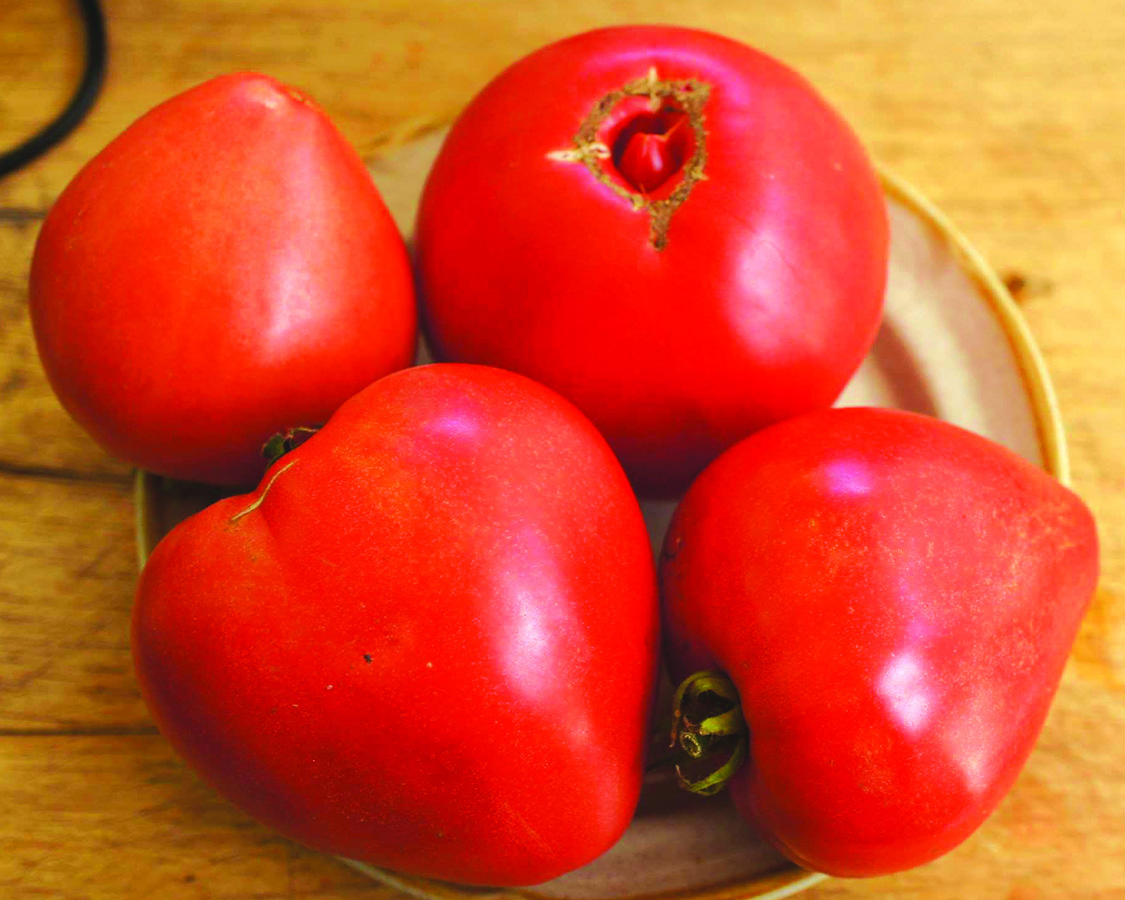
Dwarf Pink Passion Dwarf (tree-type) large regular leaf plant produces heavy yields of 4-8 oz., pink, medium-sized, heart-shaped fruits with delightful, balanced, sweet flavors. Good for a large container.
Dwarf Pink Passion
Dwarf Maralinga It produces heavy yields of rich-brown tomatoes with deep crimson flesh and medium to large slicing tomatoes. They are full flavored. Plants grow to about 3 1/2’ feet tall. They produce 6-8 oz fruits that are balanced, earthy and satisfying.
Dwarf Maralinga
The ones I have shared with you are not the only dwarfs that I have. Come by and see what we have. Live a little and try something that may be a little different than what you are used to. You won’t regret it!
I think most folks are wary of Dwarf tomatoes, thinking they are miniature plants with miniature fruit. I am here to show you they aren’t any of those things. They are dwarf only in stature, most growing between 3 and 4 feet. They also do really well in large pots if you don’t have the real estate for a garden. You can still enjoy a homegrown tomato instead of those nasty, red things that they call tomatoes at the store.
I started out with a couple of varieties. I was intrigued by the story of how they came to be. For years, if someone wanted smaller plants, they chose determinate varieties that didn’t get very big, the plant or the tomatoes. There’s not a whole lot of variety there. Smaller fruits, almost all of them were red, a lot of the early tomatoes fall into the diminutive category and their flavor, while head and shoulders above store tomatoes, were still not as flavorful as one would hope. (Mostly because they don’t have time to develop the flavors in longer season tomatoes.)
Dwarf (Tree Type) tomatoes from The Dwarf Tomato Project. I grew 6 of them in 2016 and was very impressed with most of them. They are perfect for a small space gardener who wants a slicer instead of the smaller tomatoes that are usually produced by most determinate tomatoes.
This class of tomatoes exhibits characteristics of both determinate and indeterminate types. Historically called “tree-type,” they are now commonly referred to as” dwarfs”. Tree-type tomato plants have very thick main stems with minimal branching. Their foliage can be either regular or potato leaf but in either case, are rugose (e.g. dark green in color and crinkly in texture). Due to their slow growth rate, they appear from a distance to be determinate achieving three to four feet in height. However, like indeterminate, they continue to set fruit throughout the growing season. Compact and everbearing, what a great combination! They come in many colors, shapes and sizes.
To learn more go the link below, it’s really quite fascinating. The Dwarf Tomato Project grew out of a comment made in a Tomato Forum at Gardenweb when Craig LeHoullier lamented the fact that the dwarf category in tomatoes was very restricted. He suggested it would be good to cross dwarfs with heirlooms to remedy this situation and mentioned New Big Dwarf being listed in a 1915 Isbell Seed Catalogue which noted how the variety was developed by crossing Dwarf Champion (known since the late 1800s) with the largest known tomato at that time, Ponderosa. Patrina, a friend thought this sounded like a fun thing to do and decided to have a go at crossing some dwarfs with heirlooms in her next summer season in Australia.
Patrina and Craig decided to use this material to start a project where anyone (who wanted to help grow the many generations that would be needed to stabilise new varieties) could volunteer to grow some plants. The goal was to create a selection of tastes, colours and sizes that would equal heirloom varieties with plants having an advantage of being more compact and therefore more manageable. Volunteers were given the opportunity to name any new novel dwarf tomato type they discovered in appreciation for helping in the project.
I bought the majority of my seeds for these Dwarfs from Tatianas Tomatobase, Victory Seeds, and Tomatofest. As more people become aware of them, they are becoming readily available in limited varieties from other online seed companies.
These plants are wonderful for containers (the larger, the better) as long as they have enough sunlight. Remember that ripening times start when the plants are transplanted into the garden. This year, I have 29 dwarf varieties available.
Of the varieties I have grown, I have some favorites: Dwarf Fred’s Tye-Dye, Dwarf Purple Heart, Dwarf Golden Gypsy, Dwarf Tasmanian Chocolate, Dwarf Brandy Fred and Dwarf Sweet Sue.
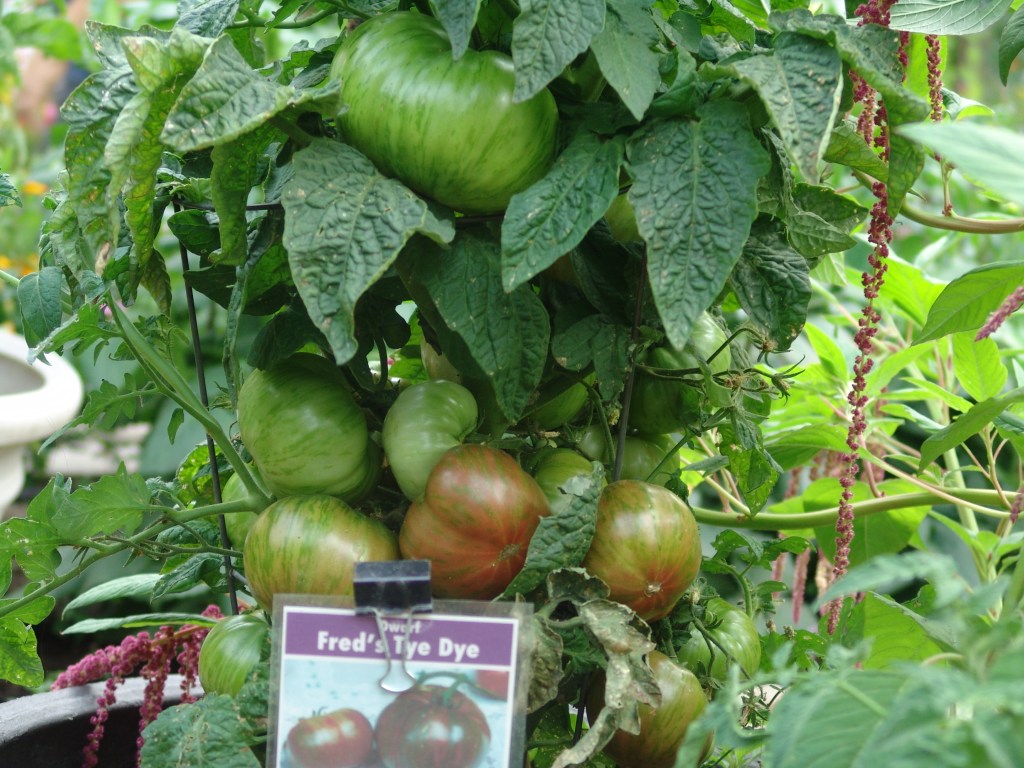
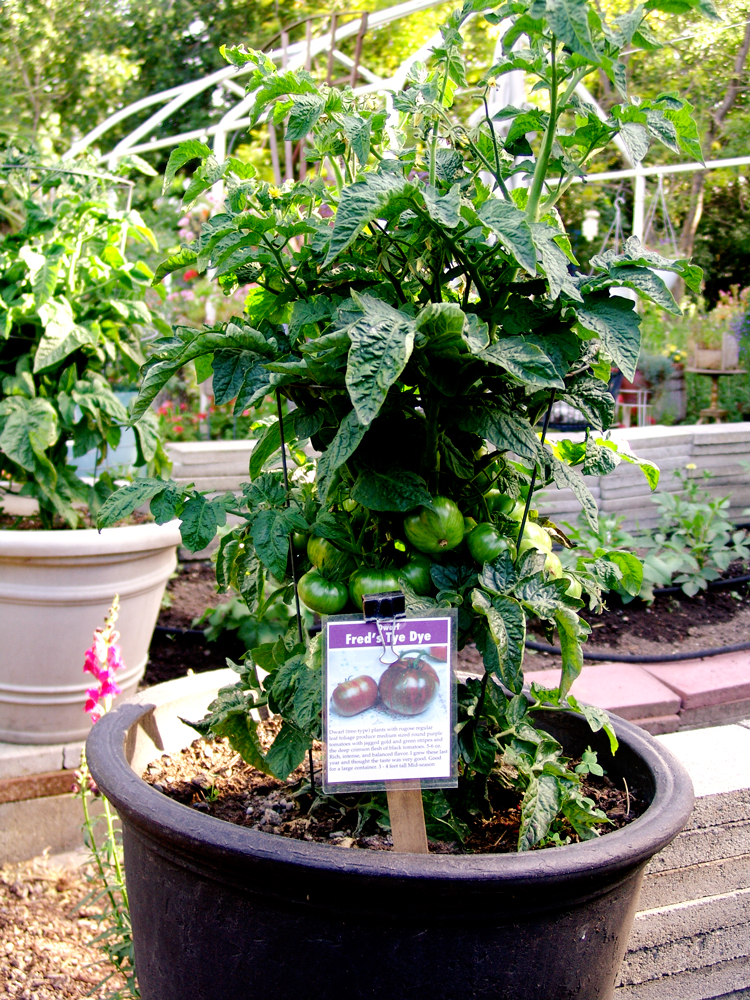
Dwarf Fred’s Tye-Dye A beautiful, purplish-colored fruit, it is sweet, large, and abundant. I think this is the one I fell in love with in the beginning. A medium-sized tomato, purple with jagged gold and green stripes and the deep crimson flesh of that black tomatoes are known for.
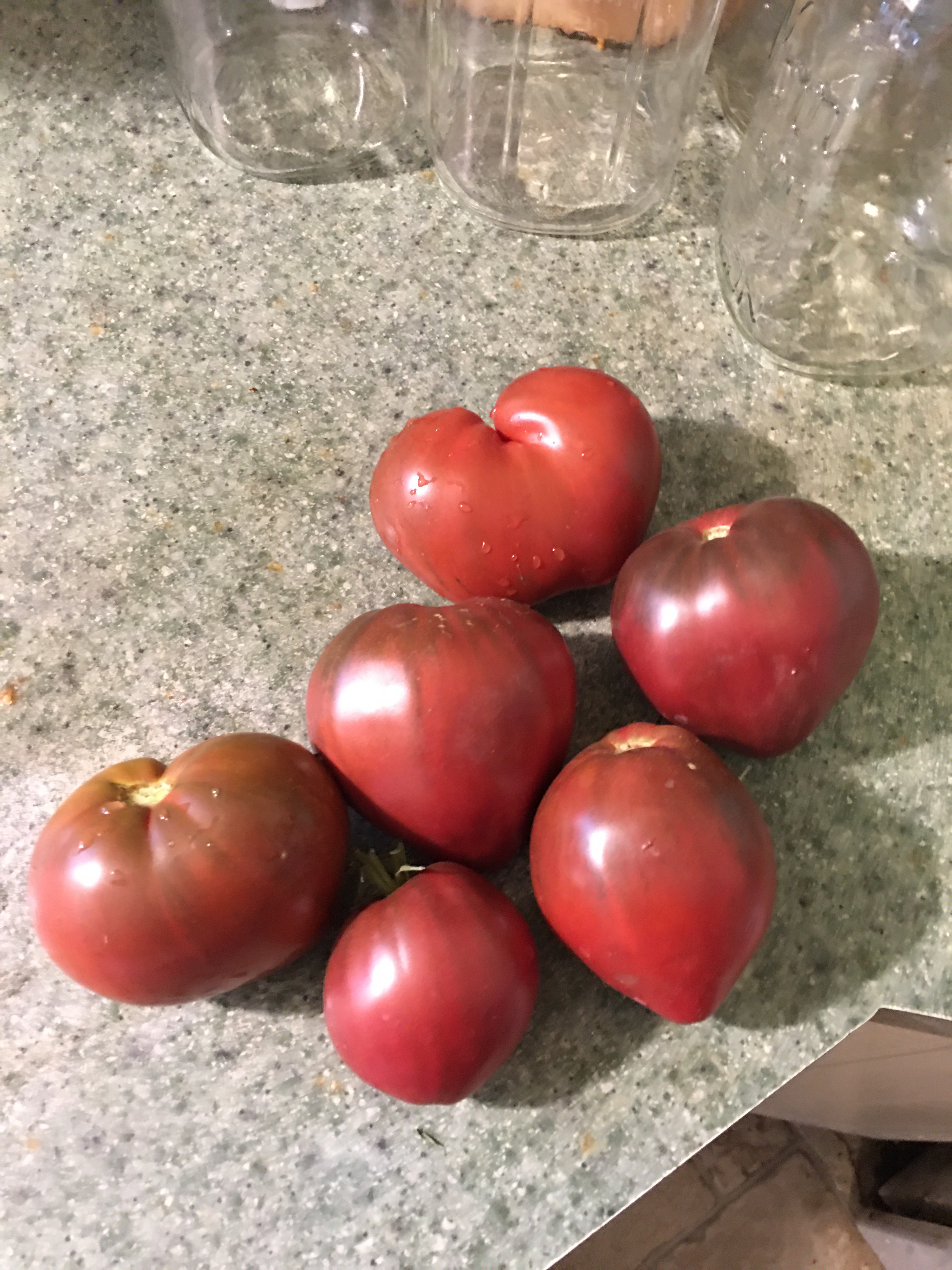
Dwarf Purple Heart This plant produces heart-shaped, medium- to medium-large fruit that ripens to a dusky rose purple hue. The flavor is well-balanced, sweet, intense, and prolific. As with all heart-shaped tomatoes, some are more of an oblate shape, but most are shaped like hearts.
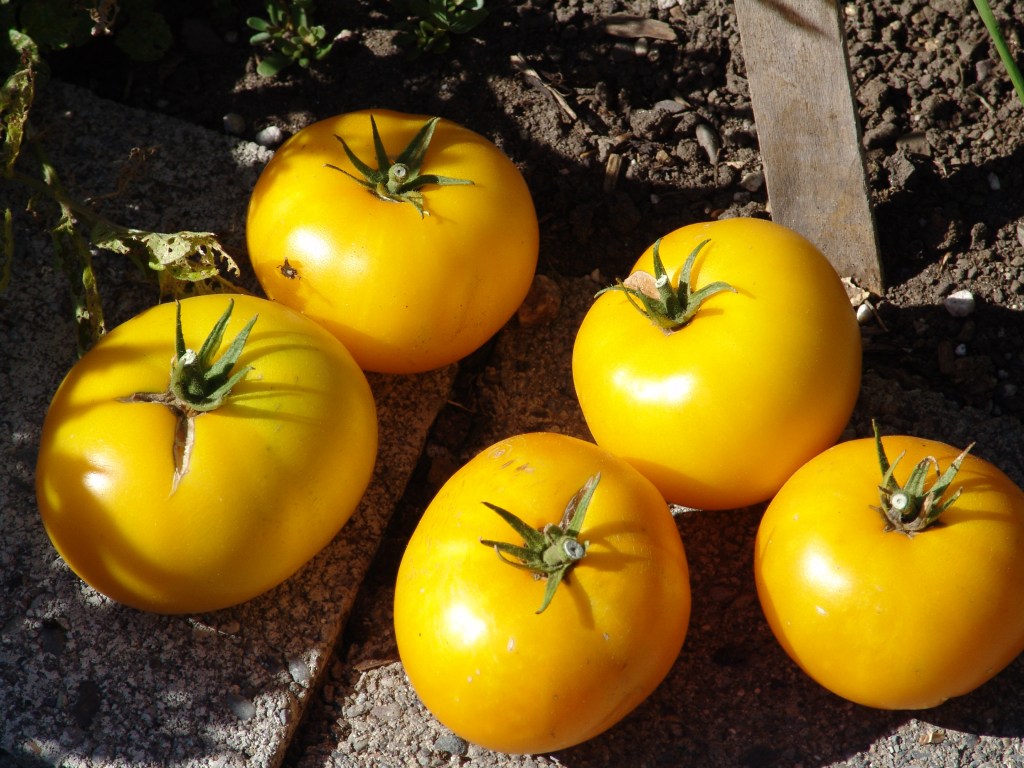
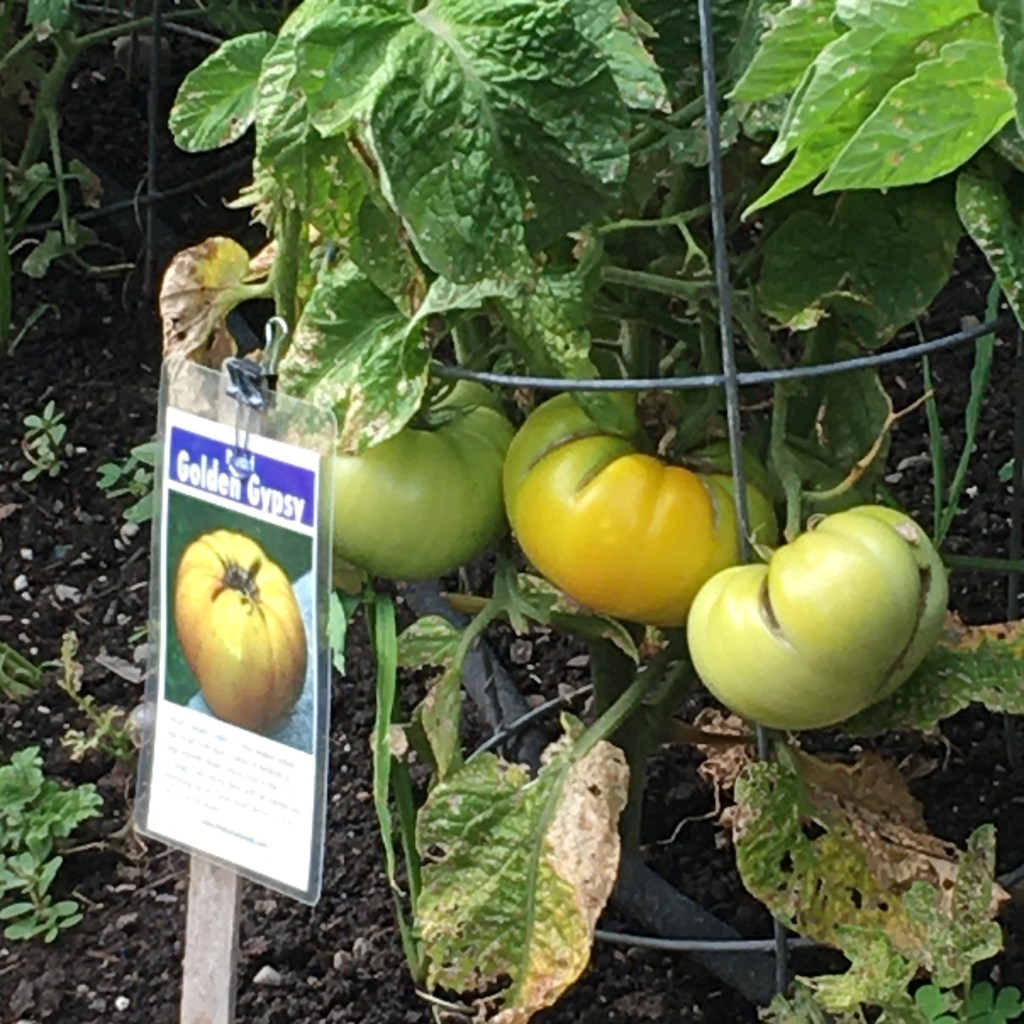
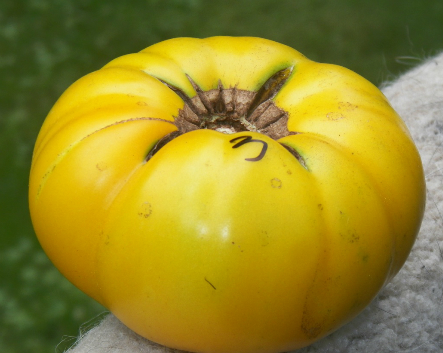
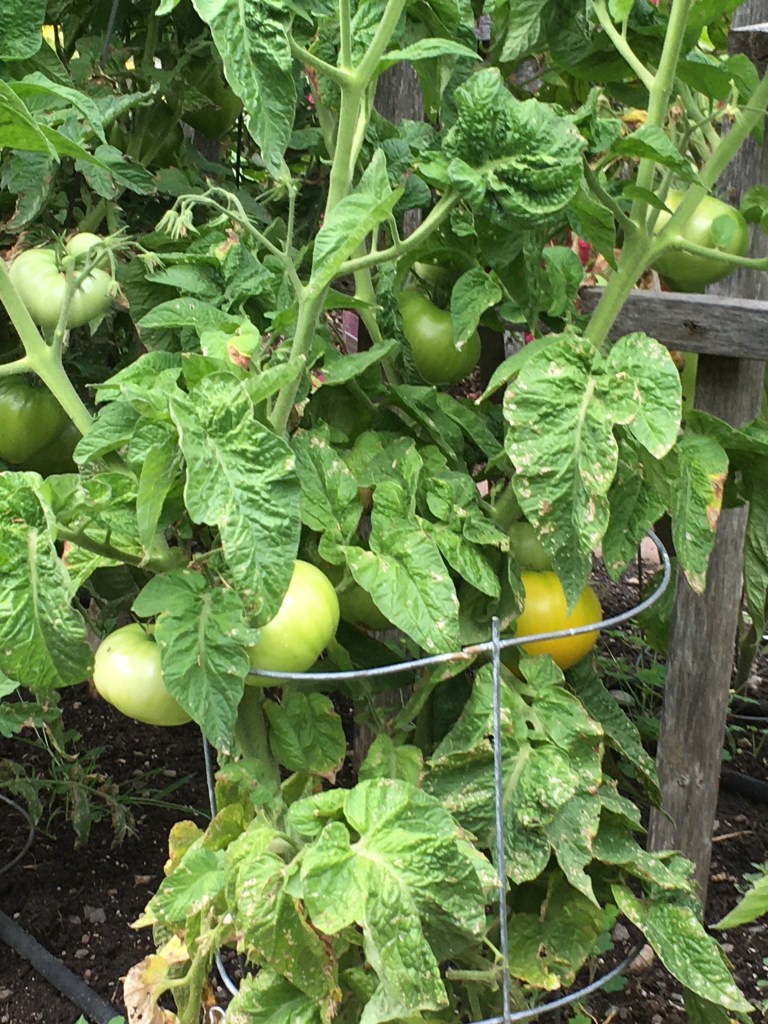
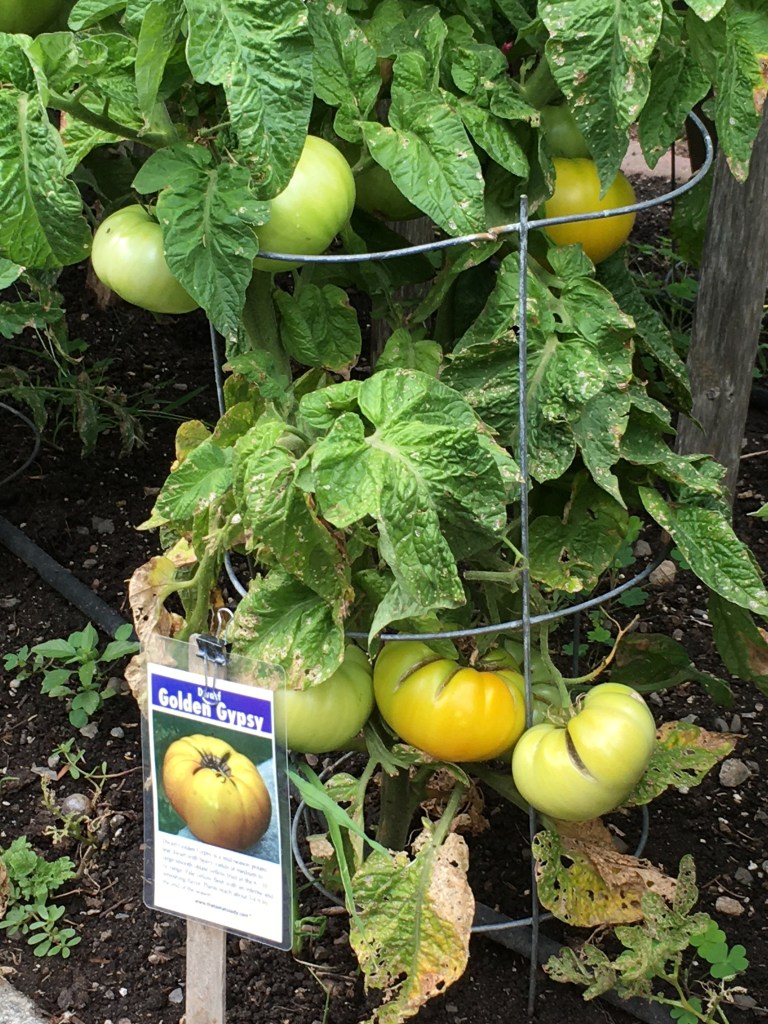
Dwarf Golden Gypsy A potato leaf dwarf with heavy yields of medium to large smooth oblate yellow fruit. Pale yellow flesh with an intense and refreshing flavor.
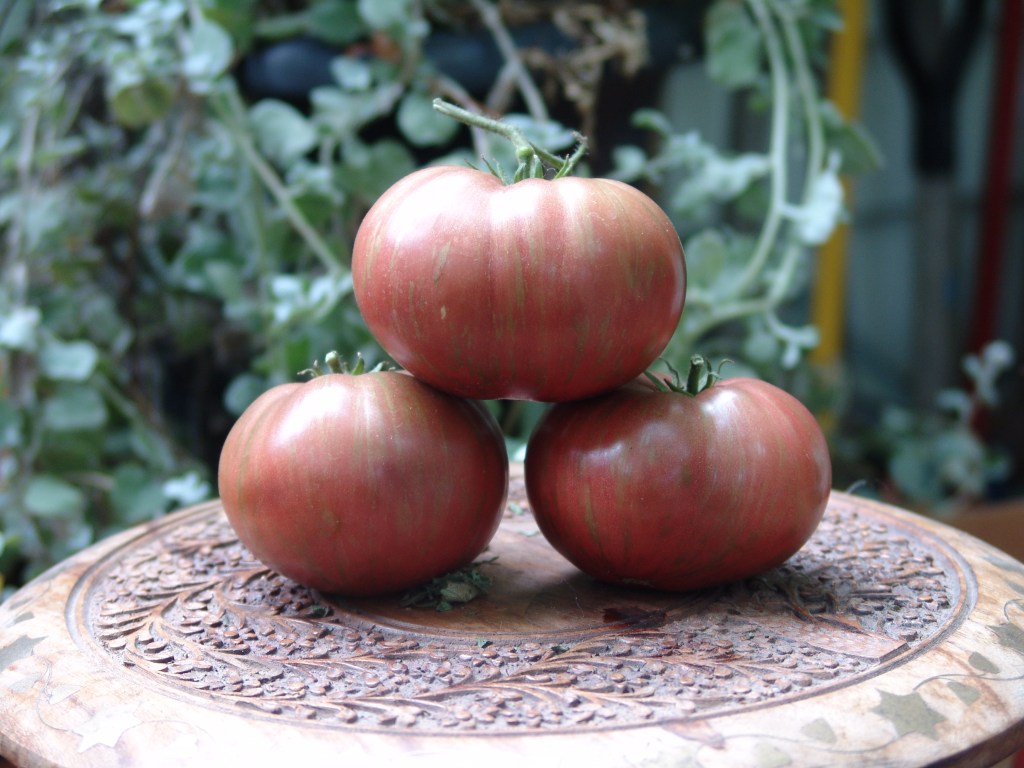
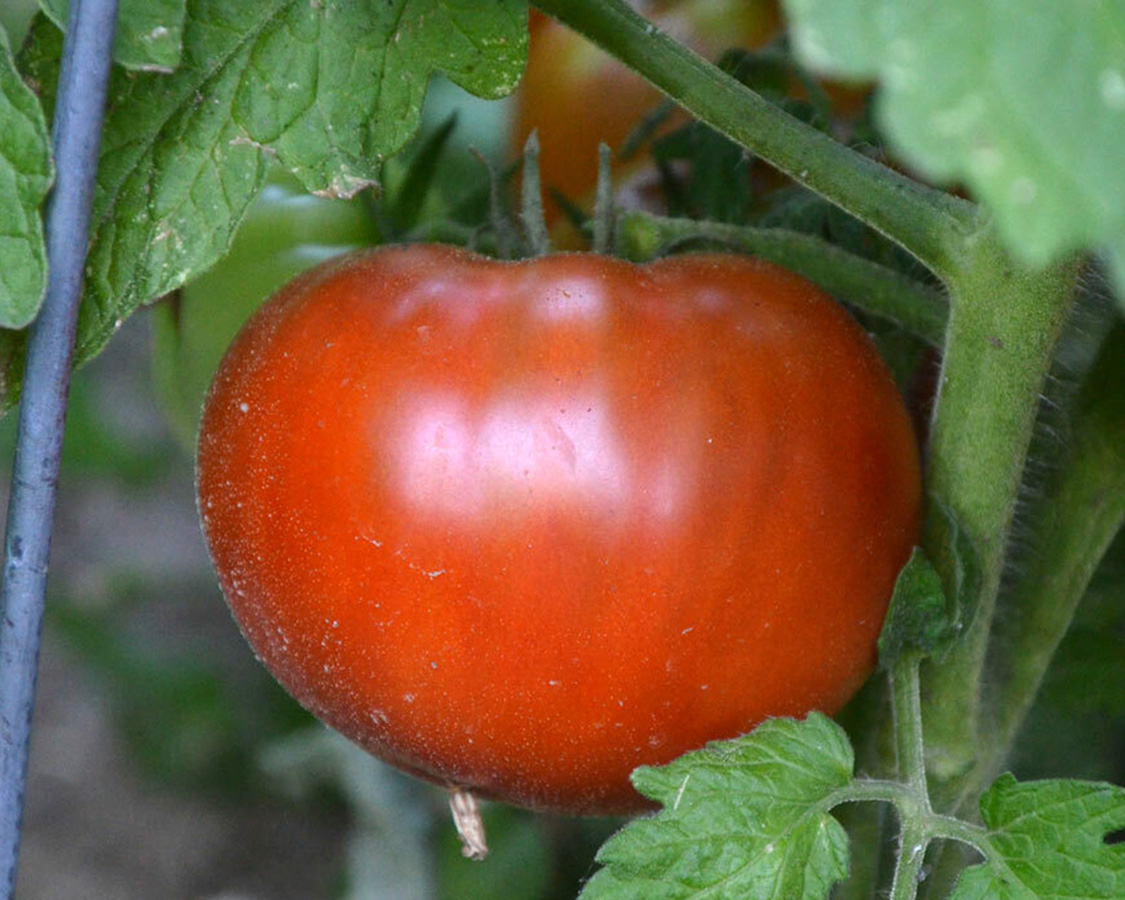
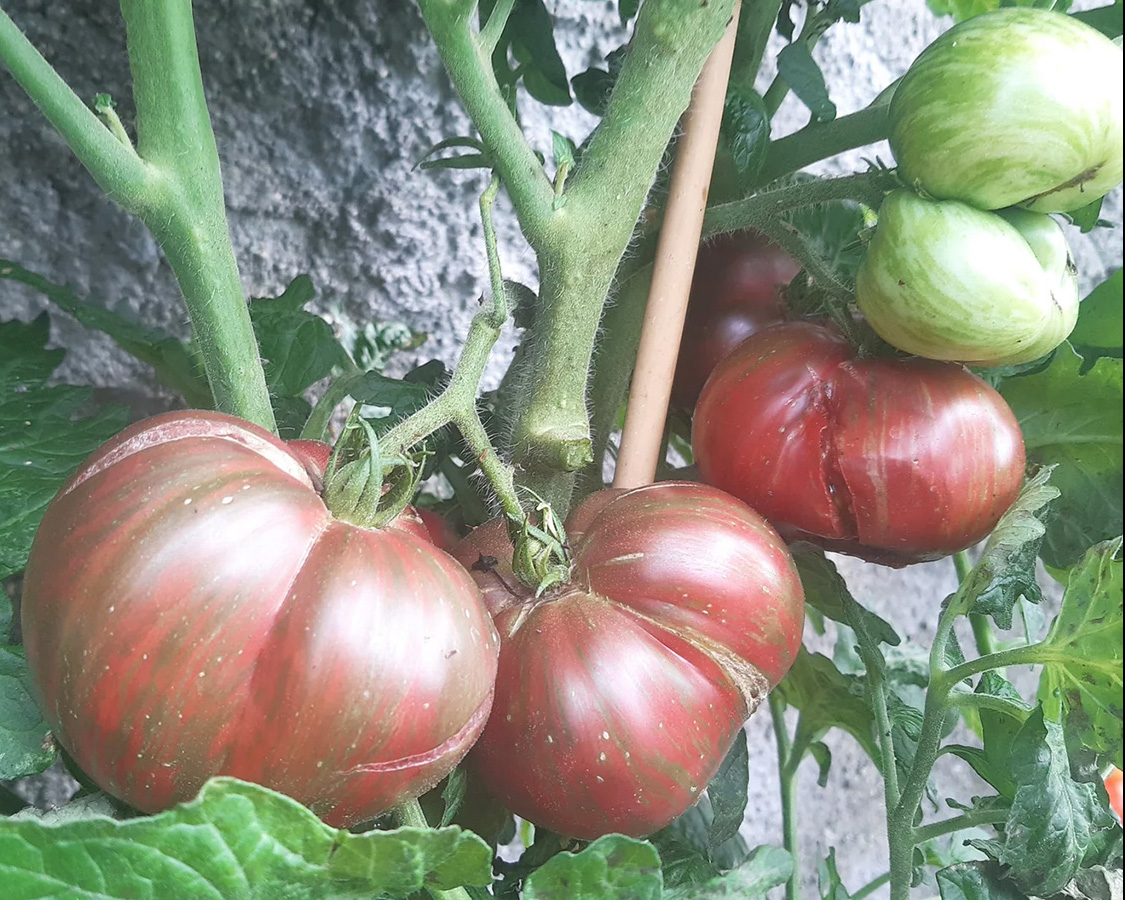
Dwarf Tasmanian Chocolate Strong-yielding, short, sturdy vines bear heavy crops of beautiful, plump, mahogany red faintly striped tomatoes with a delicious, well-balanced flavor. Perfect for large containers on a deck or balcony. I was surprised at how well it did in a larger pot. Isn’t this one a beauty!
Dwarf Brandy Fred Oblate medium to medium large fruit that ripens to a dusky, rosy purple hue. The flavor is well-balanced and intense, and the variety is quite prolific. It reminds me of a Pink Brandywine, which I believe is in its parentage.
Dwarf Sweet Sue A medium-sized fruit that ripens to a bright yellow with a pink blossom end blush. The flavor is outstanding, well-balanced, and sweet. I like pretty tomatoes that taste good as well.
These tomatoes are the ones I can vouch for having grown and eaten them myself. .
Now for some new ones that I am looking forward to trying,
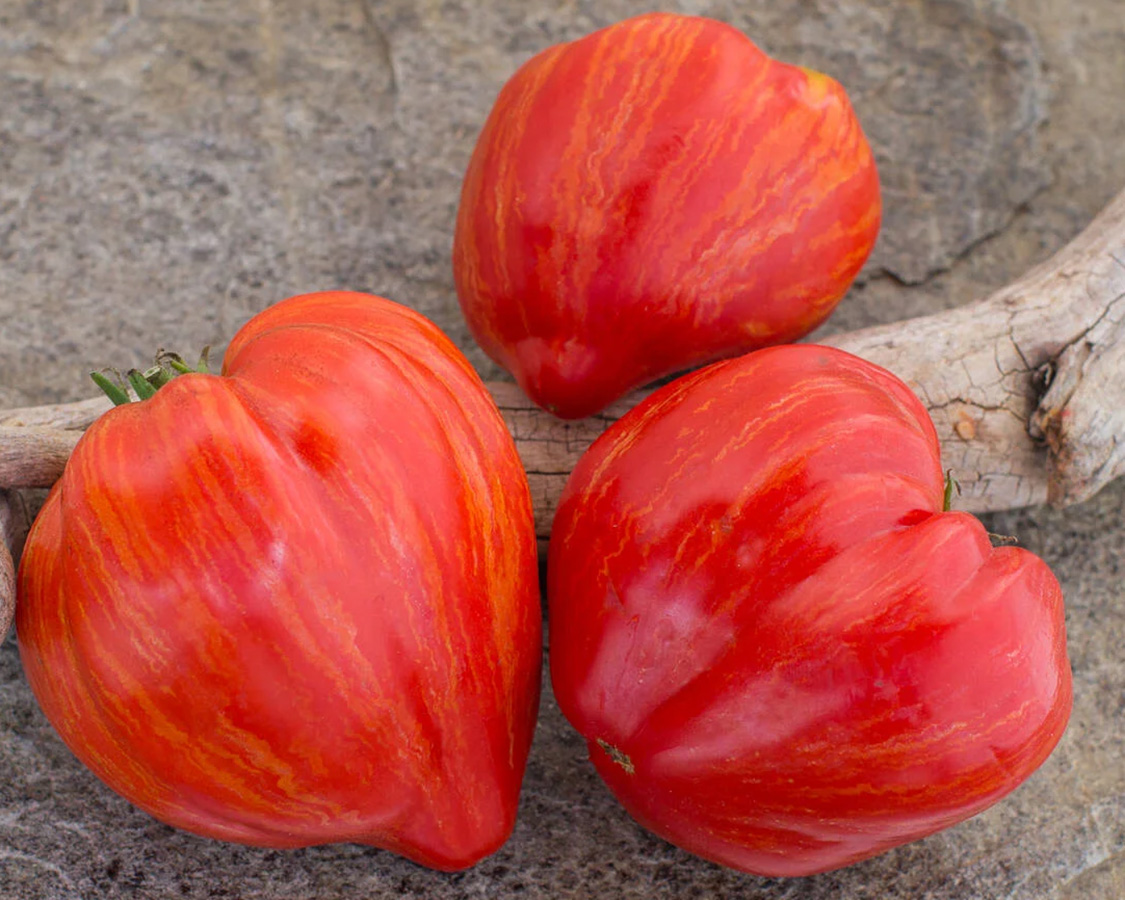
Stony Brook Heart Compact, reaching 3’ to 4’ and very productive. The distinctly heart-shaped tomatoes are a beautiful scarlet color with distinct jagged golden stripes. Average size run between six to ten oz, but they can reach one pound or more. The meaty flesh has a classic tomato flavor with an initial burst of sweetness
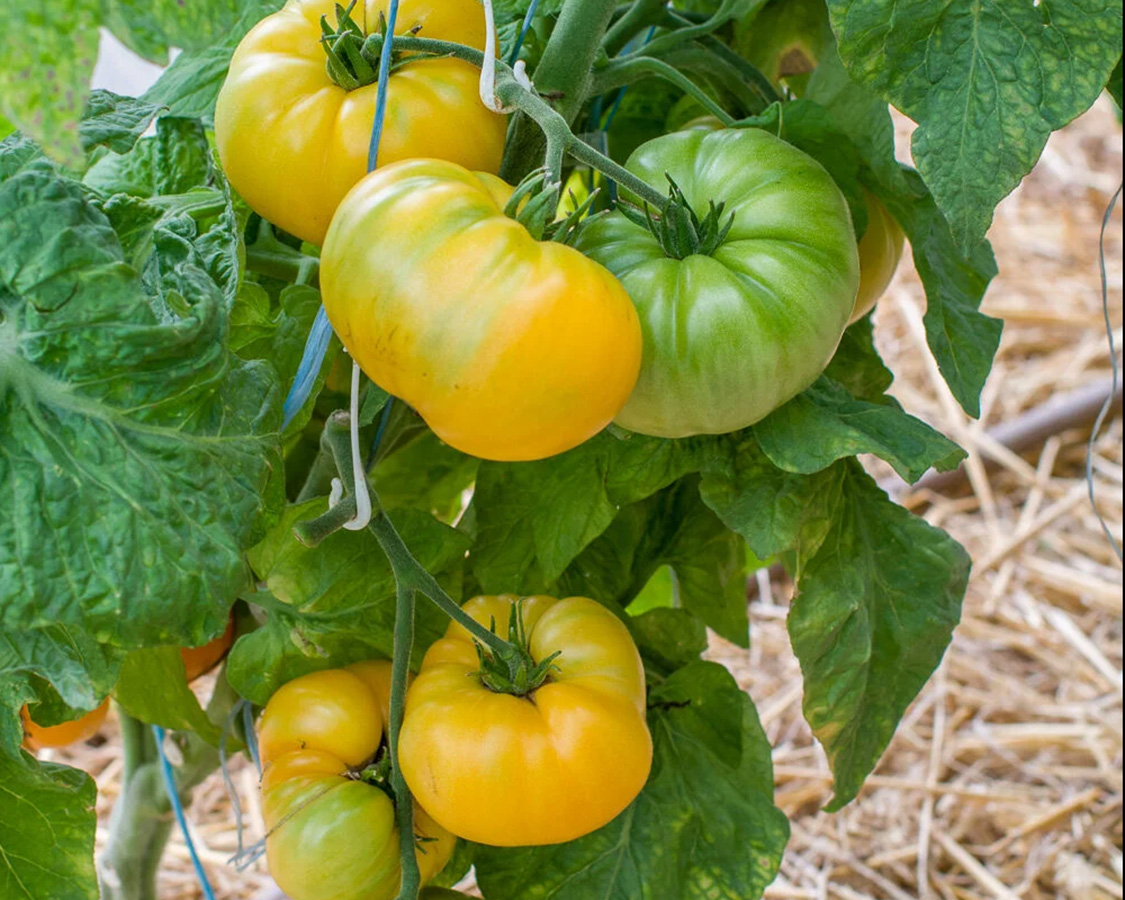
Dwarf Perfect Harmony Orange-yellow skin, a beefsteak type, flattened at the poles and with more or less plump shoulders. Grows 4’ – 5’ tall, and produces a good quantity of medium-large, up to twenty oz, bright-orange colored, with a distinctly tart, full flavor.
Dwarf Metallica All you rock fans unite. I wanted to try this one, partly because of the name. Not necessarily my favorite band, but hey, I know some of you like them. This tomato is a looker, with it’s dark pink color with metallic green striping. A beefsteak I can see a BLT in it’s future.Mild and well-balanced flavor, slightly sweet and tangy. Very productive. Can be grown in large pots.
Dwarf Idaho Gem Any Idaho fans out there? I personally love Idaho. This variety produces lots of medium to large fruits, ranging from 4 to 14 oz, a true yellow (not orange), that are juicy, sweet, and flavorfully mild; a well balanced, delightful flavor. This is a perfect meaty slicing tomato that helps prove that yellow tomatoes are not bland or too mild.
There are many more to choose from. Unfortunately, I can’t showcase them all in this one post. Otherwise, no one will want to finish reading this. I fear I have gone on far too long. However, my next post will be on a few more.
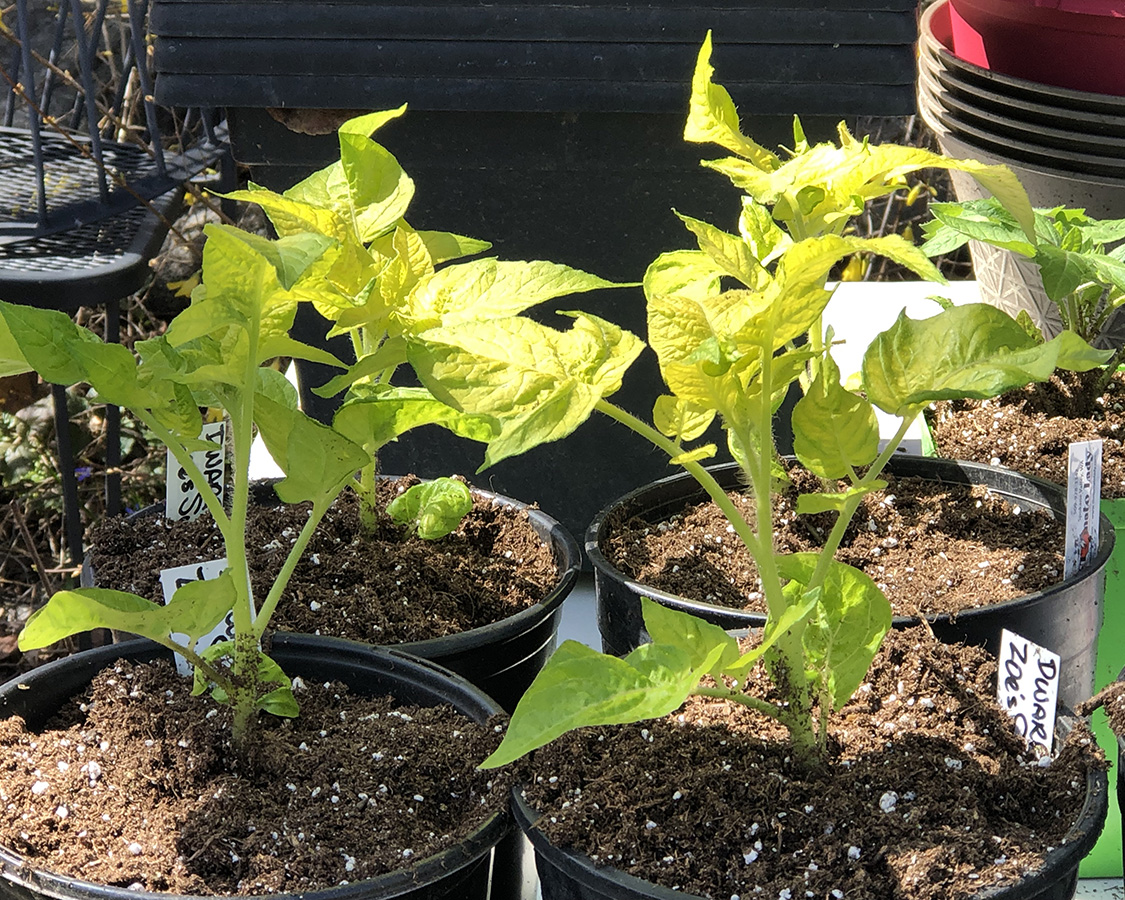
I have a treat for you now. This is one of the prettiest tomato plants I have ever seen. It is called Dwarf Zoe’s Sweet. It is named after the developers own daughter. This has the most interesting chartreuse-green foliage. When it germinated I about had a stroke thinking it had contracted a virus or had a serious nutrient deficiency. I rushed over to pull them until I realized all 9 plants were the same color. Whew! After doing some research, I find that it isn’t any of those things. These tomatoes are supposed to be very sweet. The chartreuse gene that causes that color, also encourages it to grow a little taller than other dwarfs. Most dwarfs only grow 3″ to 4″ feet (hence the name), this one can reach 4″ to 5″. I am excited to try it this year. Without further adieu, I introduce you to my shining star (literally):
Dwarf Zoe’s Sweet Don’t be put off by the chartreuse-colored leaves. The first time I saw them I rushed to pull them thinking they had a virus, except that all of them had it! The fruit are oblate shaped, 6 – 16 oz each, and pink. Flavor i son the sweet side, the texture is meaty The chartreuse gene causes plants to grow a bit taller, so be sure to stake it well.
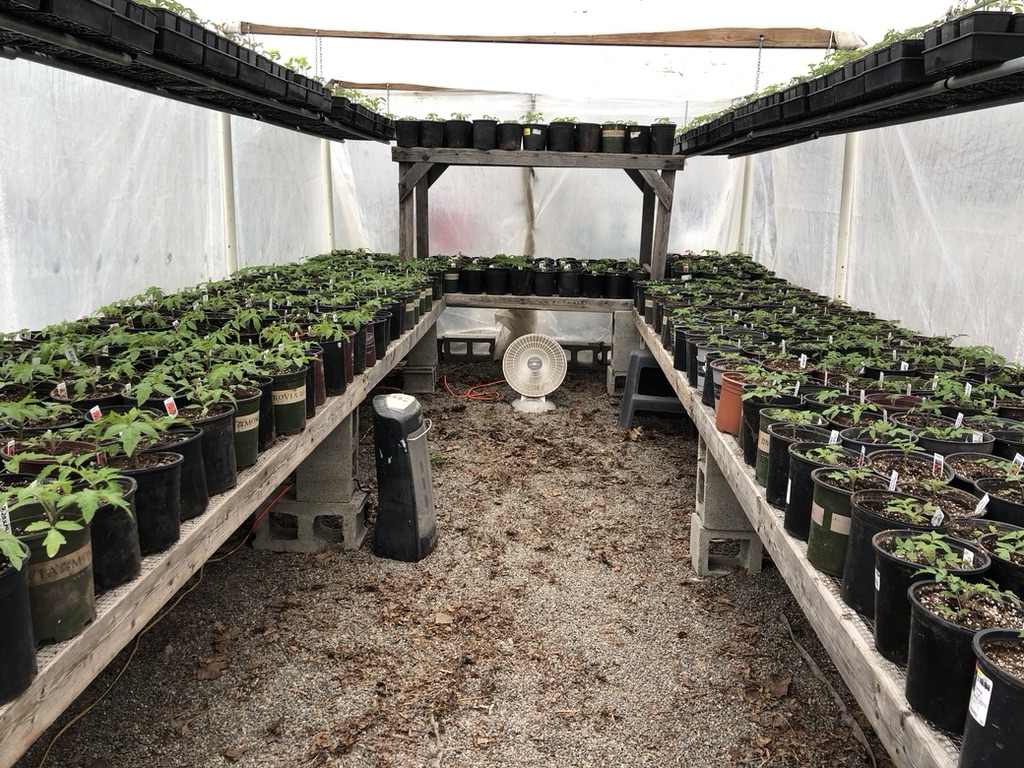
Every year I grow the same varieties that I have grown in previous years. Either they have become a customer’s favorite, or I just plain like them. I know it is overwhelming when you come to our house and are faced with 387 varieties (this year), and that is just the tomatoes!. It does not include the peppers, herbs, flowers or veggies. My goal is to introduce you to different varieties . . . of well, everything! Life is too short to eat store tomatoes. The old adage,”If it ain’t red, it ain’t a tomatah” keeps a lot of my customers from experiencing the broad range of colors and tastes. A lot of my plants have stories of their own.
I can almost guarantee that I have more tomato varieties for sale than anyone in the world. Granted, some of them are in limited quantities, seeds being somewhat scarce. Every year in the fall, I am so done with gardening. I think about having the garden paved over into a parking lot. Then, I start getting, THE CATALOGS. Yup. All my resolutions go out the door. Thoughts of Super Sweet 100’s, Romas and Early Girls are suddenly forgotten, as I thumb through the colorful pages of exotic looking tomatoes. Blue, green, striped, even white. Its a rainbow of colors. I consider myself the United Nations of tomatoes with varieties coming from all over the world. Russia, Ukraine, Italy, France, Mexico, Poland, Australia even Switzerland to name a few.
For the next several weeks, I am going to show you what you have been missing. Let the adventure begin!
But first, I should explain some basic things to you. I place my tomatoes into categories based on common uses, shapes, and maturity dates: Paste, Main Season, Patio, Cherry, Early, Heirloom, Oxheart, Dwarf, and Unusual.
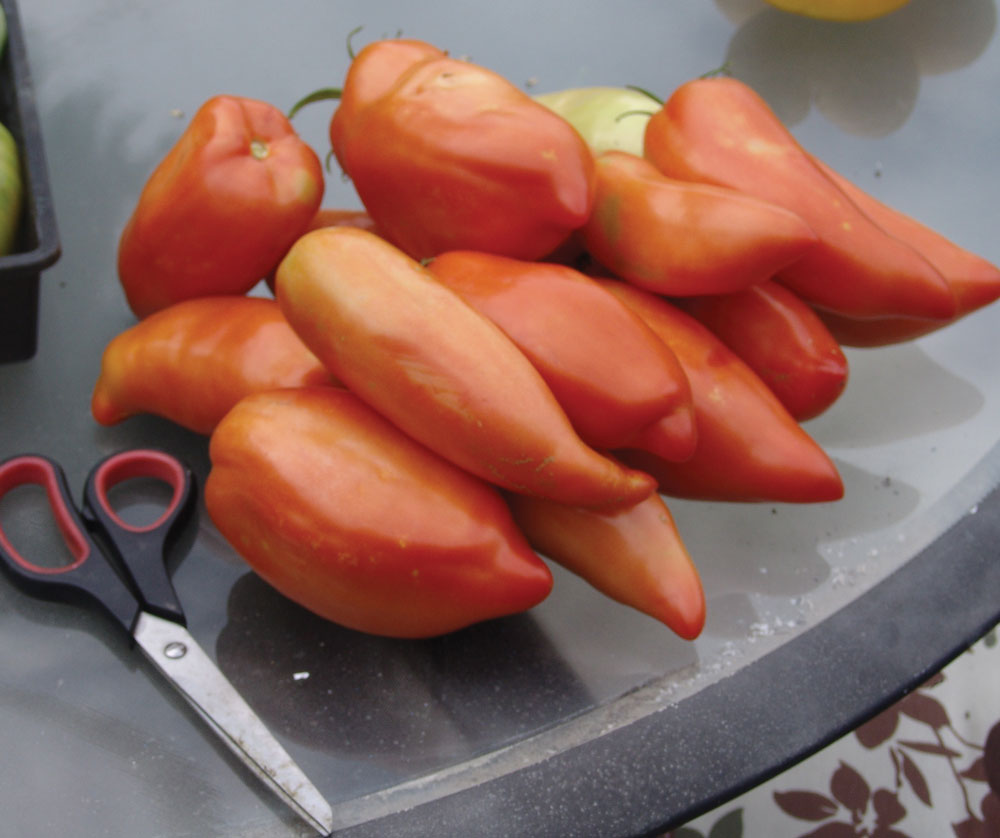
Paste tomatoes are a type of tomato that have dense, meaty flesh, less juice, few seeds, and are usually cylindrical or pear-shaped. They can be snub-nosed like a Roma or San Marzano or large, long shape with a pointy tip such as the Polish Linguisa. They are what everyone thinks of when they think about tomato or spaghetti sauce.
Polish Linguisa
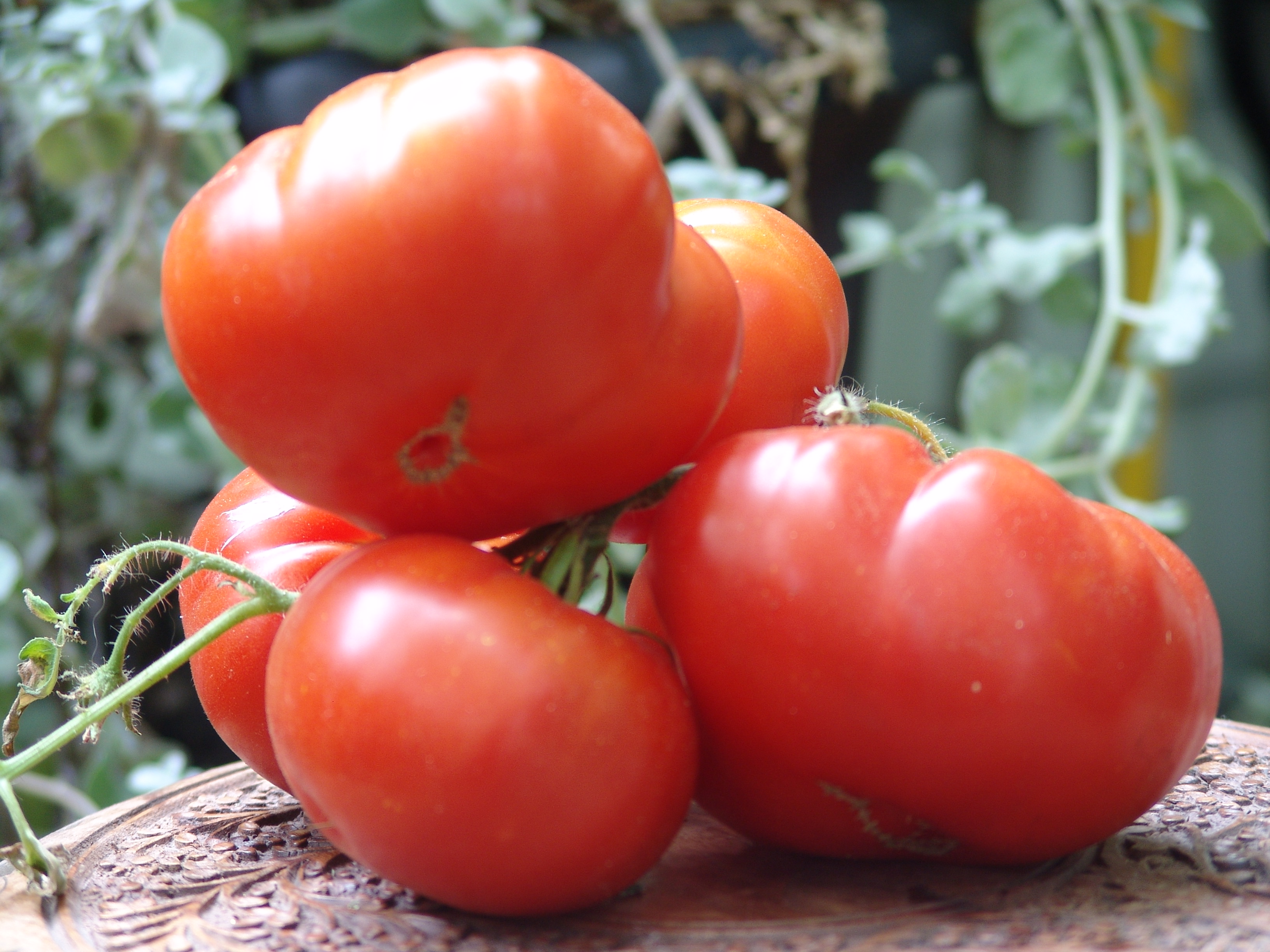
Main-season tomatoes are classified (by me) as varieties that usually ripen 70 – 84 days. They also come in different colors, although most of the ones I know are red, medium-sized, and smooth-skinned. Big Boy, Better Boy, and Goliath come to mind.
Supersteak
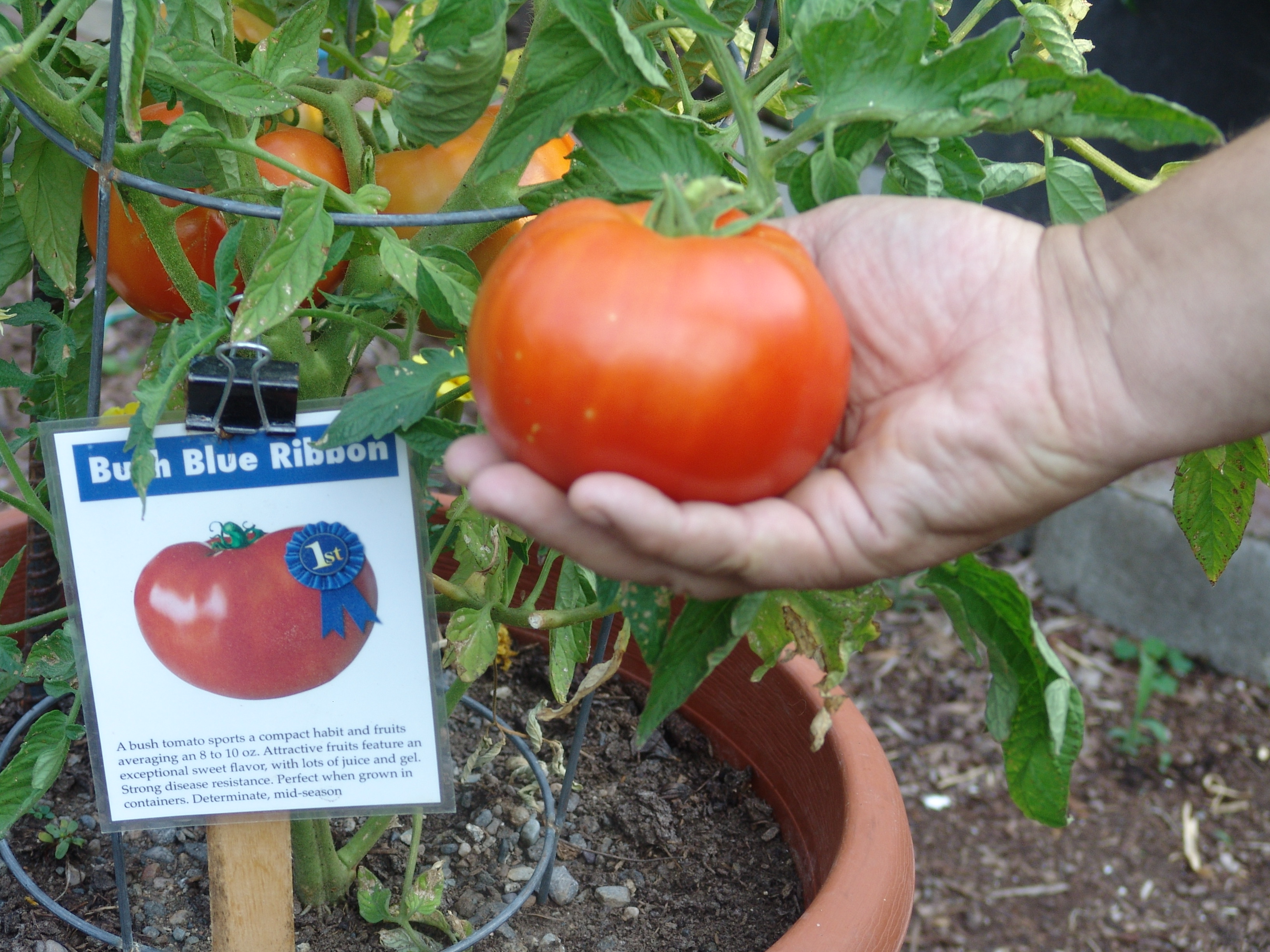
Patio/Container friendly plants are good for large or medium-sized containers. Smaller in stature, they include the bush varieties i.e. Bush Goliath, Better Bush, Bush Beefsteak, Bush Early Girl, Bush Campion II, , Bush Blue Ribbon, and Patio. The bush tomatoes can range from cherry sized to beefsteak sized. Not to be confused with the dwarf tomatoes, which I will explain further down. Most are shorter season and do well on a patio or patio table.
Bush Blue Ribbon
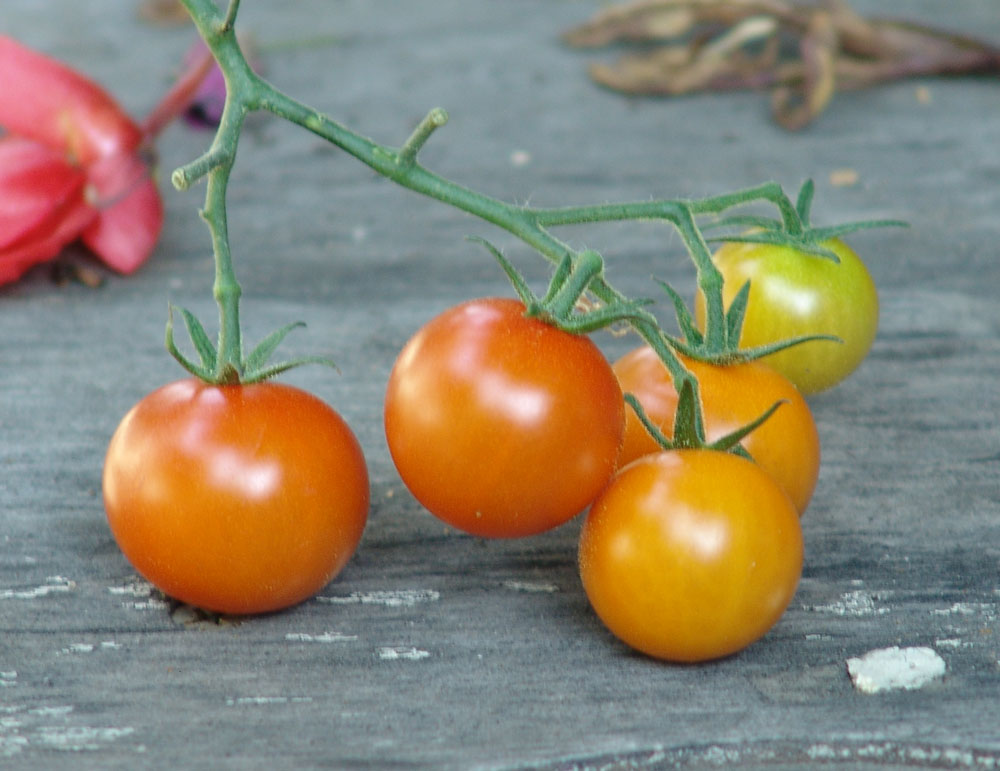
Cherrytomatoes No one needs an introduction to a cherry tomato. It usually grows on long vines that need staking. Smaller-vined ones are available, such as Sweet Valentine, Tumbler, Tumbling Tom Red and Yellow, and Tiny Tim. These are some that come to mind. All the colors of its larger brethren, some sweeter than others. Sweet Aperitif is my husand’s new favorite, small, red, and sweet.. Sungold is the sweetest cherry tomato I’ve ever had and is a favorite of most everybody. You have not lived until you picked a sun-warmed Sungold off the vine in the garden. (You can plant any tomato in a large container but it will be constricted by the size of the container.)
Sungold
Earlytomatoes are just that: early, at 55-69 days. We also have some that are extra early, ripening 54 days or less. Early Girl, Subartic Plenty, Stupice, New Girl, and Moskvich are some early varieties. They are also mostly red and smaller sized. Taxi is the only heirloom that I know of that is early and produces beautiful, sweet, yellow fruit.
Glacier
Heirloom tomatoes are what I started with in the beginning of my journey. Their descriptions made them sound really yummy and I was tired of the standard, staid tomatoes I bought fro the store. Whether you call them “Heritage” or “Heirloom,” these are still the varieties you will want to grow for taste. Heirlooms come from seed that has been handed down for generations in a particular region or area, and hand-selected by gardeners for their taste or specific growing characteristics. Heirloom tomatoes are open-pollinated, which means they’re non-hybrid and pollinated by insects or wind without human intervention. How experts define heirlooms can vary, but typically they are at least 50 years old, and often are pre-WWII varieties. All heirlooms are open-pollinated but not all open-pollinated are heirlooms. Most of them have stories. Mortgage Lifter paid off a man’s house in the depression years. Amana Orange takes its name from Amana, Iowa, Paul Robeson was named after an operatic singer in Russia.
Pink Jazz
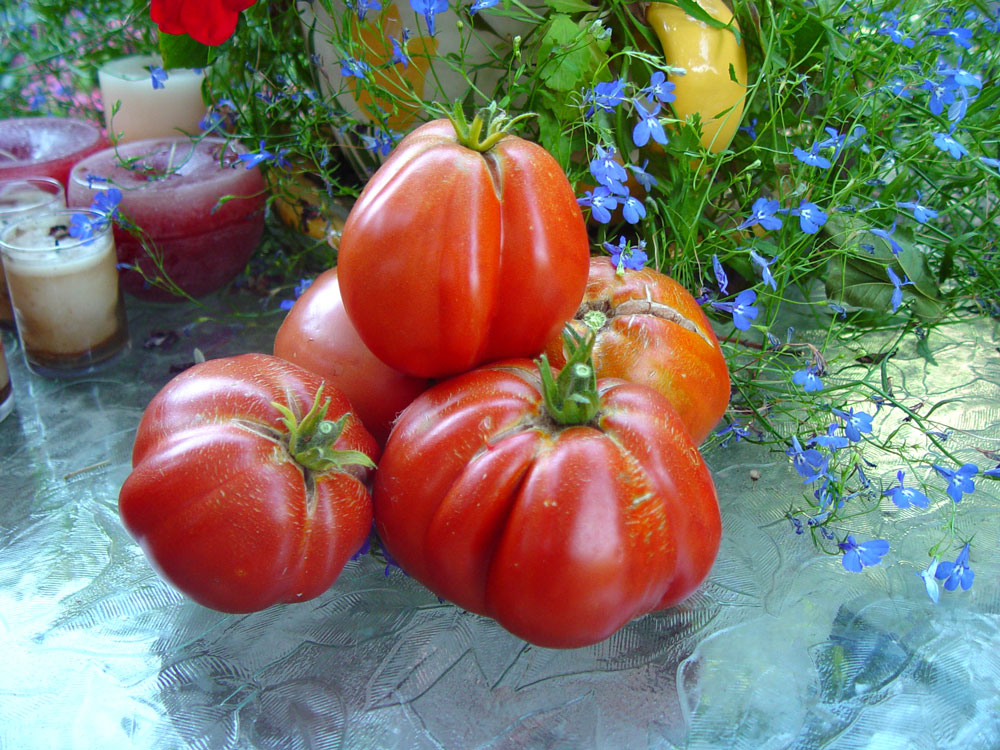
Oxhearttomatoes are very meaty, have less juice and fewer seeds, not unlike a paste tomato. The plants usually have wispy foliage, not unlike paste tomatoes. There are exceptions to the rule. They can grow very large. Cuor di Bueis big, pink, and delicious. Colors range from deep, red, dark, pink to bicolors. My particular favorite is the Orange Russian. Steve loves German Red Strawberry and Kosovo.Those are huge! These work well for canning and preserving. As better, if NOT better, because they are usually larger than paste tomatoes and it takes fewer tomatoes to process in a jar.
Cuore di Bue
Dwarf tomatoes They are perfect for a small space gardener who wants a slicer instead of the smaller tomatoes that are usually produced by most determinate tomatoes.This class of tomatoes exhibits characteristics of both determinate and indeterminate types. Historically called “tree-type,” they are now commonly referred to as” dwarfs”. Tree-type tomato plants have very thick main stems with minimal branching. Their foliage can be either regular or potato leaf but in either case, are rugose (e.g. dark green in color and crinkly in texture). Due to their slow growth rate, they appear from a distance to be determinate achieving three to four feet in height. However, like indeterminate, they continue to set fruit throughout the growing season. Compact and everbearing, what a great combination! They come in many color, shapes and sizes.
Dwarf Sweet Scarlett
Unusualtomatoes are some of my favorites. They have been placed in this category because some of their characteristics defy any other definition. These tomatoes can be large or small, multi-colored, striped, oddly shaped, sweet or not so sweet. I had to put them somewhere! Green Zebra is a a more tart tomato, this one is for you. This year I am bringing back varieties from theIndigo family, Indigo Cherry Drop, Indigo Apple, and Indigo Blueberries. They have more anthocyanins in them. (Think blueberries).
Sweet Carneros
Another thing you should understand are the growth characteristics. There are two basic growth habits: Indeterminate – means that the vines will keep growing for the entire time it is alive. there are instances in the south where I’ve heard of a 20 foot vine. They keep producing the entire summer, just not as extravagantly as the determinate varieties. Determinate – These plants grow shorter vines and stop at a pre-determined height. That varies from 2 to 4 feet. Romas, San Marzanos are determinates. They produce a large flush of tomatoes that ripen over a period of about two weeks and then they are done for the year. There are exceptions to the rule however, some, like Taxi will produce, take a rest and then produce more. These are good when you are putting up your harvests. Glacier is another early, determinate that produces for longer periods of time. Semi-Determinate and Dwarfs (see the entry about Dwarfs up above) are a couple of other types. (I have to be honest, not sure what a semi-determinate defines as.)
Wow, that is a lot of information. The next post will start showcasing tomatoes. Below is another tidbit I want to share.
I changed actual days to a seasonal range for our area of Eastern Washington. If you aren’t familiar with your climate, contact your local extension agency. Our weather is so unpredictable here, the days to maturity are from transplanting into the garden. On a seed packet it may say “72 days.” That means you should start seeing ripe tomatoes around 72 days from when you put the plant into your container or bed. It is not from the time when your seed has germinated. There are a lot variables that affect your plants. Weather, condition/health of your soil or planting medium, variety, microclimates, amount of sun, even the area of the country you live in, etc. Very Early – 54 days or less. Early – 55-69 days Mid-season – 70-84 days (most of them are mid-season) Late Season – 85 or more days (late yes, but worth the real estate)

 Notes From The Tomato Lady