
by Darius Van d’Rhys (darius) June 3, 2008
The second benefit (besides eating the garlic) is the growing garlic has natural fungicide and pesticide properties. Garlic companion planting is especially beneficial to lettuce by deterring aphids, and to cabbage. Garlic oil is effective at repelling and even killing snails and slugs.
As well as protecting other plants, garlic can also improve their flavor. Beets and cabbage are reported to be good companions that benefit from this. However, not all companion planting with garlic is beneficial. Garlic doesn’t cooperate well with legumes, peas or potatoes so do not plant your garlic too near these.
 What Kind to Grow, and Where
Garlic isn’t just garlic, there are many different kinds of garlic and they’re almost all different in size, color, shape, taste, number of cloves per bulb, pungency and storage times.
So, how do you decide what to grow? I have separate articles covering each of these groups following this article and you will find good information in them. One is a general overview, this one is on basics of growing and cooking garlic, and the ones on hardnecks, softnecks and Creoles will help you decide which type for your climate and which varieties for your taste buds.
Garlic is easy to grow. Great garlic is difficult to grow.

Garlic developed in central Asia with long cold winters, damp cool springs and warm, dry summers. Since then it has been grown around the world and a few needs have changed. Varieties like Rocamboles still need those central Asian conditions. Porcelains and Purple Stripes are more tolerant but still won’t do well in a hot dry spring. Hardneck Rocamboles do poorly in warmer climates.
Garlic tolerates most soils but if you want excellent large and beautiful garlic, you need a healthy soil full of micronutrients and minerals. High concentrations of NPK fertilizers can kill off the healthy microorganisms living in the soil, as can chemical herbicides and pesticides. “If the government requires applicators to wear ‘protective’ clothing (boots, gloves, hoods and masks) to apply it, why would you want to eat it?” [1] Garlic really needs the minerals and micronutrients more than an abundance of NPK. The soil should have manure and compost added on a regular basis. Rock dusts and minerals can be added; they act like long-time slow-release fertilizers and the garden will continue to maintain fertility for years to come, with fewer applications eventually needed.
Garlic should be planted in the fall in the north. This gives time for sprouting roots to develop before the emerging plants die down with cold winter temperatures. After a few frosts but before the ground freezes hard in my Zone 5b, I cover my garlic bed with 6-8” of straw which helps prevent frost heave. When the ground begins to warm in the spring, I remove the straw so the sun can warm the emerging stalks. Sometimes the fall planted bulbs will sprout enough to send up green shoots before winter. That’s okay… they will die back and grow again in spring.
Garlic likes fertile, well-drained soil so that the bulb is above the water level and the roots deep into the moist soil. Plant the cloves root end down, about 4” deep and 6” apart in the north, and 2-3” deep in the south. Bubils (from the scapes) can be harvested and planted but they will take 2 or more years to produce a large bulb. Some vendors and growers recommend soaking individual cloves in water with bicarbonate of soda for a few minutes, and then dipped in rubbing alcohol (or 140 proof vodka) for 3-4 minutes to kill any pathogens. Use the largest cloves to grow the best bulbs for next year.
If your soil is healthy and fertile you may choose (or not) to add a foliar spray in the spring. A tablespoon each of molasses, seaweed and baking soda in a gallon of water makes a good spray used 2-3 times in spring. Do not use a foliar spray on dry plants, nor spray close to harvest. The leaves will become lush at the expense of the bulb.
When the tops just start to turn yellow/brown and fall over, gently dig the bulbs. There should still be some green inner leaves. When only about 8 green leaves remain, stop watering and let the soil begin to dry. After digging the bulbs, do not wash, just brush off loose dirt and store in dry shade for 2-4 weeks to cure. Treat them gently as they can bruise easily and thus not store well.
Store garlic warm (55-65ºF), dry (40-60% humidity) and in the dark to keep it dormant. Garlic is usually hung to dry and good air circulation is very important.
Here’s a photo journal of the whole process of preparing beds, planting, harvesting and storing:http://www.gourmetgarlicgardens.com/gardenyear.htm
Tips on Cooking with Garlic
When the cell walls in a garlic clove are cut, diced, chopped, crushed, etc., the cloves release allicin which gives garlic its smell and taste. Peeling cloves is tedious but you can easily peel them without breaking cell walls by soaking individual cloves in plain water for an hour or two, or by dropping them in boiling water for 60 seconds. When you want to add garlic to a dish, the larger the pieces, the milder will be the flavor. James Beard’s recipe for Chicken with 40 Cloves of Garlic is at the end of this article. It surprisingly has the barest hint of garlic due to long cooking of whole cloves.
The finer you cut garlic, the more allicin is released, creating a stronger flavor. For a bold, assertive garlic taste, finely chop or crush the garlic. Let it rest for a few minutes, and then add it just before cooking is complete.
A good health practice to fight E. coli found in supermarket meats is to rub crushed raw garlic all over the meat. Crushed raw garlic is a powerful antibiotic that can kill E. coli, but it will not kill the bacteria INSIDE the meat. To do that, you must cook the meat thoroughly.
I personally don’t find garlic breath objectionable. However, sunflower seed oil and parsley taken together will drastically reduce or even eliminate primary garlic breath. After eating a garlicky meal, eat a spoonful of sunflower seeds and a sprig of fresh parsley and you will find your breath much less offensive to others.
When you cook garlic long and slow, it becomes creamy and less strong. Most garlic odor on your hands can be eliminated by rubbing them on a piece of stainless steel flatwear under running water.
Footnotes:
[1] http://www.gourmetgarlicgardens.com/growing.htm
Photo Credits: Hood River Garlic Farm http://www.hoodrivergarlic.com
http://davesgarden.com/guides/articles/view/613
Hardneck Garlic for Northern Climates
http://davesgarden.com/guides/articles/view/1030/
Softneck Garlic for Southern Climates
http://davesgarden.com/guides/articles/view/1031/
Creole Garlics
http://davesgarden.com/guides/articles/view/1032/
Chicken with Forty Cloves of Garlic
by James Beard
2/3 cup olive oil
8 chicken drumstick and thighs (or 16 of either)
4 ribs celery, cut in long strips
2 medium onions, chopped
6 sprigs parsley
1 tablespoon chopped fresh tarragon, or 1 teaspoon dried
1/2 cup dry vermouth
2 1/2 teaspoons salt
1/4 teaspoon freshly ground black pepper
Pinch of nutmeg
40 cloves garlic, unpeeled
1. Put the oil in a shallow dish, add the chicken pieces, and turn them to coat all sides evenly with the oil.
2. Cover the bottom of a heavy 6-quart casserole with a mixture of the celery and onions, add the parsley and tarragon, and lay the chicken pieces on top. Pour the vermouth over them, sprinkle with salt and pepper, add a dash or two of nutmeg, and tuck the garlic cloves around and between the chicken pieces. Cover the top of the casserole tight with aluminum foil and then the lid (this creates an air-tight seal so the steam won’t escape). Bake in a 375°oven for 1 1/2 hours, without removing the cover.
3. Serve the chicken, pan juices, and whole garlic cloves with thin slices of heated French bread or toast. The garlic should be squeezed from the root end of its papery husk onto the bread or toast, spread like butter, and eaten with the chicken.
About Darius Van d’Rhys
I have a ‘growing my own food’ obsession that comes from my overlapping interests in cooking, nutrition and gardening. I am also a “teacher”, a writer, a builder… and a craftsperson and… and… and many other things, LOL. In fact, I guess I am a generalist, and a Seeker. I live in the southern Appalachian Mountains on a hillside with a creek in front, and drive a 15 year old truck I lovingly call “My Farmer’s Ferrari.” Editor’s note: Darius passed away on March 19, 2014. Her readers will miss her greatly and we are thankful for her legacy of wonderful articles.
 |

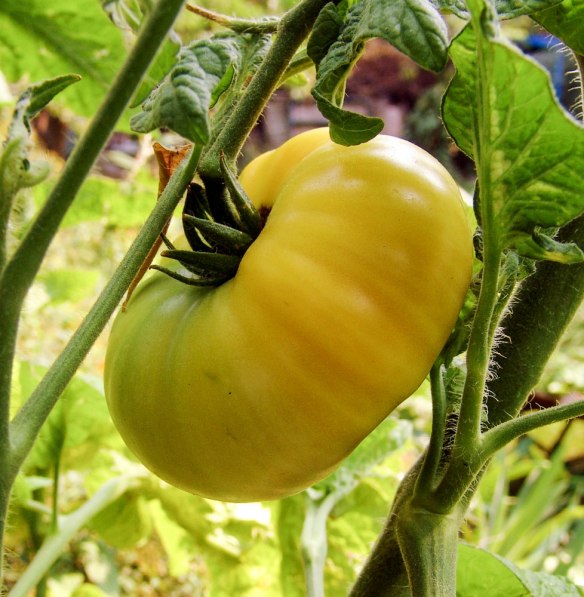
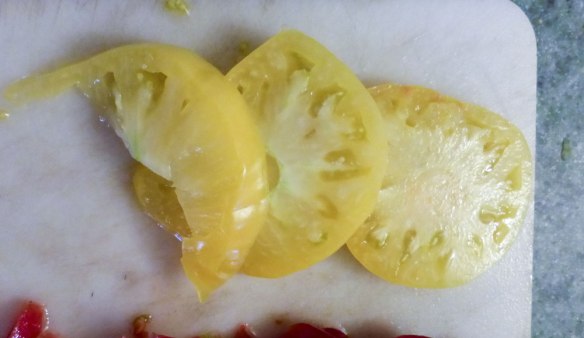


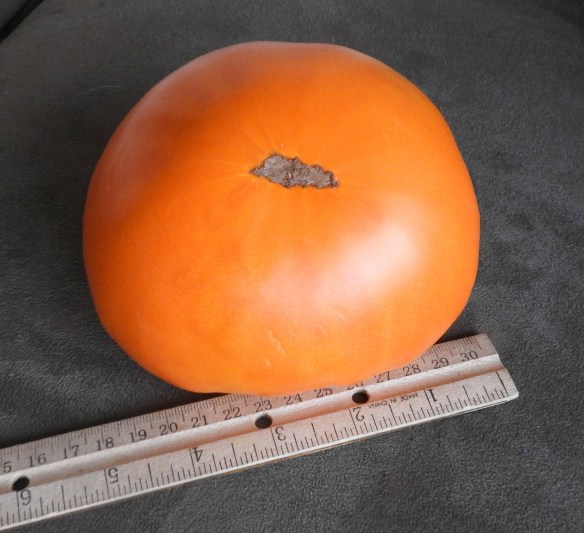

 The biggest tomato I’ve ever grown was a Rose. It weighed over 3 pounds! This variety is very juicy and solid.
 2.6 oz Krainiy Sever
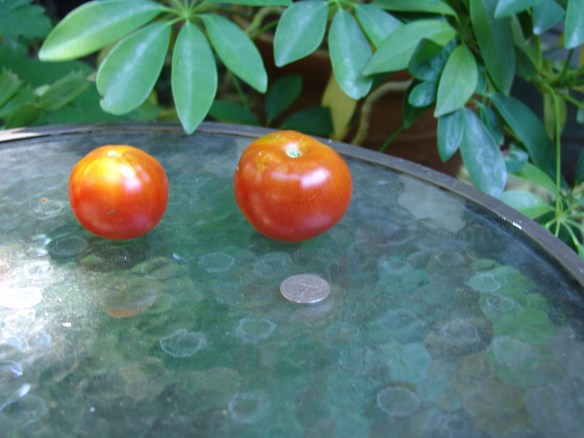 3.6 oz Krainiy Sever
 Also known as Superbissima Grandiflora. In fact that is the only name I had for them for the longest time. After doing some research, I found out they used to be called California Giants and are an heirloom petunia from way back. They are no longer commercially grown, at least I’ve never seen them at the big box stores or local nurseries.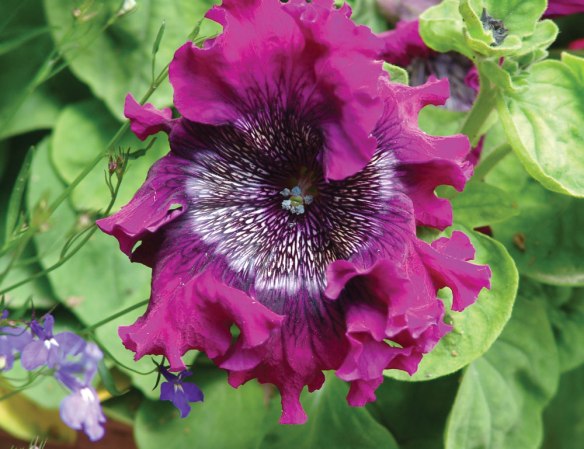


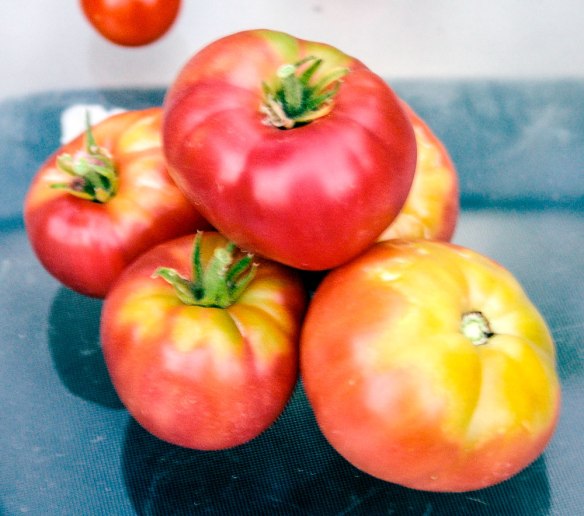
 Meet Fred’s Tye Dye. I don’t know who Fred is but I love his tomato. This is another tomato out of the Dwarf Tomato Project. It is the most beautiful color, hopefully you can see the stripes in this picture, it is from my garden. The taste was delicious. The growth habit very manageable as you can see below. This is a mid season producer and is one of the taller dwarfs although mine didn’t get any taller than 4 feet. It was one of the first ones to color up. As with any heirloom, size varies from baseball to softball size. One of the other things I like about the dwarfs is their stocky stems and their rugose, regular leaves, very crinkly and dark green.
 Yes, these came from a dwarf tomato plant. Part of the Dwarf Tomato Project. It was very tasty and produced an ample supply of tomatoes for such a small plant. Staked, in a large pot, it was maybe 4 feet. Perfect for someone who wants to grow slicing tomatoes without taking up much room, such as a deck or apartment balcony. A very pretty dark pinkish fruit.
 Notes From The Tomato Lady