
Herbicides such as 2,4-D have a strong smell and can be easily detected when used. It has growth regulator-type activity and affected plants will show curling and twisting before they die. Non-lethal doses to tomatoes will cause curling and darkening or lightening of the leaves and potentially reduce yields depending on exposure level. If the exposure was bad, the plant will eventually die.

Below are more pictures of damage caused by hervicides.
9-1-1 for Affected Plants
Unfortunately, we may be able to control what we spray in our yards but not so much what is sprayed in the neighbor’s yard or fields. Or by their lawn service. Since a foliar method is used for application, this increases the chances of drift. Lately in our area, it has been quite windy, more so than usual. I’ve had a handful of people contact me about this.
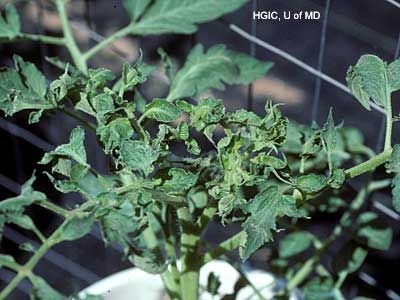
Symptoms include twisted, curling leaves, and yellowing etc. It happens quite suddenly and there is little we can do about it except deeply water the suspected victim throughly and deeply (to dilute the chemicals.) and try and wash it off the foliage as much and as soon as possible.
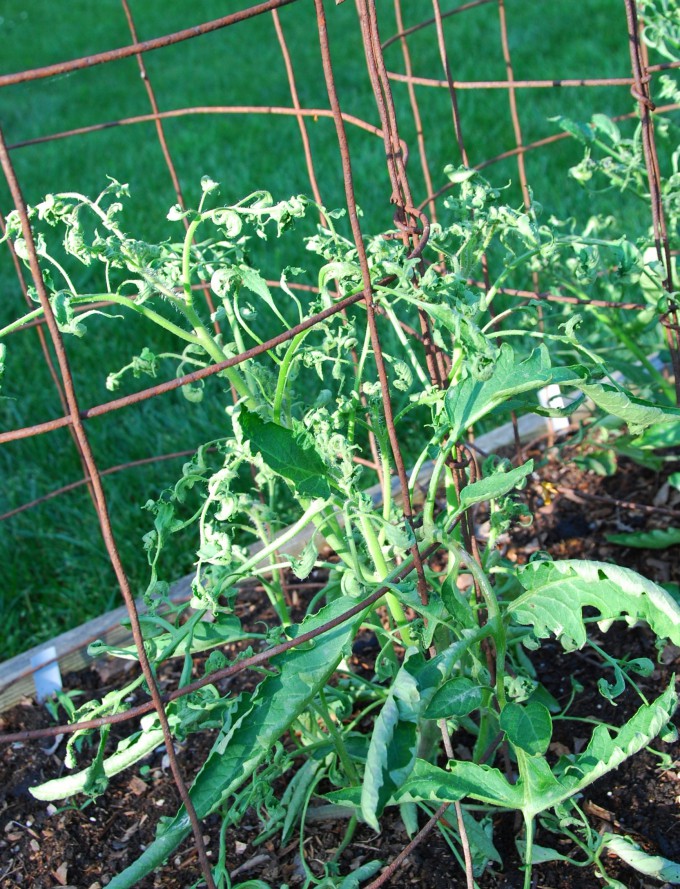
Plants accidentally exposed should have affected leaves pruned off to prevent the spread ofthe herbicide deep into the plant.

Our neighbor uses a lawn service and we have told them the employees that we have a garden and about 10,000 plants that don’t take well to drift from their sprays and they have been very good about remembering that.
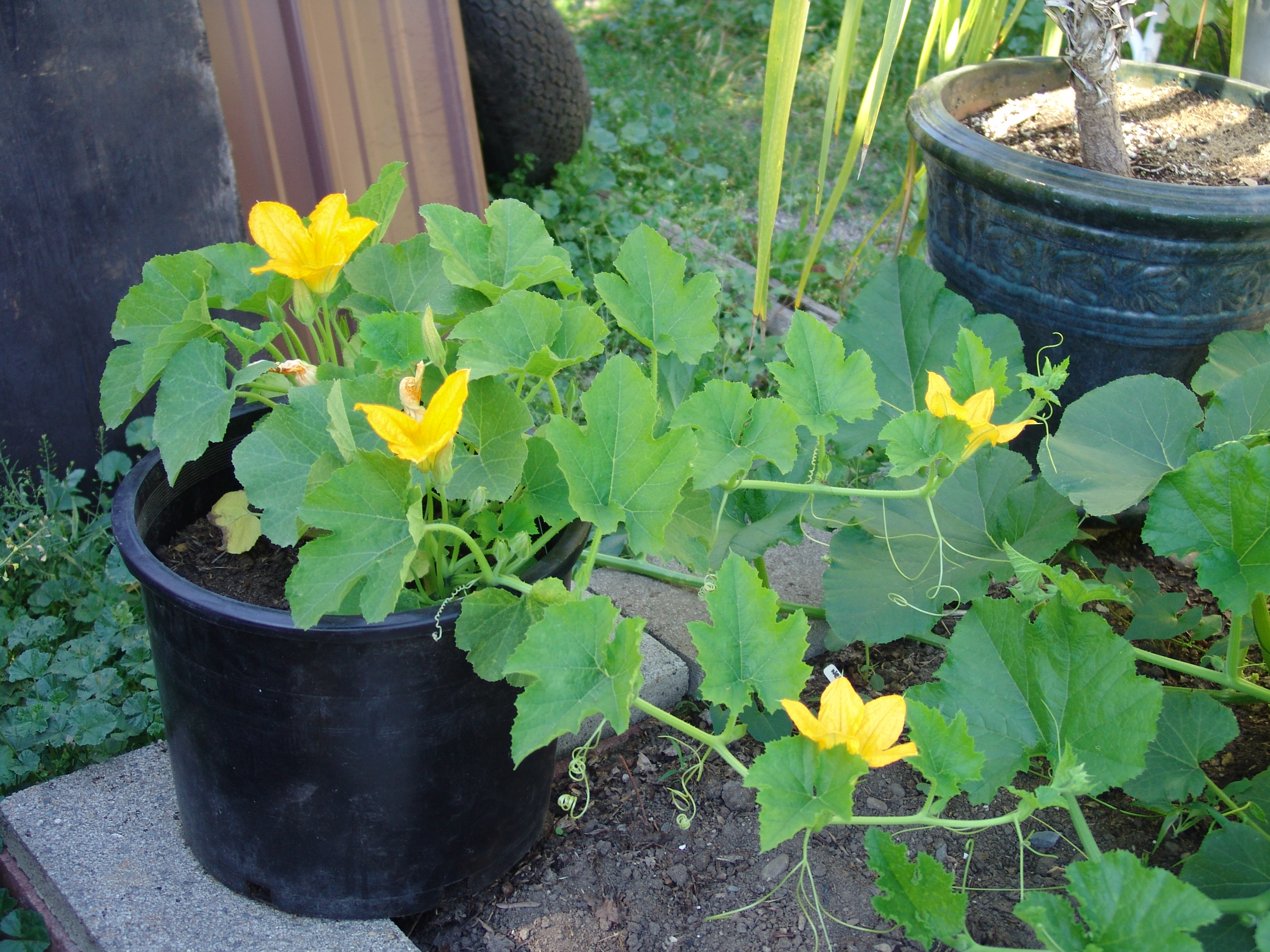 So many people come to me with questions about their gardens. I think one of the cutest things they tell me, is that they keep getting blossom end rot on their summer squash. You know, where, you get all excited because it is your first squash of the season. Every day you check on it with anticipation. Then, the horror of horrors, it starts turning yellow! Aaaahh! You babied it, watered it, fertilized it. Now, this.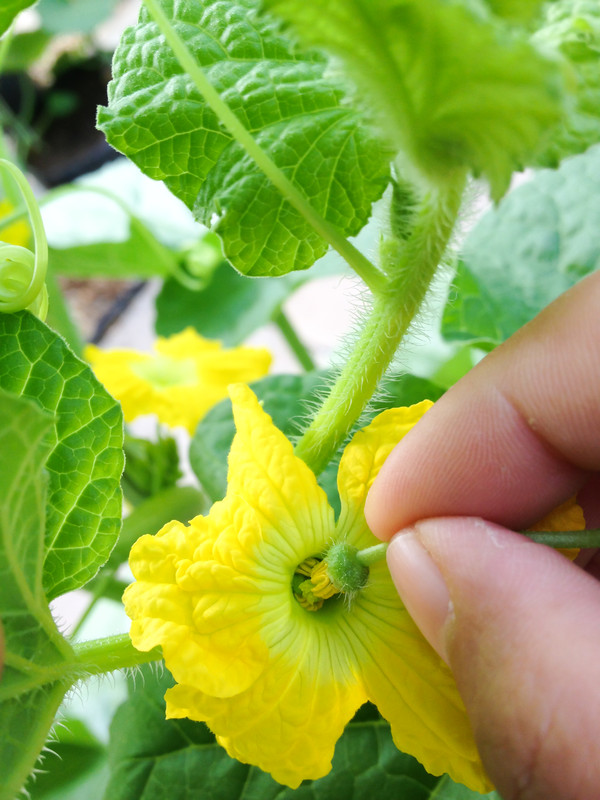
 Notes From The Tomato Lady